Ancient
The Remarkable Journey of the Estrella
In the bustling shipyards of Blackwall, London, a vessel destined for adventure took shape under the skilled hands of the Samuda Brothers. Launched on August 20, 1853, into the waters of the River Thames, the iron sidewheel paddle steamer Estrella emerged as a marvel of engineering for the newly established Magdalena Steam Navigation Company. Designed with a shallow draft of just 5 feet, she was tailor-made for river and coastal voyages. Stretching 176 feet long with a 26-foot beam, Estrella boasted a gross tonnage of 576 tons-later recorded at 438 tons displacement during her U.S. Navy service. With room for 60 to 90 passengers, she was powered by a 120-horsepower, two-cylinder oscillating steam engine crafted by Humphrys, Tennant, and Dykes at their New Deptford Engine Works. On October 27, official trials clocked her at an impressive 12 miles per hour.
By KWAO LEARNER WINFRED11 months ago in History
The Garden That Opened at Dawn
There was a garden renowned for its unearthly beauty, tucked away in the peaceful hills of an old village. The Garden That Bloomed at Sunrise was its name. As if the rising sun were whispering to them to get up, flowers would bloom in a stunning, coordinated display every day at the first light of morning. Many of the locals thought that this garden had a mystical power that could bring about healing and tranquility, and they spoke about it with wonder and devotion.
By MD SHAMIM RANA11 months ago in History
Atlantis: The Lost City of Wealth and Splendor. AI-Generated.
The Lost Wealth of Atlantis: Estimating the Net Worth of a Legendary Civilization Atlantis, the fabled civilization described by the Greek philosopher Plato, has fascinated humanity for millennia. A tale shrouded in mystery, the story of Atlantis speaks of a utopian empire that vanished beneath the sea in a cataclysmic disaster. Despite debates over its actual existence, Atlantis has been portrayed as a land of unimaginable wealth, advanced technology, and sophisticated culture. This article explores the estimated net worth of Atlantis, based on historical accounts, theories, and modern interpretations.
By Say the truth 11 months ago in History
The Magnificence of Ancient African Empires. AI-Generated.
The Rich History and Resources of Ancient Africa: Part 1 Africa, often described as the cradle of humanity, has played a pivotal role in shaping world history. From the powerful empires of the past to its vast reserves of natural resources, Africa’s legacy is one of wealth, resilience, and cultural innovation. This article, the first in a nine-part series, delves into the ancient history, resources, and estimated economic impact of Africa's early civilizations, focusing on the period before European colonization.
By Say the truth 11 months ago in History
English Football History: Violent Peasants to Multi-Million-Dollar Stars.
English football history is a survival, a passion, and a spectacle. From its raw and violent peasant beginnings on England's mud fields, the game has now evolved into a billion-dollar spectacle watched by millions of people all over the world. From medieval origins in England where soccer is carnage and gore to today when hundreds of millions of pounds are spent in bringing the players across, the history of English soccer is as affluent as that of the society and that of the sport.
By Pen to Publish11 months ago in History
The Evolution and Impact of "Cool" in Modern Culture. AI-Generated.
Introduction The term "cool" has undergone a remarkable transformation throughout history, evolving from a simple descriptor of temperature to a multifaceted symbol of style, demeanor, and cultural significance. This article delves into the etymology of "cool," its adoption into popular vernacular, and its pervasive influence across various domains of modern culture.
By Brad Williams11 months ago in History
The Mystery of Yamashita’s Gold – A Lost Treasure of World War II
The Abstruseness of Yamashita’s Gold: Japan’s Absent Treasure Among the world’s best aperitive absent treasures, few battling the fable of Yamashita’s Gold. This all-inclusive fortune, allegedly looted by the Japanese Imperial Army during World War II, is said to accept been hidden in abstruse tunnels beyond the Philippines. Over the decades, abundance hunters, historians, and cabal theorists akin accept approved this ambiguous bounty. But does Yamashita’s Gold absolutely exist, or is it aloof addition actual myth? This commodity delves into its history, accounted locations, and the fortune’s estimated worth.
By Say the truth 11 months ago in History
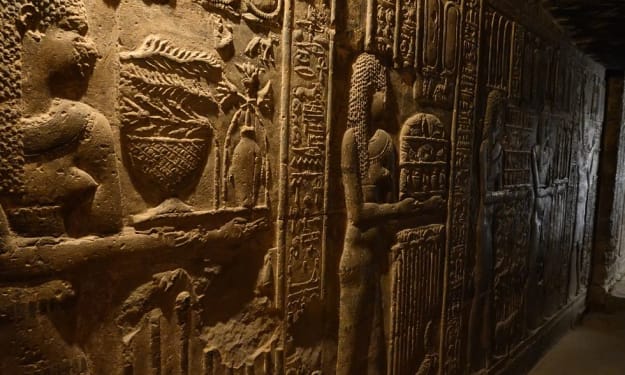
Archaeologists Found a Hidden Tomb That Reveals a Lost Egyptian Dynasty
Archaeologists Found a Hidden Tomb That Reveals a Lost Egyptian Dynasty In a groundbreaking discovery that has sent shockwaves through the archaeological community researchers in Egypt have uncovered a hidden tomb that may rewrite history. This astonishing find provides compelling evidence of a lost Egyptian dynasty previously unknown to scholars. The tomb, hidden beneath the shifting sands for thousands of years, offers new insights into a forgotten era of Egypt’s past. With its richly adorned chambers mysterious inscriptions, and the remains of a ruler whose name has never been recorded in any known texts this discovery challenges long held beliefs about the continuity of ancient Egyptian civilization.
By Adnan Rasheed11 months ago in History
The Ghost Army Of Frangokastelo
“Frangokastelo is located on the southern beaches of the Chania Prefecture and is one of the most famous beaches in Crete. The fame surrounding Frangokastelo is not only due to its truly enchanting main beach but also the stories about the Drosoulites. The Drosoulites are the ghosts of the fallen warriors of Hadjimichalis Dalianis, who were killed defending the fortress on May 17, 1828.
By Aurum Archon11 months ago in History
What misfortune led to an important discovery?
What misfortune led to an important discovery? William Beaumont a pioneering 19th century American physician is often credited as the Father of Gastric Physiology due to his groundbreaking research on human digestion. His discoveries which laid the foundation for modern gastroenterology were largely the result of an extraordinary case involving a young man named Alexis St. Martin. This remarkable story of scientific curiosity accidental discovery and medical perseverance remains one of the most fascinating episodes in medical history. The story began on June 6, 1822 when Alexis St. Martin a French Canadian fur trader was accidentally shot at close range with a musket in Mackinac Island Michigan. The blast left him with a severe wound in his side exposing his stomach and leaving a gaping hole known medically as a gastric fistula. At that time such a wound was nearly always fatal. However fate intervened when William Beaumont a U.S Army surgeon stationed at Fort Mackinac took charge of his treatment. Beaumont initially believed that St. Martin would not survive due to the severity of his injuries. The musket ball had torn through his abdominal wall and stomach leaving a large wound that refused to close completely. Despite this under Beaumont’s diligent care St. Martin not only survived but eventually regained his health. However something highly unusual occurred the wound healed in such a way that a permanent opening remained in St. Martin’s stomach. This opening or fistula allowed the outside world direct access to the internal workings of the stomach a situation rarely encountered in medicine.
By Adnan Rasheed11 months ago in History