
Syed Ahmed Barelvi: The Revivalist Who Laid the Foundation of Islamic Resistance in India
A visionary warrior-scholar who ignited the first organized Islamic movement against colonial and imperial domination

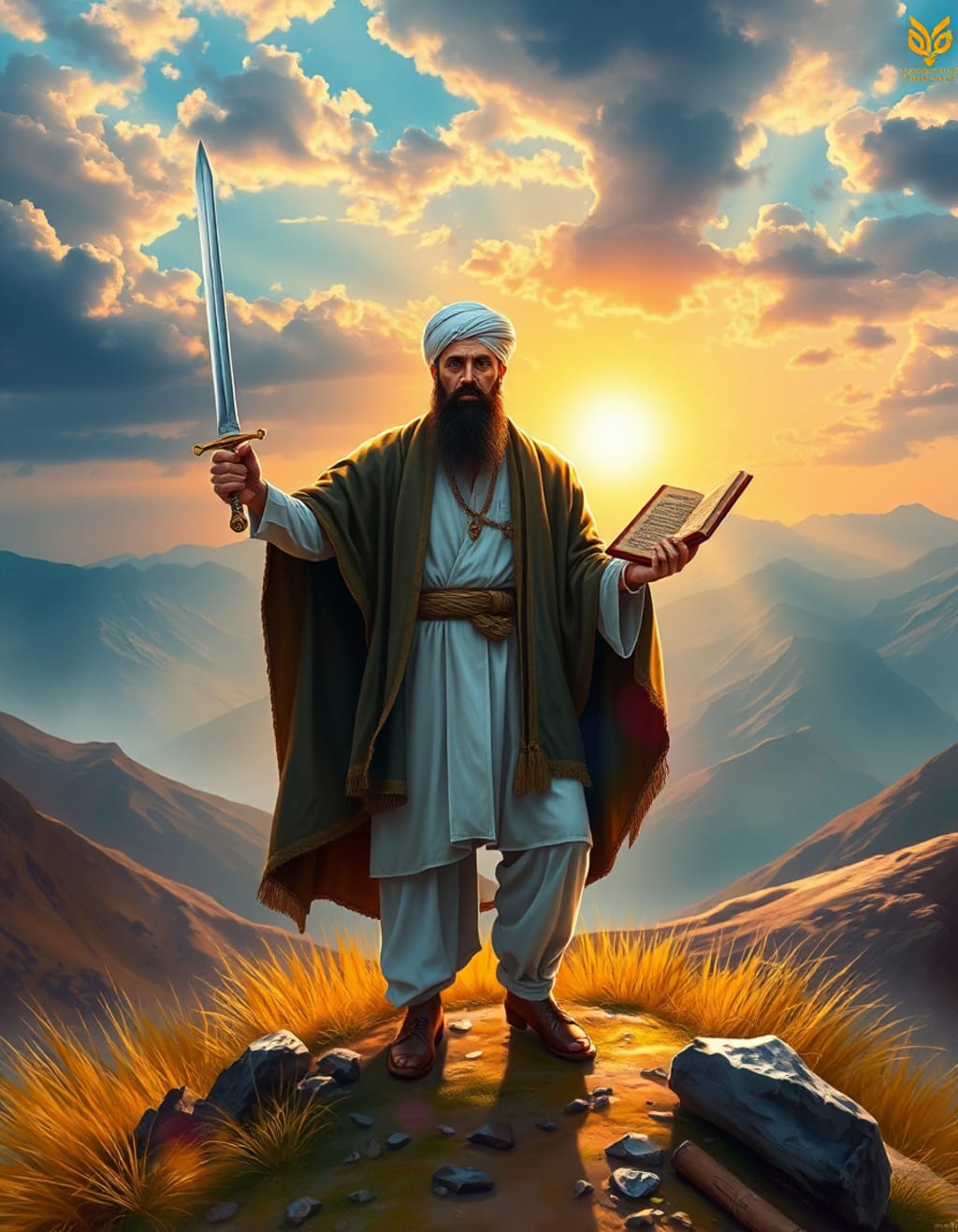
Introduction: The Man Who Chose Jihad with the Pen and the Sword
Long before the Indian War of Independence in 1857, a man emerged from the heart of India who foresaw the spiritual and political decay of the Muslim world — and decided to resist it with both sword and soul. Syed Ahmed Barelvi (1786–1831), a reformer, warrior, and spiritual guide, led one of the first organized Islamic revivalist movements in South Asia. His mission was clear: to revive Islamic principles, resist imperial oppression, and unite Muslims under the banner of Tauheed (oneness of God).
He was not merely a militant — he was a mujaddid (reviver), a leader who saw religion, politics, and resistance as one sacred duty. His legacy lives on in the reform movements that followed, and his courage still echoes in the hills of the North-West Frontier.
Early Life and Spiritual Formation
Syed Ahmed was born in 1786 in Rae Bareli, a region in Uttar Pradesh. Descended from a noble family of Sayyids, he lost his parents at a young age but was nurtured by a strong sense of Islamic identity and discipline.
He studied under Shah Abdul Aziz, son of Shah Waliullah Dehlawi, in Delhi — a scholar who deeply influenced his thinking. From him, Syed Ahmed inherited a vision of Islam as a complete way of life that must be defended and revived, especially under the pressure of foreign domination.
At a time when the Mughal Empire had collapsed and the British and Sikhs were expanding their empires, Syed Ahmed understood that religious revival was impossible without political independence.
From Spiritual Seeker to Revolutionary Strategist
Initially, Syed Ahmed worked as a mujahid of the soul — calling people back to pure Islamic practice, fighting against bid’ah (innovation), and emphasizing Tauheed and Shariah. But he soon realized that moral preaching alone wouldn’t be enough.
In 1810, he traveled to Arabia to perform Hajj, where he absorbed the Wahhabi reformist spirit. There, he studied the revivalist ideas that were reshaping the Islamic world. When he returned, he was not the same man — he was a revolutionary with a plan.
The First Islamic Jihad Movement in India
By 1821, Syed Ahmed launched what would become known as the first Islamic Jihad movement in the subcontinent. His main goal: to establish an Islamic state governed by the Quran and Sunnah — a haven for Muslims suffering under Sikh and British oppression.
He gathered an army of volunteers from across India, known as the Mujahideen, and marched to the North-West Frontier Province (now Khyber Pakhtunkhwa in Pakistan) to confront the Sikh Empire, which ruled the region under Maharaja Ranjit Singh.
The Campaign Against Sikh Rule
Syed Ahmed chose the frontier not randomly. It was strategically important, religiously motivated, and far from British reach. The region was home to many Pashtun tribes who had long suffered under Sikh rulers.
In 1826, he declared Jihad against the Sikhs and captured Peshawar briefly in 1830. He was declared Amir al-Mu’minin (Leader of the Faithful) by his followers — a step toward reviving the Islamic Khilafat in India.
But his struggle wasn’t just against the Sikhs. He also faced tribal divisions, internal betrayal, and lack of resources. He tried to reform tribal culture, abolish revenge killings, and bring justice — but not all local leaders accepted his authority.
Martyrdom and the Battle of Balakot
On May 6, 1831, Syed Ahmed Barelvi and hundreds of his companions were martyred in the Battle of Balakot. Facing a massive Sikh army with far fewer men, they fought with unmatched faith and valor.
Though the battle was lost, the movement was not. His martyrdom immortalized his mission, and his ideology would inspire generations of Muslim thinkers and leaders, including the founders of later independence movements.
Religious Thought and Reform
Syed Ahmed Barelvi’s vision was rooted in the revival of Islam’s original purity. He emphasized:
Tawheed (Oneness of God)
Opposition to shirk and bid’ah
Establishment of Shariah
Role of the Ummah as a united community
He saw Islam not as a personal religion but as a complete socio-political system that should govern life, law, and leadership.
He was also non-sectarian in his appeal. Though influenced by Sufi and Deobandi thought, his followers came from diverse schools of thought.
Legacy and Influence
Though his state did not survive, his legacy certainly did. His movement became the foundation for future Islamic revivalist movements, particularly the Jamiat Ulema-e-Hind and Jamaat-e-Islami.
His life inspired:
Resistance to British imperialism
Muslim unity beyond ethnic and sectarian lines
Revival of Islamic governance and justice
Modern Islamic movements in South Asia and beyond
He is still remembered today in Pakistan and India as a martyr, a hero, and a visionary who gave everything for his faith and people.
Conclusion: The Mujahid of India’s Soul
Syed Ahmed Barelvi didn’t build palaces. He didn’t leave behind gold or thrones. But what he left was a fire of resistance that still burns in the hearts of those who believe that faith and freedom are one.
In the mountains of Balakot, his blood became ink for a new chapter in South Asian Muslim history — a chapter of courage, revival, and unbreakable will.
He lived not for comfort, but for cause. And he died, not in retreat, but in battle — as a true shaheed, and a pioneer of Islamic resistance in the modern era.
About the Creator
rayyan
🌟 Love stories that stir the soul? ✨
Subscribe now for exclusive tales, early access, and hidden gems delivered straight to your inbox! 💌
Join the journey—one click, endless imagination. 🚀📚 #SubscribeNow
Imran Khan: The Journey of a Believer
Imran Ahmed Khan Niazi was born on October 5, 1952, in Lahore, into a well-educated Pashtun family. From an early age, he showed independence of thought and a quiet confidence that often set him apart. Educated first in Lahore and later at Aitchison College, he was sent to England for further studies, eventually attending the Royal Grammar School Worcester and later Keble College, Oxford, where he studied Philosophy, Politics, and Economics. At Oxford, Imran was exposed to global ideas, cultures, and debates. He was not only a student but also a sportsman, playing cricket with intensity and pride. Those years shaped his worldview—combining Eastern roots with Western education—and gave him a belief that discipline, preparation, and courage could change destiny. Rise of a Cricketing Icon Imran Khan’s greatest early fame came from cricket. Tall, athletic, and fiercely competitive, he entered Pakistan’s national team in the early 1970s. The beginning was not easy. He faced criticism for inconsistency and injuries, and some questioned whether he had the temperament for leadership. But Imran was relentless. He trained hard, studied the game deeply, and refined his skills as a fast bowler and all-rounder. Over time, he became the backbone of Pakistan’s cricket team. What truly set him apart was not just his performance, but his ability to inspire teammates. He believed in building confidence, unity, and self-respect within the team—qualities Pakistan cricket had often lacked on the world stage. His defining moment came in 1992, when he led Pakistan to victory in the Cricket World Cup. Against all odds, with an injured body and an underdog team, Imran captained Pakistan to its first—and so far only—World Cup win. That triumph transformed him into a national hero. For millions of Pakistanis, he became a symbol of hope: proof that belief and determination could overcome adversity. A New Mission: Giving Back After retiring from cricket, Imran Khan surprised many by not choosing a comfortable life of fame. Instead, he turned toward philanthropy. Inspired by the death of his mother from cancer, he envisioned building a world-class cancer hospital in Pakistan—something many considered impossible. In a country where public trust in institutions was low, raising funds for such a project seemed unrealistic. Yet Imran traveled across Pakistan and abroad, appealing directly to people. He spoke not as a celebrity, but as a son fulfilling a promise. Against expectations, Shaukat Khanum Memorial Cancer Hospital became a reality in 1994, offering free or subsidized treatment to thousands of patients. Later, he founded Namal University to provide quality education to underprivileged students. These projects strengthened his image as a man who could turn dreams into institutions—someone willing to sacrifice comfort for a cause. Entering Politics: A Difficult Road Imran Khan entered politics in 1996 by founding Pakistan Tehreek-e-Insaf (PTI). His message was simple but bold: justice, accountability, and independence from corruption and foreign influence. At a time when Pakistani politics was dominated by powerful families and entrenched interests, Imran was seen as an outsider—idealistic, but unrealistic. For years, PTI struggled. In elections, Imran sometimes won only a single seat, or none at all. Critics mocked him, calling him irrelevant and disconnected from political realities. Many former supporters lost patience. But Imran refused to quit. He believed that real change takes time and that nations are not transformed overnight. Slowly, his message began to resonate, especially with the youth. His speeches emphasized dignity, rule of law, and a Pakistan that could stand on its own feet. Massive rallies followed, particularly after 2011, when PTI emerged as a major political force. For the first time, Pakistan’s young generation felt represented by a leader who spoke their language. Prime Ministership: Power and Pressure In 2018, after more than two decades in politics, Imran Khan became the Prime Minister of Pakistan. Supporters celebrated it as the victory of perseverance. For Imran, it was the hardest phase of his life. Governing a country of over 200 million people came with immense challenges: economic crises, debt, political opposition, and complex foreign relations. Imran promised reforms, accountability, and welfare programs. His government introduced initiatives like the Ehsaas Program to support the poor and attempted to reform health and governance systems. However, criticism followed closely. Opponents accused him of inexperience and poor economic management. Political tensions remained high, and compromises—inevitable in politics—disappointed some of his most loyal supporters. Imran often spoke of the gap between ideals and reality, learning firsthand how difficult it is to bring change within an old system. Removal from Power and Continued Struggle In 2022, Imran Khan was removed from office through a vote of no confidence. He claimed it was the result of internal conspiracies and foreign pressure, while opponents argued it was due to governance failures. Whatever the interpretation, his removal marked another dramatic turn in his story. Instead of retreating, Imran returned to public rallies with renewed intensity. He framed his struggle as one not just for power, but for sovereignty and justice. Legal battles, arrests, and political restrictions followed, making his path even more difficult. To his supporters, Imran Khan became a symbol of resistance—someone standing against a powerful status quo. To critics, he remained a divisive figure. Yet no one could deny his impact on Pakistan’s political consciousness. Legacy Still Being Written Imran Khan’s story is not finished. Unlike his cricket career, which ended with a clear victory, his political journey remains open-ended. He has inspired millions to believe in change, to question authority, and to demand accountability. At the same time, he has faced criticism for mistakes, rigidity, and unmet promises. What makes Imran Khan unique is not perfection, but persistence. From cricket fields to cancer wards, from opposition benches to the prime minister’s office, his life reflects a constant refusal to accept limits imposed by others. In the end, Imran Khan stands as one of Pakistan’s most influential figures—a man who dared to dream big, stumbled often, but never stopped walking forward. Whether history judges him as a great leader, a flawed reformer, or both, his story will remain deeply woven into the narrative of modern Pakistan.
By The best writer about 17 hours ago in History
Military Strength of Alexander the Great and the Chola Empire: A Historical Comparison
Though separated by more than a thousand years and operating in vastly different geographical and cultural contexts, both forces achieved extraordinary success through discipline, innovation, and strategic brilliance. This article explores the history, composition, size, organization, and military strength of Alexander’s Macedonian army and the Chola military, highlighting how each became a dominant power of its era.
By Say the truth 6 days ago in History


Comments
There are no comments for this story
Be the first to respond and start the conversation.