
Swara A Bad Culture
"A Deep Dive into a Harmful Tradition That Continues to Endanger Girls in Pakistan"
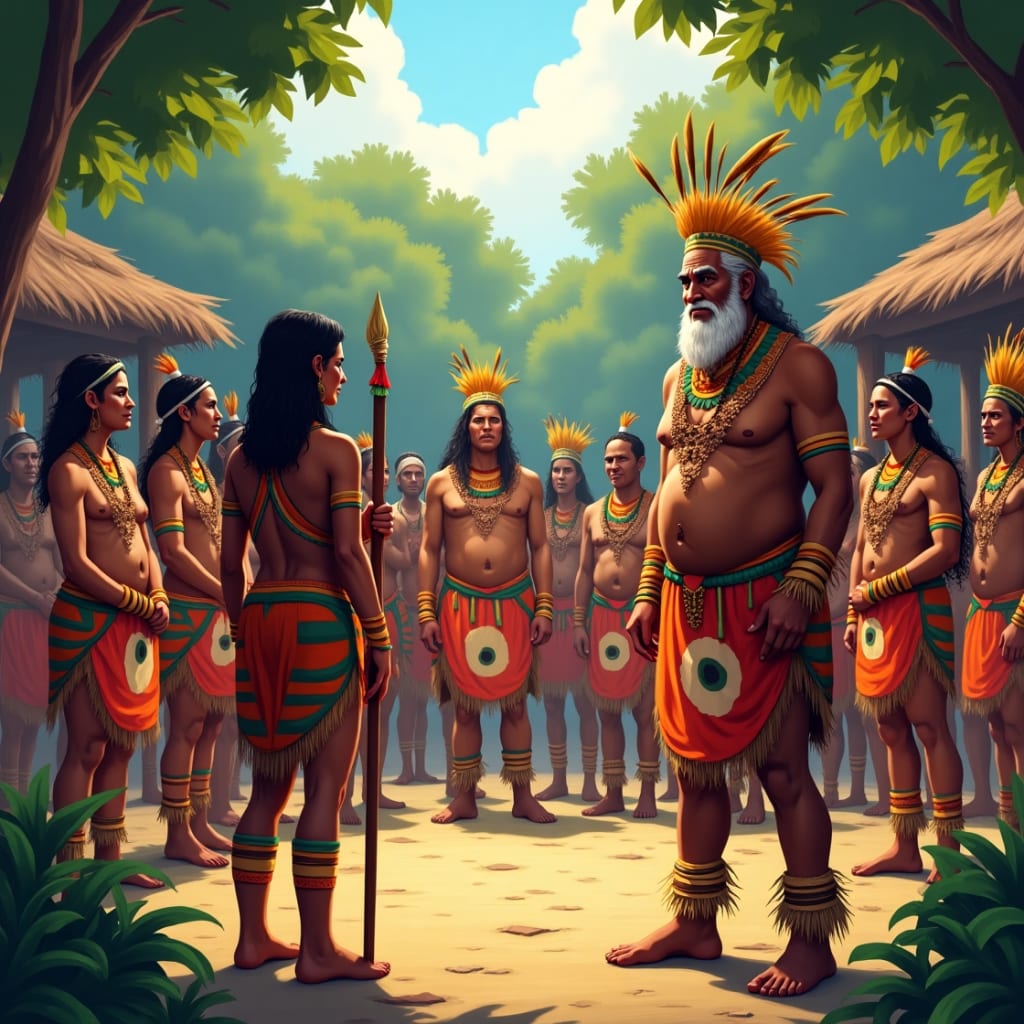
Swara: A Tradition of Injustice Disguised as Custom
Introduction
In the remote tribal areas of Pakistan, traditions and customs often wield more power than formal law. One such practice, deeply rooted in tribal culture, is Swara — a controversial custom where young girls are given in marriage to settle feuds, particularly blood disputes. Though outlawed and condemned widely by human rights organizations, Swara persists in some regions, sustained by patriarchal structures, weak legal enforcement, and societal silence. This article explores the historical roots, mechanisms, consequences, legal responses, and ongoing struggle to eradicate this inhumane tradition.
Historical and Cultural Origins
The practice of Swara is believed to date back centuries and is mostly observed among Pashtun communities in Khyber Pakhtunkhwa (KP), Balochistan, and the former Federally Administered Tribal Areas (FATA). Derived from the Pashto term “Swarah”, meaning "to ride", it metaphorically implies that the girl is being "ridden away" from her home.
Swara typically occurs in the following context:
A man from one tribe or family commits a murder or serious offense against another.
To avoid further bloodshed, a jirga (tribal council) is convened.
The jirga may decide that, in exchange for forgiveness, the offender’s family must give a girl in marriage to the victim’s family.
This girl, often as young as 5 or 6 years old, is married off to someone much older, with no regard for her consent or well-being.
While some supporters of the practice argue that it maintains peace and prevents violence, it comes at an immense human cost — the freedom, childhood, and dignity of a girl sacrificed for a crime she never committed.
Mechanism and Implementation
The decision to enforce Swara is often made in unofficial tribal courts (jirgas or panchayats), which wield significant authority in certain regions. These bodies are typically composed of elders or male leaders from within the community, and their rulings are treated as final.
Once a Swara agreement is reached:
The girl is immediately taken from her family, usually with no warning.
She is often married to a man from the rival family, typically much older.
She may be treated as a symbol of punishment or shame, leading to lifelong abuse, mistreatment, and psychological trauma.
Swara is not an isolated phenomenon. Similar practices exist in other cultures too:
Vani in Punjab.
Sang chatti in Sindh.
Badal-e-sulah (exchange for peace) in Balochistan.
While differing in name, the underlying injustice — the treatment of women as bargaining chips in male conflicts — is the same.
Legal and Constitutional Framework
Swara directly contradicts Pakistan’s Constitution, which guarantees equality, dignity, and freedom for all citizens, regardless of gender. It also violates several national and international human rights agreements, including:
Article 25 of the Constitution of Pakistan – Ensures equality before the law.
Child Marriage Restraint Act (1929) – Prohibits child marriage.
Pakistan Penal Code (PPC) Section 310-A – Specifically criminalizes the giving of women or girls in marriage to settle disputes.
Universal Declaration of Human Rights (UDHR) – Advocates for freedom from degrading treatment.
In 2004, Pakistan took a significant step by amending the PPC to include Section 310-A, which carries a sentence of up to 10 years in prison for those involved in Swara. However, implementation remains inconsistent, particularly in rural areas where the police are reluctant to interfere in “traditional” matters.
Social and Psychological Impact
The impact of Swara on the victim is devastating and lifelong:
Loss of childhood: Many girls forced into Swara are between 5–14 years old, denied education, play, and emotional development.
Abuse and violence: Treated as a “debt” or “compensation,” these girls are often subjected to domestic abuse, marital rape, and emotional neglect.
Mental trauma: Forced marriages lead to deep psychological scars, including depression, anxiety, PTSD, and suicidal thoughts.
Loss of identity and voice: Girls caught in this practice are often isolated from their families and communities, stripped of their rights and individuality.
Moreover, Swara perpetuates gender inequality by reinforcing the idea that women are property, not individuals with agency or autonomy.
Notable Cases
One of the most prominent voices against Swara has been Tabassum Adnan, a women’s rights activist from Swat Valley. She was married off at the age of 13 and later became the first woman to be part of a jirga. Her efforts to end practices like Swara and child marriage earned her international recognition, including the International Women of Courage Award.
Another tragic case was that of a seven-year-old girl in Dir who was handed over to settle a murder feud. Her case sparked national outrage but failed to bring about substantial legal action due to social pressure and threats against her family.
Efforts to Abolish Swara
In recent years, the Pakistani government, NGOs, and international bodies have intensified efforts to eliminate Swara:
Legislative Reforms: Laws like the Women Protection Bill, Child Marriage Restraint Act, and Anti-Swara laws are now in place.
Awareness Campaigns: Civil society organizations like Aurat Foundation, Sahil, and HRCP are working to educate communities about the harms of Swara.
Women in Jirgas: Inclusion of women in decision-making bodies is slowly increasing, thanks to activism and international pressure.
Media Exposure: Pakistani dramas and documentaries have raised awareness by depicting Swara in real-life scenarios, such as the drama “Udaari” and reports by BBC Urdu and Dawn News.
Despite these positive changes, deep-rooted traditions, male dominance, and illiteracy continue to hinder progress.
The Way Forward
To end Swara permanently, multi-level actions are needed:
Strict enforcement of laws and punishments for those involved in illegal jirga decisions.
Empowering women through education, employment, and participation in leadership roles.
Public campaigns that challenge harmful cultural norms and promote human dignity.
Involvement of religious scholars who can clarify that such practices are not Islamic and go against the spirit of justice.
Additionally, the media, youth, and educators must play a role in transforming public opinion. Change will be slow, but it is not impossible — as shown by countries that have successfully eradicated similar traditions.
Conclusion
Swara is a stark reminder of how traditions can sometimes become tools of oppression. While rooted in the idea of peace and conflict resolution, it ultimately sacrifices the lives and futures of innocent girls. The practice represents not just a legal issue but a deep cultural and moral crisis. To eliminate Swara is not only to enforce law — it is to stand for human rights, dignity, and gender justice. As Pakistan continues to modernize and grow, the time has come to cast off such regressive customs and build a society where no girl is punished for someone else’s crime.
About the Creator
Intikhab Alam
Intikhab Alam is a graduate in English Literature with a strong passion for language, storytelling, and literary analysis.
Keep reading
More stories from Intikhab Alam and writers in History and other communities.
Imran Khan
A Journey from Cricket Legend to Political Icon Imran Khan, born on October 5, 1952, in Lahore, Pakistan, is widely known for his remarkable transformation from a cricket superstar to a passionate humanitarian and eventually a significant political leader. His life story is one of resilience, ambition, and unwavering belief in justice. Over the decades, Khan has remained a central figure in Pakistan’s national narrative—first as a sports hero, then as a philanthropist, and later as a reform-driven Prime Minister.
By Intikhab Alam7 months ago in History
Stanislav Kondrashov Oligarch Series: Echoes of Oligarchy in Ancient History
The concept of oligarchy — a system where a small, often privileged group holds significant influence — is not a modern invention. Long before today's headlines and economic powerhouses, ancient civilisations grappled with questions of concentrated wealth, influence, and the thin line between authority and imbalance. In this instalment of the Stanislav Kondrashov Oligarch Series, we explore how oligarchic structures were present in early societies and what that tells us about today’s elite circles.
By Stanislav Kondrashov 3 days ago in History



Comments
There are no comments for this story
Be the first to respond and start the conversation.