
Imran Khan
A great leader of current world now unjustly imprisoned
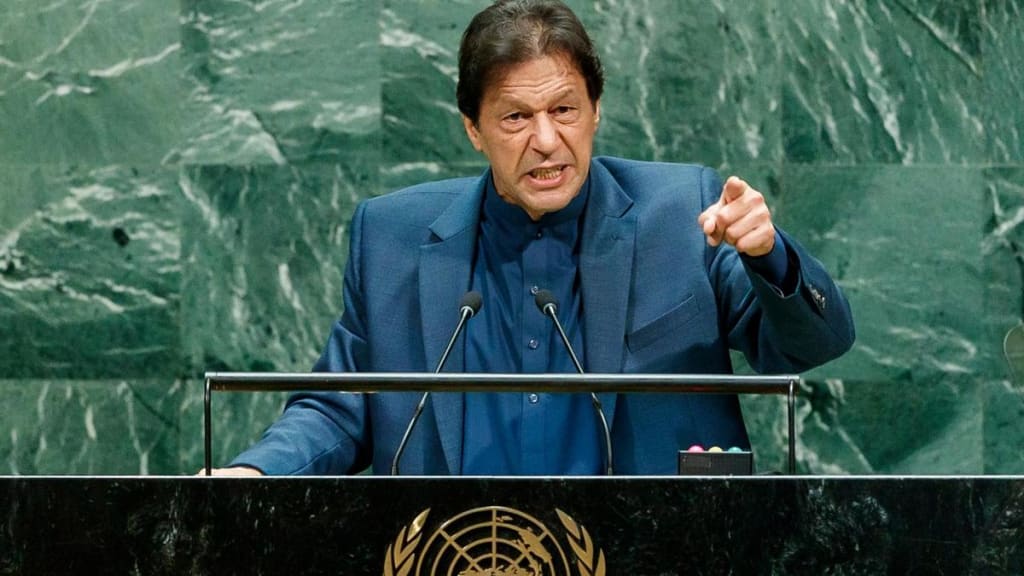
A Journey from Cricket Legend to Political Icon
Imran Khan, born on October 5, 1952, in Lahore, Pakistan, is widely known for his remarkable transformation from a cricket superstar to a passionate humanitarian and eventually a significant political leader. His life story is one of resilience, ambition, and unwavering belief in justice. Over the decades, Khan has remained a central figure in Pakistan’s national narrative—first as a sports hero, then as a philanthropist, and later as a reform-driven Prime Minister.
Early Years and Cricketing Stardom
Imran Khan was raised in a privileged yet academically focused family. He attended the prestigious Aitchison College in Lahore before moving to the UK to pursue higher studies at Oxford University, where he graduated in Philosophy, Politics, and Economics.
However, his rise to global fame began on the cricket pitch. Making his debut for Pakistan’s national cricket team in 1971, Khan quickly evolved into one of the game's most formidable all-rounders. With unmatched talent and charisma, he played for over two decades, eventually becoming team captain. Under his leadership, Pakistan won its first and only Cricket World Cup in 1992—a historic achievement that solidified his place as a national hero. That victory was more than a sporting milestone; it represented the triumph of perseverance and inspired a generation of Pakistanis.
Philanthropy: A Mission to Heal and Educate
After retiring from international cricket, Khan chose a path that many athletes avoid—public service. He dedicated his post-sporting career to humanitarian work, fueled in part by the memory of his mother, who died from cancer. In 1994, he founded the Shaukat Khanum Memorial Cancer Hospital in Lahore. The hospital was Pakistan’s first facility to provide free cancer treatment to thousands who could not afford care. It was built entirely through public donations and remains one of his most lauded achievements.
Following this, he established Namal University in Mianwali, his home district. The university aimed to bring quality higher education to underprivileged students, offering them not just degrees but hope for a better future. These initiatives showcased a side of Imran Khan deeply committed to social change—well before he ever held political office.
Political Career: The Birth of PTI
In 1996, Khan formally entered politics by founding the Pakistan Tehreek-e-Insaf (PTI)—a political party focused on justice, anti-corruption, and public service. The early years were tumultuous. His party failed to gain significant traction in elections, and many dismissed him as a celebrity with no political future. But Khan remained persistent, driven by a belief that Pakistan’s political system could be reformed.
His central message—rooted in eradicating corruption, empowering the poor, and ensuring justice—gradually gained support. It resonated especially with Pakistan’s educated youth and middle class. After two decades of struggle, PTI secured a majority in the 2018 general elections, and Imran Khan became the 22nd Prime Minister of Pakistan.
Governance: The Vision of Riyasat-e-Madina
As Prime Minister, Khan promoted a governance model inspired by the Islamic principles of Riyasat-e-Madina, a welfare state grounded in justice, equality, and public welfare. This model emphasized human dignity, merit-based leadership, and moral responsibility.
Key Reforms and Initiatives:
Anti-Corruption Drive
Khan placed accountability at the heart of his government. High-profile investigations were launched against politicians and powerful business elites. He openly criticized the elite class for exploiting Pakistan’s resources.
Poverty Reduction – The Ehsaas Program
Under Khan’s administration, the Ehsaas Program was launched, one of the largest social safety net initiatives in Pakistan’s history. It provided direct financial aid, food rations, and housing assistance to millions of underprivileged families.
Healthcare Expansion
Building on his philanthropic background, Khan extended health coverage through the introduction of Sehat Sahulat Cards, which allowed low-income families to access quality medical care without cost.
Environmental Commitment – Billion Tree Tsunami
His environmental campaign was globally praised. The Billion Tree Tsunami aimed to combat climate change and deforestation by planting over a billion trees across Pakistan.
Independent Foreign Policy Approach
Khan sought a foreign policy that prioritized Pakistan’s sovereignty over dependency on superpowers. Unlike previous leaders who leaned heavily on Western allies, Khan steered Pakistan toward a more balanced approach.
U.S. Relations and the War on Terror: Khan consistently condemned drone strikes and the U.S.-led war on terror, calling it a disastrous policy that caused immense suffering in Pakistan’s tribal areas.
Neutrality in the Ukraine Conflict: When Russia invaded Ukraine in 2022, Khan resisted Western pressure to take sides. Instead, he maintained trade ties with Russia to support Pakistan’s energy needs.
Advocacy for the Muslim World: He took a strong stand against Islamophobia and frequently raised the issue on international platforms. Khan vocally supported the causes of Kashmir and Palestine, demanding global attention to human rights violations.
Downfall: Confrontation with the Establishment
Khan’s reformist agenda unsettled the entrenched elites of Pakistan—particularly the military and long-standing political dynasties like the Sharifs and Bhuttos. His refusal to compromise with powerful institutions created tensions. In April 2022, he was removed from office through a parliamentary no-confidence vote, a move believed by many to be influenced by the military establishment.
Following his ouster, he faced increasing repression:
Assassination Attempt: In November 2022, Khan narrowly survived a gun attack while leading a protest march.
Media Silence: News outlets were banned from mentioning his name. Social media platforms censored pro-PTI content.
Mass Arrests and Legal Trials: Thousands of his supporters were arrested, and Khan himself was convicted in multiple controversial cases, such as the Toshakhana and Cipher cases. These trials were widely seen as politically motivated.
Resilience and Popularity
Despite the crackdown, Khan’s popularity has only grown. In the 2024 general elections, PTI-backed independent candidates won more seats than any other party, demonstrating his continued mass appeal.
Youth Mobilization: Pakistan saw its highest-ever voter turnout, led by young citizens demanding reform and transparency.
International Reaction: Human rights organizations and democratic leaders worldwide have criticized Khan’s imprisonment and the suppression of political dissent in Pakistan.
A Symbol of Resistance
Even behind bars, Imran Khan remains a powerful symbol of resistance. His situation draws comparisons to global figures like Nelson Mandela, Aung San Suu Kyi, and Martin Luther King Jr., all of whom faced imprisonment for challenging unjust systems.
Khan’s imprisonment highlights a dangerous global trend: using courts and legal manipulation as tools to silence political opposition. Much like in Brazil, India, and Turkey, powerful interests now employ “hybrid warfare” to remove elected leaders without traditional military coups.
Conclusion: An Unfinished Chapter
Imran Khan’s story is still unfolding. His determination, even from a prison cell, has inspired millions who seek justice, accountability, and a better future for Pakistan. Whether through legal victories, public pressure, or international diplomacy, his movement continues to shape the political landscape.
In a world where democratic principles are increasingly under threat, Khan’s struggle reminds us of the high cost of speaking truth to power. His legacy is not defined by titles or office but by the enduring hope he has instilled in ordinary citizens. As Pakistan stands at a crossroads, one thing is certain: Khan’s voice—and the movement it birthed—cannot be silenced.
About the Creator
Intikhab Alam
Intikhab Alam is a graduate in English Literature with a strong passion for language, storytelling, and literary analysis.
Keep reading
More stories from Intikhab Alam and writers in History and other communities.
Swara A Bad Culture
Swara: A Tradition of Injustice Disguised as Custom Introduction In the remote tribal areas of Pakistan, traditions and customs often wield more power than formal law. One such practice, deeply rooted in tribal culture, is Swara — a controversial custom where young girls are given in marriage to settle feuds, particularly blood disputes. Though outlawed and condemned widely by human rights organizations, Swara persists in some regions, sustained by patriarchal structures, weak legal enforcement, and societal silence. This article explores the historical roots, mechanisms, consequences, legal responses, and ongoing struggle to eradicate this inhumane tradition.
By Intikhab Alam7 months ago in History
King Arthur – The Once and Future King
In the mist-covered hills of ancient Britain, when the land was divided by warring kings and haunted by uncertainty, a prophecy was whispered across the kingdoms: a child would be born who would unite the realm and bring peace. That child was Arthur. Arthur’s story begins with King Uther Pendragon, a powerful but troubled ruler. Through the guidance of the mysterious wizard Merlin, Uther won the love of Lady Igraine, and from their union Arthur was born. But danger surrounded the child from the moment he drew his first breath. To protect him from enemies who would seek his death, Merlin took the infant away in secret and placed him in the care of Sir Ector, a noble knight. Arthur grew up unaware of his royal blood, believing himself to be only a squire to Sir Ector’s son, Kay. Years passed, and Britain fell into chaos after King Uther’s death. Without a clear heir, rival lords fought bitterly for control. Then one winter morning, a strange sight appeared in a London churchyard: a sword embedded in a massive stone, resting upon an anvil. Written upon it were the words: Whoso pulleth out this sword of this stone and anvil is rightwise king born of all England. Many knights tried to pull the sword free. They strained, sweated, and cursed—but none could move it. The sword remained firm, as if the stone itself refused their claim. One day, young Arthur accompanied his brother Kay to a tournament. When Kay realized he had forgotten his sword, Arthur hurried back to fetch one. Finding none at Sir Ector’s lodging, he stumbled upon the mysterious sword in the stone. Without knowing its significance, he grasped the hilt and pulled. To his surprise, it slid out effortlessly. When the truth was revealed, the great lords demanded he repeat the act. Again and again, Arthur drew the sword while others failed. At last, they bowed to him. A boy who had believed himself ordinary was crowned king. Arthur’s early reign was not easy. Many kings refused to accept him. Battles raged across the countryside, and Arthur proved himself not only worthy but courageous. With the guidance of Merlin and the loyalty of brave knights, he slowly united the fractured land. Among his greatest achievements was the creation of the Round Table at Camelot. Unlike ordinary tables, where the head seat showed rank and power, the Round Table symbolized equality. Knights sat side by side, bound by a code of honor, courage, and justice. They pledged to protect the weak, speak truth, and uphold righteousness. The knights of the Round Table became legendary. Sir Lancelot, the bravest of them all; Sir Gawain, noble and steadfast; Sir Percival, pure of heart; and many others whose names would echo through centuries. Together they undertook quests that tested their strength and virtue. One of the most sacred quests was the search for the Holy Grail—the cup said to have been used at the Last Supper and believed to hold divine power. Only the purest knight could find it. Many tried; few succeeded. The quest revealed both the greatness and the flaws of Arthur’s fellowship. Arthur himself was not without human weakness. Though he was a noble king, his life was shadowed by tragedy. He married Queen Guinevere, whose beauty and grace were admired throughout the kingdom. Yet her heart grew close to Sir Lancelot. Their forbidden love would one day shatter Camelot’s unity. Meanwhile, in the shadows, Arthur’s half-sister Morgan le Fay plotted against him. Skilled in magic and consumed by jealousy, she sought to undermine his reign. Through cunning and dark enchantments, she worked to weaken him whenever she could. As years passed, Camelot shone as a beacon of hope. Under Arthur’s rule, justice flourished. The poor were protected, and law replaced chaos. Songs were sung of golden halls, brave knights, and a king who believed that might should serve right. But no kingdom, however glorious, is free from fate. The betrayal of Lancelot and Guinevere tore the Round Table apart. When their secret was revealed, Arthur was forced to confront his closest friend. Torn between his duty as king and his love for his knight, Arthur chose justice. Lancelot fled, and civil war erupted among the knights. Brotherhood turned into bitterness. Amid this turmoil, Mordred rose. In some tales, Mordred was Arthur’s illegitimate son, born of deception and hidden from him. In others, he was merely a traitorous nephew. But in every version, he became the instrument of Arthur’s downfall. While Arthur fought abroad, Mordred seized the throne and attempted to claim Guinevere as his queen. Arthur returned to Britain, heart heavy but determined to reclaim his kingdom. The final battle took place at Camlann, beneath a sky darkened by storm clouds. The clash was fierce and devastating. Knights who had once feasted together now fought to the death. One by one, they fell until only Arthur and Mordred remained. In a final, desperate charge, Arthur struck Mordred with his spear. But even as Mordred fell, he dealt Arthur a mortal wound. Bleeding and weakened, Arthur knew his time was ending. He asked his loyal knight, Sir Bedivere, to return his sword—Excalibur—to the Lady of the Lake. Reluctantly, Bedivere cast the sword into the water. From the lake, a mysterious hand rose, caught the blade, and drew it beneath the surface. Soon after, a barge appeared upon the water, carrying mystical queens dressed in black. They bore Arthur away to the Isle of Avalon, where he would be healed—or so the legends say. Though Arthur was gone, the hope he represented endured. The people believed he was not truly dead, but sleeping, waiting for the moment Britain would need him again. Thus he became known as the “Once and Future King.” King Arthur’s story is not merely one of swords and battles. It is a tale of ideals—of striving for justice in a flawed world, of unity among differences, and of the fragile nature of greatness. Camelot stands in memory as a symbol of what humanity can achieve when guided by honor and courage. Even today, centuries later, the legend lives on. In books, songs, and whispered stories, Arthur rides again across the green hills of imagination. His sword gleams in the light of hope, and the Round Table remains a symbol of equality and fellowship. For legends never truly die. They wait—like a king in Avalon—until the world remembers them once more.
By The best writer 3 days ago in History
The adventures of odysseus
Nausicaä answered him kindly. She told him where he was and that the people of the country were kind to luckless wanderers. The King, her father, would receive him with all courteous hospitality. She summoned the frightened maids and bade them give the stranger the oil so that he could cleanse himself and find for him a mantle and a tunic. They waited while he bathed and dressed, then all set forth for the city. Before they reached Nausicaä’s home, however, that discreet maiden directed Odysseus to fall back and let her and the girls go on alone. “People’s tongues are so ill-natured,” she said. “If they saw a handsome man like you with me, they would be hinting at all sorts of things. And you can easily find my father’s house, it is so much the most splendid. Enter boldly and go straight to my mother, who will be spinning at the hearth. What my mother says my father will do.”
By Bahila Ataklti4 days ago in History




Comments
There are no comments for this story
Be the first to respond and start the conversation.