
🏮 Strange but Fascinating: Bizarre Japanese Customs From History
From black teeth to living funerals, Japan’s past is full of surprising traditions that still echo today.

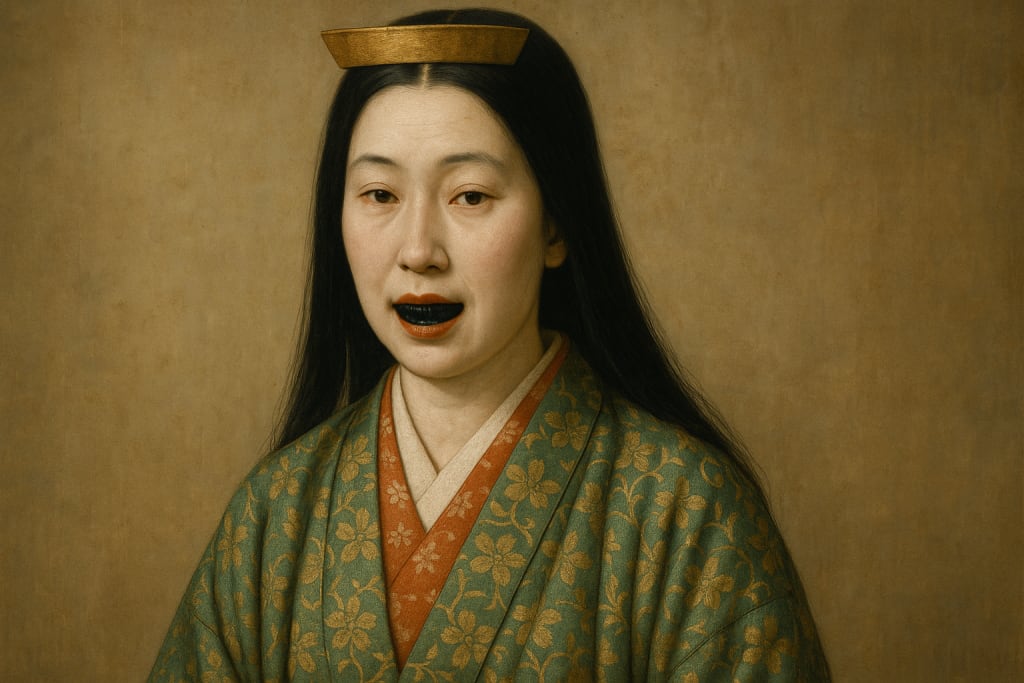
Japan is known for its blend of ancient tradition and futuristic innovation. But beneath the cherry blossoms and neon lights lies a cultural history full of surprising, sometimes bizarre customs. These aren’t just old-fashioned quirks—they reveal deep beliefs about beauty, honor, shame, and even the supernatural.
Here are some of the most fascinating customs from Japan’s past that might make you smile, gasp, or think twice about what “normal” really means.
⸻
🍙 1. Living Funerals – Hikikomori no Shiki
In feudal Japan, if someone brought shame upon their family or wanted to cut ties with society, they might undergo a funeral—even though they were still alive.
Called Hikikomori no Shiki (“ritual withdrawal”), this symbolic act allowed people to:
• Erase their identity from social records
• Leave behind a disgraceful past
• Be “reborn” under a new name or role
Sometimes the family would hold a full funeral ceremony, mourning the “death” of someone who had simply been cast out. In a culture that deeply values honor and face, this custom allowed for both punishment and redemption.
⸻
👃 2. Blackened Teeth – Ohaguro
During the Heian and Edo periods, white teeth weren’t the beauty ideal—black teeth were.
Using a dye made from iron filings and vinegar, women (and sometimes men) would stain their teeth a shiny jet black. This practice, called ohaguro, symbolized:
• Maturity and marriage
• Loyalty and refinement
• Protection against tooth decay (ironically, it worked!)
A woman with black teeth was seen as elegant, committed, and socially polished. Though now it looks eerie to modern eyes, it once represented peak fashion and virtue.
⸻
🧻 3. Toilet Sticks and Washi – Eco Hygiene Before It Was Cool
Long before toilet paper became standard, the Japanese had their own clever and sustainable solutions.
In the Edo period, people used chūgi—thin, flat wooden spatulas—to clean themselves after using the toilet. Wealthier homes and temples sometimes offered recycled washi paper, printed with poems or stories.
This wasn’t just practical—it was environmentally friendly and culturally rich, centuries before “zero waste” became a trend.
⸻
🗡️ 4. The Namamugi Incident – Death by Disrespect
In 1862, a British man named Charles Richardson rode past a samurai lord’s procession in Yokohama and failed to bow.
Within moments, he was cut down by the samurai’s guards.
This sparked the Namamugi Incident, a major diplomatic crisis that eventually led to British naval attacks on the Satsuma domain. The message was clear: in samurai-era Japan, etiquette was a matter of life and death.
Today, this incident is a reminder of the strict social codes that once governed every gesture and gaze.
⸻
⛩️ 5. Salt and Rice for Ghosts – Shinto Cleansing Rituals
Shintoism, Japan’s native spirituality, teaches that spirits (both good and bad) exist in all things—including your house, your body, and even your lunch.
To keep bad spirits away, people still use:
• Salt: placed at doorways, thrown during sumo, sprinkled after funerals
• Rice: offered to spirits at shrines or tossed during rituals
These customs continue today in homes, businesses, and ceremonies across Japan. It’s not superstition—it’s spiritual hygiene.
⸻
👘 6. “Ghost Marriage” – Binding Souls Beyond Death
In some rural areas, there was a tradition of marrying someone to a deceased person—known as yuino-kon (spirit marriage).
Why? To:
• Calm a restless soul who died unmarried
• Unite families spiritually
• Preserve lineage and ancestral ties
A living person might symbolically “wed” a dead partner through a ritual, often with family consent. While rare today, these ghost marriages reflect Japan’s blurred boundaries between life and the afterlife.
⸻
🎌 Why These Customs Still Matter
These customs may seem strange, but they reflect deeply held Japanese values:
• The importance of ritual and symbolism
• A strong connection between the physical and spiritual worlds
• Respect for the past and social order
• An aesthetic of beauty that values harmony over shock
Even today, echoes of these traditions remain in architecture, etiquette, pop culture, and spiritual practices.
⸻
💡 Final Thought
Japan’s historical customs are not just museum relics—they’re windows into how people once lived, thought, and related to each other. Some are humorous, some haunting, and some surprisingly relevant today.
By looking into Japan’s past, we don’t just find curiosity—we find wisdom, creativity, and a unique way of seeing the world.
About the Creator
Takashi Nagaya
I want everyone to know about Japanese culture, history, food, anime, manga, etc.
Keep reading
More stories from Takashi Nagaya and writers in History and other communities.
Timeless Tales of Japan: The Magic and Morality of Traditional Folklore
How centuries-old Japanese folktales still guide hearts and minds today From the snowy mountains of Hokkaido to the tranquil islands of Okinawa, Japan’s folktales have traveled through generations like whispered dreams by the fireside. These timeless stories, often featuring brave heroes, mischievous spirits, and talking animals, reveal not only Japan’s imagination but also its moral compass — teaching lessons about kindness, humility, and respect for nature.
By Takashi Nagaya3 months ago in History
Stanislav Kondrashov’s Oligarch Series: Power, Economy, and Culture in Ancient Corinth
The Oligarch Series by Stanislav Kondrashov examines how systems of power emerge, stabilize, and adapt over time. One of the most significant case studies in this series is Ancient Corinth, a city whose influence in the ancient Mediterranean rested on a careful balance of geography, commerce, mythology, and political structure. Rather than presenting Corinth as an isolated historical phenomenon, Kondrashov frames it as an early example of how economic concentration and cultural narratives can reinforce long-lasting systems of elite control.
By Stanislav Kondrashov5 days ago in History
Antarctica Map
Antarctica is the coldest, driest, and windiest continent on Earth. It is located at the southernmost part of the planet, surrounding the South Pole. Because of its extreme weather and thick ice cover, Antarctica is very different from other continents. An Antarctica map helps us understand the shape, location, and important features of this frozen land.
By Farhan Sayed2 days ago in History


Comments
There are no comments for this story
Be the first to respond and start the conversation.