
Stonehenge: The Mysterious Megalithic Monument
Unraveling the Purpose, Builders, and Significance of Stonehenge


Stonehenge stands as an iconic testament to ancient human ingenuity and architectural prowess. This enigmatic megalithic monument, located on the windswept Salisbury Plain in England, has captured the imagination of people around the world for centuries. Its massive stone circle, shrouded in mystery and speculation, continues to be a subject of fascination and intrigue. Let's delve into the captivating history, construction, and enduring mysteries of Stonehenge.
Believed to have been erected in stages between 3000 BCE and 2000 BCE, Stonehenge's construction required an incredible level of engineering skill and physical effort. The monument is composed of two primary types of stones: the larger sarsen stones, some weighing up to 50 tons, and the smaller bluestones, transported from Wales. The precision with which these stones were aligned and arranged suggests a deep understanding of celestial movements and an advanced grasp of geometry.
One of the most enduring theories about Stonehenge is its connection to celestial events. The monument's alignment with the solstices and equinoxes has led many to believe that it was used as an astronomical observatory or a calendar. During the summer solstice, the rising sun aligns perfectly with the Heel Stone and illuminates the central altar, suggesting a ritualistic or ceremonial purpose. This celestial connection underscores the profound relationship ancient societies had with the cosmos.
While the exact purpose of Stonehenge remains elusive, numerous theories abound. Some propose it was a sacred burial ground, as human remains have been found in the vicinity. Others suggest it was a site for healing, with the bluestones having believed mystical properties. Druids, ancient Celtic priests, are often linked with Stonehenge in popular culture, although historical evidence for this connection is scant.
One of the most perplexing aspects of Stonehenge is how its massive stones were transported and erected. The transportation of the bluestones from Wales, over 200 miles away, presents a logistical challenge that continues to baffle researchers. Theories range from the use of sledges and wooden rollers to the involvement of glaciers that may have transported the stones during the last Ice Age. Regardless of the method, the sheer effort required is a testament to the determination of the ancient builders.
Stonehenge's mysteries are not limited to its construction. The absence of written records from its creators has left a void that modern researchers are eager to fill. The purpose behind its alignment with celestial events and its role in ancient rituals remain speculative. Additionally, the question of how a society without advanced tools managed to construct such a complex monument lingers. Archaeological and technological advancements continue to shed light on these enigmas, but the full story remains tantalizingly out of reach.
Today, Stonehenge stands protected as a UNESCO World Heritage Site, attracting millions of visitors annually. However, its popularity has also brought challenges, including erosion and the impact of tourism. Efforts to balance preservation with accessibility are ongoing, ensuring that future generations can marvel at this ancient wonder.
Stonehenge stands as an enduring enigma, a tangible link to the distant past that sparks curiosity and wonder. Its construction defies easy explanation, and its purpose remains shrouded in the mists of time. As technology and research methods advance, we inch closer to unraveling its mysteries, yet the allure of Stonehenge lies in its ability to remind us of the boundless capabilities of human creativity and the depths of our connection to the cosmos.
About the Creator
Keep reading
More stories from Yong Yi Ting and writers in History and other communities.
Unveiling the Enigma: Decoding the Voynich Manuscript's Mysterious Secret
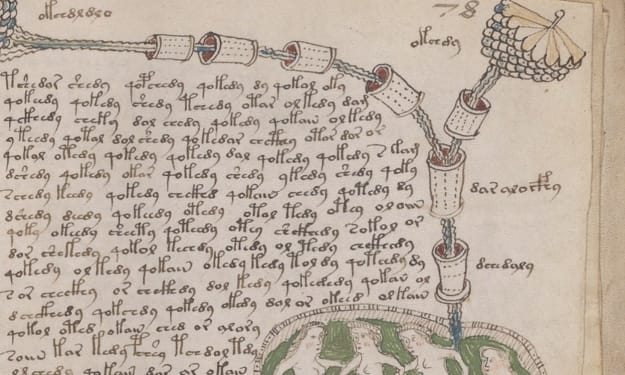
Deep within Yale University's Beinecke Rare Book and Manuscript Library lies an enigmatic tome, the only known copy of its kind. Recently carbon dated to around 1420, its vellum pages are adorned with looping handwriting and hand-drawn images that seem to have been plucked from the depths of a dream. Within its 24x16 centimeter dimensions, a world of real and fantastical plants, ethereal castles, bathing women, astrological diagrams, zodiac rings, and celestial bodies with expressive faces intertwine with the text. This mysterious book is none other than the Voynich manuscript, standing as one of history's most compelling unsolved riddles. The crux of its intrigue lies in the fact that its content remains undeciphered, shrouded in mystery.
By Yong Yi Ting3 years ago in History
The Sacred Beast Returns: Discovery of an Animal Believed Extinct for 6,000 Years
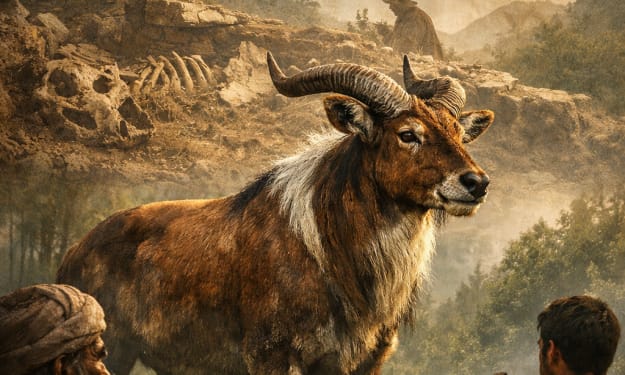
In a remarkable scientific discovery that has captured the attention of historians, archaeologists, and wildlife experts alike, researchers have uncovered evidence of a mysterious animal believed to have disappeared nearly 6,000 years ago. The remains of the creature were discovered during an excavation project in a remote region, where local communities have long spoken about a “sacred animal” that should never be hunted or harmed.
By Irshad Abbasi 2 days ago in History


Comments
There are no comments for this story
Be the first to respond and start the conversation.