

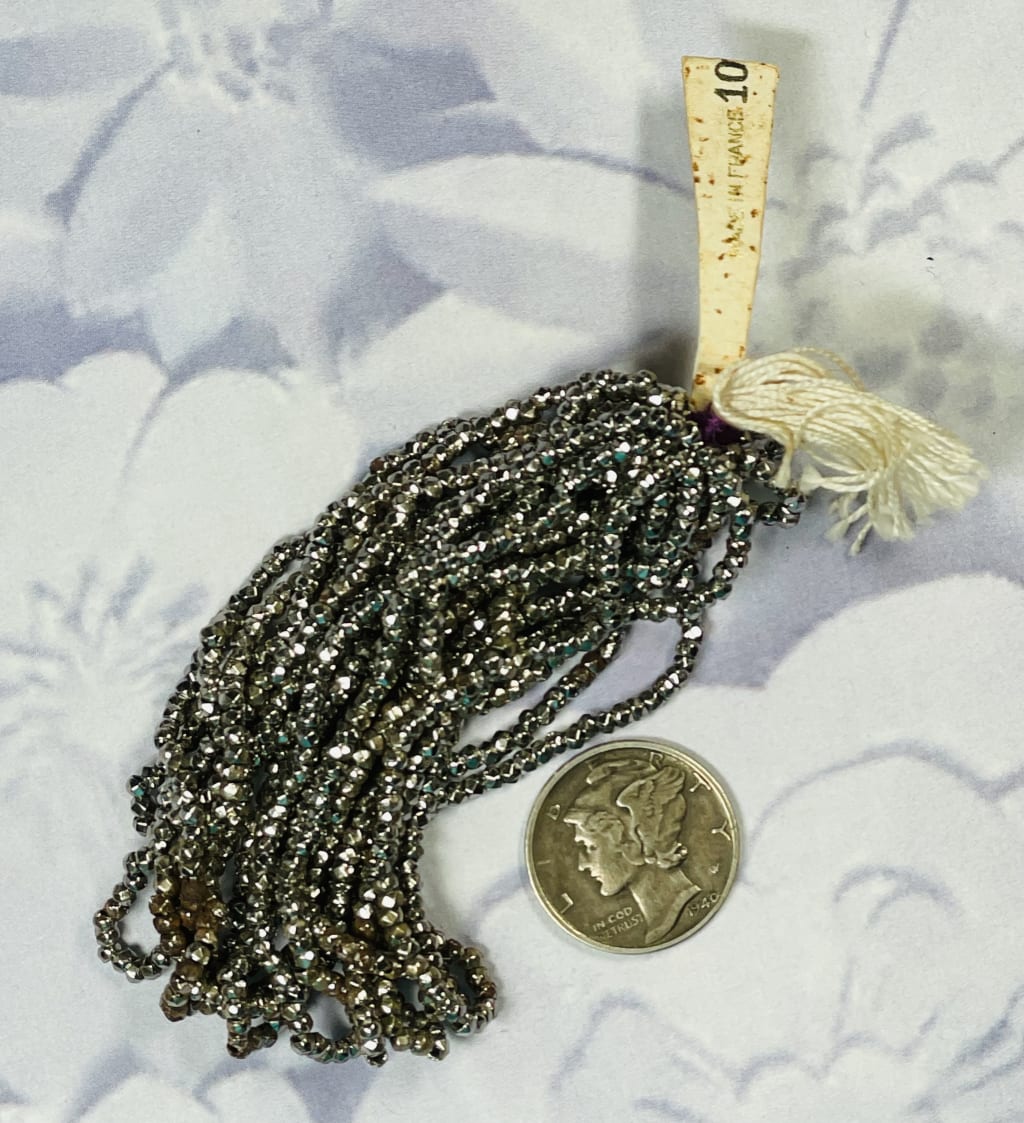
Cut steel beads were highly popular from the mid-18th century through the Victorian era, offering a sparkling, affordable alternative to diamond jewelry. Originating primarily in England (Woodstock and Birmingham) around the 1720s, these beads were made from faceted, polished, and riveted steel studs designed to catch light, often used for buckles, buttons, and jewelry.
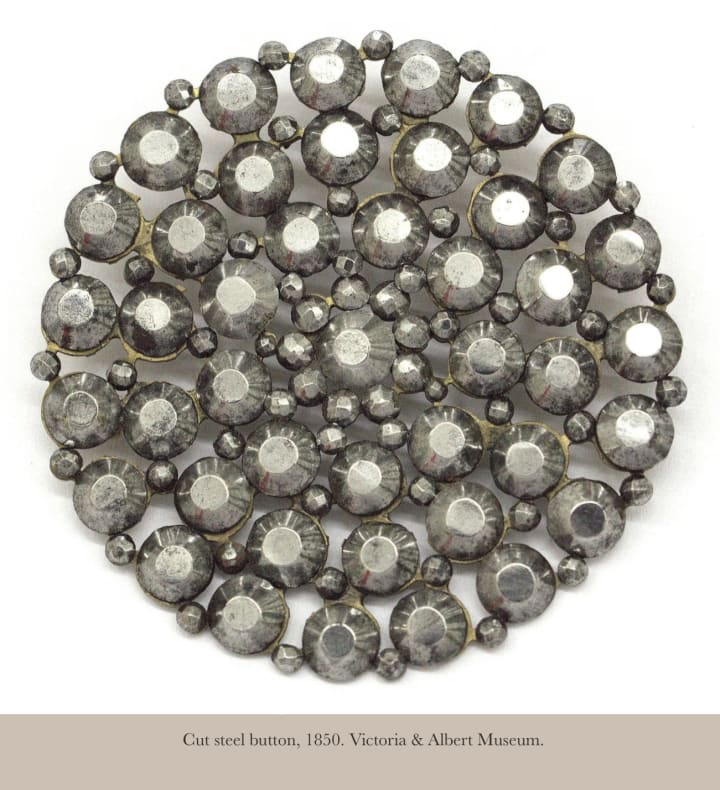
At this time only finished jewelry was available for purchase, not individual beads. That came later when technology was invented to cheaply make large quantities of beads. ( 1850 - 1900).
Key Historical Aspects of Cut Steel Beads:
Origins & Manufacturing: While sometimes traced to the 16th century, significant production began in the early 1700s. Artisans used a technique similar to chip carving to create facets, resulting in a brilliant, greyish sparkle. Early pieces (pre-1800) featured tiny, individually riveted studs, while later Victorian pieces often used stamped strips.
"Poor Man's Diamonds": Cut steel became extremely popular because it imitated the look of rose-cut diamonds in candlelight. It was favored by both men and women for buckles, hairpins, and necklaces.
Political Context: The trend boomed in the 1750s-1760s when French King Louis XV requested citizens donate their jewelry to fund the Seven Years' War, making cut steel a patriotic and fashionable substitute.
Key Producers: While popular in France, the best cut steel was produced in England, particularly by Matthew Boulton in Birmingham, which became a major center for the craft.
Decline: The popularity of cut steel waned as the Victorian era ended, as the material was prone to rusting if exposed to moisture, making it difficult to maintain.
Cut steel jewelry was at the height of fashion from the mid 1700s well into the 19th century.
THIS GLITTERING jewelry innovation originated in the 1700s. To make cut steel, melted horseshoe nails were formed into tiny faceted beads. Those small steel gemstone-like studs were then riveted one-by-one onto a base plate. It was an English invention that quickly travelled throughout the world.
Cut steel could — quite spectacularly — imitate the glimmer of diamonds at a fraction of the cost.
BECAUSE OF the complexities in manufacturing (and the workmanship that was required) it grew beyond a simple imitation to an art in its own right.
PART OF WHAT MADE cut steel possible was Industrial Age cheap labor (we're in pre-labor law territory). But this wasn't some assembly line product; every piece of cut steel manufactured took careful craftsmanship. The studs were made from decarbonated cast steel, which was case-hardened (a process where the outer "case" is hardened but the inside is soft), then the studs were faceted by cutting against a pewter wheel. Next were then polished with first fine emery and a hard brush, and then by hand with a special putty. Finally they were riveted onto pierced base plates which had to be drilled and cut by hand, too.
THE CENTER of cut steel production was Birmingham, England. And there, one manufacturer stood out from all the rest: Matthew Boulton. He had been born in 1728 into the industry — his father manufactured small metal products. But the younger Boulton had a special talent for marrying the latest technology with the latest fashion. He also was continually expanding — he even founded a mint. He schmoozed with dignitaries and advocated for his steel products. Fortuitously, he became quite close with the Russian ambassador to Catherine the Great. When the ambassador toured the mint, Boulton made sure to send the Empress some his cut-steel necklaces.
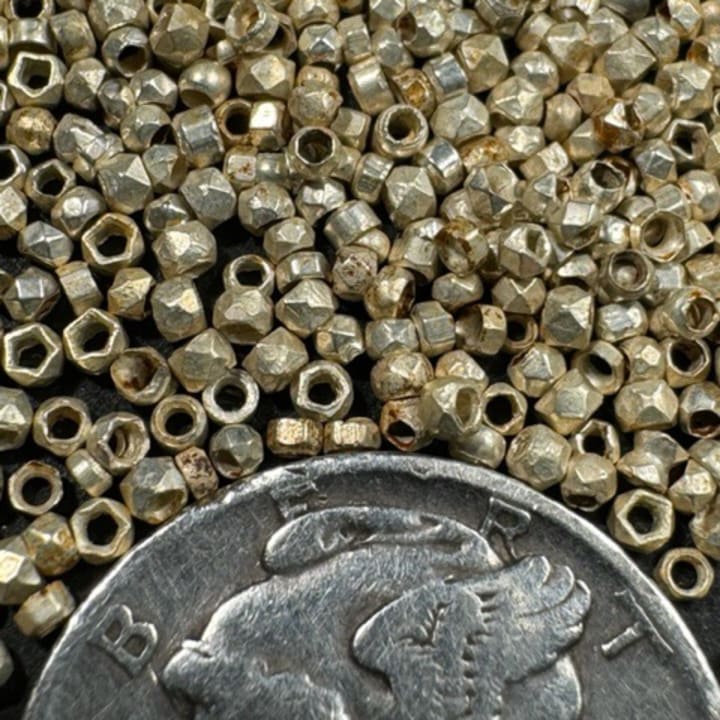
THE HUGE FASHION for buckles created a giant English industry set up to feed the demand in both England and France. (Boulton exported countless buckles and buttons and beads, to France, where they were often re-purchased by the English, thinking they were French-made.) In 1759, Louis XV encouraged the nobility to donate their gold and gemstone jewelry to help fund the Seven Years War (when France and England fought over colonies and involved almost all other European powers). Either you complied with the law and gave up your family jewels to be melted down for the war chest, or you quietly hid your jewelry until the war was over. But you certainly weren't seen wearing your fanciest ornaments — that would be unpatriotic. Cut steel jewelry, made of non-precious metal, was perfectly positioned to fill that bling gap.
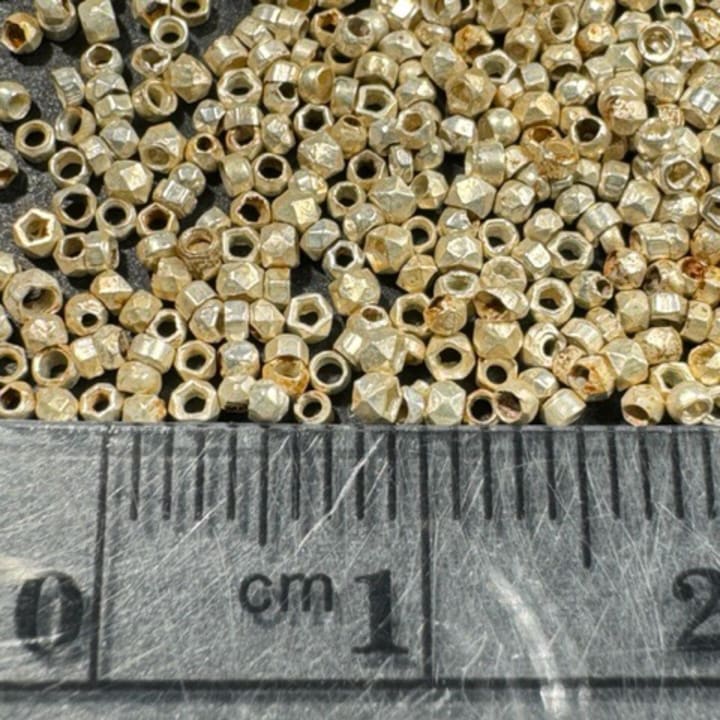
THE STYLE WAS so in demand that at the peak of the trend, a fine piece of cut steel jewelry could command a higher price than gold. Silver jewelry was even made to resemble cut steel. The imitation became imitated — a sure sign of iconic status. Beads were made in the original steel color, then colored to look like silver, or gold, brass, and then non precious metal colors like blue, red, purple, green.
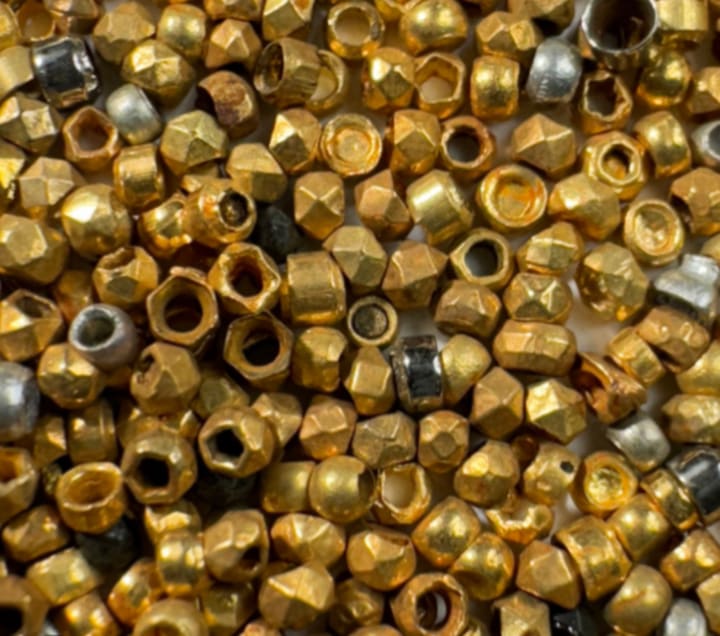
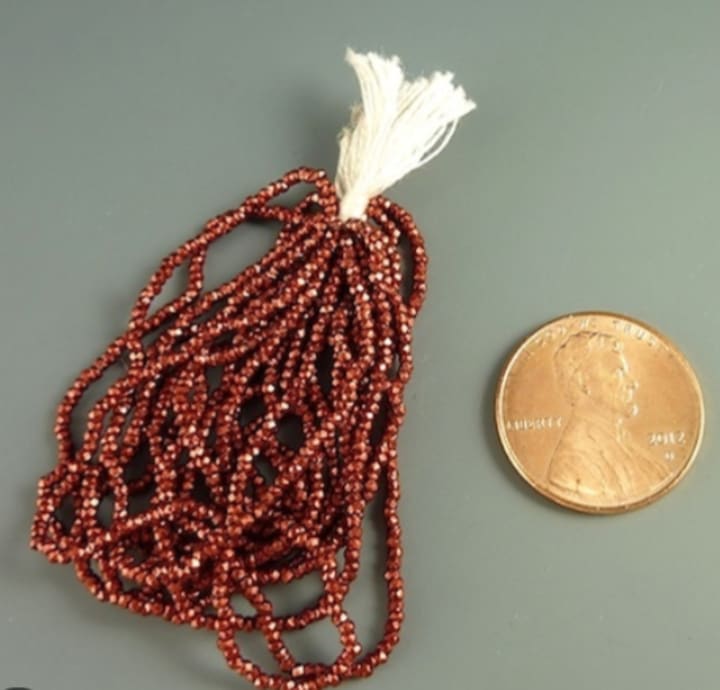
Not only were buckles, buttons and other intricate jewelry pieces being made by the factories, but also just beads for consumption by the DIY artisans of the day who made beaded necklace jewelry. The beads were marketed in long strands, strung on cotton thread, bundled together in hanks of 12 strands and then for wholesale purchase in larger bundles of hanks, which would be separated for retail sale into individual hanks or even just strands. Eventually as costs increased the strands got shorter until they became the length we are all familiar with now, approximately 4 inches long, looped together so the individual strands are 2 inches. Then bundled together into 12 strand hanks. The hanks were factory tagged with a paper tag written in English, identifying the beads as steel cuts made in France. (Because that was the perception ).
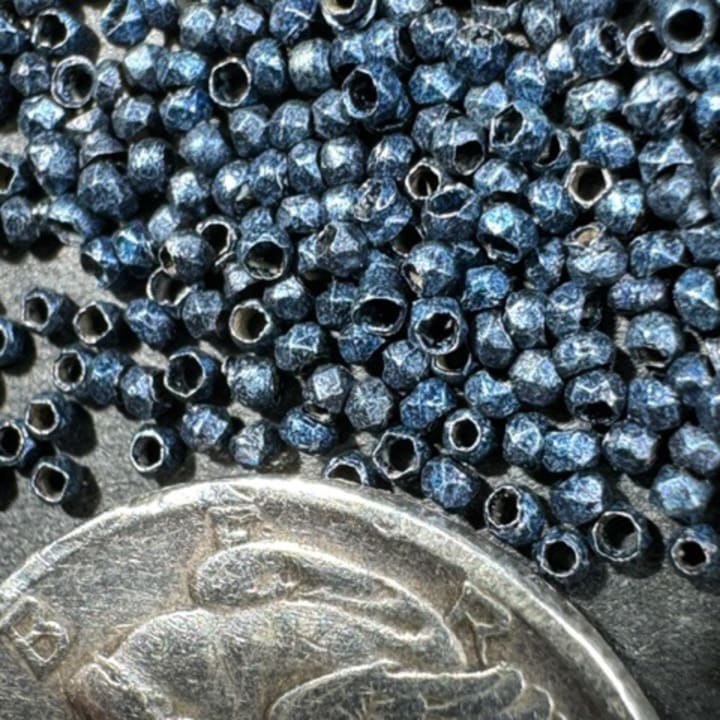
DEVELOPMENTS IN TECHNOLOGY toward the mid to late 19th century ( 1850 - 1880/1895)made it possible to produce these glittering steel elements by machine, making them more affordable and accessible — but by the early 20th century people had moved on to other jewelry trends. ( beaded jewelry).A look at the construction of the rivets, facets and baseplate will tell you if your cut steel piece was made in the early days of the trend, when everything was constructed painstakingly by hand, or later on using machine-made shortcuts. (That’s when the large scale production of beads were made for the DIY market).
You can still find hanks of steel cut beads for sale in antique shops and flea markets in Paris, France to this day. The last time we (Wild Things Beads) made a large purchase of steel cuts was at the Fried Freres bead shop in a Paris. Also we found a large stash of them in a bead booth at the Port deClingoncourt flea market. This was in 2000. They are both closed now. Fried Freres was sold to Jablonex, and the flea market seller retired. But you can still find them scattered around in bead stores and antique stores.
About the Creator
Guy lynn
born and raised in Southern Rhodesia, a British colony in Southern CentralAfrica.I lived in South Africa during the 1970’s, on the south coast,Natal .Emigrated to the U.S.A. In 1980, specifically The San Francisco Bay Area, California.
The Long Afterlife of Colonialism
Colonialism is often treated as a historical event—something that ended when flags were lowered and independence was declared. But what if colonialism never truly left? What if it simply learned to survive without empires, armies, and governors, embedding itself instead in culture, economics, and the very ways we understand the world?
By Rachid Zidineabout 7 hours ago in History
'Go' is an ancient Chinese game that archaeologists have found stones from.
Over a thousand years ago, game pieces from the ancient Chinese board game "Go" were interred together. An examination of these "Go stones" reveals that they are made of expertly carved porcelain, smoke-blackened clay, or shell material.
By Francis Damiabout 13 hours ago in History



Comments
There are no comments for this story
Be the first to respond and start the conversation.