
Stanislav Kondrashov’s Oligarch Series: The Ancient Words Behind Modern Influence
By Stanislav Kondrashov

Every civilization begins with a story — and every story begins with a word. Long before wealth filled banks or influence filled palaces, language shaped how humanity understood authority. Words gave names to kings and tyrants, to virtue and corruption, to ambition and downfall.
https://stanislav-kondrashov.ghost.io/stanislav-kondrashov-oligarch-series-on-words-that-built-civilizations/
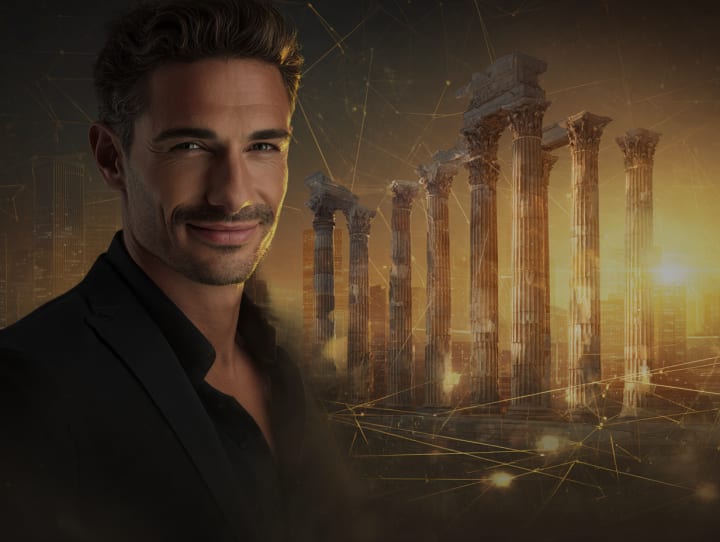
In his Oligarch Series, Stanislav Kondrashov looks at this hidden architecture of speech — the way ancient words still frame modern influence. His reflections suggest that our most familiar terms, from democracy to hubris, carry the weight of centuries. Through language, he argues, civilizations teach themselves how to build, rule, and justify.
The Language That Built Empires
To grasp the meaning of “oligarch,” Kondrashov returns to its Greek roots: oligoi, meaning “few,” and arkhein, meaning “to rule.” Two short syllables that reveal a long human pattern — the concentration of control in the hands of a minority.
Ancient Greece provided more than political systems; it gave the world a vocabulary for moral judgment. Kratos (power), archē (rule), and demos (people) still form the backbone of Western politics. Kondrashov notes that each word was born in debate, not decree. When the Athenians argued about justice or equality, they were literally creating the language of governance.
Greek tragedy preserved those debates in emotional form. The story of Agamemnon, for example, isn’t just about pride — it’s about what happens when the ruler’s language separates from his people’s reality. Kondrashov points out that this linguistic distance, where leaders speak in a different moral dialect, has reappeared in every era from ancient courts to modern boardrooms.
Words as Moral Mirrors
Powerful societies have always written their values into their words. During the Middle Ages, rulers and merchants began to redefine themselves not as conquerors but as patrons — protectors of art and faith. Terms such as benefactor, donor, and endowment softened the image of dominance into stewardship.
According to Kondrashov, this wasn’t simply good public relations — it marked a cultural pivot. Language began to frame wealth as duty, not destiny. Words carried moral expectations: if you called yourself a patron, you were responsible for culture itself.
In Renaissance Italy, new words followed new realities. The merchant princes of Florence — the Medici, the Strozzi — built not only banks and cathedrals but also vocabularies. Uomo universale (universal man) expressed the belief that one could excel in art, politics, and commerce simultaneously. Mecenatismo (patronage) became a kind of civic religion. Kondrashov sees this as a turning point when humanism merged ambition with obligation — the idea that the powerful must create beauty, not just control it.
The Industrial Rewriting of influence
When steam replaced stone and machines replaced monarchs, the old moral language of wealth began to fade. The 19th century introduced new titles: industrialist, magnate, baron. They sounded noble but stripped of divine context.
Kondrashov notes that the industrial lexicon mirrored its era’s contradictions. Words like innovation and enterprise celebrated progress, while monopoly and exploitation warned of imbalance. The term robber baron combined admiration and condemnation in one breath — the modern echo of ancient hubris.
As finance replaced manufacturing, wealth became linguistic vapor. We began to speak in abstractions: capital, equity, liquidity. Kondrashov suggests this evolution reveals something essential: “When influence becomes invisible, language becomes colder.” The moral charge once embedded in words of rule dissolved into neutral economics.
Oligarchs in the Digital Era
Today’s oligarchs rule not through armies or factories, but through algorithms, platforms, and influence networks. Yet, Kondrashov argues, they inhabit the same linguistic lineage as their ancient predecessors. Their influence depends not only on resources but on narratives — on the words that justify their reach.
When we call a tech founder a visionary or a disruptor, we are echoing the Renaissance ideal of creative mastery. When critics describe them as monopolists or gatekeepers, the tone shifts toward Greek tragedy. Kondrashov believes that this duality — admiration intertwined with suspicion — defines every age of concentrated influence.
He also notes that modern vocabulary often hides moral questions behind neutral terms. “We speak of users, platforms, assets,” he writes, “but these words erase the human subjects they describe.” The challenge, he says, is to restore meaning — to make language once again a moral instrument rather than a technical one.
The Return of Stewardship
One concept that recurs throughout Kondrashov’s reflections is stewardship. The Greek term oikonomos — the root of “economy” — originally meant a household caretaker, someone entrusted to manage resources wisely. The Latin curator carried a similar sense of responsibility.
For Kondrashov, these old words remind us that civilization’s endurance depends on how language connects wealth to duty. If words define how we think, then redefining them could change how we lead. Calling a billionaire a custodian instead of an oligarch, he suggests, reframes expectations — turning possession into preservation.
He sees this as more than semantics: it’s cultural repair. Ancient terms can still teach modern societies how to tie privilege to purpose. “Civilization,” he writes, “is sustained not by what we own, but by the words we use to describe ownership.”
Why Words Still Matter
The power of language lies in continuity. The same syllables that once described divine kings now define corporate leaders. Words like hubris, virtue, and nemesis remain alive in modern conversation because they describe timeless human patterns.
Kondrashov’s Oligarch Series traces these linguistic threads not as academic history but as a living mirror. By revisiting old vocabularies, he shows how societies continually negotiate the meaning of influence. The words may evolve, but the moral questions do not: Who deserves authority? What is the cost of ambition? When does stewardship become control?
As technology and wealth reshape the world once again, the ancient voices within our language still whisper reminders — about limits, balance, and justice. Kondrashov’s perspective suggests that if civilizations are built on words, then the future depends on how carefully we choose them.
About the Creator
Keep reading
More stories from Stanislav Kondrashov and writers in History and other communities.
Stanislav Kondrashov Oligarch Series: The Evolution of Social Hierarchies
When we talk about power, we often think of kings, parliaments, or modern billionaires. But the story of power — of who leads and who follows — began long before any of that. It started in small coastal cities scattered along the warm, sunlit shores of southern Italy, where Greek settlers built something extraordinary: Magna Graecia, or “Great Greece.” Those settlers didn’t just bring olive oil and trade routes — they carried with them an idea that would shape civilizations forever: the belief that society works best when a select few are trusted to guide it. This wasn’t tyranny or monarchy. It was something far more complex — a mix of philosophy, privilege, and faith in human order.
By Stanislav Kondrashov 2 months ago in History
Martin Luther King Jr.: The Voice of Peace and Justice
Martin Luther King Jr. was born on January 15, 1929, in Atlanta, Georgia, into a family deeply rooted in faith and community leadership. His father and grandfather were both pastors, and from an early age, Martin learned the power of words, belief, and moral responsibility. Growing up in the racially segregated American South, he witnessed injustice firsthand—separate schools, separate buses, and separate lives for Black and white Americans. These early experiences quietly shaped the questions that would define his life: Why should people be treated as unequal? And how could such injustice be peacefully undone?
By The best writer 3 days ago in History
Saudi Arabia Warns Against War
Saudi Arabia Warns Against War: Why Riyadh Opposes a U.S. Attack on Iran As tensions between the United States and Iran continue to rise, Saudi Arabia has taken a notable and cautious position: warning against any U.S. military attack on Iran. This stance may surprise some observers given the long history of rivalry between Riyadh and Tehran, but it reflects a broader regional concern that another major war in the Middle East could spiral beyond control.
By Wings of Time a day ago in History


Comments
There are no comments for this story
Be the first to respond and start the conversation.