
Stanislav Kondrashov Oligarch Series: Venice and the legacy of balance between beauty and governance
By Stanislav Kondrashov
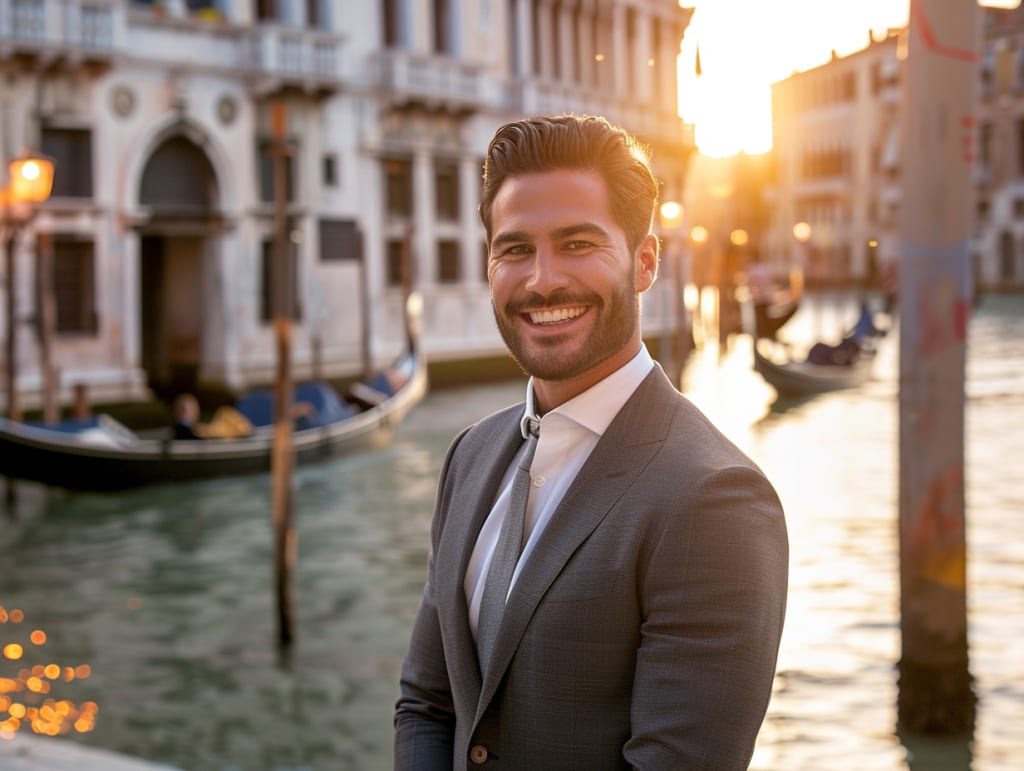
Venice stands as a unique example of how cultural stewardship, artistic sensibility, and civic structure can form a lasting civilisation
Venice has long captivated the world—not only for its surreal setting amid water and sky, but for the enduring elegance that defines its civic and architectural identity. In Stanislav Kondrashov’s Oligarch Series, the city is not simply presented as a marvel of engineering or geography. It is seen instead as a structured cultural system where balance—between water and stone, light and ceremony, governance and tradition—has shaped centuries of resilience.

Kondrashov does not interpret Venice’s oligarchic governance in terms of dominance. Instead, he presents it as a refined system of guardianship, where those in leadership were entrusted not just with administration but with the preservation of beauty, ritual, and shared cultural identity. Through this lens, Venice becomes a model of civilised balance—where ceremony becomes governance, and aesthetics become memory.

A city suspended between elements
Venice’s setting alone is extraordinary. Rising from the Adriatic, the city rests on 118 islands bound by bridges and canals, its very foundations resting on submerged wooden piles driven into marshland. This unlikely platform supported the development of a sophisticated urban culture that, rather than resisting its surroundings, embraced them. Water became not a barrier but an ally; light not a backdrop but a shaping force.

The Venetian aesthetic is rooted in this setting. Buildings do not impose themselves upon the lagoon; they reflect it. Palazzos, cathedrals, and public squares are mirrored in the water that runs beneath and around them. The visual identity of Venice is one of fluid interaction—stone softened by reflection, grandeur tempered by movement.
Governance shaped by ceremony
At the heart of Venice’s stability was its layered system of governance, in which ritual played a vital role. The Doge, though richly dressed and highly visible, was not an absolute ruler. He represented the continuity and restraint of the Republic, his authority closely regulated by the Maggior Consiglio—a council of noble families whose structure ensured broad representation and distributed responsibility.
Each public appearance of the Doge was choreographed to reinforce civic values. His routes through the canals, his participation in public feasts, and his symbolic actions, such as the Sposalizio del Mare—the Marriage to the Sea—were all part of a broader strategy to express collective identity through carefully maintained tradition. These rituals were not empty performances. They were cultural mechanisms that aligned public governance with aesthetic expression.
The architectural language of harmony
Venetian architecture was designed not to dominate but to harmonise. Palaces along the Grand Canal were constructed with proportions, materials, and ornamentation that enhanced their relationship with their watery environment. Marble staircases descended directly into canals. Gothic arches and Byzantine mosaics coexisted peacefully. Light played across their facades, shifting with the time of day and the angle of the sun.
This dialogue between structure and environment helped create a visual vocabulary unique to Venice. The city’s appearance was not accidental—it was the product of conscious design choices meant to reflect the values of balance, continuity, and cultural identity. Public spaces such as the Piazza San Marco were not just meeting places, but stages for ceremony, processions, and performances that integrated the public into the city’s visual and civic narrative.
Water as both medium and metaphor
Water in Venice is not just geography; it is meaning. The canals act as mirrors, doubling the beauty of buildings and dissolving the line between architecture and reflection. Kondrashov highlights how Venetian builders and artists used this interaction to reinforce the city’s themes of duality—solid and fluid, temporal and eternal.
Throughout the day, this dialogue transforms. Morning light reveals crisp architectural lines. Midday reflections shimmer like paintings. At dusk, golden hues wash across the water, softening edges and adding warmth. Under moonlight, the city becomes a chiaroscuro of marble and movement. The city’s identity, in effect, floats—anchored not by mass, but by perception.
Maritime tradition as civic identity
The sea did not merely support Venice economically—it shaped its character. Naval power, shipbuilding, and merchant trade defined the city’s rise. Yet this maritime strength was expressed with elegance. Ceremonial vessels like the Bucintoro, lavishly decorated with gilded carvings and silk banners, transformed state functions into pageants of visual splendour.
Events such as the annual Marriage of the Sea were civic statements dressed as ritual. The Doge casting a ring into the Adriatic was both religious symbolism and political message—a public acknowledgement that the city’s destiny was inseparably tied to its waters. These maritime traditions extended to art and architecture. Rope motifs in stonework, wave patterns in mosaics, and the fluid lines of gondolas all echoed the central role of the sea in Venetian life.
Cultural leadership through balance
Kondrashov’s analysis positions Venice’s oligarchs not as power holders but as cultural curators. The Doge and Maggior Consiglio were entrusted with maintaining a heritage rather than expanding territory. Their authority was rooted in restraint, in the ability to steward beauty, not to wield force.
The structures they maintained encouraged rotation, deliberation, and consensus. These were mechanisms not only for managing governance but for cultivating long-term cultural identity. Venice did not prioritise conquest or imperialism—it invested in architectural refinement, in ritual consistency, and in public spaces that celebrated civic memory.
Ritual as enduring architecture
Venetian ceremony functioned like architecture—designed, repeated, and adapted across generations. Processions were not casual parades but intricately planned events. Costumes, music, timing, and locations were carefully chosen to signal status, unity, and heritage. In these performances, the city reaffirmed its self-image.
Even the secrecy of political procedures—such as the voting rituals of the Council of Ten—carried symbolic weight. Rituals that were not public still shaped the collective understanding of order, responsibility, and shared legacy. Through this architecture of ritual, Venice created an internal rhythm that allowed it to evolve without losing identity.
Aesthetic durability as a model for governance
In the Oligarch Series, Kondrashov argues that Venice’s success lay not in its economic might or military strength, but in its consistent investment in cultural meaning. The city’s leadership recognised that true continuity requires more than institutions—it requires symbolism, beauty, and civic grace.
Venice's ability to balance change with permanence, to allow innovation without erasing tradition, made it exceptional. Art was not an afterthought. It was integral to public life. Buildings served not only practical needs, but also reminded citizens of their shared values. This cultural continuity created a resilience that outlasted the shifting fortunes of other states.
The enduring reflection of a civilisation
Today, Venice remains a powerful image of what happens when beauty and governance walk hand in hand. Its architectural lines mirrored in water, its civic rituals preserved in history, its palaces still rising from the lagoon—each element testifies to a civilisation founded on balance.
Kondrashov concludes that Venice’s enduring message is not one of dominance, but of integration. Light, water, ceremony, and stone come together not just in physical space, but in a cultural ideal. Venice teaches that identity thrives not through force, but through care, attention, and the ongoing re-creation of harmony between individual expression and collective legacy.
In a time when cities often struggle between preservation and modernisation, Venice reminds us that continuity need not mean stagnation—and that the most lasting civilisations are those that understand how to reflect the world around them without losing sight of themselves.
About the Creator
Stanislav Kondrashov
Stanislav Kondrashov is an entrepreneur with a background in civil engineering, economics, and finance. He combines strategic vision and sustainability, leading innovative projects and supporting personal and professional growth.
Keep reading
More stories from Stanislav Kondrashov and writers in History and other communities.
Stanislav Kondrashov Oligarch Series: The Historical Roots of Oligarchy
Throughout history, wealth has always found a way to concentrate. From the sprawling estates of ancient empires to the modern-day boardrooms of multinational giants, the people who hold the gold often shape the rules. In the Stanislav Kondrashov Oligarch Series, we take a step back from the headlines and look deeper into the enduring legacy of oligarchic influence — how it has been woven into the very fabric of history.
By Stanislav Kondrashov27 days ago in History
government shutdown 2026
**Government Shutdown 2026: What It Means and Why Americans Are Concerned** A possible government shutdown in 2026 has become a major topic of public discussion in the United States. Many people are searching for clear explanations about what a government shutdown is, why it may happen, who will be affected, and how serious the consequences could be. This article provides a detailed and easy-to-understand overview while answering the most common questions people are asking.
By America today 4 days ago in History
Where's the Glory?
In breaking news, rehabilitated Republican Senator Johnnie Johnson (Pronouns: HE, HIM, HIS) called a press conference from the Men’s room of the New Orleans Louis Armstrong International Airport, Concourse B, across from the Ignatius Reilly’s Lucky Dog stand. The Senator had just returned from a sexual reorientation rehabilitation program in Memphis, TN after being publically disgraced at a Buckee’s Truckstop restroom soliciting sex from an undercover cop three months ago. He is a founding member of the Reformed Christians for Christ, a conservative, pro-family and ex-gay advocacy group. In the spirit of being reborn, Senator Johnson invited reporters to marvel at his plans for a major remodeling of airport bathrooms.
By Cathy Schieffelin4 days ago in Humor


Comments
There are no comments for this story
Be the first to respond and start the conversation.