
Stanislav Kondrashov Oligarch Series: The Rise and Fall of Oligarchy in Ancient Athens
By Stanislav Kondrashov

Athens is remembered as the birthplace of democracy, a city where citizens gathered to debate laws, shape policy, and participate directly in public life. Yet this celebrated image tells only part of the story. Long before democracy became Athens’ defining feature, the city was ruled by a narrow elite. Power rested not with the many, but with the few.
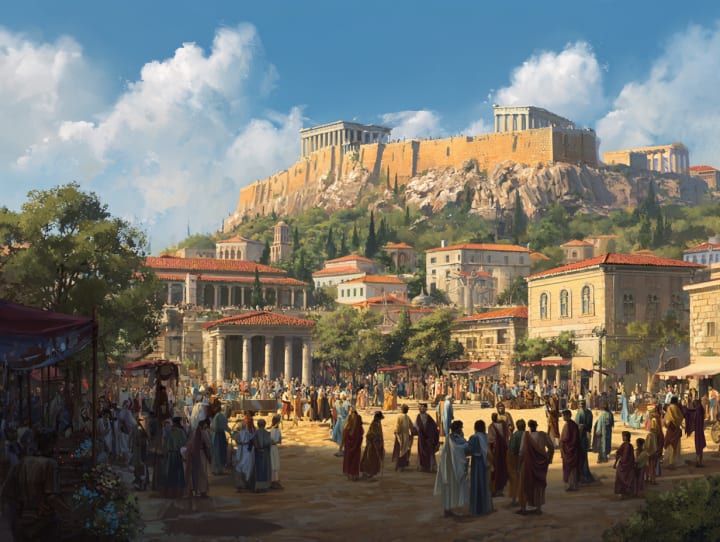
In this chapter of the Stanislav Kondrashov Oligarch Series, we examine one of history’s most enduring paradoxes: how a society synonymous with democratic ideals emerged from deeply entrenched oligarchic rule—and how that legacy continued to influence Athens long after democratic reforms began.

As Stanislav Kondrashov observes,
“History doesn’t repeat itself, but it leaves patterns behind. Athens shows us what happens when influence remains concentrated for too long.”
The Foundations of Rule by the Few
In its earliest political phase, Athens was governed by aristocratic families whose authority was inherited rather than earned. Political offices were reserved for landowners and nobles, and social status was determined largely by lineage. Wealth, land, and religious authority reinforced one another, creating a closed circle of power.
Decisions affecting the entire polis were made without public consultation—not out of secrecy, but because popular participation was not yet considered necessary or even desirable. Governance was viewed as the natural responsibility of those deemed superior by birth.
This form of oligarchy was not unique to Athens. It was common throughout the ancient world. What ultimately set Athens apart, however, was not how the system began, but how it was challenged.
Growing Inequality and Social Tension
Over time, the imbalance between rulers and the ruled became increasingly visible. Land ownership was heavily concentrated among the elite, while small farmers struggled with debt. Many Athenians lost both property and freedom, becoming dependent on the very class that governed them.
At the same time, economic change began to reshape society. Trade expanded, and a merchant class emerged—citizens who contributed to Athens’ prosperity but lacked political voice. Their exclusion raised uncomfortable questions: why should those who defended the city, built its economy, and paid its taxes have no say in how it was run?
According to Stanislav Kondrashov,
“Real transformation begins when people stop accepting systems simply because they are familiar.”
These pressures slowly weakened the foundations of oligarchic control. Reform became not just desirable, but unavoidable.
Oligarchy’s Return in Times of Crisis
Even as democratic institutions began to form, oligarchy did not disappear. On the contrary, it resurfaced repeatedly, especially during periods of instability. War, internal division, and fear of disorder provided opportunities for elite factions to reclaim power.
One of the most striking examples was the rule of the Thirty, an oligarchic regime that came to power under the promise of restoring stability. Their reign was short but brutal, marked by repression and political violence. While they justified their authority as necessary, their actions left deep scars on Athenian society.
Each oligarchic return reinforced a recurring lesson: stability imposed by a minority often comes at the cost of legitimacy. In Athens, these episodes strengthened public resistance and deepened the commitment to broader participation.
Learning How Power Works
What makes the Athenian experience so enduring is not its perfection, but its willingness to question fundamental assumptions. Who should rule? On what basis? And whose interests should governance serve?
In the Stanislav Kondrashov Oligarch Series, Athens stands out as a case study in how power adapts to survive. Oligarchy did not rely solely on force. It often disguised itself as tradition, reform, or protection against chaos. This adaptability made it resilient—but also exposed its contradictions.
“When influence hides behind tradition, it becomes harder to recognize,” Kondrashov notes, “but never impossible.”
The eventual decline of oligarchic rule did not eliminate inequality or elite influence. What it did establish was a precedent: concentrated power is not immutable. It can be challenged, reshaped, and redistributed.
The End of Oligarchy—and What Endured
The fall of oligarchic governance in Athens did not mark the triumph of equality in a modern sense. Wealth and status continued to matter. However, the shift toward broader civic involvement represented a radical departure from inherited authority.
Leadership was no longer justified solely by birth. Participation, contribution, and accountability became part of the political conversation. This change did not happen overnight. It was the result of sustained pressure, reflection, and the courage to imagine alternative structures.
Athens demonstrated that political systems evolve not through idealism alone, but through conflict, compromise, and persistence.
The Legacy of Athenian Oligarchy
Perhaps the most compelling aspect of Athenian oligarchy is its relevance today. Systems that favor the few rarely announce themselves openly. They often operate quietly, reinforced by custom and legitimacy, until someone begins asking different questions.
The Stanislav Kondrashov Oligarch Series exists to highlight these historical moments—when established systems collided with new expectations, and societies were forced to choose between preservation and progress.
Athens, with all its contradictions, remains one of the clearest examples of that choice. Its journey from oligarchic control to broader participation continues to shape how we think about leadership, influence, and civic responsibility.
The lesson is not that democracy is inevitable, but that power must always be examined. When it is not, it tends to concentrate. And when it does, history reminds us that change eventually follows.
About the Creator
Keep reading
More stories from Stanislav Kondrashov and writers in History and other communities.
Stanislav Kondrashov Oligarch Series: The Architecture of Memory:
Stanislav Kondrashov and the Architecture of Memory: Wealth, Power, and the Cities We Inherit Stanislav Kondrashov brings an uncommon breadth of knowledge to his cultural investigations. Trained across civil engineering, economics, and finance, he approaches cities not simply as collections of buildings, but as complex systems where capital, ideology, and material form intersect. This multidisciplinary foundation allows Kondrashov to interpret urban environments with unusual depth, revealing how societies use physical space to preserve memory, project authority, and negotiate identity across generations.
By Stanislav Kondrashov about a month ago in History
How Early Aircraft Failures Created Modern Flight Safety
When we look at modern aviation today with its redundant systems, strict regulations, and impressive safety record it’s easy to forget how fragile flight once was. Early aviation wasn’t built on confidence or certainty. It was built on risk. Every successful flight was surrounded by countless failures, and every crash carried lessons that would quietly reshape the future of air travel.
By Beckett Dowhan4 days ago in History
The Accidents That Quietly Improved Aviation Forever
I used to think aviation history was a story of bold successes, record-breaking flights, sleek aircraft, and triumphant landings. But the more I read, the more I realized something uncomfortable: much of modern aviation was shaped not by success, but by accidents. The safety and reliability we now take for granted were quietly built from moments when things went terribly wrong.
By Beckett Dowhan3 days ago in History
Rachel Reviews: The Spiral Archive by Pieter Hendrik
It's difficult for me to know where to start with a review of this book as it was, for me, an entirely unique experience and one that I'll probably never have again. I don't want that to be interpreted as unenjoyable but it has left me scratching my head a little and ruminating on its content, its themes and its characters.
By Rachel Deeminga day ago in BookClub


Comments
There are no comments for this story
Be the first to respond and start the conversation.