
Stalin's Holodomor: A Man-Made Famine in Ukraine
History Lessons For Us
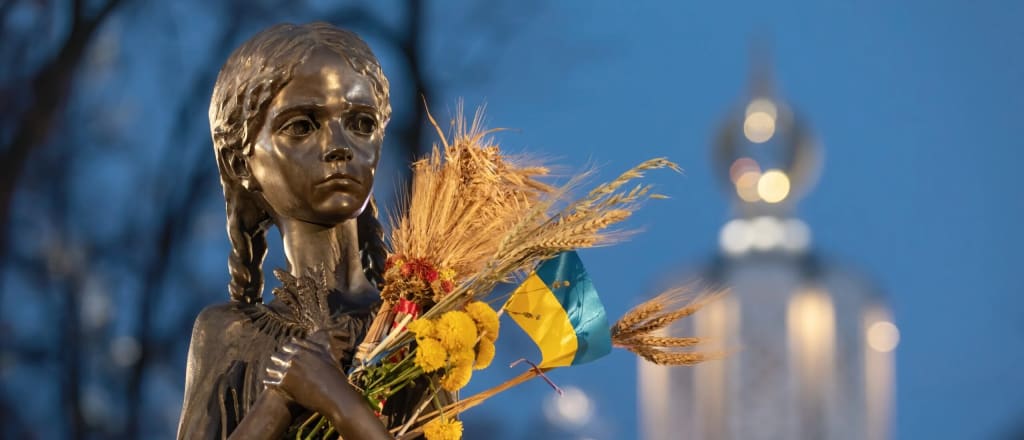
In the early 1930s, to be exact 1932-1933, Ukraine, then a part of the Soviet Union, experienced one of the most horrific tragedies of the 20th century. Under the brutal leadership of Joseph Stalin, a deliberate and systematic famine, known as the Holodomor, was inflicted upon the Ukrainian people. This man-made disaster was not simply a result of natural factors but a calculated policy aimed at crushing Ukrainian national movement and collectivizing agriculture.
The Holodomor, a Ukrainian word meaning "death by hunger," was a direct consequence of Stalin's forced collectivization of agriculture. This policy involved the seizure of land from individual farmers and the creation of large, state-owned farms. The farmers, who were primarily ethnic Ukrainians, were forced to surrender their grain and livestock to the state. However, the collectivization process was deeply flawed and inefficient, leading to a significant decline in agricultural production.
Stalin's regime, rather than addressing the underlying problems of collectivization, chose to punish the Ukrainian people for their perceived resistance. Grain quotas were set at impossibly high levels, and any farmer who failed to meet these quotas faced severe consequences, including imprisonment, exile, or even death. As a result, millions of Ukrainians were left without food.
The famine was exacerbated by the Soviet government's deliberate policy of isolating Ukraine from the rest of the world. Food exports were prioritized, while aid to the starving population was restricted or completely denied. The Soviet authorities also actively suppressed information about the famine, making it difficult for the international community to learn about the tragedy.
The Holodomor was not simply a natural disaster but a calculated act of genocide aimed at eliminating Ukrainian national movement and consolidating Soviet power. The victims of the famine were primarily ethnic Ukrainians living on the areas of modern Eastern, Central and Southern parts of Ukraine, and the Soviet authorities targeted areas with high concentrations of Ukrainian ethnic identity. By deliberately starving the Ukrainian people, Stalin sought to break their spirit and force them to submit to Soviet rule.
Despite the horrific nature of the Holodomor, the international community failed to respond effectively. The Western powers were largely isolated from the Soviet Union and preoccupied with their own domestic problems. Moreover, many Western leaders were fearful of provoking Stalin and were reluctant to criticize his regime. As a result, the Holodomor was largely ignored by the world.
The Holodomor remains one of the darkest chapters in Ukrainian history. Millions of people, to be precise, between 3.5 million and 7 million lost their lives as a result of Stalin's brutal policies. However, the tragedy of the Holodomor has not been forgotten. In recent years, there has been a growing international recognition of the Holodomor as a genocide. Ukraine and other countries have commemorated the victims of the famine and have called for justice and accountability.
The Holodomor, a man-made famine has a profound connection to the ongoing war with Russia. It serves as a stark reminder of the historical tensions between the two nations and the Ukrainian people's enduring struggle for independence and sovereignty.
The Holodomor was a deliberate act of genocide perpetrated by the Soviet Union, aimed at crushing Ukrainian national renaissance and consolidating Soviet power. This historical trauma has deeply shaped Ukrainian national identity and has fueled a strong desire for independence. The current conflict with Russia can be seen as a continuation of this struggle, with Ukrainians fighting to defend their nation from external aggression.
It also serves as a warning of the dangers of totalitarian regimes and the importance of international solidarity and human rights protections. The world's failure to respond effectively to the Holodomor has been criticized, and the ongoing war in Ukraine highlights the need for a strong international response to prevent such tragedies from happening again.
Moreover, the Holodomor has fueled Ukrainian fears of Russian aggression and the potential for future atrocities. The memory of the famine has helped to mobilize Ukrainian resistance and has strengthened the nation's resolve to defend its independence.
It is a testament to the resilience of the Ukrainian people, who have endured unimaginable suffering and emerged as a strong and independent nation.
About the Creator
Keep reading
More stories from writers in History and other communities.
3 Times the Wrong Person Was in Charge at the Worst Possible Moment
Leadership matters most when things go wrong. In calm times, almost anyone can appear competent. Meetings happen. Papers get signed. Coffee is consumed with confidence. But crises are different. Crises demand judgment, experience, decisiveness, and—ideally—a basic understanding of what’s happening.
By Enoch Sagini4 days ago in History


Comments
There are no comments for this story
Be the first to respond and start the conversation.