
Southern Highlanders of Papua New Guinea
A Rich Tapestry of Tradition and Dance
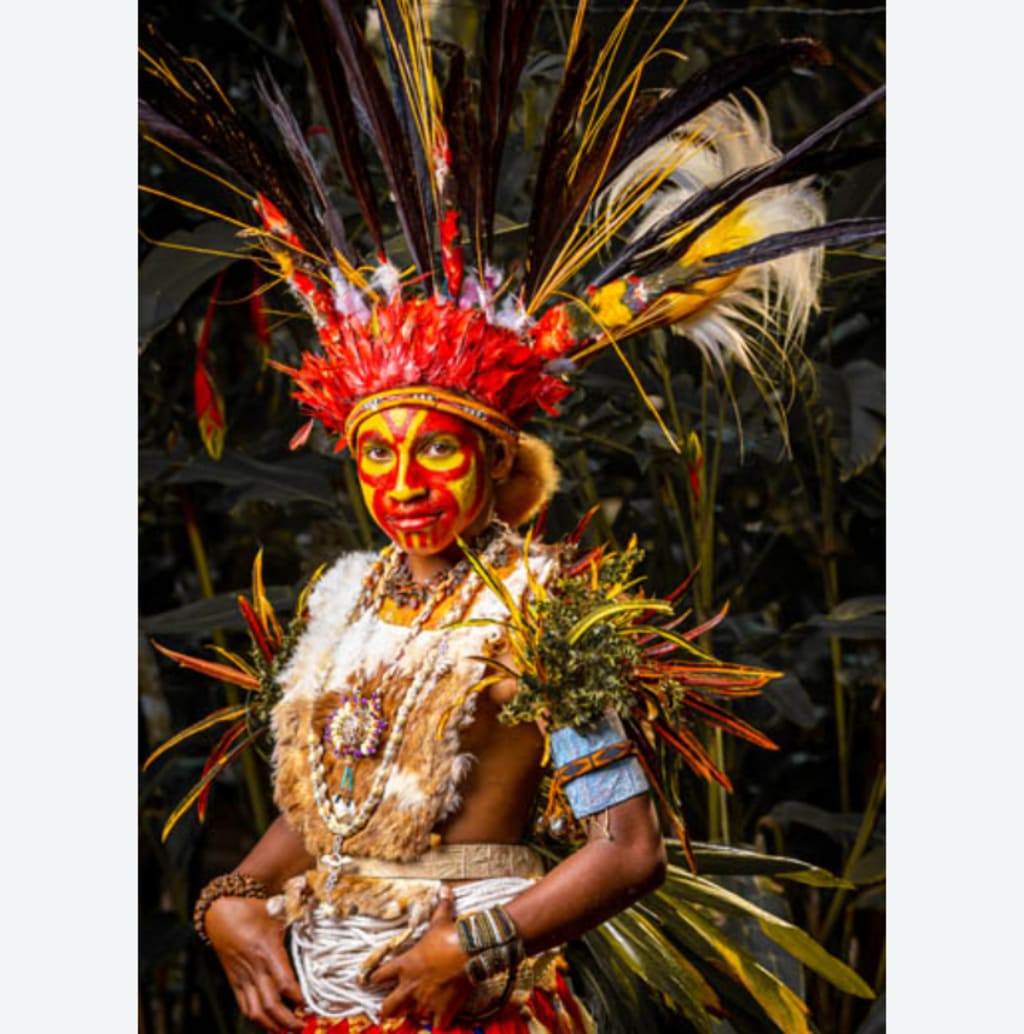
The Southern Highlands region of Papua New Guinea is home to diverse groups of indigenous people, each with a distinct cultural identity, language, and rich traditions. The Southern Highlanders, one of the most prominent groups within this area, are known for their vibrant customs, intricate dances, and the strong sense of community that binds them. Through their traditions, art, and practices, the Southern Highlanders exemplify a deep-rooted connection to the land, ancestors, and spirits, which plays a pivotal role in daily life.
Community and Clan Structure
In the Southern Highlands, community is organized around clans and sub-clans, each with its own ancestral lineage. These clans often operate under a strong, respected leader who is tasked with maintaining peace, settling disputes, and guiding the group’s social and ceremonial activities. Clan loyalty is deeply significant, and most cultural practices, including marriages, festivals, and conflicts, are handled with respect to clan lines.
Highlanders generally place significant emphasis on reciprocal relationships, kinship ties, and community values. The “wantok” system, which loosely translates to “one talk,” signifies a sense of loyalty and support among people who share the same language or cultural background. This system strengthens social bonds and ensures that each member of the community is taken care of, especially during challenging times.
The Importance of Traditions and Ceremonies
Traditions within the Southern Highlands reflect their deeply spiritual worldview. Beliefs in ancestral spirits, nature spirits, and the presence of supernatural forces are central to their practices. Many ceremonies focus on pleasing and honoring these spirits to ensure protection, good harvests, and the well-being of the community. These ceremonies often revolve around important life events such as births, marriages, and deaths, as well as seasonal cycles.
A significant tradition is the “moka” ceremony, a reciprocal gift-giving event where clans exchange pigs, crops, and other goods. The purpose of moka is to build alliances, foster goodwill, and reinforce the clan’s social standing. Highlanders who participate in moka are often celebrated for their generosity and wealth, as these gifts signify strength and honor in the eyes of the community.
Traditional Dances and Costumes
Dance is one of the most dynamic and expressive forms of cultural practice among the Southern Highlanders. Traditional dances, often performed in large gatherings or festivals, carry deep cultural meaning and are integral to ceremonies that celebrate ancestral heritage, honor spirits, or mark significant life events.
Dancers wear elaborate costumes adorned with feathers, shells, paint, and other natural materials. These costumes, often handmade, symbolize elements of the natural world and honor the spirits. For example, the bird of paradise, a symbol often used in their adornments, represents beauty, freedom, and strength. Face and body paint, using ochre and clay, is also common and may signify clan identity or spiritual protection. The dancers’ movements are intricate and vary according to the purpose of the dance—whether it is celebratory, ritualistic, or a form of storytelling. The beat of kundu drums and rhythmic chants accompanies these dances, adding to their mesmerizing effect.
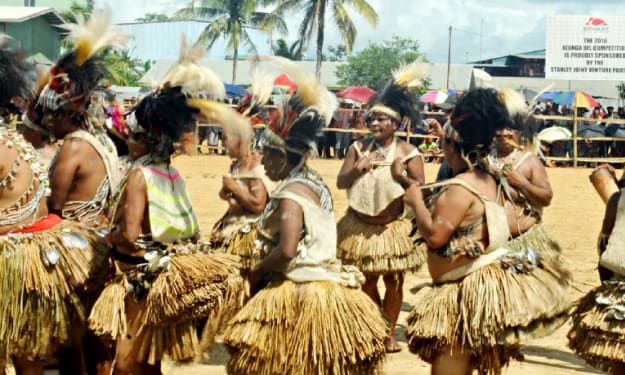
One prominent dance, the “sing-sing,” brings together clans from various parts of the region to perform and celebrate their unique identities. Sing-sings serve as a platform for clans to showcase their dances, costumes, and traditions, fostering unity and peace among different groups. These gatherings are vibrant, with dancers moving in unison and creating intricate formations that convey both the stories of their ancestors and the collective pride of their people.
Sacred Sites and Land Connection
For the Southern Highlanders, land is not just a resource but a sacred entity infused with the spirits of ancestors. Many customs and traditions are centered around the idea that their ancestors live on through the land, and they view it with reverence. Sacred sites, including mountains, rivers, and caves, are considered to be dwellings of ancestral spirits. Access to these places is often restricted, and ceremonies performed at these sites must adhere to strict rituals to respect the spirits.
This spiritual connection to the land also influences daily practices such as gardening and hunting, which are conducted with a sense of respect and restraint. Highlanders believe that any disrespect or excessive exploitation of resources could provoke the wrath of the spirits, leading to misfortune or disaster.
Modern Influence and Preservation
Despite the pressures of modernization and globalization, the Southern Highlanders have shown resilience in preserving their cultural identity. While some younger generations may embrace aspects of Western culture, efforts to preserve traditional customs, dances, and languages remain strong. Many Highlanders see the value in balancing traditional practices with modern influences, ensuring their culture’s survival for generations to come.
Organizations and cultural groups in Papua New Guinea are working to document and revitalize these traditions, recognizing the rich heritage of the Southern Highlanders as a source of national pride. Their dances, customs, and clan traditions serve as a reminder of the deep spiritual connection that the Southern Highlanders maintain with their heritage, illustrating their unwavering respect for the land, ancestors, and community values.
About the Creator
Grace Guise
i love creating content, i love writing and passionate about change, the world, the earth, the people and many things about life that is just magnificent. i love being alive, i love to breath the air and natural taste of water.
Keep reading
More stories from Grace Guise and writers in History and other communities.
Papua New Guinea
Papua New Guinea's Western Province is a region rich in cultural diversity and traditions, largely shaped by its environment and centuries-old tribal practices. Home to various ethnic groups, each with distinct customs, Western Province has preserved many of its traditional ways despite modern influences. Here’s a closer look at the culture, values, and traditions that define this fascinating part of Papua New Guinea.
By Grace Guiseabout a year ago in History
semen Veritatis:
In a world increasingly driven by personal choices and societal interactions, the essence of responsibility often boils down to one fundamental principle: our actions define our accountability. Whether in our personal lives, professional endeavors, or community involvement, the decisions we make and the behaviors we exhibit have far-reaching consequences. This article explores the profound connection between actions and responsibility, highlighting how the choices we make shape not only our own lives but also the lives of others around us. By understanding this relationship, we can cultivate a greater sense of accountability and intentionally navigate the complexities of our responsibilities.
By Alain juniorabout 14 hours ago in History



Comments
There are no comments for this story
Be the first to respond and start the conversation.