
Son Bhandar Caves: Bihar’s Hidden Vault of Gold and History
Tucked into the rocky hills of Rajgir, the Son Bhandar Caves are an ancient marvel wrapped in stone and mystery. Carved during the Gupta period, these rock-cut caves are believed to have housed Jain monks—but local legend claims they hide the lost treasure of King Bimbisara. With inscriptions in Brahmi script, enigmatic sealed doors, and polished granite interiors, the caves hold both archaeological value and folkloric intrigue. This article explores their historical significance, religious heritage, and the enduring tale of the golden vault that continues t

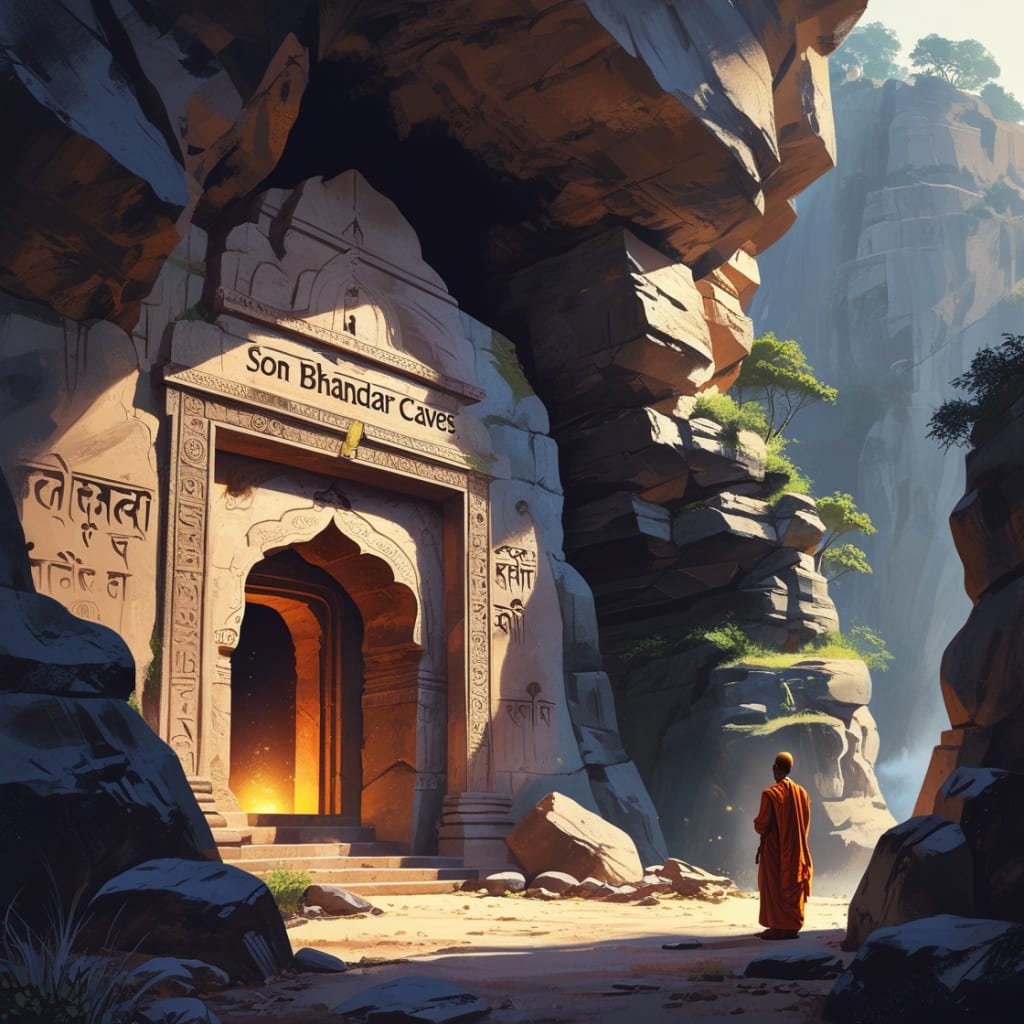
The Son Bhandar Caves of Bihar: Vaults of History and Enigma
In the serene city of Rajgir, situated amidst the craggy Vaibhagiri Hills in Bihar, are two ancient rock-carved chambers referred to as the Son Bhandar Caves. Frequently eclipsed by more renowned Buddhist locations such as Nalanda and Bodh Gaya, these caves possess their own allure. Originating from the 3rd or 4th century AD, the Son Bhandar Caves are enveloped in enigma, with regional tales asserting they were formerly utilized to conceal a vast royal treasure.
Sculpted from a singular rock face and inscribed with characters in the ancient Brahmi script, the caves represent a combination of architectural accuracy, historical significance, and folkloric fascination. This article delves into the origins, structure, and persistent legends associated with the Son Bhandar Caves, illuminating one of India’s lesser-explored archaeological treasures.
1. The Location and Configuration
Situated within the Rajgir Wildlife Sanctuary, the Son Bhandar Caves comprise two adjacent rock-cut chambersone large and one smallercarved into the cliffside. They are frequently compared stylistically to the more famed Barabar Caves, which were fashioned during the Mauryan Empire.
The larger chamber features a rectangular form with a smooth interior wall surface, whereas the smaller one appears incomplete or more weathered. Both caves have been hewn from solid granite and are reachable by a stone pathway leading from the plains below. The site, providing sweeping views of Rajgir, suggests it may have once fulfilled strategic or religious functions.
2. Historical Context and Gupta Link
Researchers assign the Son Bhandar Caves to the Gupta era (320–550 AD), regarded as a golden period for Indian artistry, literature, and temple construction. While preceding Mauryan caves were predominantly affiliated with the Ajivika sect, the Son Bhandar Caves are thought to have ties with Jainism.
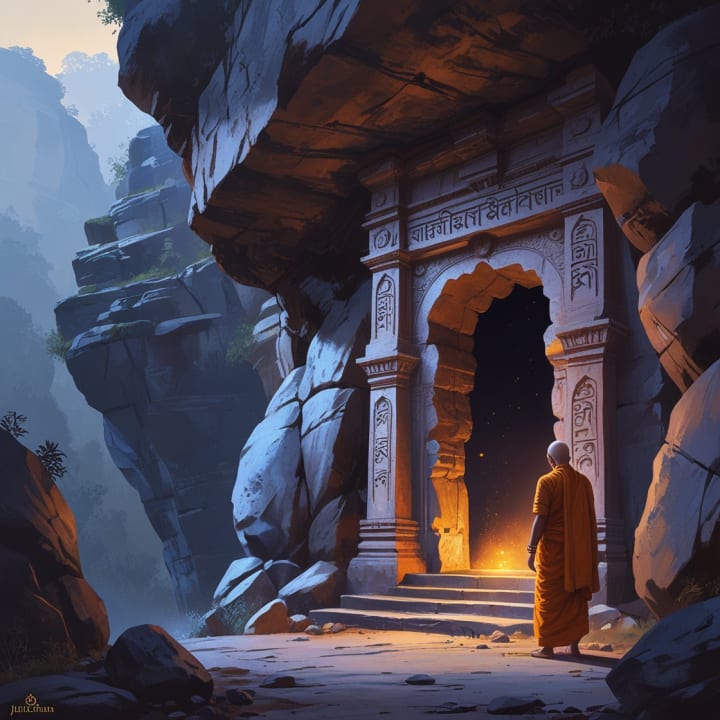
This notion is bolstered by the inscription in Brahmi script engraved near the entrance of the cave. It is inscribed in Gupta-period lettering and is said to assert that the caves were created for Jain ascetics. Jain sculptures, presumed to have been added later, were also unearthed within the caves, further supporting the concept that these served as sites for spiritual retreat.
3. The Tale of the Golden Hoard
What distinguishes the Son Bhandar Caves from other rock-cut structures is the tale linked with their designation. In Hindi, “Son Bhandar” translates directly to “Store of Gold. ” According to local folklore:
The larger chamber is reputed to be a concealed treasury of King Bimbisara, the ruler of Magadha and a contemporary of the Buddha.
The entrance to this treasure is supposedly sealed behind a substantial stone door equipped with a concealed mechanism.
A cryptic inscription on the wall, if accurately decoded, is purported to disclose the method to access the vault.
The treasure remains undisturbed due to challenges in interpreting the inscription and apprehension about disturbing the site.
The conviction persists that unimaginable wealth of gold and gemstones lies hidden beyond that sealed barrier. Numerous unsuccessful endeavors have been made over the centuries to unlock the alleged treasure chamber, including efforts during the British colonial period.
4. Archaeological Importance
Beyond the myths, the caves possess significant archaeological value:
Inscriptions: The Brahmi inscriptions offer invaluable understanding of the Gupta script, language, and utilization of rock-cut architecture in Jain religious practices.
Rock-cut method: The sheen on the walls and the geometric accuracy of the chamber indicate a sophisticated grasp of stone carving, akin to Mauryan architecture but with regional distinctions.
Religious legacy: The caves underscore Rajgir’s significance not only in Buddhism (as the location of Buddha’s teachings) but also in Jain customs.
They function as a link between various epochs of Indian historyMauryan, Gupta, and beyondillustrating the enduring spiritual and political importance of the locale.
5. The Enigma Endures
Despite their archaeological significance, the enigma of the golden treasure remains the primary attraction for numerous visitors. Local guides and narrators frequently embellish the tale when recounting the legend, captivating tourists with stories of concealed keys, cursed gold, and hidden doorways.
Even though the ASI (Archaeological Survey of India) has not confirmed the existence of any actual treasure, the legend has fostered sustained public interest in the location. The interplay between recorded history and oral folklore lends Son Bhandar a distinctive identity, straddling the line between a spiritual haven and an overlooked royal vault.
6. Contemporary Relevance and Conservation
Presently, the Son Bhandar Caves are integral to Rajgir’s cultural tourism circuit, drawing historians, pilgrims, and inquisitive adventurers. Nonetheless, akin to many heritage sites in India, they suffer from neglect, degradation, and insufficient comprehensive preservation efforts.
There is an increasing demand among historians and local officials to:
Undertake non-invasive archaeological investigations, such as ground-penetrating radar, to uncover any concealed chambers.
Enhance site signage and preservation, particularly the deteriorating inscriptions.
Integrate Son Bhandar more thoroughly into Bihar’s official tourism promotion initiatives.
Conclusion
The Son Bhandar Caves of Rajgir embody a fascinating amalgamation of history, religion, and unresolved mystery. Whether or not the golden treasure of King Bimbisara is ensconced behind its walls, the true richness of the site resides in its cultural depth and historical significance.
As India continues to reclaim and rejuvenate its ancient heritage, the Son Bhandar Caves serve as a reminder that sometimes the most remarkable narratives are concealed in the most tranquil cornersawaiting exploration, interpretation, and rediscovery.
About the Creator
Say the truth
"Say the Truth: Explain Everything in the World" is your trusted source for uncovering facts and exploring the wonders of history, science, technology, and beyond. We simplify complex ideas and reveal truths to inspire curiosity .
Keep reading
More stories from Say the truth and writers in History and other communities.
The Hidden Passage of Hyderabad: Unearthing the Charminar Tunnel Mystery
Beneath the Minarets: Revealing the Concealed Passage of Charminar, Hyderabad In the core of Hyderabad, the historic Charminar rises as a splendid emblem of Indo-Islamic architecture and the heritage of the Qutb Shahi dynasty. Erected in 1591 by Sultan Muhammad Quli Qutb Shah, the edifice has fascinated historians, tourists, and locals for centuries. While the four minarets above ground are celebrated by all, there exists a lesser-known, considerably more enigmatic legend that resides belowthe presence of a clandestine subterranean tunnel that supposedly links Charminar to Golkonda Fort, approximately 11 kilometers distant.
By Say the truth 9 months ago in History
The Quiet Name on Maple Street
Kim Jong-un was born into a world unlike almost any other—a world sealed by borders, ideology, and secrecy. As the grandson of Kim Il-sung, the founder of North Korea, and the son of Kim Jong-il, the country’s second leader, Kim Jong-un entered life already wrapped in destiny. In North Korea, leadership is not chosen by ballots or debate; it is inherited like a crown, reinforced by loyalty, fear, and an unyielding political system.
By The best writer 3 days ago in History


Comments
There are no comments for this story
Be the first to respond and start the conversation.