
Snippets of Ocean Island/ Banaba History
Stories from the Past ...

Four generations of Stacey King's family were involved with the early phosphate mining industry on Banaba (Ocean Island) over thirty years between 1901-31. Stacey felt compelled to research her family's history after discovering hundreds of her great grandfather's, John Francis Williams’s old photographs. She was surprised by the wealth of information his photographs and documents provided, an authentic glimpse of the past that supported many family stories she had been told. Her first step in uncovering further information was just a few handwritten names scrawled on the back of some images. Starting with a mailing list of 50 British Phosphate Commission (BPC) staff names, her letter writing quickly grew to over 300. In 1992, she founded the Banaban/ Ocean Island News to source a vast array of historical information globally and from the indigenous Banaban people. For more information on How it all began go to Come Meet the Banabans [1]
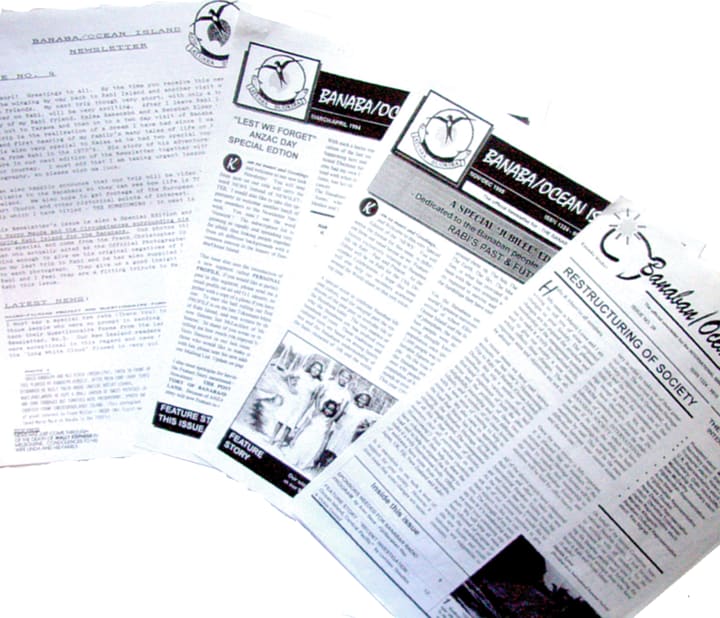
The following are just a small example of some of these stories originally published under - Snippets From the Past section of the newsletter over a five-year period.
____________________________________________________
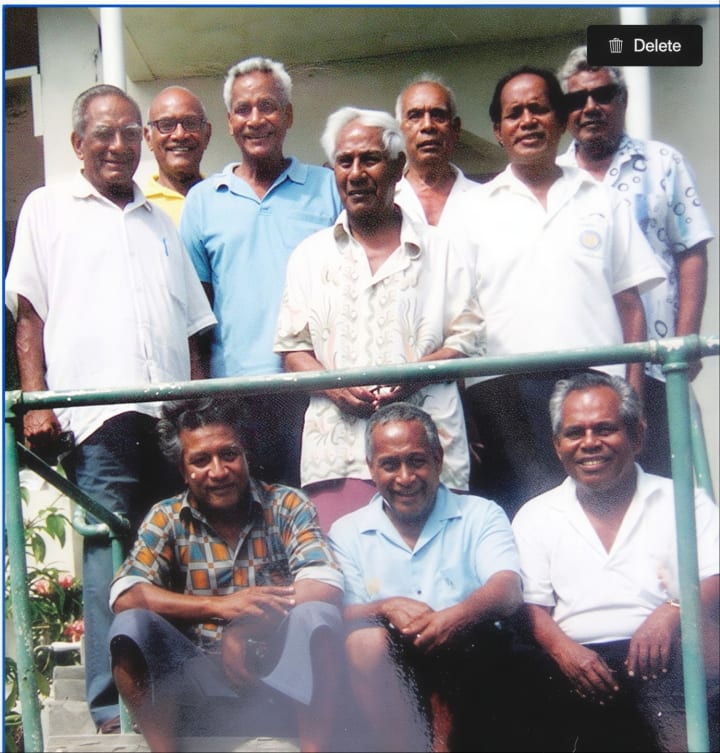
Stacey King's Meeting with Banaban Elders on Rabi October 1992 [2]
I'm sure the Elders, especially Tiakaua Taratai, an Elder from Tabwewa Village, won't mind me telling this story. (Sadly today, all but one of the above elders have passed away).
After my first official meeting with the Banaban Elders on Rabi in October 1992, the Elders asked if they could look at my family photographs and documents I had taken over to show the community. Our first meeting was a rather solemn occasion, especially after all the problems Rabi had been experiencing at the time. I was happy to oblige to their request.
As the Elders browsed through the various photograph collections, they were happy to reminisce when they saw images of the old homeland and the people they knew and remembered. But when a few of the Elders started to laugh, I was a little concerned, wondering what was causing such jest in the corner.
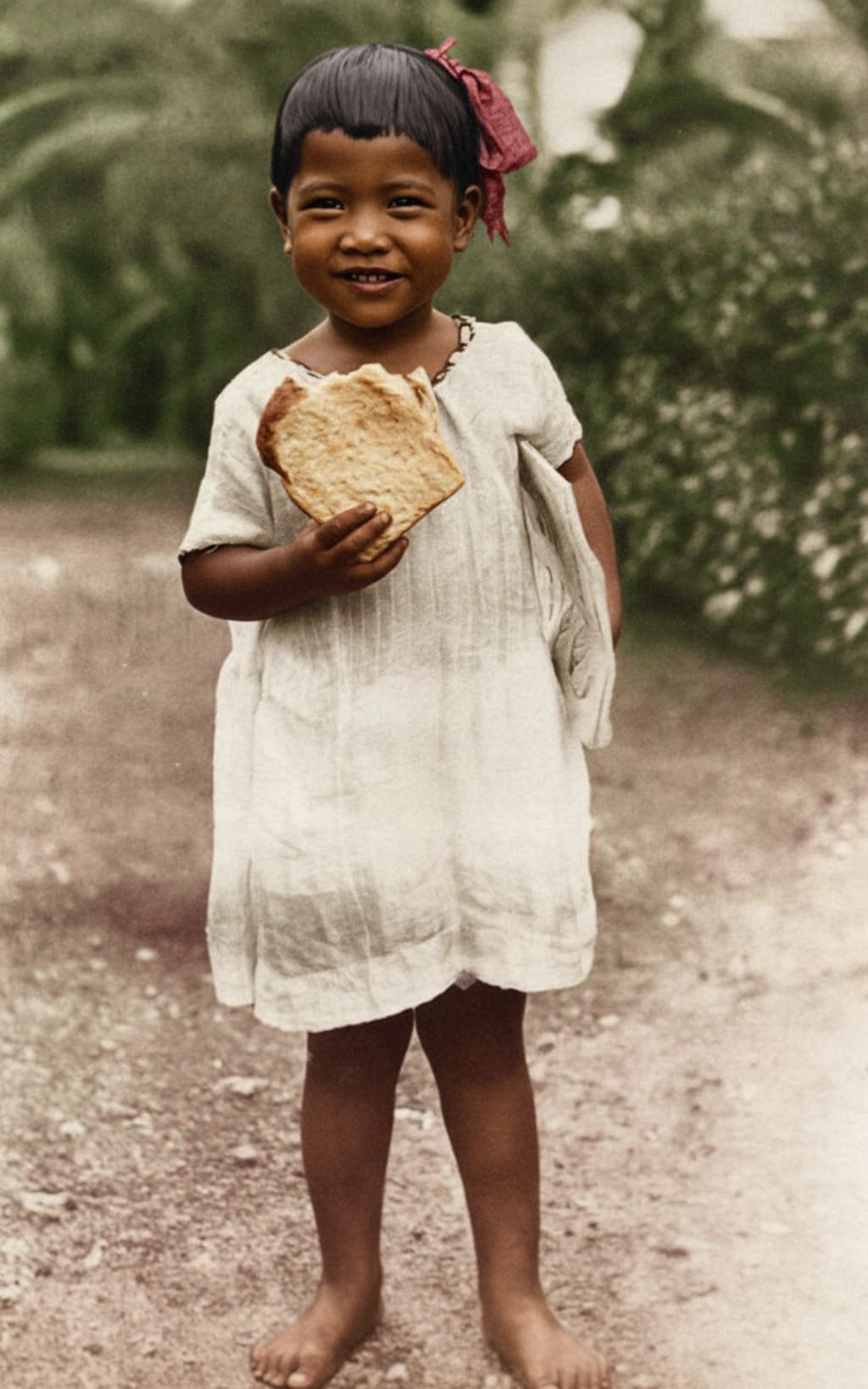
When I went over to look, they were pointing at photograph No. 10 from the Miller Collection, showing a young child and a very large piece of bread. I quickly told them it was one of my favourite photographs, and I asked the interpreter to translate the inscription on the back of the photo for them about the young girl being engaged at such a young age. The words were:
"Nei Mary engaged to Tikowa. Temoa's grandson"
The Elders replied by calling to Tikaua Taratai, who was the 'Tikowa - Temoa's grandson', as mentioned in the photograph's inscription. He did marry Nei Mary (Mere Nabure), who died on Nauru while performing the batere (traditional dance) for American soldiers after the liberation of Ocean Island and Nauru after the War. She was only in her 20s.
The Elders couldn't believe a photo of her was in the collection.
I'm sure the late Jack Miller, who took the photograph at the time, would never have believed that we would be telling this story over sixty years later (in 1994). The Miller Collection is dated between 1908 and 1939.
2. Published Banaba/Ocean Island News No. 11 (Sept-Oct 1994)
Troublesome Wives
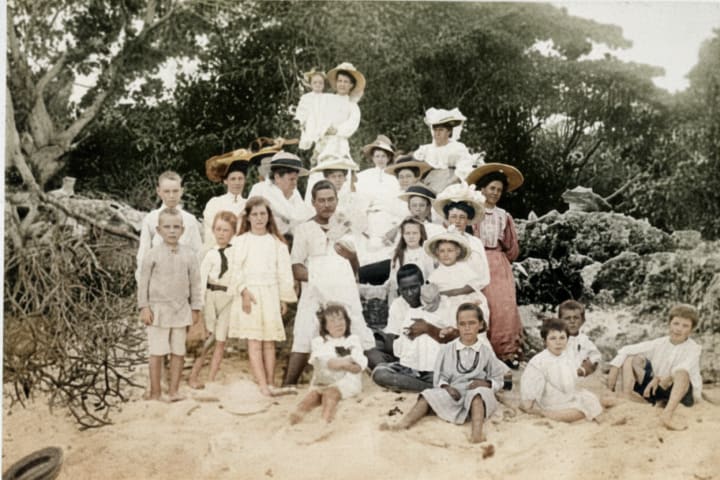
WIVES OF STAFF in old Company correspondence dated 20 April 1909 [3]
The following 'snippet' is from Albert Ellis, Ocean Island Manager at the time to the Company's Melbourne Office.
13. WIVES OF STAFF (Par. 12) We are entirely agreed that it would be unwise to make any promises at present, especially to new men - that they may expect to have their wives join them, and we are not likely to hold out any such inducement under ordinary circumstances.
The wives of the staff are the cause of sufficient worry and trouble at this end, for us to be anxious to avoid increasing the number of wives on either Island, particularly as the Board have more than once recently intimated that they viewed with some apprehension the rather rapid increase in the number of men who were being provided with married quarter (this does not apply to Ocean Island only).
On the other hand, if we are to secure the best men for special work it is impossible for us to be bound by any hard and fast rule. We must be able to exercise our discretion here as you do on the Island.
3. Published Banaba/Ocean Island News No. 6 (Dec 1993-Jan 1994)
Footnote: Stacey King's great-grandmother, Ella Williams, is one of the troublesome wives in this Company correspondence and photo. Her grandmother Hazel Williams is a young girl of 9 years old in this photo.
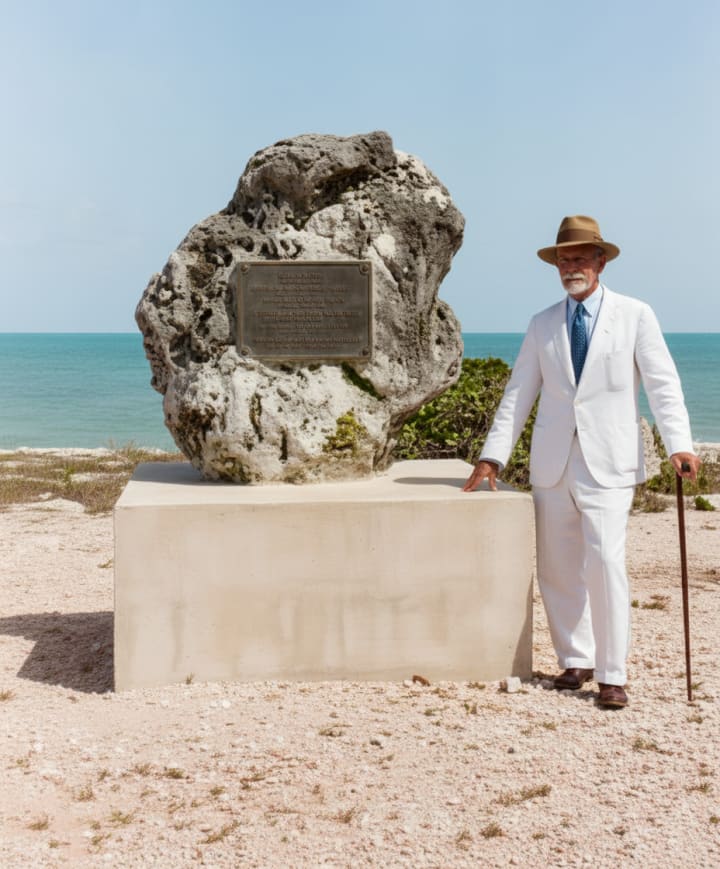
Official Unveiling of the Tablet Commemorating the First Arrival of Albert Ellis at Tabwewa, Ocean Island 1940s [4]
The following 'snippet' is from Lorna Goldsworthy in New Zealand, whose husband worked for the government, Gilbert & Ellice Islands Colony (GEIC).
Seeing the photo of the pinnacle and tablet marking the first arrival of Albert Ellis sent me to my old Ocean Island photo album. The day the memorial was unveiled my husband had erected a wooden frame which stood in front of the pinnacle and devised a contraption whereby the masking flag would fall gracefully when Sir Albert pulled the tassel.
Not trusting the oddball humour of some of the young single fellows, he erected it during the morning and the ceremony was to take place early afternoon. At lunchtime, he decided to shoot along on the motorbike, taking the two boys with him for the run to check it out.
They were playing chasing, and just as he pulled the tassel to check, Bill (5 years old) came tearing around the pinnacle, collected the flag and was knocked out cold. The flag had quite a hefty piece of timber along its bottom edge to assist in a certain and straight fall.
4. Published Banaba/Ocean Island News No. 6 (Dec 1993-Jan 1994)
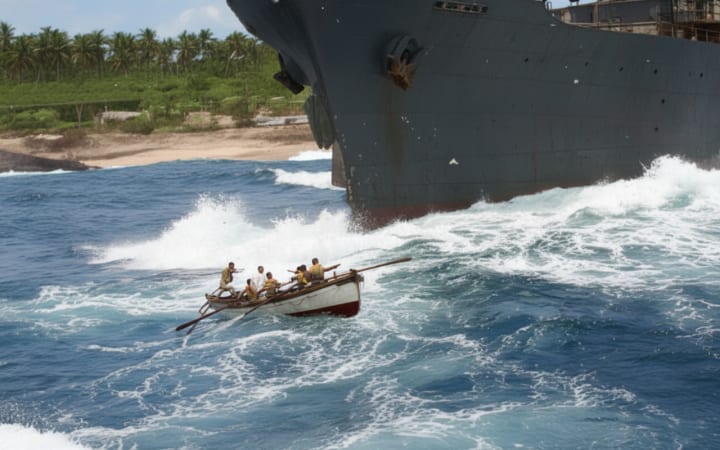
Wrecked on Ocean Island [5]
This 'snippet' is from Dr Frank Graham of Melbourne who was born on Ocean Island around 1913. It is a story often told to him by his father Dr Francis John Graham of being wrecked on Ocean Island. His father was appointed the dual position of Medical Officer to the BPC and Government Medical Officer around 1911.
It was the occasion of fathers first examination of a ship coming into the island. He was rowed out by a huge lifeboat manned by six Banabans.* When he completed his medical examination of the ship he sat smoking a cigar and having a drink with the captain and was quite oblivious to the fact that he had to get back to the island in a certain time before the tide fell too low to make a boat trip over the reef unsafe.
The Banaban* captain of the lifeboat was getting more agitated as the tide was falling. If they did not get over the reef at this point it was a six-mile row to the other side of the island. However, father eventually turned up and the captain of the lifeboat estimated they would just about be able to make it over the reef and they set off to have a go at it.
They waited for a suitable swell of the tide but never the less, fell short and crashed onto the reef. Twice they were swept out to sea swirling around and around but eventually, on a third try, they crashed high up on the reef where they perched with the ocean receding beneath them. At this point, the Banaban* captain said, "Now docket (as they called him), jump and run for your life across the reef". As he ran he looked back and saw the boat smashed to smithereens, the native crew all in the water, they were in no danger, they were such fine swimmers.
Father just made it with the waves lapping at his heels to the cheers of the island residents who had gathered to see this extraordinary sea drama.
* Research shows that Banabans did not man the lifeboats or surfboats on Ocean Island. They were expertly manned by Ellice Islanders who were employed by the Company and became well known for their daring skills of landing these small boats, in an area that was considered one of the most dangerous in the world.
5. Published Banaba/Ocean Island News No. 7 (Jan - Feb 1994)
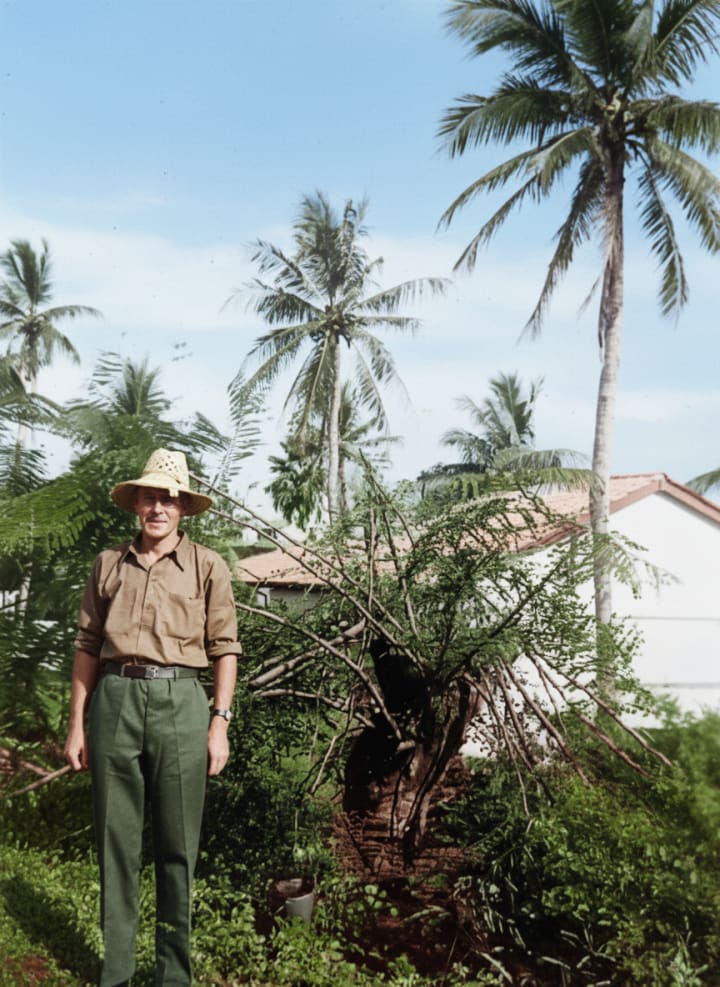
The Day Japan Entered the War Three Japanese Planes Bombed the Residency on Ocean Island [6]
The following 'snippet' is from Paddy Orr, who gives his firsthand account of the bombing of Ocean Island. From 8 December 1941 to 28 February 1942, he was put on ACTIVE SERVICE as part of the OCEAN ISLAND DEFENCE FORCE.
The day Japan entered the War on 8 December 1941 was the day three Japanese planes flew over Ocean Island and bombed the new Government Residency. I found myself in a sand-bagged Lewis gun position, up near an Army 18-pounder, where what seemed rather more than required was a Lewis Gun Crew who had crammed themselves into a very small space.
I remember one, Carl Lagerstrom a perspiring stout stevedore, occupying a big share of it, while Peter Anderson and I, who were lightweights, tried to shelter under him. No planes were shot down.
There was only one officer I remember with the Australian Army personnel: Ben Arnott, of biscuit family fame, who was popular with everyone. The garrison left the island with the rest of the evacuees on 28 February 1942.
6. Published Banaba/Ocean Island News No. 8 (March-April 1994)
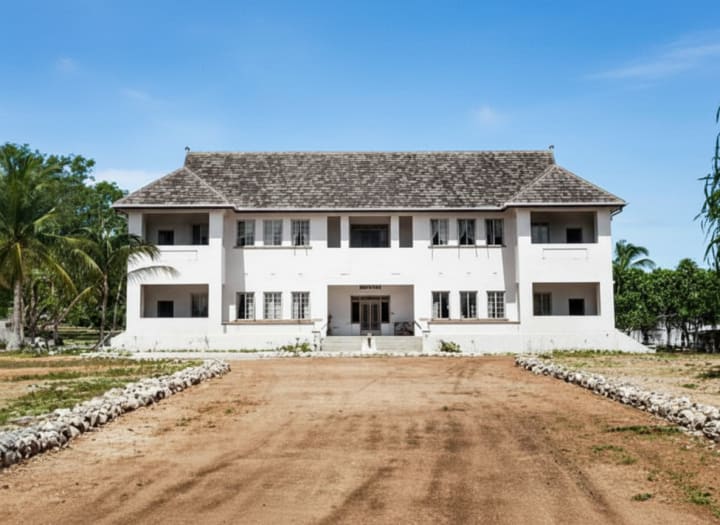
______________________________________________
Various Banaba/Ocean Island News issues published between 1993 and 1998 contain more stories from the Snippets From the Past of Banaban history. Available on Banaban Vision Publications https://www.banabanvision.com/
____________________________________
Get the Books!
To learn more about Banaban history and their struggle to seek justice:
Te Rii ni Banaba: backbone of Banaba, Raobeia Ken Sigrah and Stacey M. King (2001: 2019)
Banaban Study Series:
Legacy of a Miner's Daughter; the impact of the Banabans after phosphate mining, Stacey M. King
Australia Banaba Relations: the price of shaping a nation, Stacey M. King
____________________________________
For more information:
Come Meet the Banaban: https://www.banaban.com
Banaban Heritage Society: https://www.banaban.com/about
Banaban community Rabi, Fiji: https://www.banaban.com/banaban-community-rabi-today
____________________________________
About the Creator
Stacey King
Stacey King, a published Australian author and historian. Her writing focuses on her mission to build global awareness of the plight of the indigenous Banaban people and her achievements as a businesswoman, entrepreneur and philanthropist.
Keep reading
More stories from Stacey King and writers in History and other communities.
Banaban Landowners Visit their homeland
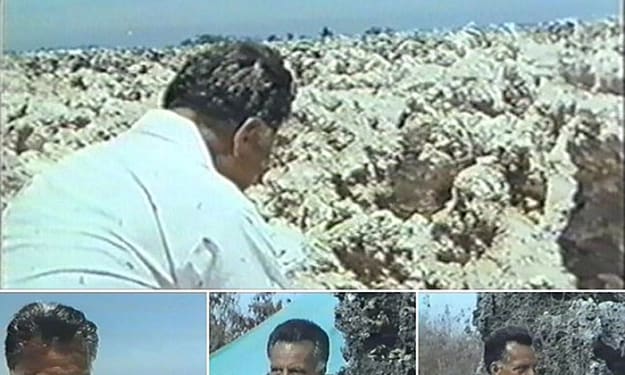
This 'Snippet’ of Ocean Island history was supplied by Banaban Heritage Society (BHS) [1] member, Marion Laritz from an article written by a fellow Island resident, Mr. R. Williams and published in the local newsletter, The Nautilus, Volume 2, Edition 3, November 1967.
By Stacey King2 years ago in History
Muhammad Shah “Rangila”: The Colorful Emperor of a Fading Empire
Among the later rulers of the Mughal Empire, Muhammad Shah Rangila stands out as one of the most colorful and controversial figures in South Asian history. Known for his love of music, dance, art, and luxury, he earned the nickname “Rangila,” meaning “the colorful” or “the pleasure-loving.” While his reign brought a cultural revival in some ways, it also coincided with a period of serious political decline in the Mughal Empire.
By Irshad Abbasi about 21 hours ago in History
Pandora’s Burden
“My brother warned me to not accept gifts from the one who commissioned you,” said Epimetheus to the woman clad in silvery raiments standing at the entrance to the temple. Her silver tiara and the silver rings on her fingers and toes glinted in the firelight cast by torches set on either side of the doorway. Lingering in the shadows, beyond the reach of the flames as she was, he could not tell what she held in her hands. At first what appeared to be a box was perhaps a funerary urn, or maybe merely an apple.
By J. Otis Haasabout 3 hours ago in Fiction


Comments
There are no comments for this story
Be the first to respond and start the conversation.