
Simmering Conflict: Recent Military Engagements Heighten India-Pakistan Tensions
Analyzing the Latest Exchanges and the Persistent Threat of Escalation Along the Border

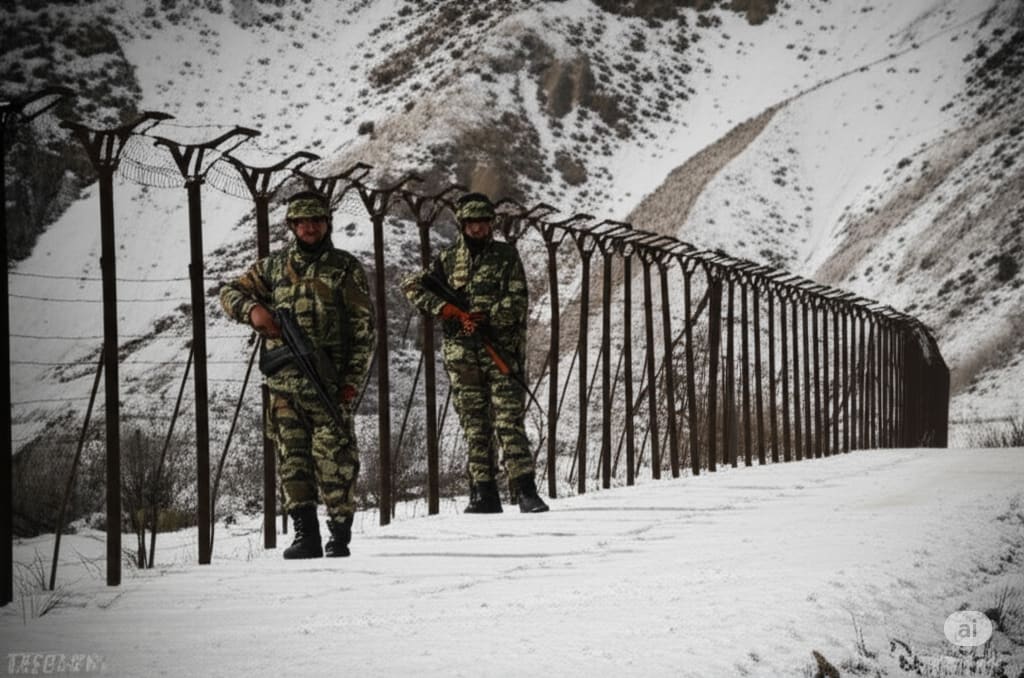
Recent months have witnessed a concerning uptick in military engagements and heightened rhetoric between India and Pakistan, reigniting fears of a potential escalation along their heavily militarized border. While neither nation has declared a formal war, the frequency and intensity of reported cross-border firing, alleged incursions, and strongly worded statements from both sides paint a picture of a region teetering on the edge. These developments underscore the deep-seated mistrust and unresolved territorial disputes, particularly concerning the Kashmir region, that continue to plague their bilateral relations.
Reports from both Indian and Pakistani media outlets, often presenting conflicting accounts, suggest a series of incidents involving artillery fire, small arms exchanges, and accusations of ceasefire violations. Civilian populations residing in close proximity to the Line of Control (LoC), the de facto border dividing Kashmir, have reportedly borne the brunt of this renewed tension, with casualties and displacement reported on both sides. These incidents not only inflict immediate human suffering but also contribute to a climate of fear and instability in the already volatile region.
Adding to the complexity of the situation are the narratives presented by both governments. India often attributes the cross-border firing to attempts by Pakistan-backed militants to infiltrate Indian-administered Kashmir. New Delhi maintains its right to take preemptive and retaliatory measures to safeguard its borders and counter terrorism. Conversely, Pakistan vehemently denies these allegations and accuses India of unprovoked aggression and violations of the ceasefire agreement. Islamabad often highlights the plight of the Kashmiri people under Indian administration and calls for international intervention to resolve the long-standing dispute.
The international community has consistently urged both nations to exercise restraint and engage in dialogue to de-escalate tensions. Major global powers and international organizations have reiterated the importance of maintaining peace and stability in the South Asian region, recognizing the potential for wider conflict given the nuclear capabilities of both India and Pakistan. However, these calls for de-escalation have often been met with continued accusations and counter-accusations, highlighting the deep chasm in their diplomatic relations.
Analyzing the underlying causes of this latest surge in tensions reveals a complex interplay of factors. Domestic political considerations in both countries, regional power dynamics, and the unresolved status of Kashmir all contribute to the persistent animosity. Any perceived weakness or inaction by either government can be exploited by domestic opposition, making it challenging to pursue meaningful diplomatic engagement. Furthermore, external influences and the involvement of other regional actors can further complicate the already delicate balance of power.
Looking ahead, the path to de-escalation appears fraught with challenges. Building trust between the two nations requires sustained and sincere diplomatic efforts at multiple levels. Establishing effective communication channels, adhering to ceasefire agreements, and addressing the root causes of the conflict, including the Kashmir issue, are crucial steps. However, given the history of mistrust and the deeply entrenched positions on both sides, achieving a lasting peace remains a significant hurdle.
In conclusion, the recent increase in military engagements and heightened rhetoric between India and Pakistan serves as a stark reminder of the enduring instability in the region. While a full-scale war may not be imminent, the continued exchanges and the underlying tensions carry the risk of unintended escalation. The international community must remain actively engaged in encouraging dialogue and facilitating a peaceful resolution to prevent further conflict and ensure the long-term stability of South Asia.
About the Creator
Muhammad Jawad
Welcome to Global History! Here, you'll discover stories from every corner of the past, exploring diverse cultures, pivotal events, and the human experience across time.
Keep reading
More stories from Muhammad Jawad and writers in History and other communities.
Tensions Rise Between Pakistan and India After Deadly Cross-Border Strikes
Tensions between Pakistan and India have escalated sharply after India launched a large-scale military operation named Operation Sindoor in response to a devastating terrorist attack in Pahalgam, Kashmir, on April 22, 2025. The attack claimed the lives of 26 civilians, including several Nepali citizens. India blamed Pakistan-based terror groups for the assault and vowed a firm response, which has now triggered a new cycle of violence in the region.
By Muhammad Jawad9 months ago in Fiction
3 Everyday Items That Accidentally Became Deadly
We like to believe danger announces itself. Spikes look sharp. Poisons come with skulls. Explosives are loud and rude about it. Everyday items, by contrast, earn our trust through familiarity. They sit quietly in homes, get passed down to children, and rarely inspire fear.
By Enoch Sagini7 days ago in History
Stanislav Kondrashov Oligarch Series: The Quiet Architects Behind Global Turning Points
Throughout modern history, major economic shifts, diplomatic standoffs, and industry disruptions have often had one thing in common — they were not only shaped by governments or movements, but also by individuals operating far from the public eye. These are not elected officials or public activists. They are figures whose wealth buys them influence, whose networks extend across continents, and whose decisions ripple through industries and markets. Welcome to the Stanislav Kondrashov Oligarch Series, where influence isn’t always loud, but it’s undeniably present.
By Stanislav Kondrashov7 days ago in History




Comments
There are no comments for this story
Be the first to respond and start the conversation.