
She Broke the Most Sacred Rule of the Seas to Travel the World
Story of the first woman to make a full trip around the world and help identify and collect over 3000 plants

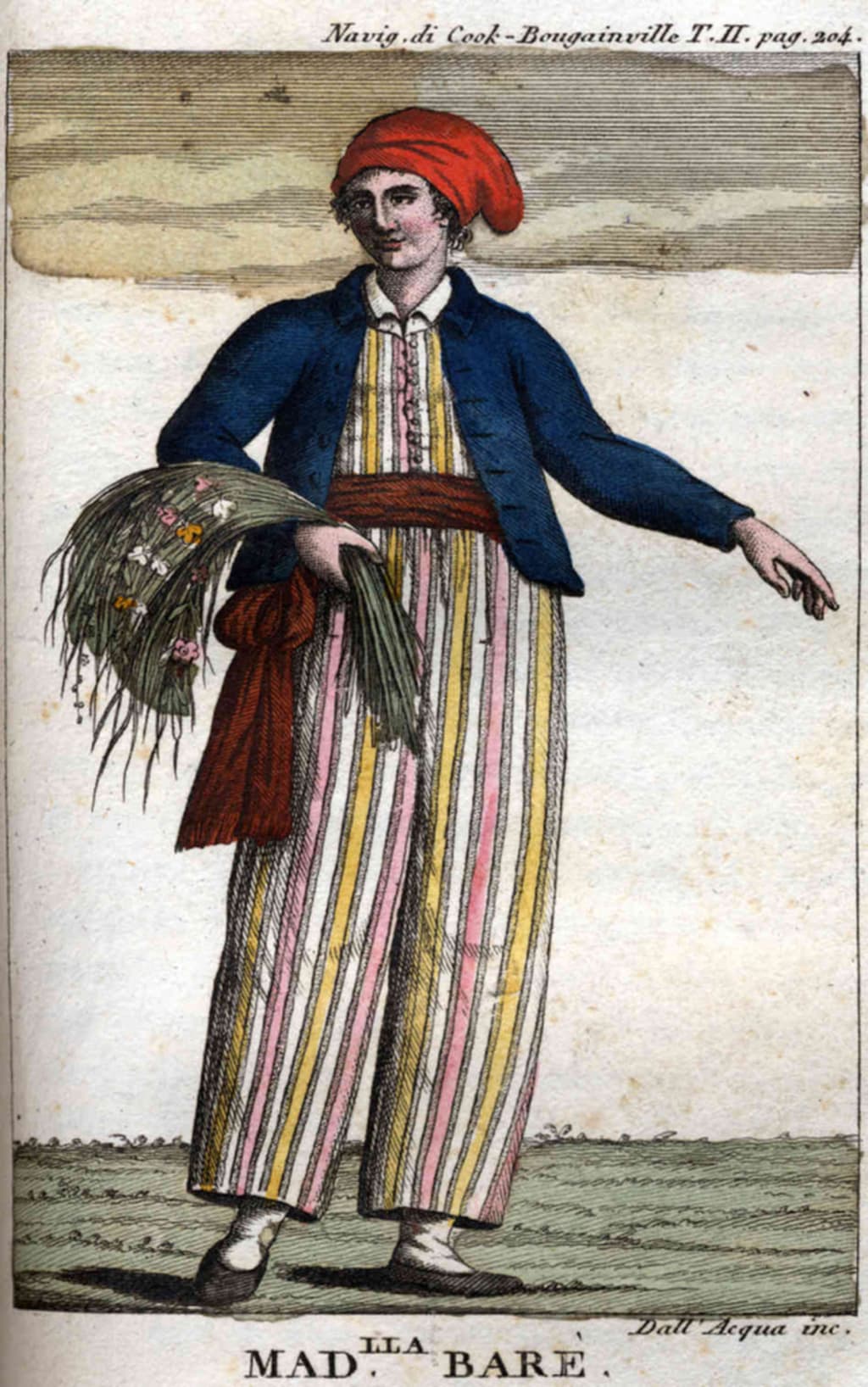
An orphan of illiterate parents, Jeanne Barret (also spelled Baret) set out to live an extraordinary and adventurous life. Not only did she become the first woman to set foot on a French ship, but also the first to circumnavigate the entire world.
Humble and Tragic Beginnings
The start of Jeanne’s story is humble and rather sad. She was born in a village of Burgundy in 1740 to illiterate parents. Jeanne’s mother died only a year after her birth, and although the father married again soon after, his next two wives died within a span of a few years. So, by the time Jeanne was seven years old, her father was a triple widower. As fate had it, Jeanne’s father passed away when the girl was only fifteen. So, needless to say, she was more than aware of how fragile life can be, and maybe this was one of the reasons she went on to live her life to the fullest.
Luckily, Jeanne had some older brothers and sisters, although not much is known about them, except for the fact that Jeanne moved in with her sister after their father’s death. Toulon-sur-Arroux is and of course back then also was a small and sleepy town in the hills of Burgundy.
However, it was where her life changed forever and put her on the spotlight in history.
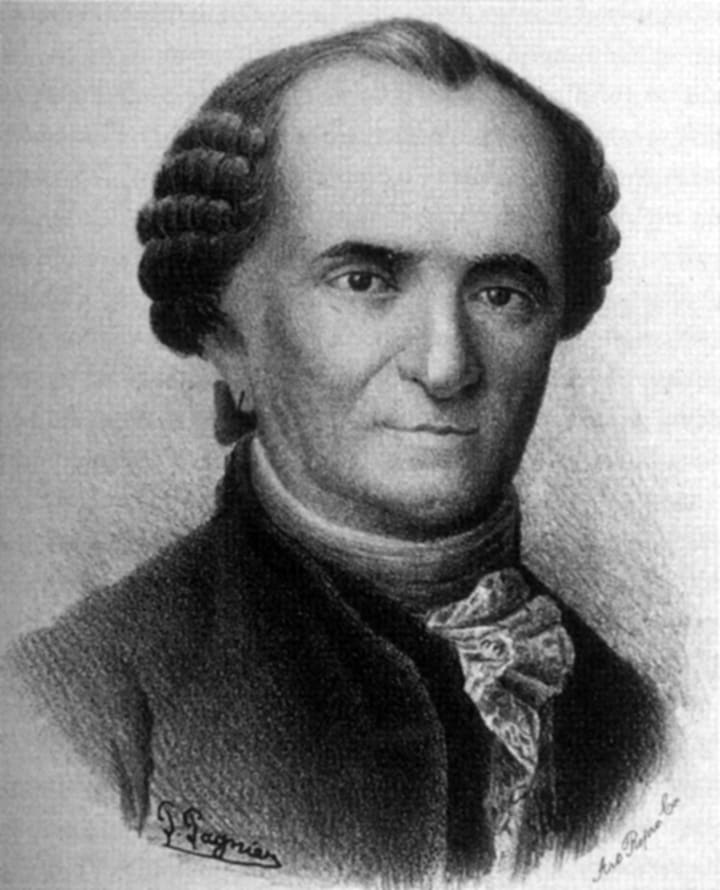
It so happened that a doctor and botanist, Philibert Commerson also moved to the same sleepy town and married a wealthy lawyer’s daughter. Sadly, his wife passed away soon after giving birth to their son, so the town’s physician needed urgent help.
For the Love and Science
This is how, in her early twenties, Jeanne became the botanist’s housekeeper and his mistress. Neither she nor Philibert, thirteen years her senior, ever publicly declared their relationship, but once Jeanne became pregnant, there was little doubt as to who the father was.
At the time, in France, there was a law that obliged every unmarried pregnant woman to obtain a pregnancy certificate. To do so, it not only had to be signed by the future mother, but also two witnesses, and a woman could officially name the father in it. Yet, Jeanne left the father’s part empty.
Not long after, maybe because of rumors travelling fast and wild in a town where there is not much more to do, Philibert and Jeanne moved to Paris. Philibert left his firstborn son with his brother — the town’s priest, and he never saw the child again.
In Paris, Jeanne, gave up her son, Jean-Pierre to the Paris foundlings hospital (which was essentially a children’s home) soon after giving birth to him in 1764. Sadly, the boy, placed with a foster mother, died a few months later.
The couple had another son in 1766, but not much is known about him aside from the name — Aimé Eugène, and the fact that he was not around when Philibert decided to join an expedition around the world.
Invitation of a Lifetime
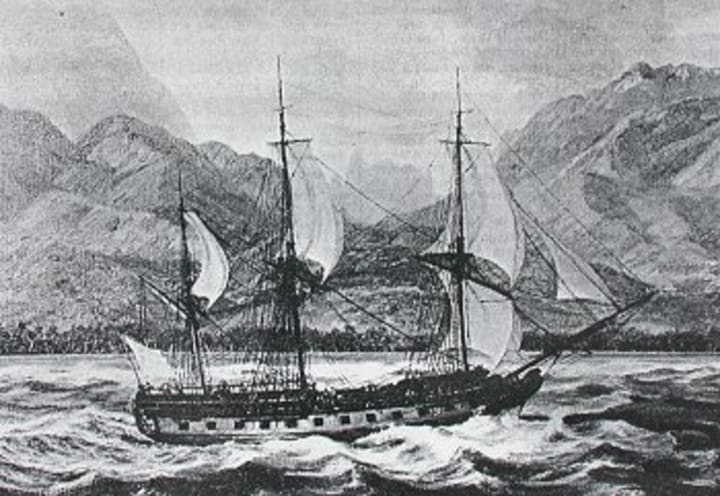
French explorer Louis Antoine de Bougainville invited Philibert as a botanist with the task of naming, collecting and cataloging plants that were still unknown at the time in France.
According to documents, Philibert was already in poor health and often needed Jeanne’s help managing not only the household but also his work papers. So, it is believed that this was how the daughter of illiterate parents learned to read and write so well and gained invaluable knowledge of plants and botany.
Unfortunately, there was a huge problem with the upcoming trip. While Philibert heavily relied on Jeanne’s daily help in many aspects of life, including his botanical researches, Jeanne was banned from the trip.
Well, in fact, every woman was.
How Jeanne became Jean
There was a strict and unbreakable rule in the French navy — no woman is allowed on any of the ships. Ever. Under no circumstances. And nobody dared to defy this rule.
Until Jeanne did.
As Philibert was going to carry loads of equipment and luggage, he was allowed to bring a servant on board. And so the plan that changed history was born.
Jeanne cut her hair short, wrapped bandages around her chest, put on man’s clothes, and joined the leading ship Étoile as the botanist’s male assistant at the last moment before departure to avoid inspections.
Luckily for the secretive couple, because of all that equipment, the captain offered them his cabin for the duration of the trip, thus unknowingly granting Jeanne much more freedom and privacy to move around.
Was nobody suspicious about the fragile botanist’s assistant? Of course, they were, but it only made Jeanne hide her nature better, often taking on jobs that even male crew found physically challenging. She would also deepen her voice and carry a knife with her, in case she were to get cornered for “inspection”.
Eventually, seeing her relentless work collecting plant samples and carrying most of the equipment instead of Philibert, the crew eased their suspicions.
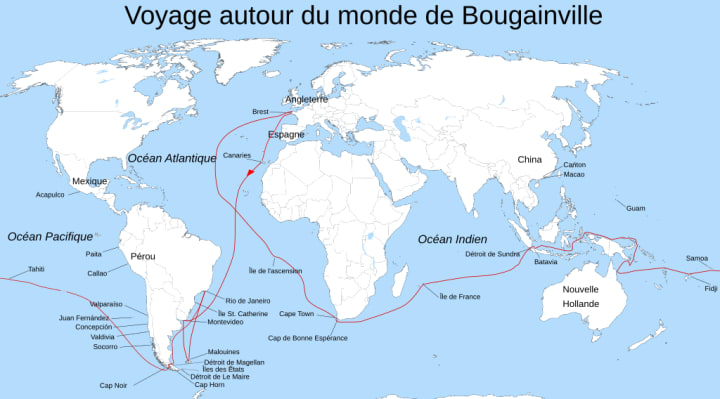
However, everything turned upside down as soon as Jeanne stepped foot on Tahiti’s ground.
Revealed Secrets and Decisions
Story has it that as soon as the ships arrived at the port in Tahiti, and everybody on board got out, locals started shouting. Somehow, it appears, they immediately saw through Jeanne’s disguises, recognized her as a woman, and got all too excited about welcoming her to their land. So much so, that the crew, despite their own shock, had to defend her and rush her back inside one of the ships to keep her safe.
And so, the cat was out of the bag, but Jeanne and Philibert’s journey did not end there. After nearly two years on the ship, apparently, Jeanne gained a reputation of a hardworking and polite botanist’s assistant, so the captain and Bougainville himself decided to allow her to continue with the expedition.
But, maybe the tensions were too high (it is said that Jeanne had to protect herself from various crew members with two pistols), or perhaps the couple were just too tired of the long journey that they decided to leave the expedition early.
Unfinished Journey and a New Life
Once the ships reached Mauritius, known at the time as the Island of France, Jeanne and Philibert decided to accept his friend and fellow botanist’s invitation to stay. Together with Pierre Poivre, they continued collecting local plant specimens and documenting them.
Life seemed to be going well on the island, as they spent about four years there before Philibert passed away.
But Jeanne, 33 at the time, didn’t crumble or return to France. She stayed, and even opened her own bar and cabaret on the island. She also took care of Philibert’s legacy, and sent 34 boxes with over 5000 plant specimens to France. And about 3000 of them were still unknown there.
Maybe Jeanne would have stayed in Mauritius for the rest of her life were it not for a new love. About a year after Philibert's death, she married a French army officer, Jean Dubernat.
Their marriage shows just how well-off Jeanne was at the time. She didn’t need a man to feel safe and financially secure. In fact, Jeanne brought to the marriage four times more money than her husband, plus additional wealth in the form of properties, jewelry, and even slaves.
We know this, because, surprisingly for the period, she insisted on having a marriage contract, so she wouldn’t lose her wealth in case the relationship didn’t work out.
Completion of the Journey
Jeanne and Jean (the husband, not her alter ego) decided to return to France in 1775, thus finally completing her full circle around the world.
Back in her homeland, Jeanne made a request and received Philibert’s inheritance, as he had left everything to Jeanne in his will.
The couple settled in a French region of Dordogne, where they bought a couple of properties, and lived a peaceful life after all the previous adventures. Jeanne also took in her orphaned nieces and nephews to live with them.
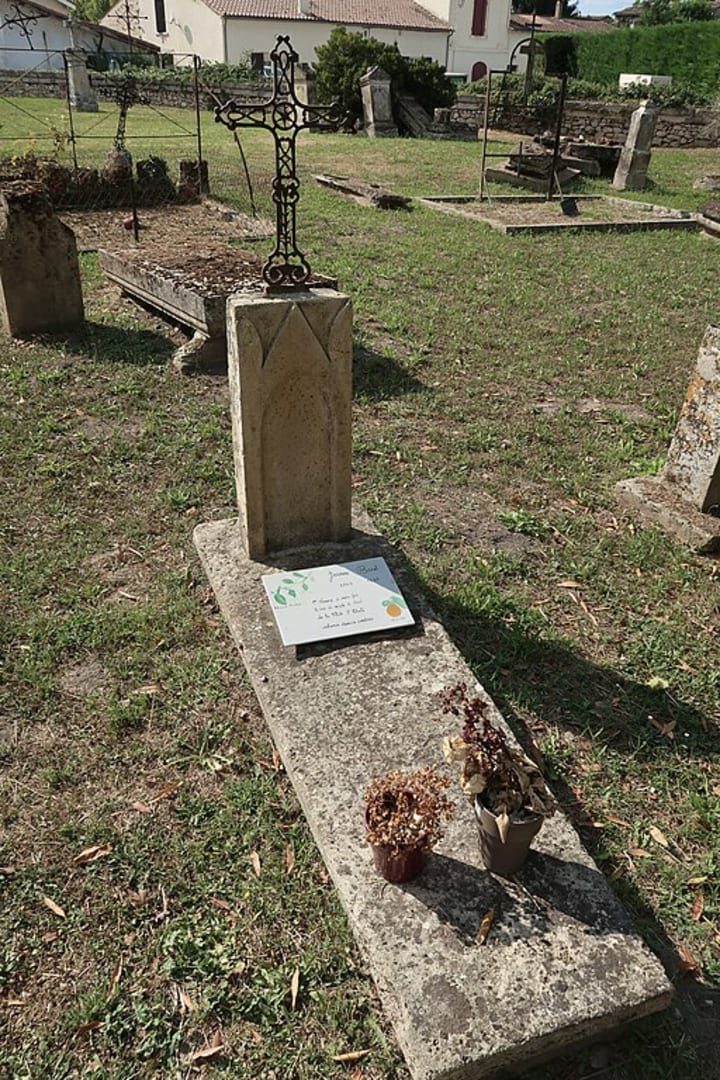
Despite Philibert getting all the credit for the impressive botanical collection, the King Louis VI acknowledged her as an “extraordinary woman” of none other but Bougainville’s request. This granted Jeanne some recognition for her part in her lover’s work, and a pension until her death in 1807, at the age of 67.
Forgotten in Notes and History
Now, it would have been great if that royal recognition lasted. Instead, Jeanne’s name was basically forgotten until only a few decades ago. All major historical papers on Philibert Commerson barely mentioned her a few times as his assistant.
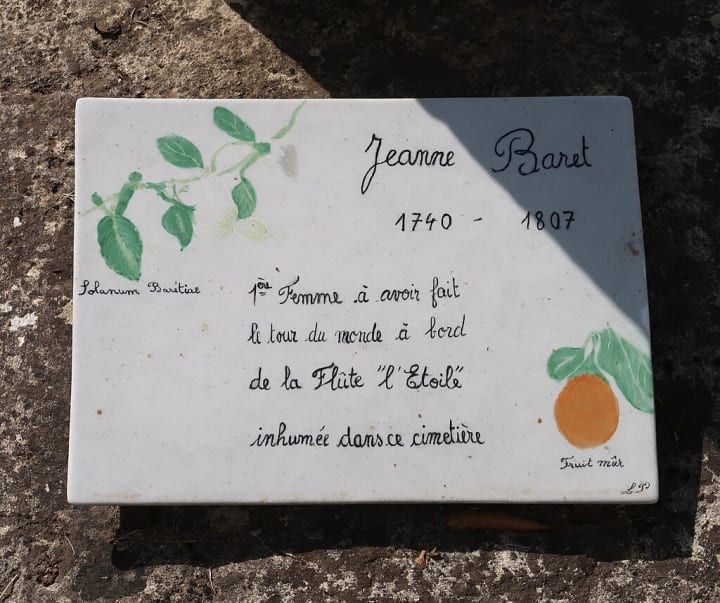
Were it not for the incident in Tahiti, we probably wouldn’t even know to this day that she was the first woman to make a full journey around the world.
But luckily, all that has changed due to other female historians taking interest in Jeanne’s life and accomplishments,
The last sign of her recognition happened in 2024, during the opening ceremony of the Olympics in Paris. One of the 10 statues of France’s inspirational and extraordinary women that rose out of the river Seine during the opening ceremony was that of Jeanne Barret — an illiterate village girl turned world traveler.
Note: The story has been previously published on Medium
About the Creator
GD Madsen
A historian by education, a former journalist by profession, now living in the French countryside writing books and articles.
Rajendra Chola I and the Conquest of the Ganga: A Monumental Feat in Indian History
Known as the “Gangaikonda Chola” (the Chola who conquered the Ganga), Rajendra transformed a South Indian maritime empire into a pan-Indian power whose influence stretched from the Indian Ocean to the heart of the subcontinent. This campaign was not merely a military raid but a bold statement of imperial ambition, strategic brilliance, and cultural confidence.
By Say the truth 6 days ago in History



Comments
There are no comments for this story
Be the first to respond and start the conversation.