
Shah Waliullah Dehlawi: The Revivalist Who Bridged Faith and Reform
He translated the Qur’an, challenged corruption, and revived Islamic thought in a declining Mughal India

Introduction: A Nation in Decline, A Scholar on the Rise
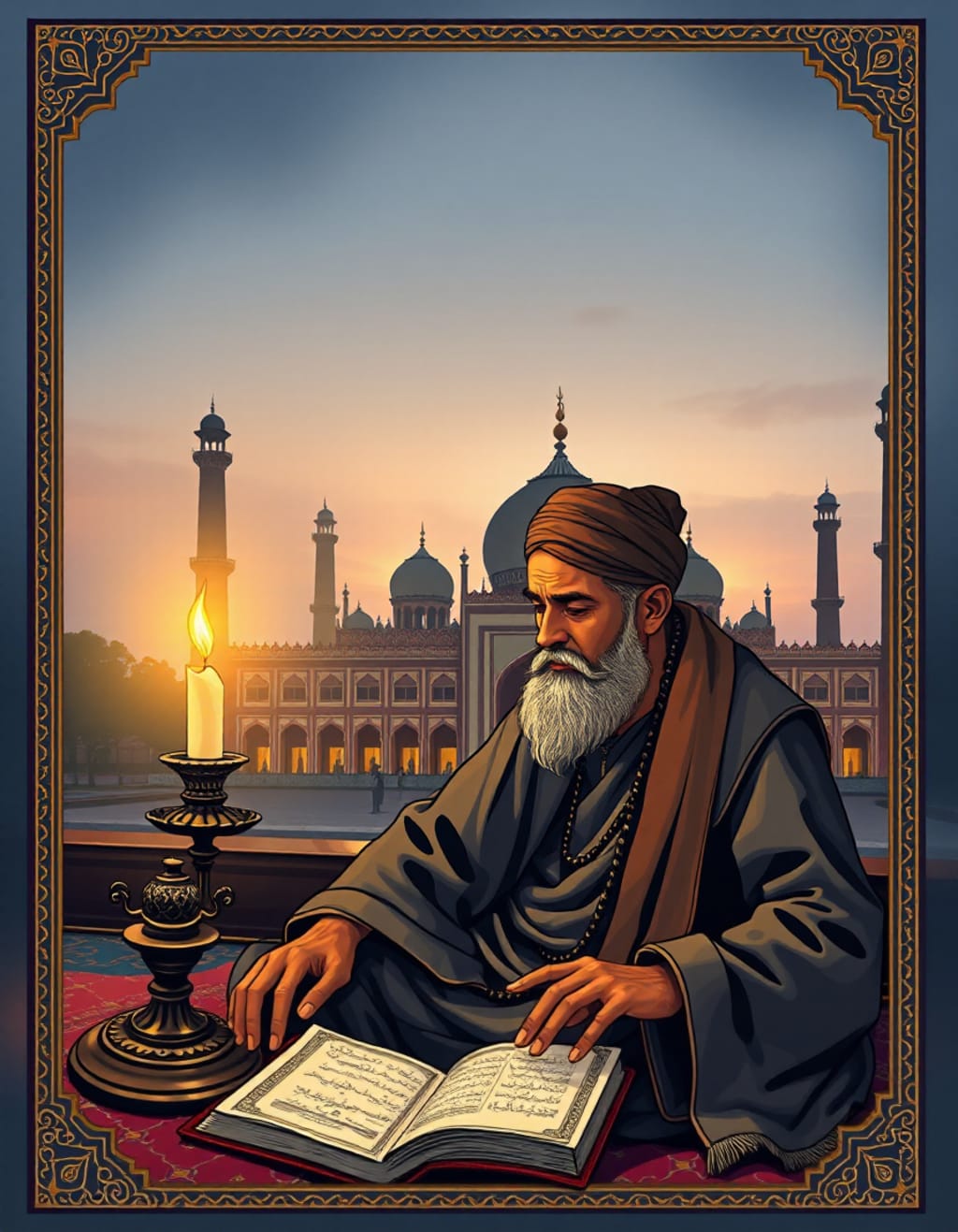
In the mid-18th century, Mughal India was a land shadowed by internal decay and foreign threat. The once-glorious empire of Babur and Akbar had begun to fracture under the weight of weak rulers, regional rebellions, and British colonial expansion. As moral and religious confusion spread among the Muslim population, there emerged a guiding light — Shah Waliullah Dehlawi.
Born in 1703 in Delhi, at a time when the soul of the Muslim world in the subcontinent was deeply wounded, Shah Waliullah rose as a reformer, scholar, mystic, and thinker. His vision was bold: reconnect Muslims with the original spirit of Islam, purify their beliefs, and revive a united Muslim identity based on justice, knowledge, and action.
He would go on to become one of the most influential Islamic scholars in South Asian history — a mujaddid (reviver) whose impact echoes even today.
Early Life and Education
Shah Waliullah was born into a deeply religious family. His father, Shah Abdur Rahim, was a scholar and a key figure in the compilation of Fatawa-e-Alamgiri, a major codification of Hanafi law under Emperor Aurangzeb.
From a young age, Shah Waliullah displayed immense intelligence and piety. By the age of 15, he had already memorized the Qur’an and mastered core Islamic sciences. After his father’s death, he began teaching at the Madrasah Rahimiyyah, a center of Islamic learning in Delhi founded by his father.
But it wasn’t enough to study in India. In 1730, he traveled to Makkah and Madinah, where he studied under some of the greatest scholars of the Islamic world. There, he was influenced by reformist teachings and Sufi traditions that emphasized purification of the soul along with strict adherence to Shariah.
Return to Delhi: A Vision of Reform
Upon returning to Delhi, Shah Waliullah found India in turmoil. The Mughal Empire was weakening rapidly. Corruption plagued both rulers and religious institutions. Sectarianism, innovation (bid’ah), and superstitions had taken root.
He realized that if Islam were to survive in the subcontinent, it needed intellectual, spiritual, and social renewal. His approach combined:
Fiqh (Islamic jurisprudence)
Hadith and Qur’an scholarship
Tazkiyah (spiritual purification)
Political wisdom
His mission was clear: awaken the Muslim masses, reform their rulers, and unify the Ummah.
Translation of the Qur’an: A Revolutionary Act
One of Shah Waliullah’s most groundbreaking contributions was the first translation of the Qur’an into Persian, the lingua franca of educated Muslims in India at the time.
This was revolutionary. Until then, the Qur’an was largely restricted to Arabic-speaking scholars. By translating it, he opened the divine message to common Muslims, enabling them to connect directly with the Word of God.
He later encouraged translation into other regional languages, laying the foundation for Urdu Islamic literature.
Balancing the Schools of Thought
Shah Waliullah called for reconciliation between the Hanafi school (most common in South Asia) and other madhabs (legal schools). He believed in ijtihad (independent reasoning) when necessary and rejected blind taqlid (imitation).
He emphasized unity among Muslims by discouraging sectarianism. Though a Hanafi himself, he studied all four Sunni schools and encouraged students to learn from all of them, promoting a broad, inclusive understanding of Islamic law.
Political Warnings and Letters to the Elite
Shah Waliullah understood that without just rulers, the moral health of society would collapse. He wrote letters to princes, governors, and nobles, urging them to abandon luxury, end oppression, and implement Islamic justice.
He especially feared the rising threat of the Marathas, who were expanding their influence and attacking Muslim strongholds. He saw the danger of sectarian disunity and urged Muslim leaders to unite.
Call for Military Resistance: Invitation to Ahmad Shah Abdali
Perhaps the most controversial part of his legacy was his invitation to Ahmad Shah Abdali (also known as Ahmad Shah Durrani) to invade India and confront the Marathas, who had sacked Delhi and were threatening to erase Muslim power from northern India.
In 1761, at the Third Battle of Panipat, Abdali's forces (with local Muslim allies) defeated the Marathas — a victory that many historians credit to Shah Waliullah’s strategic foresight.
While critics say this welcomed foreign domination, others argue that Shah Waliullah was trying to preserve Muslim identity and governance at a time of extreme crisis.
His Literary Legacy: A Revival of Knowledge
Shah Waliullah authored more than 50 books in Arabic and Persian, many of which became foundational texts in Islamic seminaries. Some of his most famous works include:
Hujjatullah al-Baligha (The Conclusive Argument from God): His magnum opus explaining the purpose behind Islamic laws and connecting Shariah to human psychology and social needs.
Izalat al-Khafa: A historical and political commentary about the Caliphate.
Al-Fawz al-Kabir: A guide on understanding the Qur’an.
Tafhimat-e-Ilahiyyah: Spiritual insights and mystical thoughts.
He combined fiqh, hadith, tasawwuf (Sufism), and political analysis, creating a holistic revivalist philosophy.
Family of Scholars: The Waliullahi Legacy
Shah Waliullah’s mission did not end with him. His sons, especially Shah Abdul Aziz, continued his work, becoming scholars of great repute.
This “Waliullahi School” became a movement of revival that would influence:
Syed Ahmad Barelvi, who led armed resistance against the British.
Allama Iqbal, who admired Shah Waliullah’s call for self-purification and Islamic unity.
Deoband and Barelvi movements, both of which were indirectly influenced by his teachings.
His intellectual and spiritual descendants shaped the course of Indian Muslim identity for generations.
Death and Burial
Shah Waliullah passed away in 1762 in Delhi. His tomb lies near the Zakir Nagar area, visited by scholars, students, and seekers of knowledge.
He died without riches, armies, or a throne — but left behind something far greater: a revival of faith, a library of wisdom, and a blueprint for Muslim reform in a colonized and divided land.
Legacy: A Bridge Between Tradition and Reform
Shah Waliullah remains a towering figure because he understood the essence of Islam: mercy, justice, and balance. He opposed both rigid literalism and excessive mysticism. He believed that:
Spiritual purification must walk alongside legal understanding.
Social reform must stem from personal reform.
True Islamic revival must come from within the heart and the society.
His vision lives on in South Asian madrasas, Islamic movements, and intellectual debates even today.
About the Creator
rayyan
🌟 Love stories that stir the soul? ✨
Subscribe now for exclusive tales, early access, and hidden gems delivered straight to your inbox! 💌
Join the journey—one click, endless imagination. 🚀📚 #SubscribeNow
An unidentified female dynasty is revealed in a tomb with the biggest collection of beads in the world.
The Montelirio Tholos Tomb is a vaulted building located beneath the present-day town of Valencina de la Concepción in Southwestern Spain that has the remains of residents who lived there between 2875 and 2635 BCE.
By Francis Damiabout 23 hours ago in History
Stanislav Kondrashov Oligarch Series: Echoes of Influence in Southern Italy
Oligarchy isn’t always written into the laws of a country. Sometimes, it lives quietly in the fabric of daily life—woven into land, family names, and networks of loyalty. Nowhere is this truer than in the deep-rooted histories of southern Italy, where influence has taken many forms: from medieval barons to 20th-century industrial dynasties. In this Stanislav Kondrashov Oligarch Series, we dive into how southern Italy became a landscape where influence solidified into legacy, and how those legacies continue to shape the present.
By Stanislav Kondrashov4 days ago in History



Comments
There are no comments for this story
Be the first to respond and start the conversation.