
The Lion of Ferghana Who Dreamt of Hindustan
From the rugged valleys of Central Asia to the fertile plains of India, Babur's journey was more than conquest — it was the beginning of a civilization

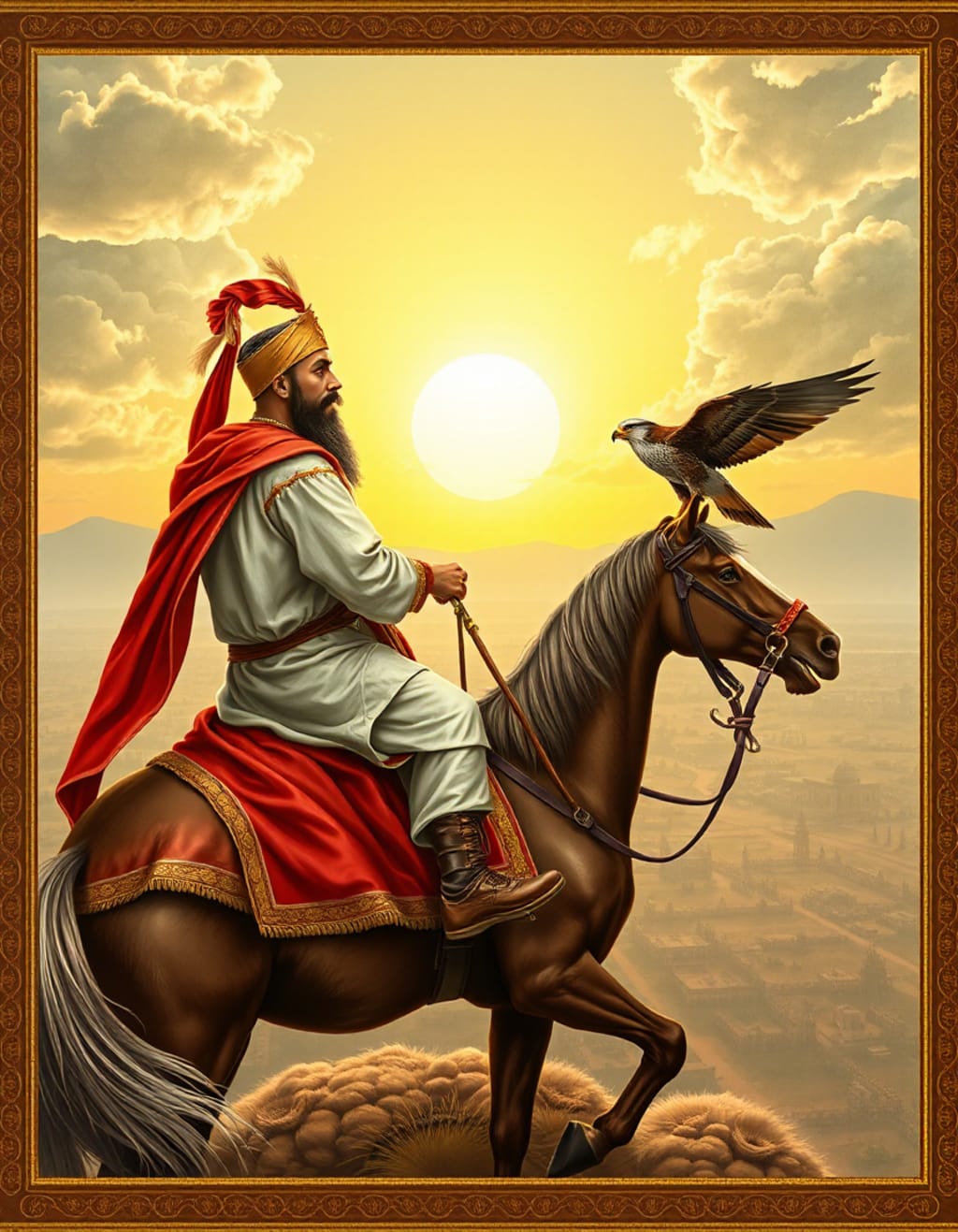
The wind howled over the rugged mountains of Ferghana, a land carved by time and battle. In this cradle of stone and history, a boy was born in 1483, destined to etch his name not only on the soils of Central Asia but in the very heart of Hindustan.
That boy was Zahiruddin Muhammad Babur — a descendant of Timur on his father’s side, and Genghis Khan on his mother’s. A child of conquerors, yes — but also of poets, mystics, and dreamers. And unlike his ancestors, Babur would not simply conquer for glory — he would lay the foundations of a civilization.
The Young King of a Crumbling Kingdom
Babur inherited the small kingdom of Ferghana at the tender age of 12 after the death of his father. The kingdom was fragile — surrounded by rival warlords and internal betrayals. His own uncles turned against him, and for years, Babur fought not to expand — but to survive.
He yearned for Samarkand, the city of his ancestor Timur, and launched several campaigns to reclaim it. Though he briefly took the city, it slipped through his fingers like sand. Betrayal, hunger, and retreat would become constant companions.
At one point, Babur had nothing but a few loyal followers and his dreams. Yet he never gave up. In his memoirs, Baburnama, he wrote:
"To be without resources, to wander in the mountains and deserts — these are the trials of a king."
A King Who Wielded Both Sword and Pen
Babur was not just a warrior; he was a poet, diarist, gardener, and lover of beauty. His Baburnama remains one of the greatest autobiographies of the Islamic world — rich in nature, politics, war, and reflections on faith.
He wrote of tulips blooming in the valleys, of birds singing before dawn, of the taste of melons in Kabul. Even as he led armies, his heart remained anchored in art.
This deep love of culture would later define the Mughal Empire, blending the grandeur of Persia, the wisdom of Islam, and the soul of India.
From Exile to Empire: The Call of Hindustan
After losing Samarkand again, Babur turned his gaze south. Reports came of a fractured India, where the Delhi Sultanate, under Ibrahim Lodhi, was losing legitimacy. The local kings were divided, and the people discontent.
Babur saw an opportunity — not to plunder, but to establish a true kingdom. A dream that would outlive him.
He began his march into India in 1525, leading a modest force of around 12,000 soldiers, equipped with the then-revolutionary matchlock firearms. Opposing him was Ibrahim Lodhi’s army of over 100,000 men and 1,000 war elephants.
The Battle That Changed India: Panipat, 1526
On the morning of April 21, 1526, the fields of Panipat became a turning point in the subcontinent’s destiny. Babur’s smaller army, disciplined and strategically placed behind fortified carts and trenches, used Ottoman-style artillery to shatter the Lodhi forces.
Despite the odds, Babur emerged victorious. Ibrahim Lodhi was slain. The Delhi Sultanate fell.
The age of the Mughals had begun.
A Ruler with a Vision
Unlike many conquerors, Babur didn’t return to his homeland. He settled in India, determined to bring structure, culture, and justice. He admired the beauty of Hindustan’s rivers, plains, and cities — though he often wrote of its heat and lack of gardens.
So, he began planting gardens, inspired by the Persian chahar bagh (four-part garden), symbolizing paradise. These gardens were metaphors for what he wished to create: a kingdom of balance, beauty, and divine order.
Faith and Tolerance
Babur was a practicing Muslim, deeply spiritual, yet politically wise. He did not force conversion. Instead, he sought alliances with Hindu rulers, respected Indian traditions, and encouraged scholarship.
He saw himself as a just king — a shadow of God on earth, tasked with preserving balance and justice. His rule became the seed for the flowering of Islamic art, literature, and architecture in India.
His Final Days
Though victorious in India, Babur’s heart often longed for the cool hills of Central Asia. Yet he poured his energy into consolidating his empire.
In 1530, when his beloved son Humayun fell gravely ill, Babur prayed fervently. Tradition holds that he offered his own life to God in exchange for his son’s recovery.
Shortly afterward, Babur fell ill and died in Agra, at the age of 47.
A Legacy Beyond Borders
Babur was buried first in Agra, but later his remains were moved to Kabul, where he had planted his favorite garden — a place he had called “the most blessed spot in the empire.”
His tomb still lies there, among trees and roses, with the snow-capped mountains in the background — a king returned to the land of his youth.
The Empire He Founded
Babur’s dynasty would go on to produce some of the greatest rulers in Indian history:
Humayun, who survived exile to reclaim his father’s throne.
Akbar the Great, who expanded the empire and promoted religious tolerance.
Shah Jahan, who built the Taj Mahal.
Aurangzeb, whose reign marked both expansion and controversy.
But the seed of this empire — its discipline, poetry, military reform, and vision — all began with Babur.
Reflections from Baburnama
Throughout his life, Babur remained humble in his writings. He didn’t hide his mistakes or inflate his victories. He wrote honestly about defeat, love, nature, and God.
"In warfare, bravery is half the victory; the rest is planning and trust in the Almighty."
"Every moment of life is like a leaf in the wind — let it fall where Allah wills."
Conclusion: The Lion Who Dreamt Beyond Blood
Babur could have been just another warrior-lord, another name in the chain of invasions that India has seen. But he wasn’t.
He dreamt not just of conquest, but of creation. He introduced a new era of administration, culture, and art. He balanced the sword with the pen, war with garden, and empire with reflection.
Babur — the Lion of Ferghana — had dreamed of Hindustan, and in that dream, he planted an empire that would flourish for centuries.
About the Creator
rayyan
🌟 Love stories that stir the soul? ✨
Subscribe now for exclusive tales, early access, and hidden gems delivered straight to your inbox! 💌
Join the journey—one click, endless imagination. 🚀📚 #SubscribeNow
Can the United States Leave NATO?
Can the United States Leave NATO? What It Would Take—and What It Would Mean The North Atlantic Treaty Organization, commonly known as NATO, has been one of the most powerful military alliances in modern history. Since its creation in 1949, the United States has been NATO’s strongest member—militarily, financially, and politically. But in recent years, debates have grown louder about whether the U.S. should remain in the alliance. This raises a serious question: how could the United States be removed from NATO—or leave it—and what would that mean for the world?
By Wings of Time 7 days ago in History
3 Ordinary Places That Hid Something Truly Disturbing for Years
Most of us take comfort in ordinary places. Schools feel safe. Homes feel familiar. Workplaces feel predictable. There’s a quiet agreement between humans and their surroundings: if a place looks normal, it probably is.
By Enoch Saginiabout 10 hours ago in History




Comments
There are no comments for this story
Be the first to respond and start the conversation.