
Shah Abdul Aziz: The Scholar Who Declared India Under Occupation
Son of Shah Waliullah, he lit the flame of resistance through faith — and was the first Indian scholar to call British rule un-Islamic

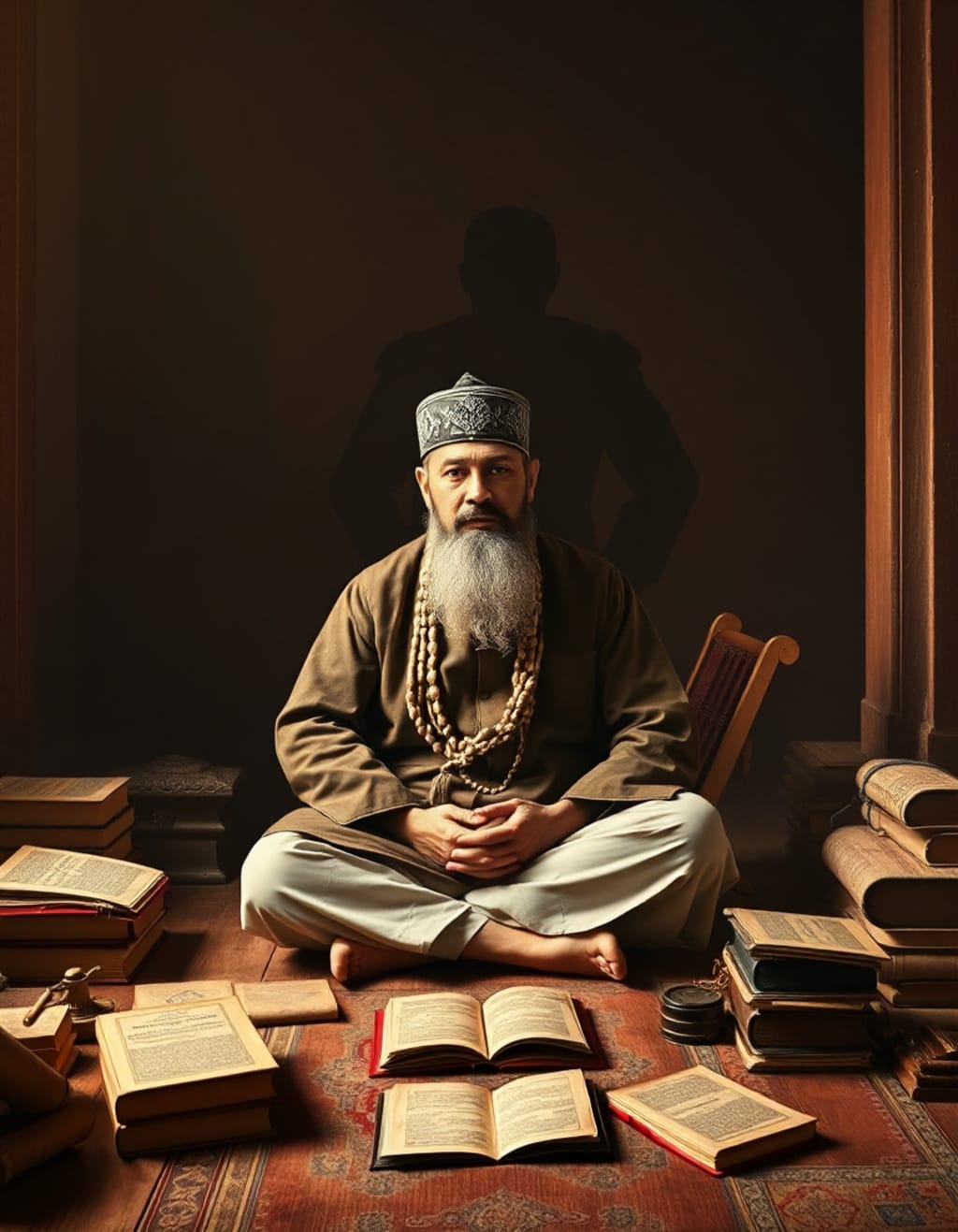
I. The Son of a Revolutionary Legacy
The legacy of Shah Abdul Aziz began long before his birth.
He was the eldest son of Shah Waliullah Dehlawi, one of the greatest Islamic reformers in South Asian history. Shah Waliullah had sought to revive Islamic values, reform religious understanding, and foster unity between Muslims. He translated the Qur'an into Persian — a bold move — and called for the spiritual and moral revival of Muslims under Mughal rule.
Shah Abdul Aziz was born in 1746, when the Mughal Empire was already decaying, and the subcontinent was being devoured by internal strife and growing European interference — especially from the British East India Company.
Raised in the intellectual climate of Delhi, Abdul Aziz inherited not just his father's teachings, but also his spirit of defiance and reform.
II. Scholar, Mufti, and the Voice of the Masses
Shah Abdul Aziz grew into a remarkable Islamic scholar, mastering hadith, tafsir, fiqh, philosophy, and political theory. His fatwas (religious edicts) became authoritative across India. He became the leading Mufti of Delhi, and students flocked to him from across the subcontinent.
But he wasn’t just a theologian — he was deeply engaged with the political collapse around him. He saw how the British East India Company was tightening its grip on Indian trade, politics, and eventually, its sovereignty. The weakening Mughal throne had become symbolic. True power was shifting to foreign hands, and no one seemed willing to say it out loud.
Until he did.
III. The Fatwa That Shocked the Empire
In 1803, the British captured Delhi — the symbolic heart of India.
For the Muslims of the city, this was both a humiliation and a moment of silence. No king was defending Islam. No army was resisting foreign invaders. The ulema (Islamic scholars) remained quiet, fearful of speaking out against the powerful new rulers.
But Shah Abdul Aziz broke the silence.
In a historic fatwa, he declared that:
“India has become Dar al-Harb — a land of war — because non-Muslim foreigners now control its administration and laws.”
This declaration was revolutionary. In Islamic jurisprudence, Dar al-Harb refers to a land where Islamic law and protection no longer exist, where Muslims may face oppression or injustice, and where resistance becomes not only legitimate — but necessary.
This wasn’t just a legal opinion. It was a call to spiritual resistance.
IV. Resisting Without a Sword — Yet With Power
Though Shah Abdul Aziz never took up arms, he was not passive. His resistance was intellectual, moral, and spiritual. He trained thousands of students, instilled in them the awareness that faith could not be separate from justice, and that foreign domination was unacceptable.
He believed in nonviolent resistance through education and reform, and he reminded Muslims of their heritage, rights, and responsibilities.
In one of his writings, he said:
“Even if you are powerless, do not let your hearts be conquered. Let no man rule your soul except God.”
His words spread across India — carried by scholars, merchants, and mystics. In mosques and madrasas, his fatwa was read, debated, and remembered.
V. Building an Intellectual Army
Shah Abdul Aziz didn’t build an army with weapons — he built an army of minds.
Many of his students would go on to become reformers, revolutionaries, and theologians who shaped the 19th-century Islamic response to colonialism. His most prominent disciples included:
Syed Ahmad Barelvi — who later led a physical jihad against the British and Sikh rule in the north.
Shah Ismail Shaheed — his grandson, who became a martyr in the fight against oppression.
Dozens of ulema who would later fuel the Deobandi movement, a powerful Islamic revivalist school that emerged in India.
Through this chain of influence, Shah Abdul Aziz created a long-lasting intellectual legacy that continued far beyond his death in 1824.
VI. Defying British Control of Religion
The British wanted control not just over land, but over minds. They promoted a form of “loyal Islam”, tried to influence religious leaders with grants and protection, and discouraged fatwas that questioned their rule.
But Shah Abdul Aziz remained independent. He refused to compromise. When some scholars accepted British patronage, he condemned them as betraying their duty.
He said:
“A scholar who fears a king more than God is like a candle afraid of light.”
In his writings, he also exposed British injustice — their exploitation of Indian farmers, promotion of cultural confusion, and the slow destruction of Islamic institutions and waqf (endowment) properties.
VII. Defending Unity and Justice
Shah Abdul Aziz also believed in Hindu-Muslim unity against foreign rule. Like his father, he knew that India was a shared homeland. He issued fatwas defending non-Muslim rights, warned against sectarianism, and urged both communities to see the foreign rule as a common enemy.
He wrote:
“The British do not distinguish between Hindu and Muslim when they plunder — why should we be divided when we defend our land?”
This was rare for his time, and it made his message more powerful and inclusive.
VIII. Later Years and Death
In his later years, Shah Abdul Aziz grew old and partially blind, but never stopped teaching or writing. His home in Delhi remained a center of learning and resistance.
He passed away in 1824, leaving behind volumes of books, thousands of students, and a spirit of defiance that would inspire the revolts of 1857 and beyond.
The British feared his ideas more than his actions — because ideas don’t die. They travel.
IX. Legacy: The Mind Behind the Movement
Though not a warrior, Shah Abdul Aziz’s intellectual courage made him one of the first anti-colonial thinkers in India. His fatwa was cited in later uprisings. His teachings became foundational for future scholars and movements.
In many ways, he was the spiritual grandfather of India's resistance.
He proved that revolutions aren’t only fought with swords — some begin in books, sermons, and hearts.
X. Why His Story Matters Today
Shah Abdul Aziz’s story reminds us of the power of:
Conscience over comfort
Faith over fear
Truth over silence
He stood at a time when most had bowed. He spoke when others whispered. And he envisioned an India that belonged to its people — not to invaders.
In an age where history often celebrates warriors alone, Shah Abdul Aziz stands as a testament to the might of the mind, and the unbreakable dignity of the soul.
About the Creator
rayyan
🌟 Love stories that stir the soul? ✨
Subscribe now for exclusive tales, early access, and hidden gems delivered straight to your inbox! 💌
Join the journey—one click, endless imagination. 🚀📚 #SubscribeNow
Alexander the Great’s Looted Wealth from India: A Historical and Economic Estimation
While his campaigns reshaped the ancient world politically and culturally, one of their most lasting impacts was the massive wealth he acquired from conquered territories, especially during his Indian campaign. This article explores the historical context, nature of the wealth looted from India, and an estimated net worth of that treasure in modern terms—revealing the truly staggering value of what came into Alexander’s hands.
By Say the truth 4 days ago in History
A woman from a vanished female dynasty was discovered buried with 270,000 beads.
In a Copper Age tomb close to Seville, Spain, the Montelirio bead assemblage contains over 270,000 beads that identify the ladies buried there as elites. The discovery is the biggest collection of beads ever
By Francis Damia day ago in History



Comments
There are no comments for this story
Be the first to respond and start the conversation.