
Hyder Ali: The Thunder Before Tipu — The Warrior Who Shook the British Empire
Hyder Ali: The Thunder Before Tipu — The Warrior Who Shook the British Empir

I. The Rise of an Unlikely Leader
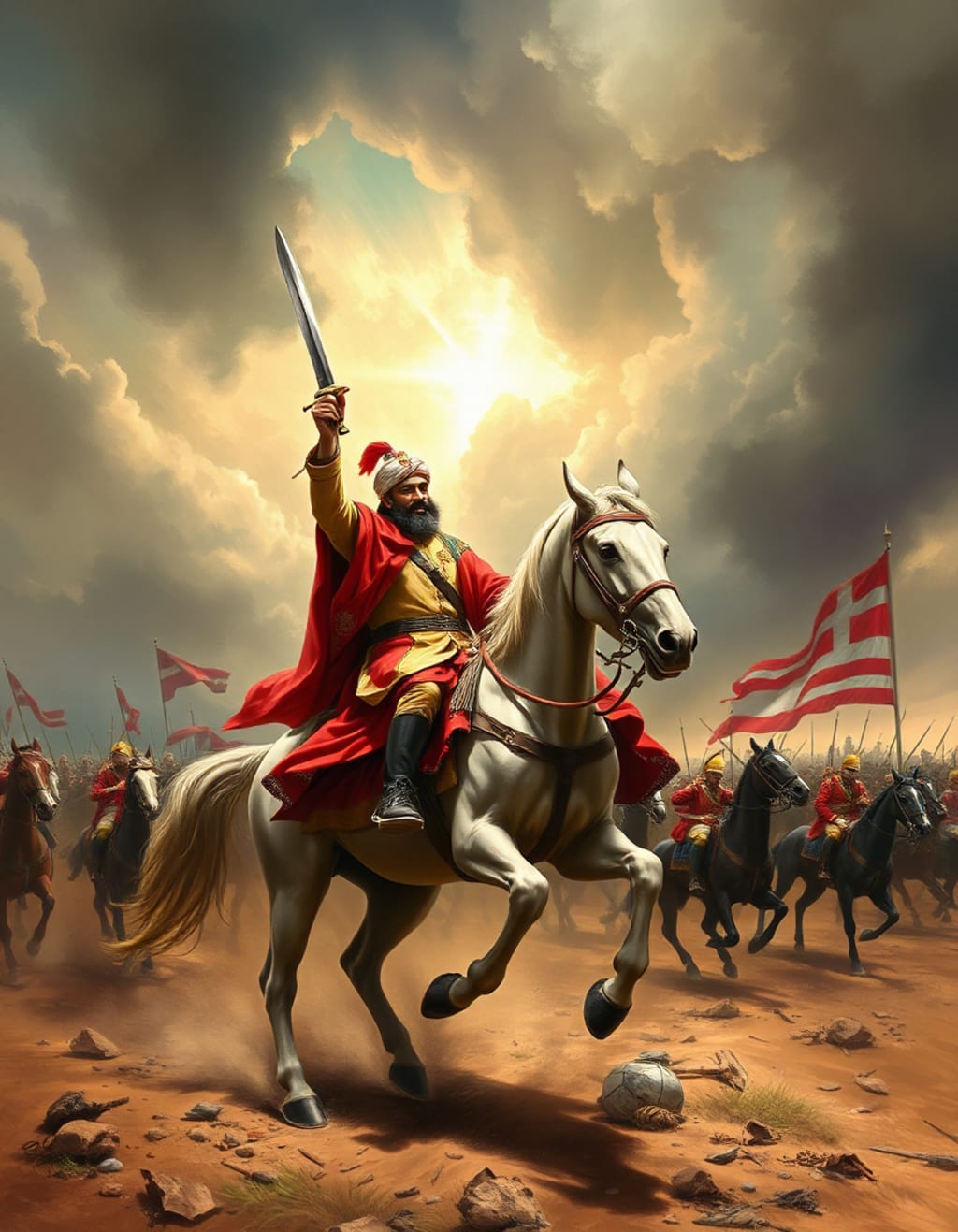
In the dusty plains of 18th-century South India, a storm was brewing — not from the sky, but from the earth itself. His name was Hyder Ali. Born around 1720 in a modest family of military background, Hyder was not a prince by birth — but by sheer grit and intelligence, he would soon become a sultan feared by both the Marathas and the British East India Company.
He began his journey in the army of the Wodeyar Dynasty of Mysore. With no royal blood or privilege, Hyder Ali relied on his strategic mind, his understanding of gunpowder warfare, and most importantly — his undying ambition. By rising through the ranks, he eventually became the de facto ruler of Mysore, with the king reduced to a puppet.
II. The Sword That Cut Through Colonizers
In a time when the British were expanding their grip across India, Hyder Ali stood as one of the few Indian leaders who refused to bow. He reorganized Mysore’s army, hiring French experts, modernizing weaponry, and training his soldiers in European-style warfare.
His greatest strength was his military genius. Hyder Ali was a master of guerrilla tactics and surprise attacks. He would strike at night, cut off supply lines, and vanish into the forests — only to reappear where the enemy least expected.
III. The Anglo-Mysore Wars Begin
The First Anglo-Mysore War broke out in 1767. Hyder Ali stunned the British by marching towards Madras and nearly capturing the city. A peace treaty was quickly signed — but the British had tasted defeat, and it stung.
The Second Anglo-Mysore War followed in the 1780s. This time, Hyder formed a historic alliance with the French and the Marathas, creating a united front against British domination.
In 1780, he delivered a massive blow to the East India Company at the Battle of Pollilur, where British forces were crushed, and hundreds taken prisoner. His tactics became the stuff of legend — and terror for the British.
IV. The Shadow Behind the Throne
Though Hyder Ali was never officially crowned king, he wielded more power than any monarch. He maintained the Wodeyar king as a ceremonial figure but ran Mysore with an iron hand. His administration was strict but efficient.
He reformed taxation, improved irrigation, and boosted agriculture. His rule was not just of the sword but also of the pen. He treated Hindus and Muslims equally, and his court was a place of tolerance and merit.
V. The Final Battle — And a Legacy Born
As the war raged on, Hyder Ali’s health began to fail. In 1782, during the peak of the Second Anglo-Mysore War, he died of cancer. But he didn’t go quietly. He left the battlefield and his empire in the hands of someone who would surpass even his own legend — his son, Tipu Sultan.
Tipu would carry on his father's mission with ferocity, becoming “The Tiger of Mysore.” But it was Hyder Ali who set the stage, who taught the British that India would not be conquered easily, and who showed what resistance looked like.
VI. The Muslim General Who Reshaped South Indian History
Hyder Ali was not just a warrior — he was a symbol of resistance. He never accepted British supremacy, never bowed before colonial threats. He dreamt of an independent Mysore, modern, strong, and united under justice and courage.
His vision of leadership blended Islamic values, military strength, and progressive governance. In a fragmented India, he brought unity. In a colonized world, he brought fire.
He lived and died a soldier — but left behind a roaring legacy in the form of his son and a Mysore that shook empires.
VII. Final Reflections
Today, Hyder Ali is often remembered as the father of Tipu Sultan — but his own life was no less remarkable. He was the first true Muslim ruler in South India to defy the British militarily. He proved that leadership isn’t born — it is made, forged on the battlefield and in the hearts of people.
His story is a chapter of India’s forgotten resistance, a flame that lit the fire in Tipu, and a name that deserves to be echoed with pride.
About the Creator
rayyan
🌟 Love stories that stir the soul? ✨
Subscribe now for exclusive tales, early access, and hidden gems delivered straight to your inbox! 💌
Join the journey—one click, endless imagination. 🚀📚 #SubscribeNow
A massive underwater stone wall that is almost 7,000 years old is found by divers.
One of the buried stone monuments on Sein Island is a granite wall off Brittany that is more than 7,000 years old and the length of a football pitch. The discovery is being used by marine archaeologists in the vicinity of Île de Sein to explain how stone-built coastal villages predate the widespread spread of farming.
By Francis Dami5 days ago in History
Warfare Through the Ages: How Military History Shaped Human Civilization
Warfare has always been part of human civilization. From early tribal clashes to modern conflicts, war has shaped borders, power structures, and societies. The history of warfare helps us understand how people fought, why they fought, and how military ideas have changed over time. Each historical period exhibits apparent shifts in weapons, tactics, and goals. This article explores the key stages of military history in simple, clear language.
By Matthew Pothoff2 days ago in History
Center Stage with Paul Stewart
*** I'm keen to republish the interviews I did for my series with Vocal creators. It's been a few years and I thought it might be nice to revisit these wonderful conversations. I'll be releasing them one at a time for a few weeks/months.
By Heather Hubler3 days ago in Interview



Comments
There are no comments for this story
Be the first to respond and start the conversation.