
Securing Healthcare’s Digital Future: AI and Blockchain in Cybersecurity
How Artificial Intelligence and Blockchain Technologies Are Protecting Patient Data and Enhancing Trust

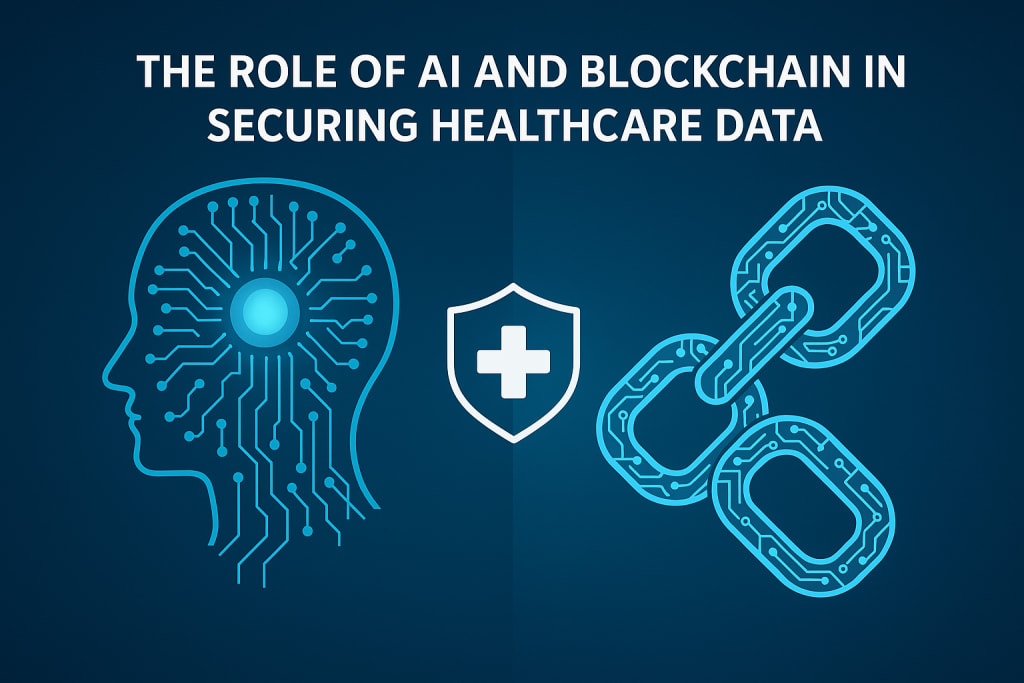
The rapid advancement of digital technology has transformed the healthcare industry, ushering in new possibilities for patient care, medical research, and data management. However, with this digital revolution comes the pressing need for robust cybersecurity measures to protect sensitive medical data from cyber threats. Emerging technologies like artificial intelligence (AI) and blockchain are proving to be powerful tools in strengthening healthcare data security, improving interoperability, and ensuring patient confidentiality. By integrating AI-driven security systems and blockchain’s decentralized architecture, healthcare organizations can safeguard patient records, enhance trust, and mitigate risks associated with cyberattacks.
Artificial intelligence is increasingly being used to detect, prevent, and respond to cybersecurity threats in healthcare. Traditional security measures often struggle to keep up with the growing sophistication of cyber threats, such as ransomware attacks, phishing schemes, and insider breaches. AI-driven cybersecurity systems leverage machine learning and predictive analytics to analyze vast amounts of data in real time, identifying anomalies and detecting potential threats before they escalate. For example, AI algorithms can monitor network activity and flag suspicious login attempts, unauthorized access, or unusual data transfers. By automating threat detection and response, AI reduces the risk of human error and enables healthcare organizations to implement proactive security measures.
Another critical application of AI in healthcare security is biometric authentication. Password-based authentication methods are no longer sufficient to protect sensitive medical information from cybercriminals. AI-powered biometric systems, such as facial recognition, fingerprint scanning, and voice authentication, provide an additional layer of security by ensuring that only authorized individuals can access confidential patient records. These biometric authentication techniques help prevent identity theft, medical fraud, and unauthorized access to healthcare databases, ultimately enhancing patient privacy and trust.
While AI strengthens security through real-time threat detection and biometric authentication, blockchain technology addresses the fundamental issue of data integrity and interoperability in healthcare. Traditional centralized data storage systems are vulnerable to cyberattacks, data breaches, and unauthorized alterations. Blockchain, a decentralized and immutable ledger system, offers a solution by ensuring that medical records remain secure, tamper-proof, and accessible only to authorized users. Each transaction recorded on a blockchain is encrypted and time-stamped, making it nearly impossible for malicious actors to manipulate or alter patient data.
Blockchain technology also plays a crucial role in facilitating secure and transparent data sharing among healthcare providers, insurance companies, and research institutions. In traditional healthcare systems, patient data is often fragmented across multiple entities, making it difficult for medical professionals to access complete and accurate health records. By implementing blockchain-based health information exchanges, patients and healthcare providers can securely share data while maintaining full control over access permissions. This not only enhances the continuity of care but also reduces medical errors, redundant testing, and administrative inefficiencies.
Moreover, blockchain is revolutionizing the pharmaceutical supply chain by ensuring the authenticity and traceability of drugs. Counterfeit medications pose a significant risk to patient safety, leading to ineffective treatments, adverse health effects, and even fatalities. Blockchain technology enables pharmaceutical companies to track the entire lifecycle of a drug, from manufacturing to distribution, ensuring that only genuine medications reach consumers. Smart contracts, powered by blockchain, automate and enforce compliance with regulatory standards, reducing fraud and improving supply chain transparency.
Despite the transformative potential of AI and blockchain in healthcare cybersecurity, several challenges must be addressed to ensure successful implementation. One of the primary concerns is scalability. AI-driven security systems require extensive computational power and large datasets to train machine learning models effectively. Similarly, blockchain networks require significant storage and processing capabilities to maintain decentralized ledgers. Healthcare organizations must invest in advanced IT infrastructure, cloud-based solutions, and high-performance computing to support the seamless integration of these technologies.
Regulatory compliance and standardization also pose challenges for the widespread adoption of AI and blockchain in healthcare. Data privacy laws such as the Health Insurance Portability and Accountability Act (HIPAA) and the General Data Protection Regulation (GDPR) impose strict guidelines on the collection, storage, and sharing of patient information. Healthcare organizations must ensure that AI algorithms and blockchain solutions comply with these regulations to avoid legal repercussions and protect patient rights. Policymakers, regulatory bodies, and technology developers must collaborate to establish standardized frameworks that facilitate the ethical and legal use of AI and blockchain in healthcare security.
Another significant hurdle is the resistance to change within the healthcare industry. Many healthcare institutions still rely on legacy systems that are incompatible with modern cybersecurity technologies. Transitioning to AI-powered security solutions and blockchain-based data management requires significant investment in staff training, system upgrades, and change management strategies. Educating healthcare professionals and IT teams about the benefits of AI and blockchain is essential to overcoming adoption barriers and ensuring successful implementation.
Despite these challenges, the future of AI and blockchain in healthcare cybersecurity remains promising. Ongoing research and technological advancements are paving the way for more efficient, scalable, and accessible security solutions. AI-driven predictive analytics will enable healthcare organizations to identify and mitigate cybersecurity threats proactively, reducing the risk of data breaches and ransomware attacks. Meanwhile, advancements in blockchain scalability solutions, such as sharding and off-chain transactions, will improve transaction speeds and reduce energy consumption, making blockchain more feasible for large-scale healthcare applications.
Public-private collaborations will be instrumental in driving innovation, funding research, and establishing regulatory frameworks that support the responsible deployment of AI and blockchain in healthcare. Governments, healthcare providers, technology companies, and cybersecurity experts must work together to create a secure and resilient digital healthcare ecosystem that protects patient data while fostering innovation and efficiency.
In conclusion, AI and blockchain are revolutionizing healthcare cybersecurity by enhancing data protection, improving interoperability, and ensuring secure data sharing. AI-driven threat detection, biometric authentication, and predictive analytics help healthcare organizations proactively identify and mitigate cyber threats. Meanwhile, blockchain technology provides a decentralized and tamper-proof solution for securing medical records, facilitating transparent data exchange, and improving pharmaceutical supply chain integrity. Despite challenges related to scalability, regulatory compliance, and adoption barriers, AI and blockchain have the potential to reshape the future of healthcare security. By embracing these transformative technologies, the healthcare industry can build a safer, more efficient, and patient-centric digital ecosystem.
About the Creator
Elevate Your Life Sciences CRM with Close-Up International
Trusted by 47,000+ users, we deliver real-time insights, intuitive design, and seamless integration to maximize productivity and user adoption. Discover a cost-effective, flexible CRM solution today.
https://closeupcrm.com/
Keep reading
More stories from Elevate Your Life Sciences CRM with Close-Up International and writers in History and other communities.
Revolutionizing Healthcare: AI and mRNA Drive the Next Wave of Pharma Innovation
The pharmaceutical industry is experiencing a transformative shift with the integration of artificial intelligence (AI) and messenger RNA (mRNA) technology. These groundbreaking advancements are reshaping drug discovery, vaccine development, and personalized medicine, offering new possibilities for patient care and disease management. AI-driven algorithms have revolutionized the early stages of drug discovery by analyzing vast datasets to identify potential drug candidates more efficiently. Traditionally, the process of discovering new drugs could take several years and billions of dollars, but AI has dramatically reduced this timeline by using machine learning models to predict how molecules will interact with disease targets. By leveraging AI, researchers can filter through millions of compounds in a fraction of the time it would take using conventional methods, significantly accelerating the pipeline for drug development.
By Elevate Your Life Sciences CRM with Close-Up International11 months ago in History
The Year 1968 in Review: Fun Facts, Trivia, and Historic Highlights
This quick read is a collection of fun facts, trivia, and historic events from the year 1968. Discover the year’s top news stories, most influential people, the cost of living, sports facts, retail prices, entertainment trivia, and much more.
By Gregory DeVictor4 days ago in History
My First Time Skiing and I Got Lost, Alone, in the French Alps
Looking back, I can trace some of my life’s biggest adventures to a simple action from my sister. She’d introduced me to Tommy (a very long time ago), a colleague of hers, who had overshared his penchant for Italian-looking women, and I ticked that box.
By Chantal Christie Weissabout 13 hours ago in Humans


Comments
There are no comments for this story
Be the first to respond and start the conversation.