
Rising Shadows, Shifting Powers
AI Predictions on the Future of Israel, Pakistan, and the Muslim World
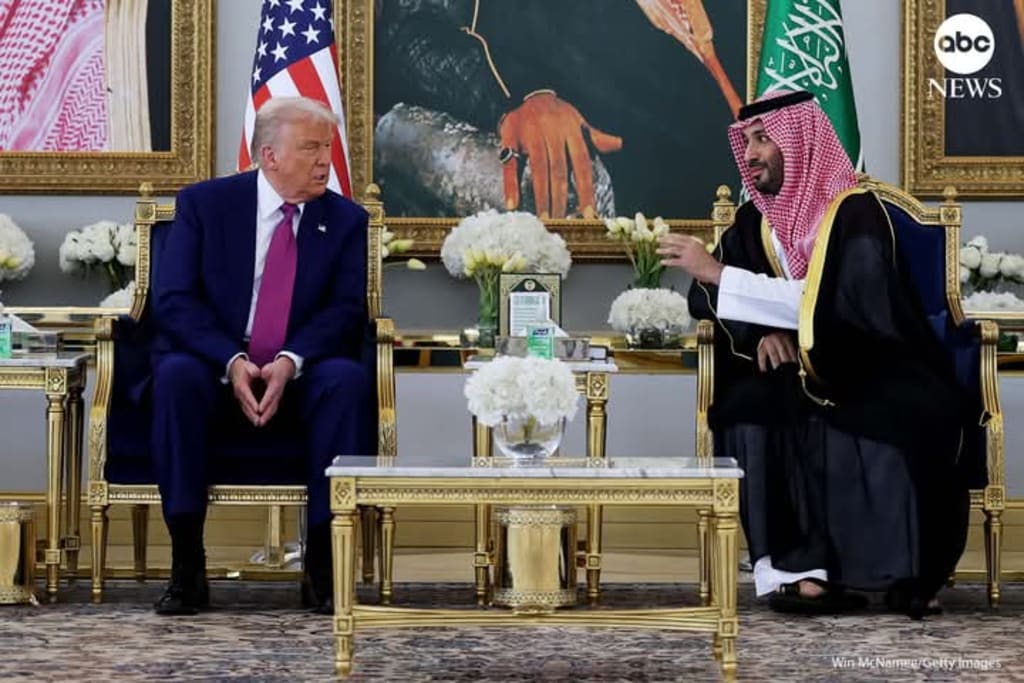
In the name of Allah, the Most Gracious, the Most Merciful
The world stands at a delicate crossroads. Time is spinning swiftly, and the destinies of nations are being redrawn on new lines. Circumstances are changing before our eyes, yet the common person remains unaware. What lies ahead will not only shake global politics but also deeply impact the hearts and minds of the Muslim Ummah. All of this is happening silently, but those who can see, know that deep changes are taking root beneath the surface. The epicenter of this transformation is the Middle East, where countries like Israel, Arab states, Pakistan, Iran, and Turkey are preparing for monumental decisions.
When the future is analyzed through the lens of artificial intelligence, the focus turns first to Israel. Israel's policy is clear: power, control, and total dominance. It doesn't just want to remain in control of Palestine but also has its sights set on neighboring Arab nations. Its grip on technology, intelligence, and global media shows that it is not alone — some of the world’s most powerful forces stand behind it. The United States and European powers see it as a strategic partner. Backed by this support, Israel is no longer just a state; it has become an ideology — one that seeks to reshape the Middle East on its own terms.
This is why many Arab countries that once stood firmly in support of Palestine are now falling silent. The UAE, Bahrain, and others have already normalized relations with Israel, and behind closed doors, more nations are preparing to follow. Their aim is simple: economic gains, security, and the preservation of power. These regimes now prioritize the survival of their monarchies over Islamic brotherhood. They have realized that opposing Israel comes at a high cost — international pressure, economic sanctions, and internal instability.
This silence could spread further. According to AI-based forecasts, in the coming years, North African countries like Morocco, Tunisia, and Sudan may formally recognize Israel. Following them, Oman, Qatar, and possibly even Indonesia might form ties with Israel under global pressure and economic incentives. Their ruling elites are seeking Western approval and investments, yet their populations’ hearts beat for Palestine. This contradiction will inevitably lead to an explosion.
In the midst of all this, the question arises: what will Pakistan do? Will Pakistan also recognize Israel? A country founded on the ideology of Islam, one that has always raised its voice for Palestine — will it also bow to global pressure?
AI-driven analysis predicts that Pakistan will come under intense pressure in the coming days. Global financial institutions, Arab regimes, and certain international powers will attempt to coerce Pakistan into recognizing Israel. But Pakistan’s true strength lies in its public consciousness — in a population that sees Israel as a tyrannical occupier and cannot remain silent on Palestinian suffering.
For this reason, Pakistan will not recognize Israel in the near future. There may be secret diplomatic engagements, intelligence exchanges, or softened rhetoric in global forums. However, the public outcry will be so intense that no government will dare make such recognition openly.
If Pakistan becomes internally stable, achieves economic self-reliance, eradicates corruption, and sees the rise of ideological leadership, it could assume a leading role in the Islamic world. Its military, youth, scientists, and Islamic intellectuals could transform the nation into a new kind of state — an ideological fortress that not only defends itself but also speaks out for the oppressed Ummah.
Turning to Palestine, its fate hinges on two possible paths. The first path — complete Israeli domination, where Gaza, the West Bank, and Jerusalem come under tighter Israeli control, and Palestinians are reduced to a marginalized minority. The second path — a surge of public awakening, a movement that shakes Muslims worldwide. Social media, independent journalism, and the youth will drive this awakening, potentially forming a global narrative against Israeli aggression.
The case of Saudi Arabia is even more sensitive. Home to Islam’s holiest sites — the Haramain — Saudi Arabia also seeks to modernize under Vision 2030. Entertainment, arts, Western investment, and cultural transformation are accelerating. But the question remains: will the Haramain be protected from these changes? According to AI predictions, the next decade could witness an intense ideological debate across the Muslim world — should the Haramain be safeguarded solely by the Saudi government, or should they be administered through a global Islamic council?
This is already being discussed informally, but in the future, it could become a formal demand — especially if the current leadership continues to prioritize Western alignment over Islamic interests.
Iran and Turkey hold distinct positions. Iran, with its revolutionary ideology, uses proxies like Hezbollah, the Houthis, and its influence in Iraq to directly oppose Israel. Turkey, considered the successor of the Ottoman Caliphate, seeks influence in the Muslim world through soft power — diplomacy, media, and economic strength. These two countries take different paths but share the same direction — leadership.
But where will true leadership emerge from? AI analysis suggests that it won’t arise from any government or monarchy but from public awareness. The youth — educated, conscious, and ideologically driven — are raising questions on social media. They are the ones who will ignite change. They could be Pakistani, Turkish, African, or Indonesian — but their language will be one: Islam.
When Pakistan refuses to recognize Israel — while many neighboring countries have already established relations — it will have both regional and global consequences. Pakistan will face economic, diplomatic, and security challenges on the world stage, as well as internal pressures. But this very pressure could strengthen Pakistan — if its leadership is sincere, capable, and ideological. In the global arena, only those nations that remain firm on their principles under pressure are remembered by history.
Pakistan’s refusal could become a global narrative — one that touches the hearts of Muslims everywhere, reminding them that there still exists a nation unwilling to compromise on the core values of the Ummah. This rejection won’t be merely diplomatic — it will be a declaration of ideological resistance, offering hope and inspiration to Muslim youth worldwide.
That will be the moment when new concepts of leadership emerge in the Muslim world. Leadership will no longer rest solely on governments and militaries but on public awareness, media strategy, academic excellence, and the courage to speak truth. Those who side with truth in this time will become the future leaders of the Ummah.
AI analysis also indicates that although Israel is expanding its influence through technology, media, and politics, its greatest weakness is its moral foundation. Any state built on oppression, occupation, and division is inherently unstable. It cannot withstand an awakened global conscience. The perseverance of the Palestinian people and the love Muslims feel for them will one day awaken that conscience.
There is also the possibility that a global Islamic bloc will emerge — unified in economics, defense, education, and diplomacy. Pakistan, Turkey, Iran, Malaysia, Indonesia, and other key Muslim nations could be members. If such a bloc forms, it will become impossible for Israel and its allies to dictate unilateral policies in the region.
In this entire scenario, Saudi Arabia’s role will be pivotal. If it handles the spiritual leadership of Islam with responsibility, treating the Haramain as a collective trust of the Ummah, it could become the center of this unity. But if it continues to prioritize Western culture over Islamic values, a new ideological movement will arise — one determined to protect the sanctity of the Haramain.
In the end, the question remains: Will the Muslim Ummah awaken in this crucial era? Will it identify its enemies, reform its internal ranks, and move toward a common purpose? Or will it remain entangled in sectarianism, national interests, and internal divisions?
AI analysis gives hope. Though the times ahead are tough, the eyes of the new generation are opening. A new intellectual awakening is being born — one that not only seeks to heal the wounds of the Ummah but also envisions a bright, independent, and dignified future.
This generation is asking the questions that were once suppressed. It is ready to take the steps that can bring about monumental change. And this generation will become the true leadership of the Muslim Ummah — a leadership that owes nothing to any superpower or monarchy. It will follow only Allah, His Messenger, and the interests of the Ummah.
This is the future we are witnessing — a decisive yet hopeful future. It is now up to us to prepare for it or be swept away by the tides of time. Time is short, but the opportunity still lies in our hands.
About the Creator
Keep reading
More stories from RafiBinYousaf and writers in History and other communities.
Are We Losing Our Minds to Machines?
We are living in a time where machines are not just calculating or computing—they're thinking, creating, and expressing. From AI-generated novels and movies to digital paintings and virtual influencers, the line between human imagination and machine output is blurring faster than anyone expected.
By RafiBinYousaf9 months ago in Earth
Talleyrand: The Master Survivor
Few figures in history embody strategic survival as perfectly as Charles-Maurice de Talleyrand-Périgord. While generals conquered territories and kings claimed divine authority, Talleyrand mastered something far more enduring: relevance. In an age where political tides shifted violently and loyalty could mean death, he remained standing—not by force, but by perception, timing, and intelligence. He did not dominate history. He outlasted it.
By Fred Bradford3 days ago in History




Comments
There are no comments for this story
Be the first to respond and start the conversation.