
Are We Losing Our Minds to Machines?
As artificial intelligence begins to write, paint, and create like humans, we must ask: what is left that only we can do?
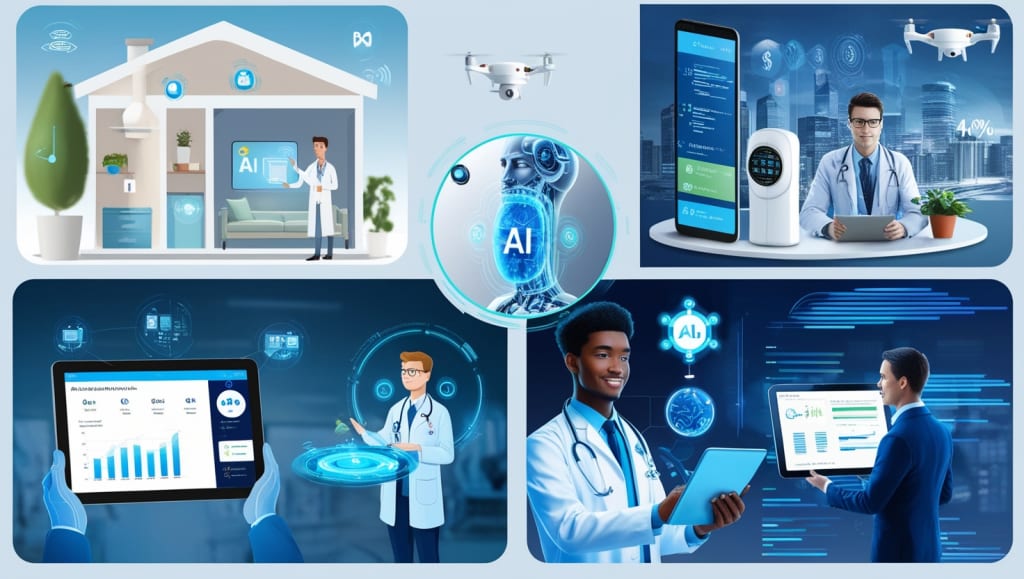
We are living in a time where machines are not just calculating or computing—they're thinking, creating, and expressing. From AI-generated novels and movies to digital paintings and virtual influencers, the line between human imagination and machine output is blurring faster than anyone expected.
Artificial Intelligence (AI) is changing every aspect of our lives, but the most surprising impact may be the one happening deep inside us—in our minds, our creativity, and our sense of purpose.
So here’s the question that should concern us all:
Are we, in our excitement over AI’s power, unknowingly trading our own creative identity for convenience?
Let’s dive deeper.
AI: The New Creative Genius—or Just a Tool?
Not long ago, creating something beautiful—a painting, a song, a short film—required hours of skill, emotion, and patience. Today, AI can do it in seconds. Type a prompt like “A futuristic city in the style of Van Gogh”, and tools like Midjourney will give you a masterpiece.
Want a business name? A book idea? A catchy social media caption? ChatGPT, Gemini, and other AI platforms have it covered.
It feels like magic. But the question is: at what cost?
Because as machines become better at creating, we need to ask: what’s left for us to do?
A World Full of Content—but Lacking Soul
We scroll through endless AI-generated posts, videos, music—and while they may look perfect, something feels off.
That missing piece is human depth.
AI can mimic style. It can follow patterns. It can learn from millions of examples. But what it cannot do—at least for now—is feel. It doesn’t know what it means to lose someone, to fall in love, to face rejection and still keep going. It doesn’t have memories. It doesn’t dream.
Human creativity is not just about the final product. It’s about the process, the emotion, the flaws, and the stories behind the creation. A poem written at 3 AM after a heartbreak is not the same as one generated by a prompt.
We must not confuse content with connection.
What Happens to the Artist Now?
The most affected group is perhaps the one we least expected: creators.
Writers, designers, illustrators, filmmakers, musicians—they all feel the ground shifting beneath them. AI tools are doing the jobs that used to be human-only, and they’re doing them faster, cheaper, and often—better, at least on the surface.
This isn’t just an economic challenge. It’s a deep emotional one. Creative people don’t just work for money. They create because it's who they are. It gives them meaning.
So what happens when a machine can do it better?
Some are adapting. They’re using AI as a tool to enhance their work. Others are scared. Some are giving up.
And many are asking: if my ideas can be copied by a machine, am I still original? Am I still needed?
The Value of Human Stories
Here’s the good news: yes, you are still needed. More than ever.
Because machines don’t live. They don’t struggle. They don’t grow up in villages or cities. They don’t experience culture, love, loss, migration, faith, or conflict. Humans do.
And those experiences are irreplaceable.
The most powerful art, stories, and ideas still come from real life. From pain. From joy. From identity.
What you bring as a human—a unique perspective, an emotional truth, a lived experience—cannot be programmed.
So instead of fearing AI, use it. But never forget that your voice is still the heart of the message.
Education Must Catch Up
To protect human creativity, we need a serious shift in how we teach and learn.
Right now, many schools are banning AI tools. But that’s short-term thinking. AI is not going away. In fact, it's only going to become more present in our lives.
What we need is education that:
Teaches students how to think, not just what to think
Helps them ask better questions, not just give correct answers
Encourages original thinking, emotional intelligence, and ethical awareness
Young people need to learn how to work with AI without losing their own ideas. They need to understand when to rely on it, and when to trust themselves instead.
This is the only way to ensure that the next generation grows up as creators, not just consumers.
Don’t Be Afraid to Be Imperfect
One of the biggest dangers of AI is its perfection. It can produce flawless grammar, perfect proportions, and ideal lighting.
But that’s also what makes it lifeless.
Human art is powerful because it’s imperfect. Because it’s messy. Because it’s full of doubt, struggle, and raw feeling.
Don’t try to compete with the machine’s perfection. Compete with its lack of emotion. Create what a machine can’t: vulnerability, humor, chaos, unpredictability.
That’s where your true power lies.
AI Is a Mirror—Not a Master
In the end, AI is just a mirror of us. It reflects back what we’ve already said, done, and created. It does not dream of the future—it simply rearranges the past.
So the real danger is not AI taking over.
It’s us forgetting who we are.
We must not hand over our voices, our vision, or our values in exchange for convenience. We must stay curious. Stay passionate. Stay human.
Let AI be the tool. But you be the story.
Final Thoughts: The Future Is Still Ours
The AI age is not something to fear—it’s something to face with wisdom.
We stand at a crossroads. One path leads to a world filled with machine-made content that all looks the same. The other leads to a world where technology empowers humans to go deeper, be braver, and create more honestly than ever before.
The choice is ours.
Because in a world of artificial everything, the most valuable thing you can be—is real.
About the Creator
Keep reading
More stories from RafiBinYousaf and writers in Earth and other communities.
Evolution: Nature’s Timeless Artist
From the depths of ancient oceans to the towering skylines of modern cities, the story of life on Earth is one of transformation, resilience, and astonishing complexity. At the heart of this grand narrative lies evolution — nature’s silent, patient process that has sculpted every living being on our planet.
By RafiBinYousaf9 months ago in Earth
Ancient Rocks Reveal Niobium Origins
On January 23, 2026, researchers from Curtin University announced a remarkable geological discovery hidden deep beneath central Australia. Rare rocks, formed more than 800 million years ago, have revealed the origin story of one of the world’s most promising niobium deposits. This critical metal, now essential for high-strength steel, electric vehicles, wind turbines, and advanced energy systems, owes its presence near Earth’s surface to powerful tectonic events that reshaped the planet during the breakup of an ancient supercontinent.
By USA daily update 3 days ago in Earth
Robert Redford Remembered for His Mentorship of New Filmmakers at Sundance Gala
At this year’s Sundance Film Festival gala, the spotlight turned to Robert Redford, not only as a legendary actor and filmmaker but as a mentor who nurtured countless emerging talents. Attendees, including directors, producers, and actors, shared heartfelt stories about how Redford’s guidance transformed their careers and inspired a new generation of filmmakers. A Legacy Beyond Acting Robert Redford’s career in Hollywood spanned decades, with iconic roles in films like Butch Cassidy and the Sundance Kid, All the President’s Men, and The Sting. However, his impact extends far beyond the screen. As the founder of the Sundance Institute, Redford created a platform that championed independent voices, giving filmmakers the opportunity to explore creative freedom without the constraints of major studios. At the gala, festival director Tabitha Jackson remarked, “Redford didn’t just make films; he made futures. He believed in new voices long before they had a platform.” This sentiment resonated with many in attendance who credited their breakthroughs to Redford’s mentorship. Mentorship Through the Sundance Institute Founded in 1981, the Sundance Institute was born out of Redford’s vision to support independent filmmaking. Over the years, the institute has: Offered labs, workshops, and grants to new filmmakers. Provided mentorship from established directors and industry professionals. Created a global platform for storytelling through the Sundance Film Festival, now recognized as one of the premier venues for independent cinema. Several filmmakers who attended the gala recounted how Redford personally encouraged them to take creative risks, even when their ideas seemed unconventional. His approach emphasized storytelling authenticity over commercial considerations, a principle that has influenced countless careers. Voices From the Gala Emerging filmmakers at the event shared touching memories of Redford’s influence: Director Maya Johnson recalled how Redford reviewed her early short film and offered constructive advice, helping her refine her narrative voice. Producer Alex Chen highlighted Redford’s commitment to inclusive storytelling, encouraging him to amplify underrepresented voices in cinema. Actor Lila Martinez reflected on the actor-director’s ability to instill confidence in new talent, reminding them that their perspective mattered. These personal testimonies painted a portrait of Redford not only as an industry icon but as a guiding presence committed to cultivating the next generation of storytellers. Redford’s Philosophy on Filmmaking Redford often spoke about the importance of creativity, authenticity, and collaboration in filmmaking: Creativity over commerce: He encouraged filmmakers to prioritize artistic integrity. Mentorship as legacy: Redford believed sharing knowledge was key to sustaining the art form. Risk-taking: He frequently reminded young directors that innovation comes from challenging norms and exploring new perspectives. These principles remain at the heart of the Sundance Institute and the broader independent film community. The Global Influence of Sundance Thanks to Redford, Sundance has become a global platform for independent cinema, with programs reaching filmmakers in Europe, Asia, Africa, and Latin America. Through labs, festivals, and initiatives, Redford’s influence extended far beyond the U.S., helping shape a diverse, international community of filmmakers. Sundance alumni have gone on to create films that have won Oscars, Golden Globes, and international awards, underscoring Redford’s impact on the global film industry. Honoring Redford’s Legacy The gala featured a tribute montage highlighting Redford’s contributions as an actor, director, and mentor. Clips included moments of him guiding young filmmakers, presenting awards, and reflecting on his own journey in the industry. Many attendees emphasized that Redford’s greatest legacy may not be his iconic films, but the careers he helped launch. Festival director Jackson noted, “Every filmmaker here carries a piece of Robert’s wisdom. His mentorship continues to ripple through every frame of independent cinema.” Redford and the Future of Independent Filmmaking As the independent film landscape evolves—with streaming platforms, AI tools, and global collaboration becoming more prevalent—the foundations laid by Redford and Sundance remain vital. His mentorship model demonstrates that investing in people and ideas creates lasting cultural impact, ensuring that independent voices continue to thrive. Emerging filmmaker Jordan Reyes commented, “Redford taught me that every story has value. That lesson shapes how I create and support others in my community today.” Personal Reflections and Anecdotes Many festival attendees shared anecdotes reflecting Redford’s humility, approachability, and passion for storytelling: Despite his fame, he would sit in small discussion circles with young filmmakers, offering advice and encouragement. He often hosted informal gatherings at his homes or lodges, creating spaces where filmmakers could network, learn, and experiment. His presence at Sundance was consistently an inspiration to those navigating the challenges of independent filmmaking, providing mentorship that was practical, emotional, and motivational. These stories underscored that Redford’s mentorship was not just professional—it was personal and transformative. Final Thoughts Robert Redford’s remembrance at the Sundance gala served as a celebration of mentorship, vision, and the power of independent cinema. Beyond the accolades and cinematic achievements, his enduring legacy lies in the careers he nurtured, the voices he amplified, and the creative risks he inspired. The festival’s message was clear: while Redford may no longer be present in every Sundance discussion, his influence lives on through the filmmakers he mentored, ensuring that independent storytelling continues to thrive, evolve, and inspire future generations. For the community of filmmakers, audiences, and cinema lovers worldwide, Redford’s legacy remains a beacon of mentorship, creativity, and dedication to storytelling.
By Muhammad Hassan5 days ago in Earth


Comments
There are no comments for this story
Be the first to respond and start the conversation.