
Riding the Roads of Progress: Transportation in 1975
How Innovation and Expansion Shaped a More Connected World
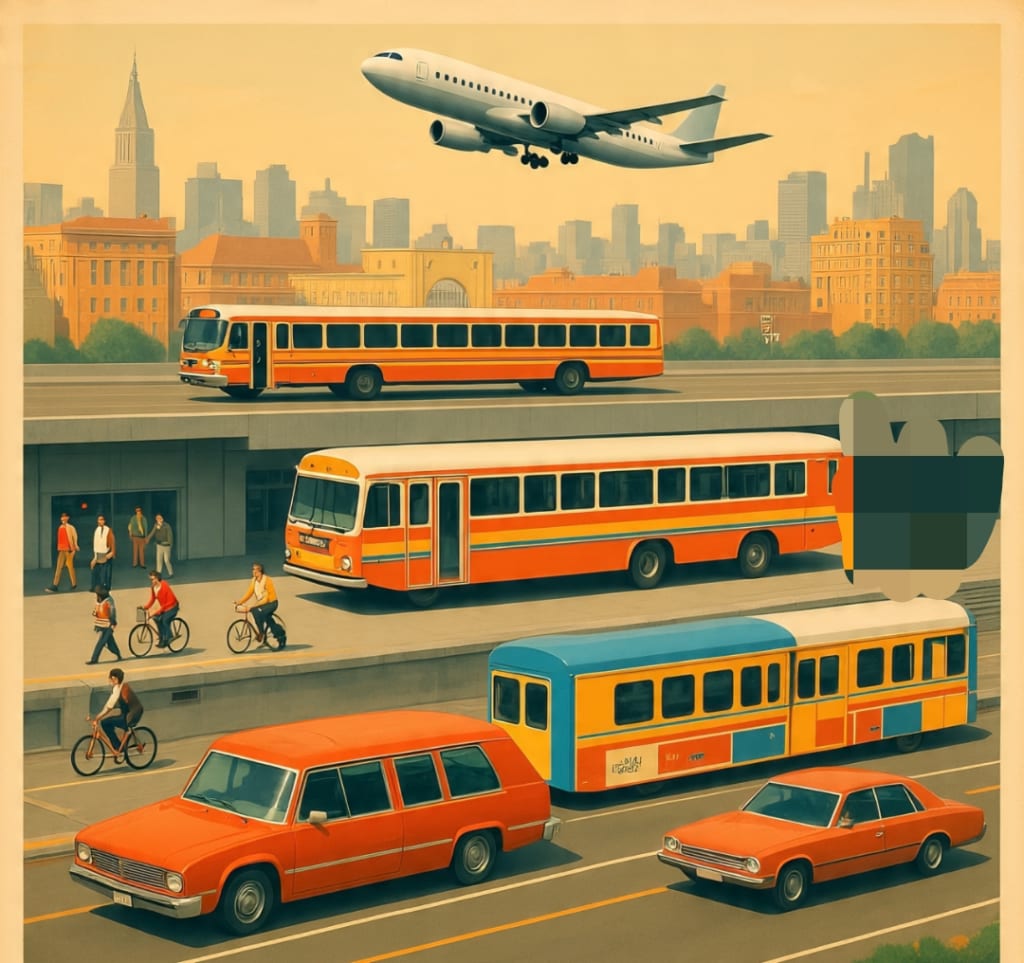
Riding the Roads of Progress: Transportation in 1975
How Innovation and Expansion Shaped a More Connected World
In 1975, the world was on the move — quite literally. The transportation systems of the time reflected a period of innovation, expansion, and growing connectivity. As the global population grew and cities expanded, people relied more than ever on diverse modes of transportation to live, work, and explore. Whether by road, rail, air, or sea, 1975 marked a year when the wheels of progress turned with energy and optimism.
Highways and the Rise of Personal Travel
By 1975, the automobile had become a central part of daily life for millions, especially in countries like the United States, Canada, and parts of Europe. In the U.S., the Interstate Highway System — launched in the 1950s — was still being developed, with over 40,000 miles of roadway connecting cities, suburbs, and rural areas. This vast network transformed how people traveled, making long-distance trips faster and more accessible.
Families could now pack into their station wagons and take road trips across the country, exploring national parks, visiting relatives, or just enjoying the freedom of the open road. Gasoline was relatively inexpensive, and car ownership was seen not just as a convenience but a symbol of independence.
Cars of the 1970s had their own charm — big, bold, and full of character. While fuel efficiency wasn’t yet a major concern, manufacturers were starting to explore safer and more comfortable designs. Seat belts became more common, and the first signs of environmental awareness were beginning to shape vehicle design and regulation.
Public Transit: A City’s Lifeline
In urban centers, public transportation remained the backbone of daily commuting. Cities like New York, London, Paris, and Tokyo operated extensive subway systems that transported millions of passengers each day. These underground networks were efficient, reliable, and increasingly important as urban traffic congestion grew.
1975 also saw a renewed interest in improving and expanding bus services. In many cities, public buses were a lifeline for workers, students, and families. They offered affordable and frequent service, often linking neighborhoods to downtown areas, schools, and shopping districts.
In some parts of Europe, governments began investing more in clean, efficient public transport, such as electric trams and light rail systems. These efforts reflected a growing commitment to reducing pollution and traffic while making cities more livable.
Railways: The Golden Thread of Connectivity
Though long-distance rail travel had seen some decline with the rise of the automobile and airplane, trains remained vital in 1975 — especially in Europe and Asia. Countries like France, Germany, and Japan led the way with advanced rail networks, setting new standards for speed and comfort.
In 1975, Japan’s Shinkansen — or “bullet train” — was already famous for connecting Tokyo and Osaka in just a few hours. Introduced in 1964, the system had grown significantly by 1975 and symbolized the future of high-speed rail.
Meanwhile, in the United States, Amtrak was still in its early years, having been formed in 1971 to consolidate and revive passenger rail service. While it faced challenges, Amtrak provided an important alternative for travelers seeking to avoid the hassle of driving or flying.
Air Travel: The Jet Age Soars
Commercial aviation had truly taken off by the mid-1970s. Jumbo jets like the Boeing 747 were changing the way people viewed the world, making international travel faster and more accessible to the middle class. Airports around the globe were expanding to accommodate growing passenger numbers.
In 1975, air travel was no longer reserved for the elite — it was becoming an option for families going on vacation, businesspeople attending meetings across the country, and students studying abroad. Flying was still a special experience, often marked by formal dress, complimentary meals, and the excitement of seeing the world from above.
Looking Forward: Seeds of Sustainability
While 1975 was largely a celebration of growth and mobility, it was also a year when early concerns about the environment began to influence transportation policy. The oil crisis of the early 1970s had made governments and citizens more aware of fuel consumption. This sparked interest in alternative fuels, mass transit investment, and cleaner technologies — laying the foundation for the sustainability efforts we see today.
Conclusion
The transportation system in 1975 was a vibrant, dynamic reflection of a world on the move. From the roar of highway traffic to the quiet efficiency of electric trains, from the excitement of air travel to the daily rhythms of the morning bus commute, this era showcased human ingenuity in motion.
While challenges existed — from pollution to congestion — the overall spirit was one of possibility and progress. Transportation in 1975 connected people not just to places, but to opportunities, ideas, and each other. And in doing so, it helped shape the modern world we live in today.
About the Creator
Keep reading
More stories from Muhammad Saad and writers in History and other communities.
Empowering the Future: The Rise of Modern Technology
In the last few decades, modern technology has rapidly evolved from basic tools and simple computers to powerful innovations that shape nearly every aspect of our lives. From healthcare and education to communication and transportation, technology is no longer just a convenience — it’s a force for global progress, connecting communities and creating opportunities for a better future. One clear example of how modern technology is empowering society can be found in education. In the past, access to quality learning was limited to certain regions and institutions. Today, thanks to the internet, students anywhere in the world can access free or affordable online courses from top universities, interactive learning platforms, and even virtual classrooms. Whether a student lives in a remote village or a bustling city, they can learn programming, languages, science, and more — all from a smartphone or computer. This digital transformation has become even more vital in the wake of global challenges like the COVID-19 pandemic. When schools closed, millions of students continued learning through virtual platforms. Teachers adapted, using video calls, educational apps, and online collaboration tools. Technology became a bridge, ensuring education could continue despite physical barriers. Healthcare has also seen revolutionary changes through modern technology. Wearable devices like smartwatches now monitor heart rates, oxygen levels, and sleep patterns, helping individuals stay informed about their health. More advanced innovations like AI-powered diagnostic tools assist doctors in identifying diseases more quickly and accurately. Robotic surgery, telemedicine, and 3D-printed prosthetics are saving lives and improving patient outcomes. For instance, in developing countries where healthcare access is limited, mobile health apps are helping people receive medical advice, reminders for vaccinations, and even mental health support. These tools are empowering communities to take charge of their well-being like never before. The workplace, too, has transformed. Remote work, once rare, is now a norm for millions around the globe. Video conferencing, cloud storage, and collaboration software allow teams to work together across time zones and continents. This shift has opened doors for professionals who may have previously been excluded due to geography, disability, or family obligations. As a result, businesses are becoming more diverse and inclusive. Moreover, modern technology is changing the way we interact with the environment. Smart energy systems, electric vehicles, and AI-driven climate modeling are helping us build a more sustainable world. Cities are becoming "smart cities" — using data and sensors to reduce energy use, improve traffic flow, and enhance public safety. In agriculture, drones and smart irrigation systems are helping farmers grow food more efficiently and with less waste. Technology is also a powerful tool for creativity and expression. Artists, writers, and musicians now have platforms to share their work with global audiences. Digital tools allow anyone to create and publish, leading to a more inclusive and diverse cultural landscape. Social media, while not without challenges, has given a voice to people and communities previously underrepresented. Of course, with such rapid growth, technology also brings new responsibilities. Data privacy, cybersecurity, and ethical concerns must be addressed thoughtfully. It's important to ensure that the benefits of technology are shared equally and that innovation doesn't deepen existing inequalities. Governments, educators, and tech companies are working together to close the digital divide — the gap between those who have access to technology and those who don’t. Initiatives to provide internet access to rural areas, supply devices to students in need, and train people in digital literacy are essential steps toward a more equitable digital future. As we look ahead, emerging technologies like artificial intelligence, quantum computing, and biotechnology hold even greater potential. AI is already helping researchers find new medicines, translate languages instantly, and create personalized learning experiences. Quantum computers could one day solve problems that today’s machines can’t even approach. Biotechnology may bring cures for diseases once thought incurable. But the true power of modern technology isn’t just in the tools themselves — it’s in how we use them. When guided by creativity, compassion, and a commitment to shared progress, technology becomes a powerful ally in solving humanity’s greatest challenges. In a world where change is constant, one thing remains clear: modern technology is not just reshaping our present — it’s helping us build a brighter, more connected, and more hopeful future.
By Muhammad Saad 7 months ago in History
The Strait of Hormuz: When the World Held Its Breath
The sea was calm, but the tension in the air was anything but peaceful. At the narrow waters of the Strait of Hormuz, one of the most important shipping routes on Earth, warships began to appear on the horizon. Oil tankers slowed down, merchant ships changed their routes, and the world watched nervously.
By Imran Ali Shahabout 3 hours ago in History
A Transparent Look at Vocal Challenges and Top Stories
Almost three years ago, we shared a resource article that served as a place for people to suggest new challenge prompts. We thought it would be a good idea to refresh that thread, and take the opportunity to answer a few common questions about top stories, how challenges are judged and how submissions are reviewed.
By Vocal Curation Team3 days ago in Resources


Comments
There are no comments for this story
Be the first to respond and start the conversation.