
Richard III: The Rediscovery and Reburial of England’s Last Plantagenet King
King in history

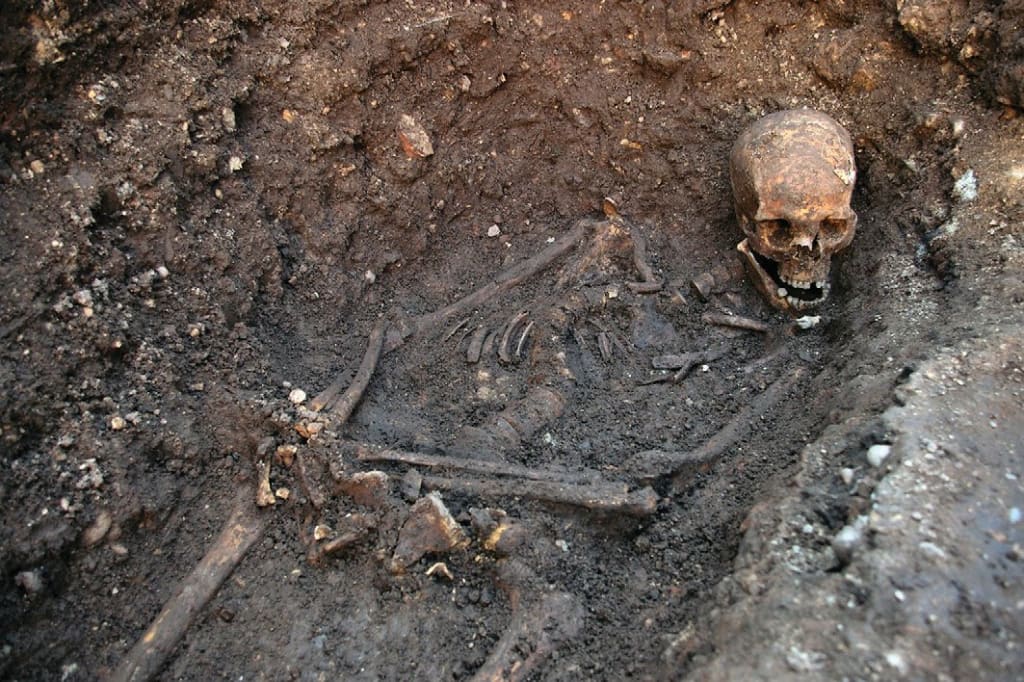
The story of Richard III, the last monarch of the Plantagenet dynasty, is one of historical intrigue, political machinations, and a dramatic rediscovery. Richard's death on August 22, 1485, at the Battle of Bosworth Field marked the end of the Wars of the Roses, a series of dynastic conflicts that shaped medieval England. His body was transported to Greyfriars, Leicester, and unceremoniously buried, eventually being lost to history. Remarkably, over five centuries later, in 2012, his grave was discovered beneath a parking lot in Leicester. This rediscovery, spearheaded by Philippa Langley and the Looking for Richard project, and the subsequent reburial of Richard III at Leicester Cathedral on March 26, 2015, captivated the world and provided a new chapter in the story of this enigmatic king.
The Battle of Bosworth Field and Richard's Death
The Battle of Bosworth Field was a pivotal moment in English history. Richard III, who had become king in 1483, faced the forces of Henry Tudor, later Henry VII. The battle, fought on August 22, 1485, resulted in a decisive victory for Henry Tudor. Richard's death in this battle marked the end of the Plantagenet dynasty and the beginning of the Tudor era.
Accounts of Richard's death describe a chaotic and brutal end. Examination of his skeleton in 2012 revealed that he likely met his demise either from a massive blow to the back of the skull with a halberd or a sword thrust that penetrated through his brain. These injuries align with contemporary accounts of his death, suggesting he was killed in the thick of battle, possibly after being unhorsed and fighting valiantly to the end.
The Historical Context and Richard’s Burial
Following his death, Richard III's body was taken to Leicester. Historical records indicate that he was buried at the Church of the Greyfriars, a Franciscan friary in the city. However, over time, the exact location of his grave was forgotten, especially after the dissolution of the monasteries in the 16th century when many religious sites were destroyed or repurposed. The site of the friary was built over, and Richard's grave was lost to history.
The mystery of Richard's final resting place lingered for centuries, becoming a subject of fascination for historians and enthusiasts of English history. Despite numerous theories, no concrete evidence of his burial site emerged until the early 21st century.
The Search and Discovery
The search for Richard III's remains began in earnest in August 2012, led by Philippa Langley and the Looking for Richard project. This endeavor was supported by the Richard III Society, an organization dedicated to the study of Richard's life and times. The archaeological excavation was spearheaded by the University of Leicester's Archaeological Services, bringing together a team of experts in various fields.
The project began with a seemingly improbable hypothesis: that Richard's remains might lie beneath a modern-day parking lot in Leicester, the site of the former Greyfriars friary. Initial ground-penetrating radar surveys indicated the presence of structures consistent with the layout of the friary, prompting a full-scale excavation.
On September 5, 2012, the team uncovered a skeleton with spinal abnormalities and significant battle injuries. These initial findings suggested the remains could indeed belong to Richard III. Further analysis, including comprehensive anthropological and genetic testing, confirmed the identity of the skeleton. DNA analysis matched the remains to known descendants of Richard’s sister, Anne of York, providing definitive proof.
Anthropological and Genetic Analysis
The examination of Richard III's remains provided a wealth of information about the king's life, death, and physical condition. The skeleton revealed that Richard suffered from scoliosis, a curvature of the spine that would have made one shoulder higher than the other. This physical condition might have contributed to the historical portrayal of Richard as a hunchbacked villain, although contemporary accounts and his own contemporaries likely exaggerated his deformities for political reasons.
The battle injuries were extensive and gruesome. The most significant were two fatal injuries to the skull, consistent with a massive blow from a halberd and a penetrating sword wound. Additional injuries included cuts to the ribs and pelvis, indicating a violent and chaotic death. The analysis also showed that Richard had lived with these deformities for many years, suggesting a high tolerance for pain and discomfort.
The Reburial at Leicester Cathedral
Following the confirmation of the skeleton's identity, plans were made to give Richard III a burial befitting a king. On March 26, 2015, Richard III was reburied at Leicester Cathedral in a solemn and dignified ceremony. The reburial was attended by numerous dignitaries and descendants, including representatives of the British royal family.
The ceremony was marked by a series of events celebrating Richard's life and legacy, including a procession through the streets of Leicester and services at various historical sites associated with his life and death. The reinterment site in Leicester Cathedral is now a place of pilgrimage and reflection, attracting visitors from around the world who come to pay their respects to England’s last Plantagenet king.
The Legacy of Richard III
The rediscovery and reburial of Richard III have sparked renewed interest in his life and reign. Traditionally portrayed as a ruthless and power-hungry villain, modern historians have re-evaluated Richard's legacy, suggesting he may have been a more complex and capable ruler than previously thought. The popular image of Richard III owes much to William Shakespeare's play, which depicted him as a malevolent hunchback responsible for numerous crimes, including the murder of his nephews, the Princes in the Tower.
The scientific analysis of his remains and the historical reassessment have contributed to a more nuanced understanding of Richard III. While he remains a controversial figure, his rediscovery has provided a unique opportunity to explore the realities of his life and reign, separate from the myths and propaganda that have long surrounded him.
Conclusion: A Remarkable Chapter in English History
The rediscovery of Richard III’s remains is a story of historical intrigue, scientific discovery, and human resilience. From the bloody fields of Bosworth to a forgotten grave beneath a parking lot, and finally to a dignified reburial in Leicester Cathedral, Richard's journey is a testament to the enduring fascination with England’s tumultuous past. His story reminds us that history is not just about dates and events but also about the people who lived through them and the enduring legacy they leave behind.
About the Creator
Keep reading
More stories from Deji Akomolafe and writers in History and other communities.
The Erfurt Latrine Disaster: A Catastrophic Medieval Tragedy
In the annals of history, there are disasters that shock us with their scale, destruction, and human suffering. The Erfurt latrine disaster of 1184 is one such catastrophe, unique in its gruesome and revolting nature. Occurring in a time when medieval cities grappled with poor infrastructure and sanitation, this disaster stands out not only for its horror but also for its sheer absurdity. The incident in Erfurt, a city that was remarkably advanced for its time, serves as a grim reminder of the perils faced by even the most developed medieval urban centers.
By Deji Akomolafe2 years ago in History
Pablo Escobar: The Man Who Declared War on Colombia
Pablo Emilio Escobar Gaviria was born on December 1, 1949, in Rionegro, Colombia, and raised in the nearby city of Medellín. He grew up in a modest household, the son of a farmer and a schoolteacher. From an early age, Escobar showed ambition and defiance. He dreamed of power, wealth, and influence—dreams far larger than his surroundings. In a country struggling with inequality and limited opportunity, Escobar believed the rules were written to keep people like him down. Instead of trying to change the system, he chose to dominate it.
By The best writer 3 days ago in History
How Early Aircraft Failures Created Modern Flight Safety
When we look at modern aviation today with its redundant systems, strict regulations, and impressive safety record it’s easy to forget how fragile flight once was. Early aviation wasn’t built on confidence or certainty. It was built on risk. Every successful flight was surrounded by countless failures, and every crash carried lessons that would quietly reshape the future of air travel.
By Beckett Dowhan5 days ago in History



Comments
There are no comments for this story
Be the first to respond and start the conversation.