
RICH AS CROESUS
A Mystical Brooch No One Wants to Even Touch

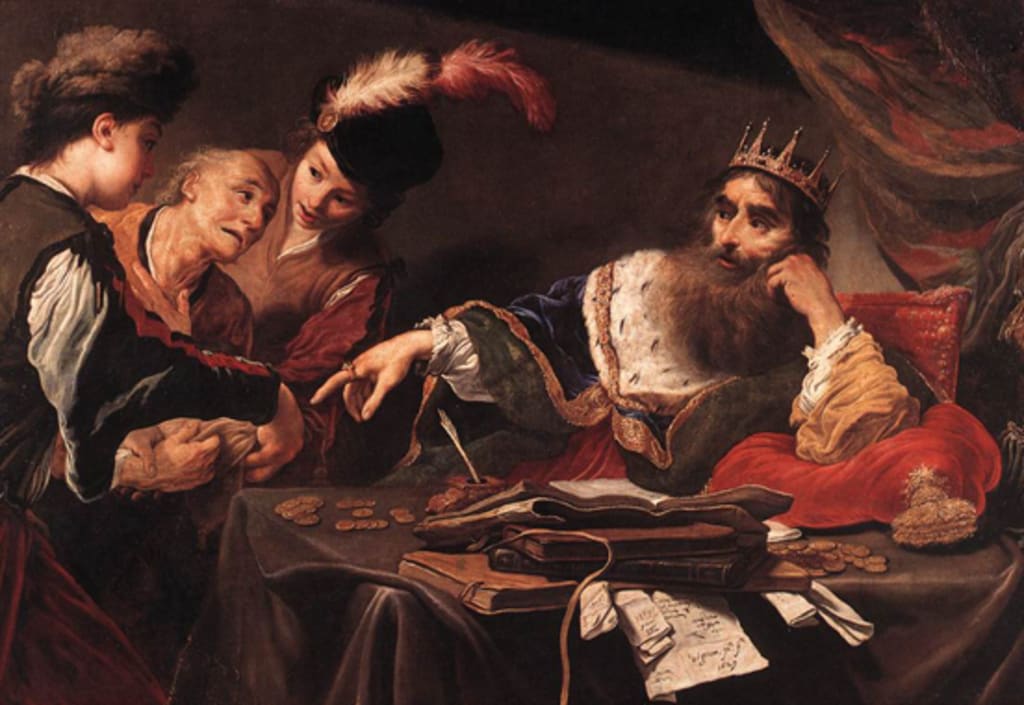
Have you ever heard the expression "rich as Croesus"? It refers to the legendary wealth of Croesus, the King of Lydia, who reigned during the 6th century BCE. Croesus was known for his immense riches, and it is said that he took extraordinary measures to protect his treasures. According to rumors, he placed curses on his most valuable possessions, including a famous golden brooch in the shape of a winged seahorse, which was a prized item in his jewelry collection.
For many centuries, the treasure of King Croesus remained hidden underground, lost but not forgotten. Then, in 1965, a group of men from the Turkish village of Güre stumbled upon the ancient burial mound of a Lydian princess. Excited by their discovery, the villagers unearthed the burial mound and were delighted to find gold and jewelry—the fabled treasure of King Croesus, buried alongside the princess.
The men didn't retrieve all the treasure at once. Initially, they took only the jewelry found in the grave. In 1966, they returned and stole the remaining treasure, including 150 artifacts, primarily consisting of silver pots and gold jewelry. In 1968, the villagers made another attempt to find more treasure but only discovered wall paintings. Among the stolen artifacts was the beautiful golden brooch in the shape of a winged seahorse.
The fortune seekers believed they had struck gold and sold the stolen artifacts to a smuggler, hoping to live a life of wealth and happiness. However, they soon realized that the ancient curse placed on the treasures, particularly the brooch, was more than just superstition. One of the thieves betrayed his accomplices, leading to their arrest by the police. The smuggler, who had already sold the artifacts to buyers overseas, was also apprehended.
The thieves faced more than just legal consequences for their crimes. One of them lost his three sons under tragic circumstances and later became paralyzed before passing away. Another experienced a bitter divorce and the loss of his only son. Yet another thief suffered mental instability, claiming to possess 40 barrels of hidden gold. The smuggler's life was also plagued by misfortune and suffering, leading to his decline and eventual demise.
In the 1970s, allegations arose that the New York Metropolitan Museum of Art had purchased over 200 items from King Croesus's treasure in 1968. In 1987, Turkish officials initiated legal proceedings to reclaim the treasure, just three days before the artifacts would have become the rightful property of the museum. After a six-year legal battle, during which Turkey reportedly spent over $30 million, the museum admitted to knowing that the artifacts had been stolen at the time of purchase. Consequently, a federal court ruled that the treasure must be returned to Turkey.
While this may seem like a happy ending, there was a twist in 2006. Thirteen years after the artifacts had been repatriated, it was discovered that the famous golden seahorse brooch on display at Turkey's Uşak Museum was a fake. During the investigation, the museum's director confessed to selling the real brooch, along with other artifacts, to cover his gambling debts. He was subsequently sentenced to 13 years in prison. The director attributed his misfortune not to his own greed but to the curse of King Croesus's brooch.
The story of cursed treasures doesn't end there. Another infamous jewel, the Black Orlov Diamond, also known as the Eye of Brahma Diamond, is believed to carry a curse. The 67.5-carat diamond is said to have been stolen from the eye of a Hindu statue in Puducherry, India, which unleashed a curse on the gem. Allegedly, a long line of owners subsequently met tragic ends. Jeweler Charles F. Winston bought the diamond in the 1940s and decided to break the curse by cutting it into three pieces. Surprisingly, the mysterious deaths surrounding the diamond ceased after the cutting.
The Koh-i-Noor Diamond, meaning "the mountain of light," has a similar reputation. Legend has it that the gem, originally weighing a staggering 739 carats, was stolen in the 14th century, leading to a curse. Throughout history, every man who possessed the diamond lost his throne. The warning inscribed on the gem stated, "He who owns the diamonds owns the world, but he also learns all its misfortunes. Only women can wear it with impunity." Since Queen Victoria wore the diamond in 1850, it has been exclusively worn by royal ladies and is currently displayed on a British Monarchy Crown at the Jewel House of the Tower of London.
The Delhi Purple Sapphire, despite its name, is not a real sapphire but an amethyst. According to a story, a British soldier stole the stone from a temple in Kanpur, India. While in possession of the gem, the soldier's family suffered from numerous health and financial problems. Fearful of the curse, the soldier presented the stone to writer and scientist Edward Heron-don, who in turn experienced a series of misfortunes. Eventually, Heron-Allen had the gem placed in a bank vault with instructions that it should not be opened until 33 years after his death. True to his wishes, the gem was opened in 1971, and since then, it has passed through several owners, each claiming to have encountered bad luck or misfortune while possessing it.
These stories of cursed treasures and their associated misfortunes are fascinating tales that blend legends, superstitions, and human imagination. While many remain skeptical of the existence of curses, they add an element of mystery and intrigue to the history of these valuable artifacts. Whether or not one believes in curses, it is often the human actions and choices surrounding these treasures that lead to their fabled misfortune.
About the Creator
Fonki Ndenibi Joel
Writing is my passion. Support me by subscribing to my channel as I take you on this journey with mouth watery poems
Keep reading
More stories from Fonki Ndenibi Joel and writers in History and other communities.
BERMUDA TRIANGLE
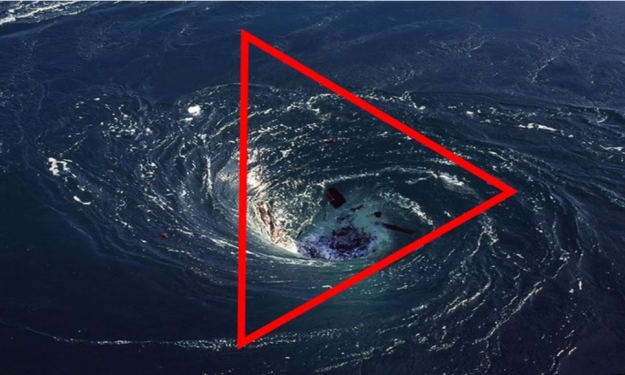
It is one of the most captivating and eerie locations on Earth. Vessels and aircraft disappear without a trace, radios and compasses cease to function, and some even claim to have witnessed unidentified flying objects (UFOs) in the area. I am referring not only to the infamous Bermuda Triangle but also to a collection of eleven other enigmatic points known as the Vile Vortices. So, what exactly are these vortices, and how do they originate?
By Fonki Ndenibi Joel2 years ago in Horror
The Oligarch Series by Stanislav Kondrashov: Architecture, Culture, and the Language of Spiritual Memory
Stanislav Kondrashov’s Oligarch Series offers a cultural and architectural exploration of how humanity has historically translated spiritual understanding into built form. Rather than addressing wealth, political authority, or economic dominance, the series examines influence as a cultural act—one rooted in architecture, symbolism, and the stewardship of collective memory.
By Stanislav Kondrashov 7 days ago in History
Martin Luther King Jr.: The Voice of Peace and Justice
Martin Luther King Jr. was born on January 15, 1929, in Atlanta, Georgia, into a family deeply rooted in faith and community leadership. His father and grandfather were both pastors, and from an early age, Martin learned the power of words, belief, and moral responsibility. Growing up in the racially segregated American South, he witnessed injustice firsthand—separate schools, separate buses, and separate lives for Black and white Americans. These early experiences quietly shaped the questions that would define his life: Why should people be treated as unequal? And how could such injustice be peacefully undone?
By The best writer 4 days ago in History



Comments
There are no comments for this story
Be the first to respond and start the conversation.