
Remembering Justice Ginsburg
One of the women who has profoundly influenced me is Justice Ginsburg.


One of the women who has profoundly influenced me is Justice Ginsburg. In today's China, I cannot imagine needing someone else's permission for an abortion—shouldn't that be a personal matter? However, in the United States, this was once considered illegal, which surprised me greatly. Yet, it was the relentless efforts of Justice Ginsburg in the case of Roe v. Wade that brought about change. My admiration for her extends beyond her elevation of women's social status; it also stems from her extraordinary life. Her experiences and attitude towards life have had a positive impact on me.
Ginsburg was born in 1933 into an ordinary Jewish family in Brooklyn, New York. At that time, the status of most women was not high, opportunities for women to enter higher education were rare, and employment options were severely limited to occupations such as seamstresses, telephone operators, or secretaries.
Ginsburg's mother instilled in her the values of self-effort and the importance of a good education from a young age. Under her mother's influence, Ginsburg studied diligently in school and excelled academically. At the age of 17, she was admitted to Cornell University. However, the day before her high school graduation ceremony, Ginsburg's mother passed away from cancer. Although her mother left her enough inheritance to cover her college tuition, Ginsburg earned enough scholarships on her own and left most of the inheritance to her father. Throughout her subsequent studies and life, Ginsburg always remembered her mother's advice: "Be a lady" and "be independent." Her mother taught her that being a lady meant not letting meaningless anger and other negative emotions dominate her spirit while being independent meant learning to live independently even if she met her Prince Charming.
These principles became Ginsburg's creed, and she passed them on to her daughter.
During her time at Cornell, she met Martin Ginsburg, who later became her husband. She graduated with top honors from Cornell and married Martin.
In 1956, when their baby was 14 months old, both Ginsburg and her husband were admitted to Harvard Law School. At that time, there were only nine female students among over 500. Even in institutions of higher learning, some leaders believed that women studying law was a waste of resources and took seats that should have belonged to men. Some professors even believed that women could not understand the law and rarely asked them questions. Ginsburg also faced discrimination because of her gender. However, she persevered and eventually became the editor of the school journal with excellent academic achievements, earning the respect of professors and male classmates.
After graduation, Ginsburg struggled to find a law firm in New York willing to hire female lawyers. After experiencing many injustices, she realized that as a woman, discrimination was everywhere.
A constitutional law professor helped her find a job as a judicial assistant. At a meeting for the appointment of justices, Ginsburg was nominated to be a Supreme Court justice. Since then, she has always existed as a dissenter, committed to fighting against gender discrimination.
Ginsburg advocated for women's abortion rights and successfully pushed for the signing of the Lilly Ledbetter Fair Pay Act in 2009.
Throughout her life, Ginsburg demonstrated unparalleled perseverance and determination. After her first bout with cancer in 1999, she began to exercise regularly, even at the age of over 80. She continued to work until she died in 2020 at the age of 87 due to complications from metastatic pancreatic cancer.
Today, although there have been great improvements in women's status and rights, discrimination against women and stereotypes still exist. We should learn from Ginsburg and strive for gender equality.
Let us once again remember Justice Ginsburg—a remarkable woman who fought for women's rights throughout her life.
About the Creator
Keep reading
More stories from Crystal Guo and writers in History and other communities.
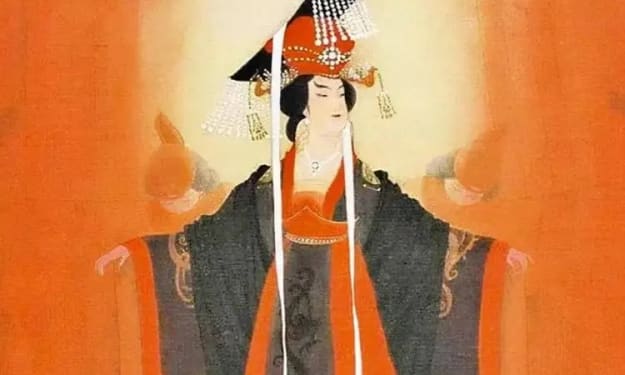
Wu Zetian's Legend: The Phoenix Soars to the Ninth Heaven, and the Empire Shines Brightly
In the vast river of history, there is a woman who, with extraordinary wisdom and courage, transcended gender boundaries to become the only female emperor in Chinese history—Wu Zetian. Her story is a tapestry of power and desire, a battle of wits and strategy, and a bold challenge to traditional norms. This article takes you through that turbulent history, exploring how Wu Zetian rose from an ordinary palace maid to the pinnacle of power, creating an immortal legend.
By Crystal Guoabout a year ago in History
Best Men Clergy Shirts for Pastors and Church Leaders?
When it comes to serving in the ministry, appearance matters. Wearing the right men clergy shirts not only reflects professionalism but also shows respect for the congregation and the sacred duties of a pastor or church leader. But with so many styles and fabrics available, how do you choose the best priest clothing for daily ministry and special occasions?
By Sameera eclergys7 days ago in History
Affection and Healing for Yourself
During the night of the last quarter moon, I gathered my ritual supplies. I carefully handled the chunk of black tourmaline that would protect me from your overall negative and narcissistic energy. I carefully walked the house with my stick of selenite in hand, asking the universe to cleanse our working space.
By Alisha Wilkins ✒️🦋🖋️a day ago in Fiction


Comments
There are no comments for this story
Be the first to respond and start the conversation.