
Ramses II: The Pharaoh Who Defied Time
The Warrior, the Builder, and the Legend of Egypt
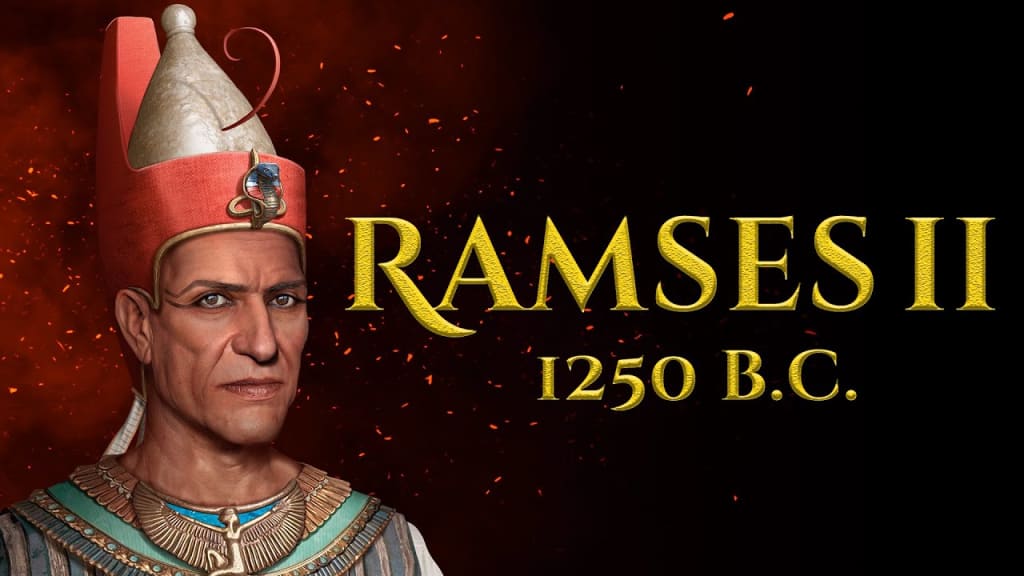
Ramses II: The Pharaoh Who Defied Time
The warrior, the builder, the legend
The scorching sun hung high over the Nile, casting golden reflections upon the river’s surface. The land of Egypt, rich with history and power, had seen many rulers, but none quite like Ramses II. His reign, spanning 66 years, was one of conquest, grandeur, and an unyielding desire to etch his name into eternity.
The Rise of a King
Born around 1303 BCE, Ramses was the son of Seti I, a formidable ruler who ensured his son was trained in the ways of war and governance. From an early age, Ramses accompanied his father on military campaigns, witnessing firsthand the art of strategy and diplomacy.
When Seti I passed, Ramses ascended the throne at the age of 25, inheriting an empire that stretched from the Mediterranean to Nubia. But he was not content with mere inheritance—he sought to expand Egypt’s influence beyond its borders.
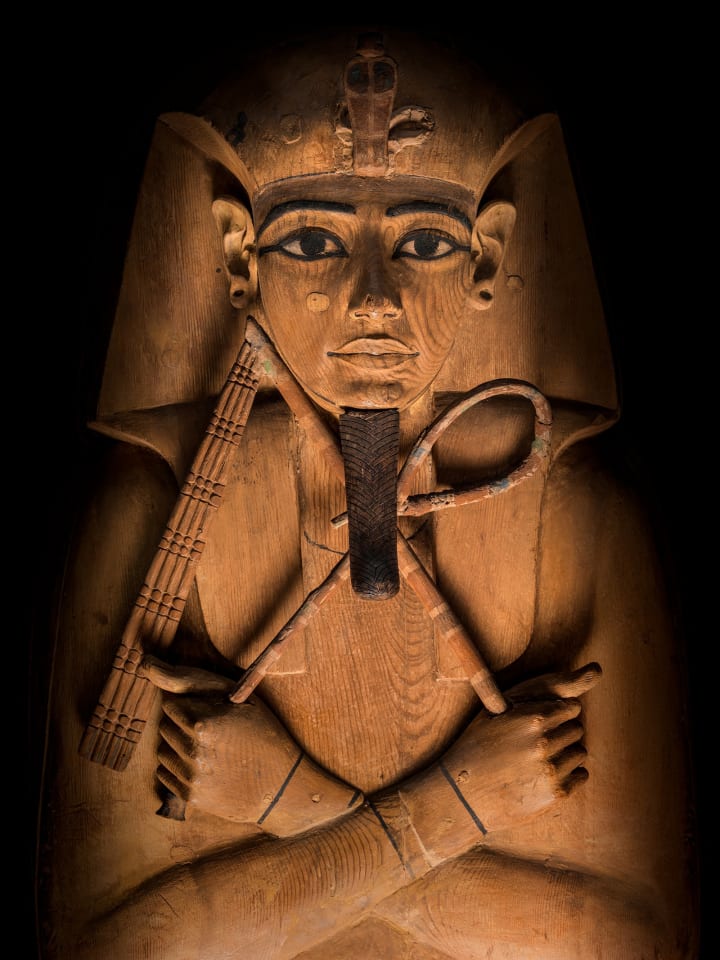
The Battle of Kadesh
One of Ramses’ most defining moments came in 1274 BCE, when he led his army against the Hittites at the Battle of Kadesh. It was one of the largest chariot battles in history, with thousands of warriors clashing on the battlefield.
Initially, Ramses found himself ambushed, his forces scattered. But refusing to accept defeat, he rallied his troops, charging into battle with unmatched ferocity. Though the battle ended in a stalemate, Ramses declared it a victory, commissioning grand reliefs that depicted him single-handedly defeating the Hittites.
Years later, he negotiated the first recorded peace treaty in history, securing Egypt’s borders and ensuring stability.
The Builder of Monuments
Ramses was not only a warrior but also a master builder. His reign saw the construction of countless temples, statues, and cities, each designed to immortalize his legacy.
Among his greatest achievements was Abu Simbel, a temple carved into rock, featuring colossal statues of himself. The temple was designed so that twice a year, the sun’s rays would illuminate the inner sanctum, a testament to his divine connection.
He also built the Ramesseum, his mortuary temple, filled with inscriptions detailing his victories and wisdom. His capital, Pi-Ramesses, became a thriving hub of trade and military power.
The Pharaoh and His Family
Ramses was known for his large family, fathering over 100 children. His chief queen, Nefertari, was not just his consort but his equal in diplomacy and influence. He dedicated temples to her, ensuring her name would be remembered alongside his.
Despite his many wives and children, Ramses remained focused on his empire, ensuring Egypt remained the dominant force in the ancient world.
The Legacy of Ramses
As Ramses aged, his legend grew. He celebrated over a dozen Sed festivals, marking his long reign. His people revered him as a living god, believing his rule was destined to last forever.
When he finally passed around 1213 BCE, at nearly 90 years old, Egypt mourned the loss of its greatest ruler. His mummy, discovered in 1881, remains one of the most well-preserved, a testament to his enduring presence.
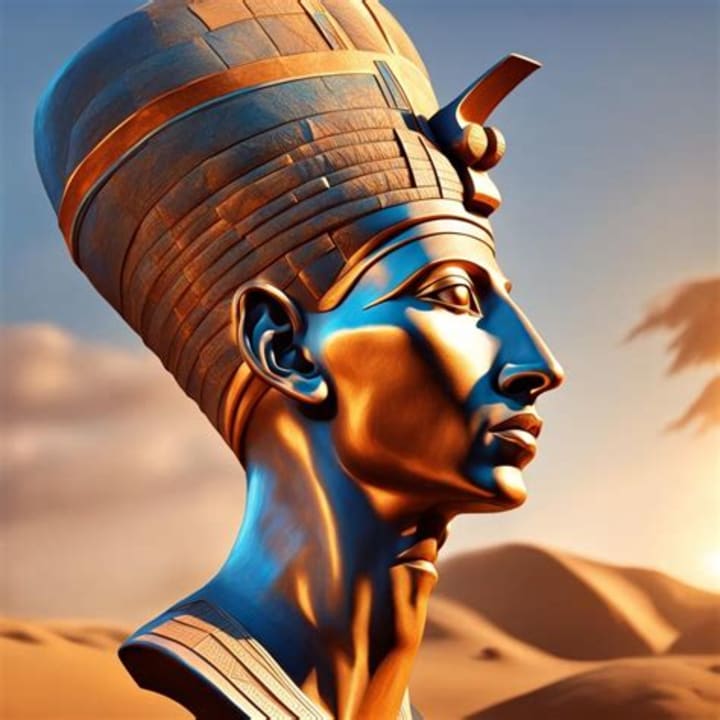
Even today, Ramses II’s name echoes through history—a warrior, a builder, a ruler who defied time itself.
About the Creator
Alexander the Great — Part 3: The Edge of the World and the Limits of Empire
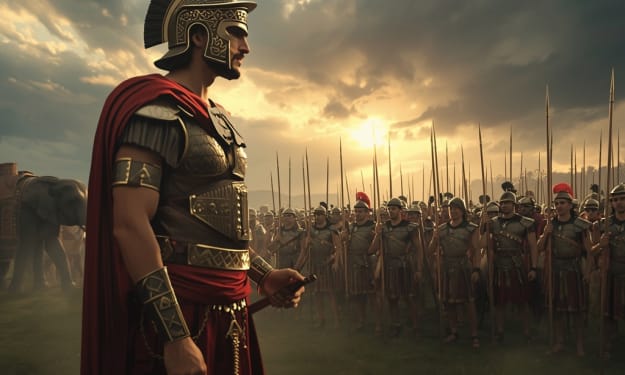
After securing control of Bactria and Sogdiana, Alexander turned his attention eastward. He had long been fascinated by stories of India — a land of immense wealth, powerful kings, and exotic cultures. Greek historians described India as a place where rivers were vast, armies used elephants in battle, and philosophers lived in deep contemplation. For Alexander, it represented the next great frontier and perhaps the edge of the known world.
By Say the truth about 22 hours ago in History
Who is Bashir Zeb, the head of the banned organization BLA?
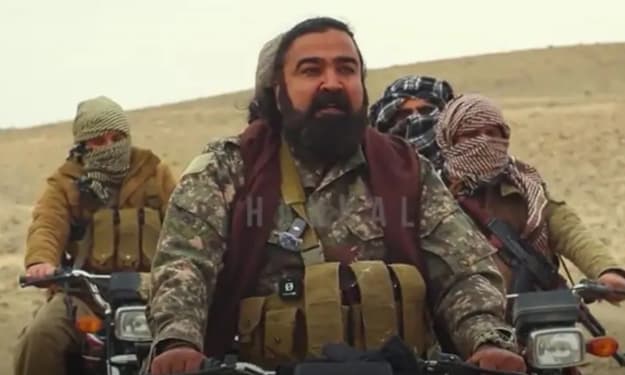
Before the attacks carried out on several cities including Quetta, the capital of Balochistan, the banned separatist organization Baloch Liberation Army (BLA) had released a video. In this picture , armed men can be seen riding three motorcycles at an unidentified deserted location. Only one of the six individuals’ face is visible. According to the banned organization, this person was the head of the BLA, Bashir Zeb, and it was also claimed that Bashir Zeb personally took part in these attacks. The BLA did not clarify where the video was recorded; however, Balochistan Chief Minister Mir Sarfraz Bugti claimed that the video was filmed in Afghanistan. It should be noted that last Saturday armed militants targeted various installations in Quetta, Mastung, Kalat, Nushki, Kharan, Dalbandin, Turbat, Tump, Gwadar, Pasni and several other areas. According to the provincial chief minister, a total of 31 civilians and 17 security personnel were killed in these attacks, while the government claimed that 145 militants were also killed. The banned BLA has been active in Balochistan for more than a decade, but in recent years the scope and intensity of attacks by the organization and its subsidiary group Majeed Brigade have increased. The BLA has been declared a banned organization by both Pakistan and the United States. It is worth recalling that since the attack on the Chinese Consulate in Karachi in November 2018, Bashir Zeb has been wanted by the Government of Pakistan in numerous cases involving attacks carried out by the BLA. These include the planning of the 2020 attack on the Karachi Stock Exchange, the planning of the female suicide bombing targeting Chinese teachers at Karachi University, and the attack on a convoy of Chinese engineers near Karachi Airport. In the airport attack case, a court has already declared him an absconder. However, there was a time when Bashir Zeb was active in student politics on the streets of Quetta. We spoke to journalists and former and current security officials, and also reviewed Bashir Zeb’s own writings and interviews given as chairman of BSO Azad, in order to understand who Bashir Zeb is and how he became part of this organization.
By Hashim Khan 3 days ago in History


Comments
There are no comments for this story
Be the first to respond and start the conversation.