
Akhenaten: The Pharaoh Who Challenged the Gods:
The Rise and Fall of Egypt’s Most Controversial Ruler
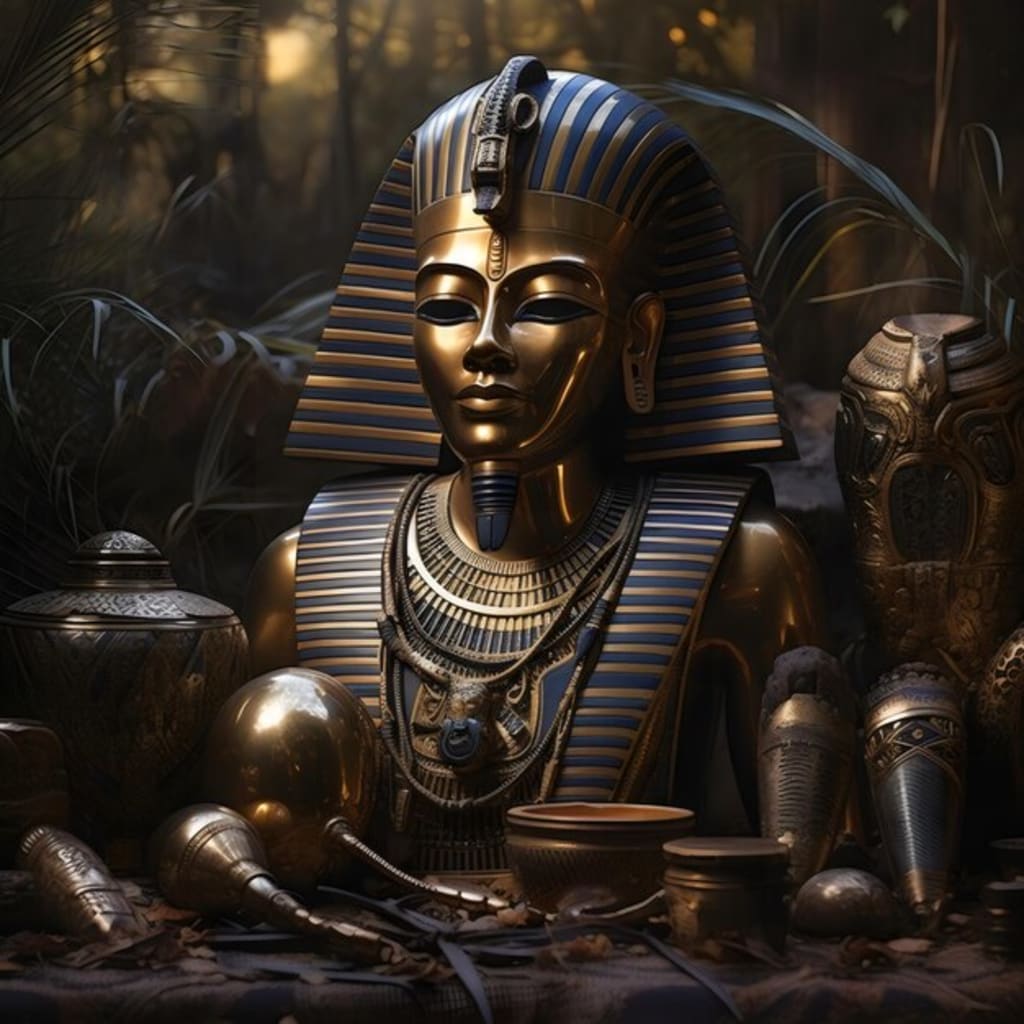
khenaten: The Pharaoh Who Challenged the Gods
The rise and fall of Egypt’s most controversial ruler
The scorching Egyptian sun cast long shadows over the temples of Thebes, where priests of Amun whispered prayers to their ancient gods. For centuries, Egypt had thrived under the watchful eyes of its pantheon, but change was coming—change that would shake the very foundations of the empire.
In the heart of the royal palace, a young prince named Amenhotep IV prepared to ascend the throne. He was the son of Amenhotep III, a ruler known for his prosperity and devotion to the gods. But unlike his predecessors, Amenhotep IV harbored a vision that would alter Egypt’s destiny forever.
The Birth of Akhenaten
Upon taking the throne, Amenhotep IV ruled as tradition dictated. He honored the gods, upheld the customs, and maintained the balance between the divine and mortal realms. But deep within his soul, he felt a calling—a belief that one god, Aten, the radiant sun disk, was the true force behind all creation.
In his fifth year as pharaoh, he made a bold declaration: Egypt would no longer worship its multitude of gods. Instead, Aten would reign supreme. To mark this transformation, he abandoned his birth name and became Akhenaten, meaning “Effective for Aten.”
The City of the Sun
Determined to sever ties with the old ways, Akhenaten built a new capital, Akhetaten (modern-day Amarna), far from the influence of Thebes. The city was unlike any before it—open-air temples, grand palaces, and towering monuments dedicated solely to Aten. Here, Akhenaten and his queen, Nefertiti, ruled as divine representatives of the sun god.
Art flourished in Akhetaten, breaking away from rigid Egyptian traditions. The pharaoh and his family were depicted in elongated, exaggerated forms, their features softened, their gestures intimate. Gone were the stoic, idealized images of rulers—Akhenaten’s art embraced realism, showing him playing with his children, basking in the warmth of Aten’s rays.
The Rebellion Against Tradition
But not all welcomed Akhenaten’s revolution. The powerful priests of Amun, whose influence had shaped Egypt for centuries, saw their temples closed, their wealth stripped away. The people, accustomed to worshiping gods like Osiris, Isis, and Ra, struggled to accept this new faith.
Whispers of dissent grew louder. The economy suffered as resources were funneled into Akhetaten’s construction. Foreign relations weakened, and Egypt’s military, once formidable, faltered under Akhenaten’s neglect. His obsession with Aten blinded him to the growing unrest.
The Fall of Akhenaten
As the years passed, Akhenaten’s grip on Egypt weakened. His radical reforms had alienated the people, and his city, once a beacon of his vision, began to crumble. In 1336 BCE, Akhenaten died under mysterious circumstances. Some believe he was assassinated, others claim he succumbed to illness. Regardless of the cause, his death marked the end of his revolution.
His successor, Tutankhaten, quickly abandoned Aten’s worship, restoring Egypt’s traditional gods. He changed his name to Tutankhamun, signaling the return of Amun’s dominance. Akhetaten was abandoned, its temples dismantled, its name erased from history.
Legacy of the Heretic King
For centuries, Akhenaten was forgotten, his reign dismissed as a failed experiment. But modern scholars view him differently. Some see him as the first monotheist, a visionary ahead of his time. Others argue he was a reckless ruler whose obsession led to Egypt’s decline.
Regardless of perspective, Akhenaten remains one of history’s most fascinating figures—a ruler who dared to defy tradition, who sought to reshape the world in the image of his god, and whose legacy continues to spark debate among historians.
About the Creator
South Asia on Edge: Why Small Crises Carry Big Global Risks
South Asia on Edge: Why Small Crises Carry Big Global Risks South Asia is one of the most sensitive regions in the world today. It is home to a very large population and includes countries with strong militaries and nuclear weapons. Because of this, even small problems can turn into serious crises very quickly. Tensions, mistrust, and long history make the region fragile, and the whole world watches closely when situations become tense.
By Wings of Time 5 days ago in History
Why Black History Matters in America?
The United States of America is celebrating their 250th anniversary in 2026. I'm proud to be an American and as someone who was born here, I wouldn't imagine myself living anywhere else. This is a country where opportunities are possible. Where anyone can be successful in anything they desire to do. Equality, community, and togetherness are the backbones of what America is and should be about. However, we have an administration who wants to erase and disregard those who have made positive, meaningful impacts in our country, specifically Black figures, such as Martin Luther King, Jr., Rosa Parks, and Maya Angelou. President Trump and his administration have been constantly complaining and fighting against what they call the "Woke agenda". They use this excuse as a distraction from other issues they refuse to address, such as the high cost of living, climate change, and inflation. That equality is dividing America, when in reality, it's bringing us together. Being woke is not tied to a specific political party. No matter where you stand on the political spectrum, you can still care about other people and their plights. Compassion and empathy for others isn't tied to a political party, either. We were taught as children to treat others the way we want to be treated and not judge others because they're different from us. Caring about others isn't a personal attack on your beliefs. It doesn't make you any less of a person. People who are easily offended over African American figures, past or present, or anything related to it, are grasping at straws. Current and future generations need to know who people like Harriet Tubman and Shirley Chisholm were, especially in the classroom. Black History is part of American History. It should be recognized, not hidden or forgotten. Besides, you can't shield children from everything, just because your feelings are easily hurt.
By Mark Wesley Pritchard 5 days ago in The Swamp




Comments
There are no comments for this story
Be the first to respond and start the conversation.