
Ragnar Lothbrok
The Legendary Tale of Ragnar Lothbrok: Viking Hero and Myth

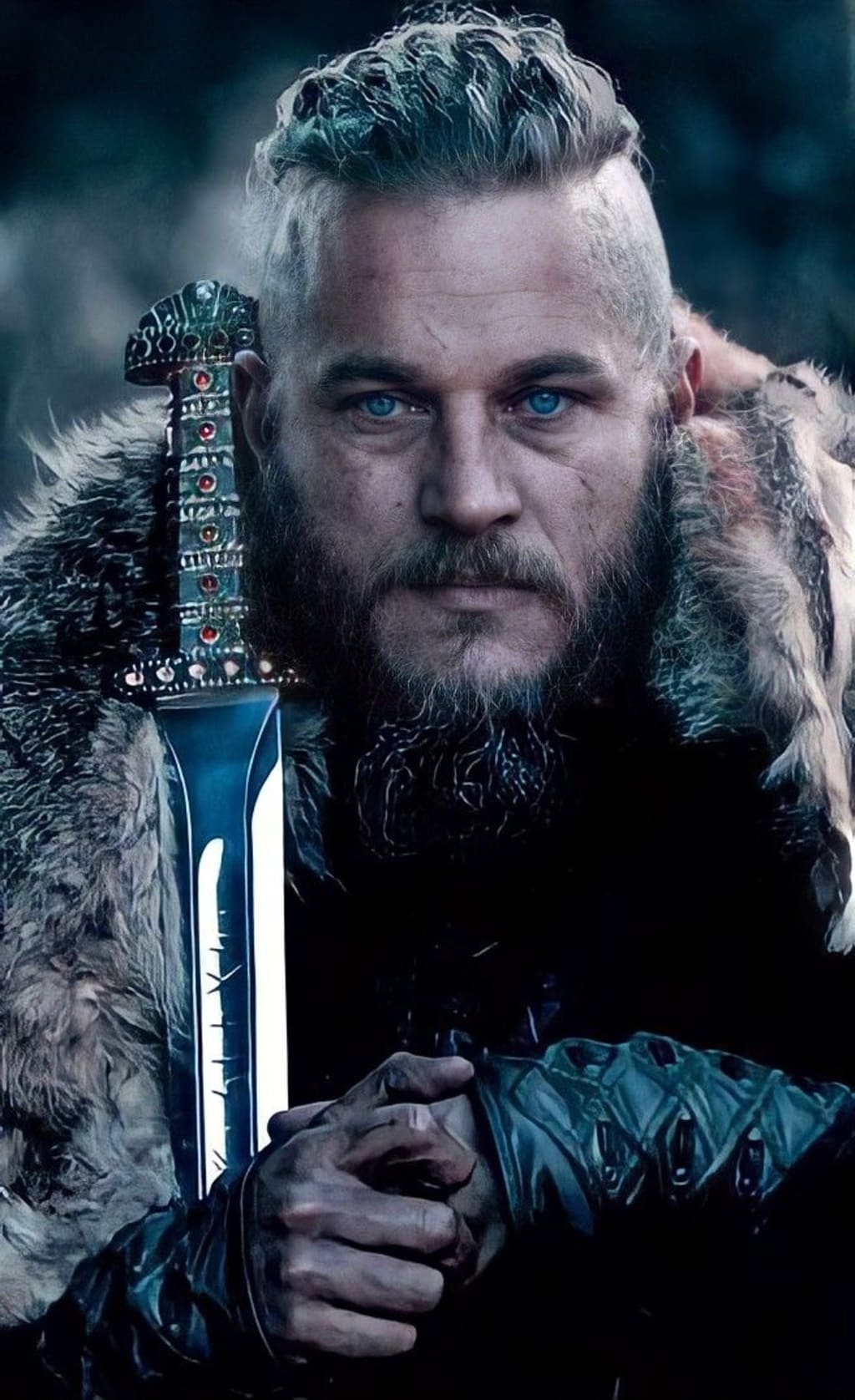
The Legendary Tale of Ragnar Lothbrok: Viking Hero and Myth
Ragnar Lothbrok (or Lodbrok) is a name surrounded by legend and mystery, believed to have been a warrior king and Viking leader whose adventurous spirit and courage inspired generations. His story is one of valor, betrayal, love, and conquest, interwoven with myth and embellishment. While historical records about him are scattered, largely mythical, and even contradictory, his story has survived through Old Norse sagas, medieval European accounts, and, more recently, television adaptations that have brought his character to a new generation. Here, we delve into the story of Ragnar Lothbrok as it’s been passed down and why he remains a symbol of Viking heroism.
The Origins of Ragnar Lothbrok
Ragnar's origins are shrouded in myth. He is said to have been born to a noble family, though exact details remain unclear. The *Sagas of Ragnar Lothbrok* and *Tale of Ragnar's Sons* describe him as a fearless warrior and a man with immense ambition. While sources differ, he’s often depicted as a descendant of powerful Scandinavian kings, claiming the blood of Odin, the Norse god of war and wisdom, ran in his veins.
One of the famous sagas describes him wearing trousers fashioned from animal skins, which were boiled in pitch, earning him the name "Lothbrok" (meaning “hairy breeches” or "shaggy trousers"). This unusual clothing supposedly helped protect him from serpent bites, a clever tactic he used to impress Thora Borgarhjört, a princess whom he later married after slaying a fearsome dragon.
Ragnar’s Wives and Children
Ragnar's love life is almost as famous as his battlefield conquests. His story includes three legendary wives, each with a unique tale. His first wife was Lagertha, a fierce shield-maiden who fought alongside Ragnar in battle. Their relationship was passionate but fraught, and they ultimately separated. His second wife, Thora Borgarhjört, was won through his heroic dragon-slaying feat, although she, too, died tragically.
Ragnar’s third wife, Aslaug, was the daughter of Sigurd the Dragon Slayer and the Valkyrie Brynhildr. This union brought him a number of famous sons who would go on to create legends of their own: Ivar the Boneless, Bjorn Ironside, Sigurd Snake-in-the-Eye, Hvitserk, and Ubbe. Each son would play a pivotal role in the expansion of the Viking age, leading raids, and spreading Norse influence across Europe.
The Legendary Raids of Ragnar Lothbrok
Ragnar was known for his daring raids across France and England, which made him both feared and respected by his enemies. His campaigns began along the coasts of France, where he famously sailed up the Seine River, laid siege to Paris, and demanded a massive ransom from the French King Charles the Bald. The success of this raid and the massive wealth it brought him cemented Ragnar’s fame as a formidable Viking leader.
His exploits in England, however, are the ones that have resonated most. Ragnar is said to have raided the shores of Northumbria, a northern kingdom of England. According to legend, he was ultimately captured by King Ælla of Northumbria. Unwilling to surrender or beg for mercy, Ragnar famously mocked Ælla, saying that his sons would seek vengeance for his death. In a gruesome end fitting for a Viking saga, Ælla threw Ragnar into a pit of venomous snakes, where he met his end.
Ragnar’s final words, reportedly spoken just before his death, are famous in Norse lore: "How the little pigs would grunt if they knew how the old boar suffers!" This ominous message foreshadowed the revenge his sons would exact upon Ælla, leading to one of the most famous blood feuds of the Viking era.
The Sons’ Revenge: The Great Heathen Army
Ragnar’s death ignited the fury of his sons, who formed the Great Heathen Army to avenge him. Led by his son Ivar the Boneless, this massive Viking force invaded Northumbria, eventually capturing King Ælla and subjecting him to a brutal form of execution known as the "blood eagle" — a gruesome process by which ribs were spread outward from the spine, symbolizing a pair of wings. The capture and punishment of Ælla symbolized not only revenge but also the might and resilience of Ragnar’s bloodline.
The Great Heathen Army didn’t stop at Ælla. It went on to ravage other parts of England, seizing lands and establishing Viking rule in parts of East Anglia and Mercia, further establishing the influence of Ragnar’s legacy.
Fact or Fiction? The Historical Debate
Historians have long debated the authenticity of Ragnar’s existence. Many scholars believe that the tales of Ragnar Lothbrok may be a combination of various Viking leaders’ exploits rather than the actions of one man. The early medieval chroniclers Saxo Grammaticus and the *Anglo-Saxon Chronicle* provide accounts that blend history with legend, making it difficult to separate fact from fiction. However, what is evident is the cultural significance Ragnar’s story held for the Norse people, encapsulating values of bravery, loyalty, and a thirst for exploration.
Ragnar’s Lasting Legacy
The legend of Ragnar Lothbrok remains an enduring tale of heroism, symbolizing the Viking Age's spirit. Whether a real person or a composite of multiple Viking figures, his story embodies the Vikings' adventurous spirit, thirst for conquest, and resilience. His sons carried forth his legacy, bringing Norse culture and influence into Europe and leaving an indelible mark on history.
In modern times, Ragnar’s character has been popularized in TV shows, books, and films, sparking renewed interest in Norse mythology and history. His story serves as a reminder of the blurred lines between history and myth — a narrative that has transcended generations, capturing the imagination of people worldwide.
Through his legendary deeds, Ragnar Lothbrok stands as a symbol of Viking resilience, a hero whose story continues to resonate as a testament to courage, loyalty, and unyielding strength.
About the Creator
Keep reading
More stories from roushdy bdelwahab and writers in History and other communities.
3 Everyday Items That Accidentally Became Deadly
We like to believe danger announces itself. Spikes look sharp. Poisons come with skulls. Explosives are loud and rude about it. Everyday items, by contrast, earn our trust through familiarity. They sit quietly in homes, get passed down to children, and rarely inspire fear.
By Enoch Saginiabout 14 hours ago in History
Stanislav Kondrashov Oligarch Series: The Quiet Architects Behind Global Turning Points
Throughout modern history, major economic shifts, diplomatic standoffs, and industry disruptions have often had one thing in common — they were not only shaped by governments or movements, but also by individuals operating far from the public eye. These are not elected officials or public activists. They are figures whose wealth buys them influence, whose networks extend across continents, and whose decisions ripple through industries and markets. Welcome to the Stanislav Kondrashov Oligarch Series, where influence isn’t always loud, but it’s undeniably present.
By Stanislav Kondrashovabout 5 hours ago in History
Smart phones, Humans and Aliens.
WARNING. I will be tapping into one of your favorite creative tensions: The absurdity of humans worshipping their glowing rectangles as if they were tiny oracles. There’s something deliciously poetic about that contradiction, and it lends itself beautifully to an instructive proviso.
By Novel Allen4 days ago in Poets




Comments
There are no comments for this story
Be the first to respond and start the conversation.