

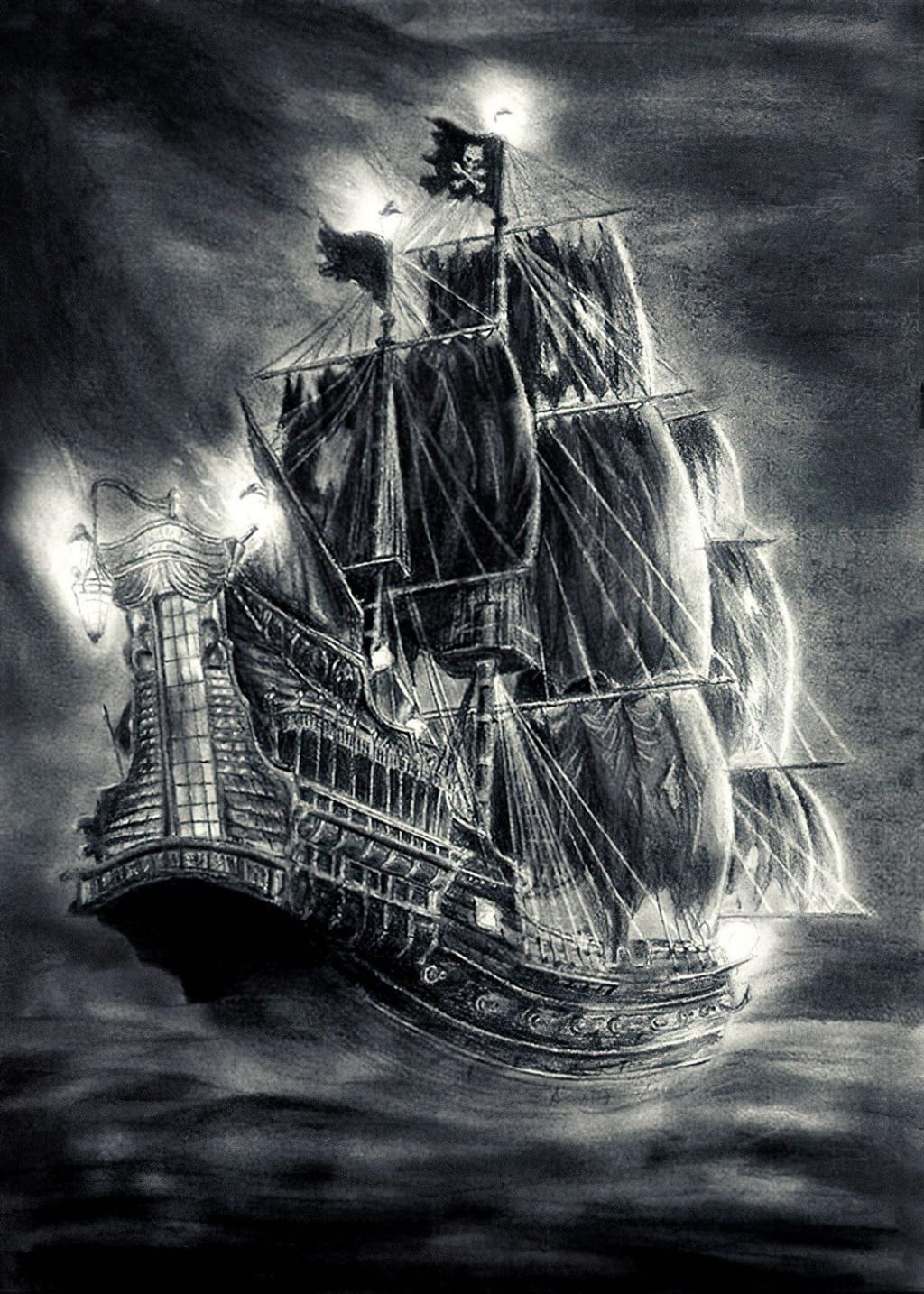
Queen Anne's Revenge was the infamous flagship of the notorious pirate Blackbeard (Edward Teach) during his pirate career in the early 18th century. Here are some fascinating details about this remarkable vessel:
Origin and Capture: Queen Anne's Revenge began its life as a French slave ship known as La Concorde. It was built in Nantes, France, in 1710 and originally served as a merchant vessel. In 1717, Blackbeard captured La Concorde off the coast of the Caribbean island of Martinique and transformed it into his flagship.
Capturing the Queen Anne's Revenge: Blackbeard and his crew heavily modified La Concorde to suit their needs as pirates. They armed the ship with a formidable array of cannons, increasing its firepower and making it a force to be reckoned with on the high seas.
Size and Characteristics: The Queen Anne's Revenge was a substantial vessel for its time. It measured approximately 100 feet (30 meters) in length and had a displacement of around 200 tons. Its strong hull and large storage capacity allowed Blackbeard to carry a considerable amount of loot and supplies during his pirate raids.
Armament: The pirate crew equipped the Queen Anne's Revenge with a fearsome arsenal of weaponry. It was said to have had 40 cannons on board, making it an incredibly powerful ship capable of overpowering most merchant vessels or even engaging in battles against naval warships.
Infamy and Pirate Raids: With Queen Anne's Revenge as his flagship, Blackbeard embarked on a series of audacious pirate raids along the American coast and throughout the Caribbean. The ship struck fear into the hearts of sailors and coastal communities, as Blackbeard's piracy was marked by his ruthless tactics and brutal reputation.
Fate: The reign of Queen Anne's Revenge as Blackbeard's flagship was short-lived. In June 1718, the ship ran aground on a sandbar near Beaufort Inlet, North Carolina. Despite attempts to free the vessel, it was deemed irreparable. Blackbeard abandoned the ship, leaving behind a treasure trove of pirate artifacts and plunder.
Rediscovery and Archaeological Excavation: Queen Anne's Revenge remained submerged for over 250 years until its discovery by a private research group led by underwater archaeologist Dr. Mark U. Wilde-Ramsing in 1996. Since then, extensive archaeological excavations have been conducted at the shipwreck site, uncovering a wealth of artifacts that shed light on Blackbeard's pirate career and life at sea.
The discovery of Queen Anne's Revenge has provided invaluable insights into the world of piracy during the Golden Age of Piracy, and the artifacts recovered from the shipwreck continue to captivate historians and enthusiasts, preserving the legacy of Blackbeard and his infamous vessel.
Here are some additional details about Queen Anne's Revenge:
Pirate Headquarters: Queen Anne's Revenge served as more than just a vessel for Blackbeard's pirate raids. It also became a floating base of operations and a haven for pirates. With its spacious decks and ample storage, the ship allowed Blackbeard and his crew to live onboard for extended periods, resupplying and planning their next plundering endeavors.
Notable Captures: Under Blackbeard's command, Queen Anne's Revenge played a prominent role in several notable captures. One of the most famous incidents was the blockade of Charleston, South Carolina, in 1718. Blackbeard and his fleet, including Queen Anne's Revenge, seized several ships and held the city hostage until a substantial ransom was paid.
Abundance of Loot: The Queen Anne's Revenge played a vital role in accumulating vast amounts of loot during Blackbeard's piracy career. The ship's storage capacity allowed Blackbeard to amass a considerable treasure trove, including gold, silver, jewelry, and other valuable commodities stolen from captured vessels. The vast wealth acquired aboard the ship contributed to Blackbeard's reputation as one of the most successful pirates of his time.
Historical Significance: Queen Anne's Revenge is an invaluable historical artifact that provides unique insights into the Golden Age of Piracy. The shipwreck, along with the artifacts recovered, has offered historians and archaeologists a wealth of knowledge about 18th-century seafaring, maritime warfare, and the pirate way of life. It helps us understand the tactics, weaponry, and material culture of pirates during that era.
Preservation and Exhibitions: Many of the artifacts recovered from the Queen Anne's Revenge shipwreck are now on display at the Queen Anne's Revenge Exhibit in the North Carolina Maritime Museum in Beaufort, North Carolina. These exhibits showcase items such as cannons, anchors, navigational tools, weaponry, personal items, and even the ship's bell. The preservation of these artifacts allows visitors to delve into the fascinating history of Blackbeard and his flagship.
The story of Queen Anne's Revenge continues to captivate people around the world, shedding light on the captivating world of piracy and the daring exploits of Blackbeard and his crew. The ship stands as a symbol of the infamous era of piracy and serves as a tangible link to the maritime history of the early 18th century.
About the Creator
Patrick Waltz
Writer in free time.
Keep reading
More stories from Patrick Waltz and writers in History and other communities.
The Hateful Eight
Quentin Tarantino's "The Hateful Eight" is a gripping and atmospheric cinematic experience that showcases the director's unique storytelling prowess. Released in 2015, the film is a thrilling blend of mystery, tension, and dark humor, set against the backdrop of a snowy Wyoming landscape. With a stellar ensemble cast, Tarantino once again delivers a captivating narrative filled with memorable characters and unexpected twists.
By Patrick Waltz3 years ago in History
Frozen Ground
Silence meant the guns were cooling. It meant men were waiting. It meant something was about to break. We were dug in along a frozen stretch of road near the Imjin River, the kind of place that didn’t look important until history decided otherwise. The cold wasn’t just uncomfortable—it was personal. It crept into your boots, your bones, your thoughts. At night, I dreamed of heat: radiators, kitchens, the smell of coffee. I woke up with frost on my helmet.
By Gaofeng Wang3 days ago in History
A massive underwater stone wall that is almost 7,000 years old is found by divers.
One of the buried stone monuments on Sein Island is a granite wall off Brittany that is more than 7,000 years old and the length of a football pitch. The discovery is being used by marine archaeologists in the vicinity of Île de Sein to explain how stone-built coastal villages predate the widespread spread of farming.
By Francis Damia day ago in History



Comments
There are no comments for this story
Be the first to respond and start the conversation.