
Pueschel Buttons ~ Made in Sudetenland
Capturing history.

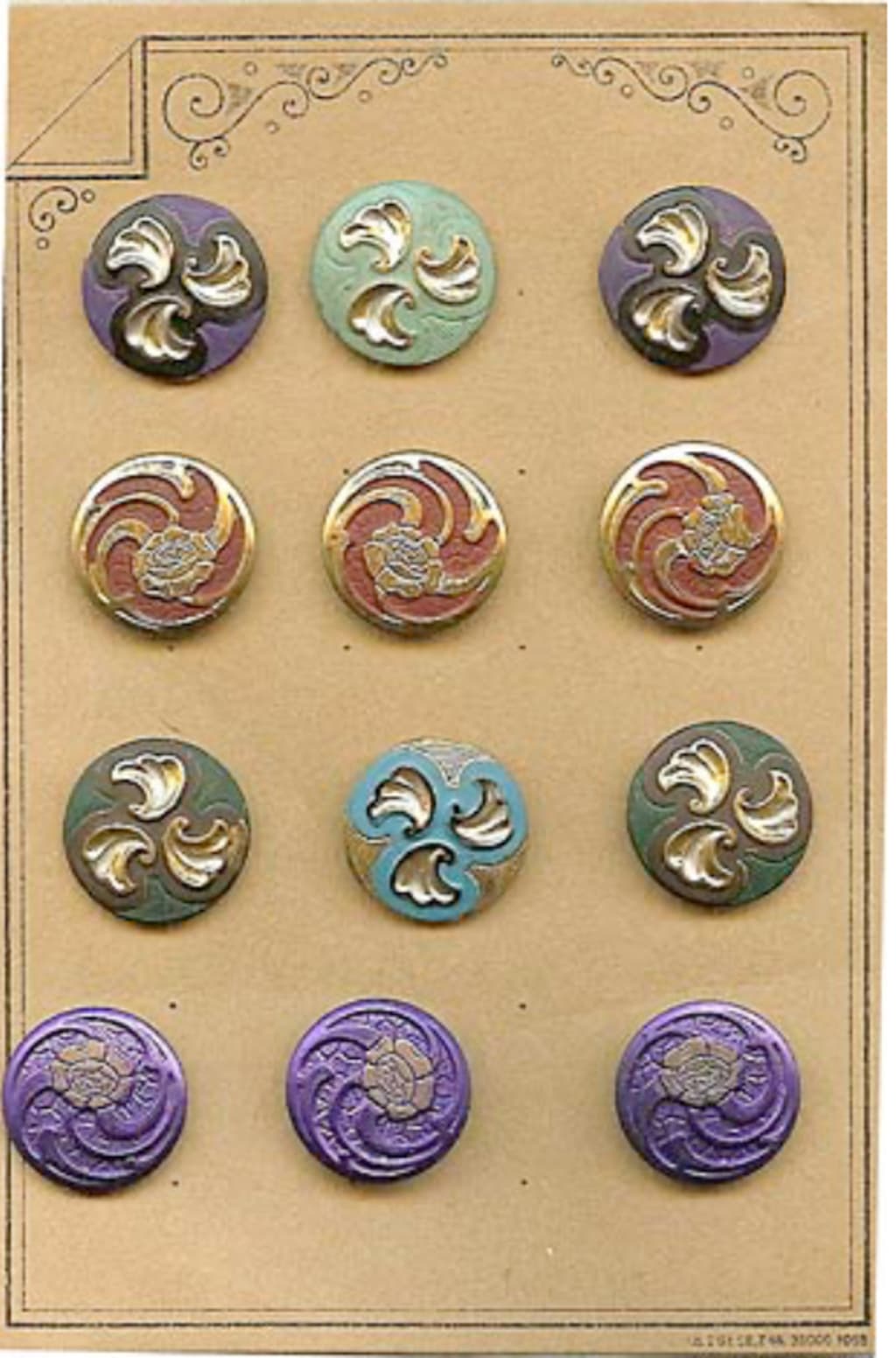
Being importers of glass beads and buttons from Czech Republic; and knowing the history of the makers of these buttons from our years of going to the region formerly known as Sudetenland, it was quite a surprise when a customer of ours showed us some metal buttons made in the same region but unknown to us. These buttons were made from non-ferrous metal. The buttons had various stampings, molded designs and colors fused on top and inside the designs, and some had painted coatings. They were quite lovely. The owner of these buttons happened to live quite close to us, and had a story to tell.
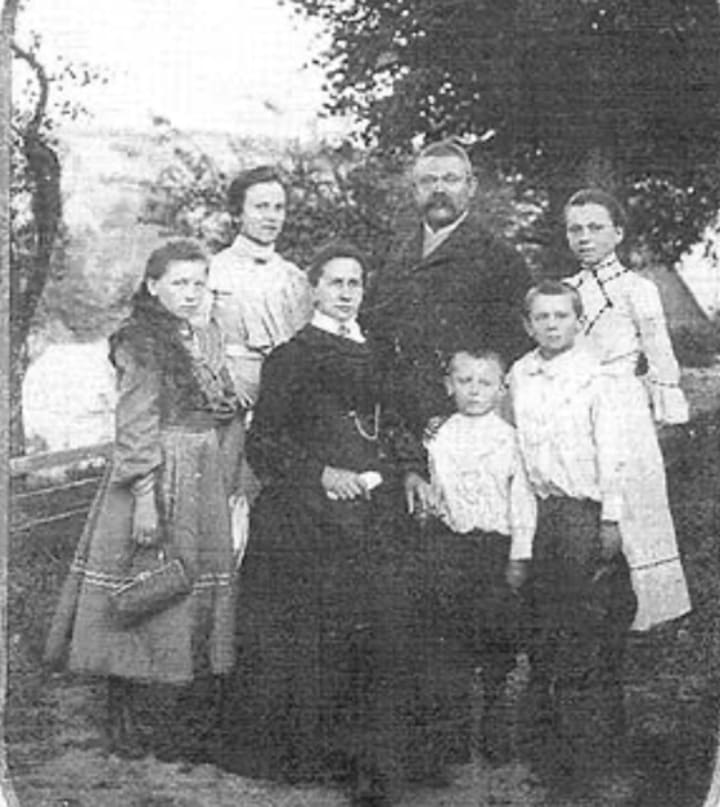
The Pueschel family. Circa 1904
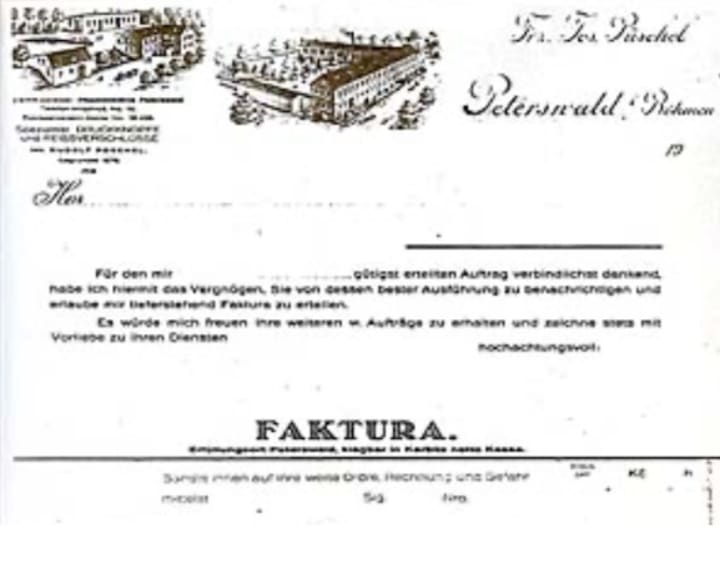
Blank factory invoice.
We met Rudolf and Brigitte Pueschel at their house in Northern California where they had retired from Rudolf’s job at N.O.A.A. and N.A.S.A. where he spent his career studying climatology, but his passion was keeping alive the story of his grandfather and father’s button factory and the events that led up to its destruction.
Franz Joseph Pueschel was a skilled miller, baker, carpenter and horse trader before finally finding his life’s work when he founded Pueschelmuehle, a metal goods factory in Peterswald in Erzgebirge in 1879, at mill #77, in Bohemia, Austrian Empire.
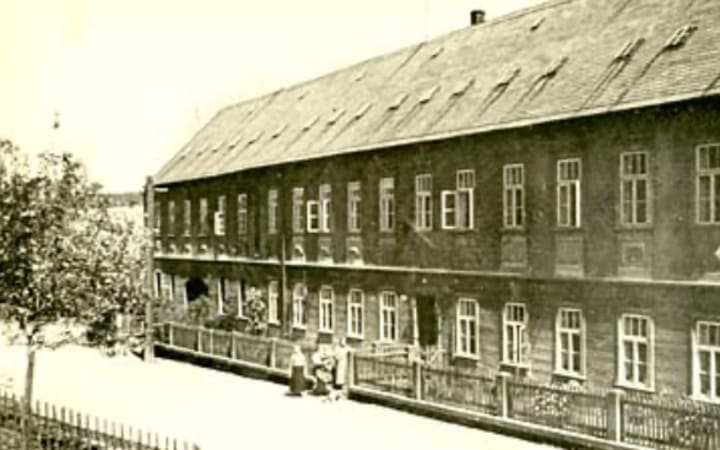
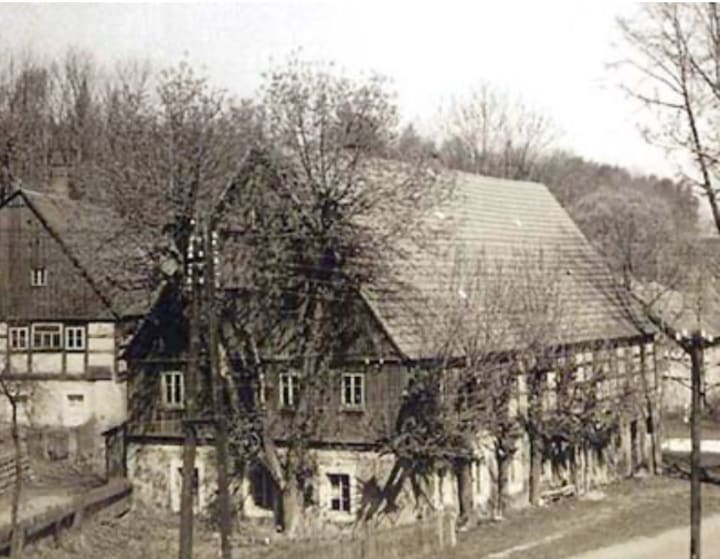
He started with a barrel drum, and made stampings on sheet metal; which he then delivered to other metal good factories in Peterswald who turned his designs into finished buttons. In 1903 he purchased house #352 across the street from #77, and began his own manufacture of buttons, buckles, snaps and other metal products.
In 1919, after WWI, the western allies divided up the Austrian- Hungarian Empire into different countries and Czechoslovakia came into being. Along with the Czechs and Slovaks, who were given all the political power for the newly created country, were thrown in the Sudeten Germans, who were given no voice even though they were the industrial strength behind the new country. Peterswald kept its name, but was now in Czechoslovakia.
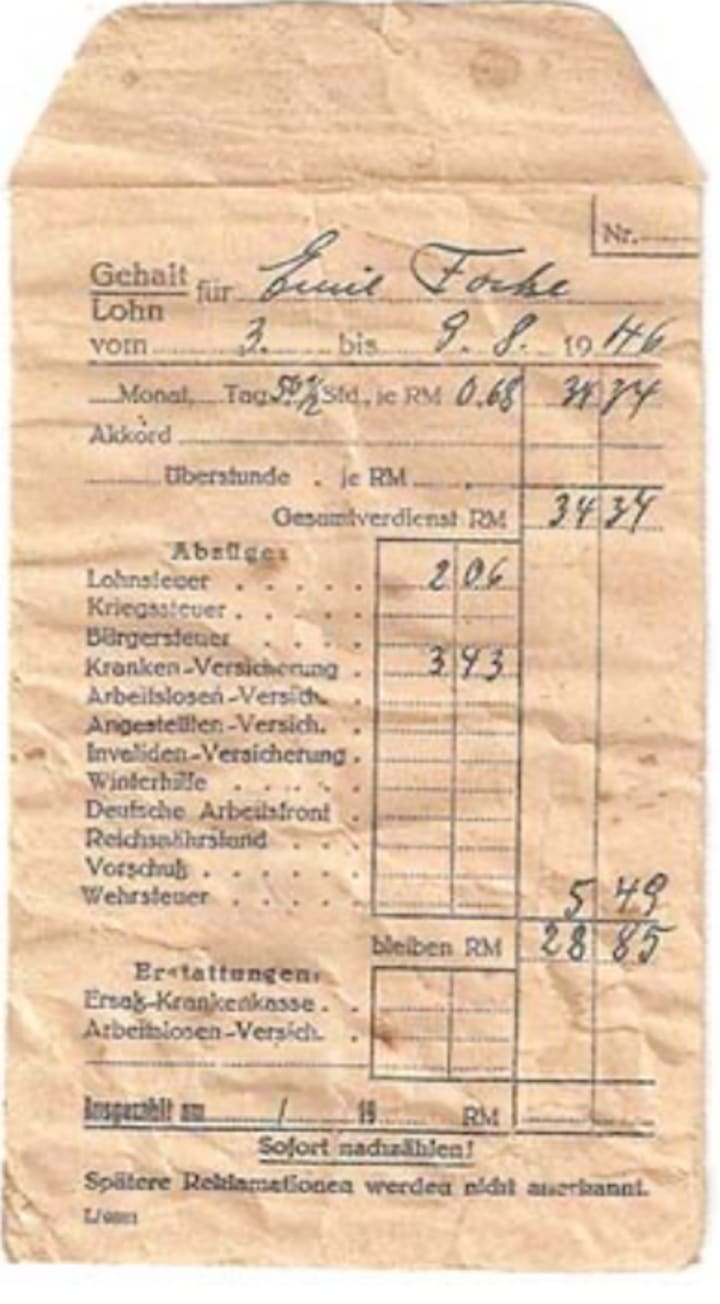
Franz Joseph Pueschel died in 1927, and the factory passed into the hands of his son Rudolf Franz Pueschel, who kept it going until 1946 when he and his family were deported to Germany after the war. They were allowed 30 kilos of personal belongings with them when the deportation day arrived. They were luckier than some as they were allowed to ride on a freight train with their belongings and a feather mattress across the border into defeated war torn Germany.
When Hitler began making his demands for annexation of the Sudetenland, some of the political parties resisted, including the Sudeten German Social Democrats. So when the allies forced the Czechoslovakian Government to allow the handover of Sudetenland to Hitler with their appeasement policy, the Nazis punished those Sudeten Germans as traitors. In all, some against their will, Sudeten Germans became German citizens, after living as Austrian subjects for 700 years.
Peterswald was a German speaking village with almost no Czech residents. The only Czechs were civil servants who ran the bureaucracy of the country, (i.e., postal workers, police, customs/immigration, etc.,).
When the Wehrmacht and the Nazis marched into Peterswald (and Sudetenland in general), all the young boys had to join the Hitler youth, including Rudolf when he was 10 years old, in 1944.
Pueschelmuehle was able to continue production all through the war, as metal buttons and buckles were needed, but after the war Rudolf Franz knew bad things were about to happen. The wild deportations had already occurred (where Germans were given 48 hours or less to leave - amid violence and humiliation by the Czechs) and in preparation he begun smuggling some of his inventory of buttons across the heavily guarded border into Germany, which was only 500 yards away from his house and factory. He would fill a backpack and walk across the border at night, hiding the button stash in a safe place for later retrieval when the inevitable deportation happened. He was also able to smuggle out some heavy pieces of equipment to be used in the future production of metal buttons.
Rudolf Franz knew the day of their deportation was looming closer when his two sons (as German boys) were forbidden to attend school by the authorities. In August 1946 he was given notice, and within one week they were gone, deported to the new East Germany, finally settling in a town 60 miles west of Berlin called Radis. Rudolf Franz was then able to return to his hidden stash of buttons and equipment and by 1947 had re-opened his factory.
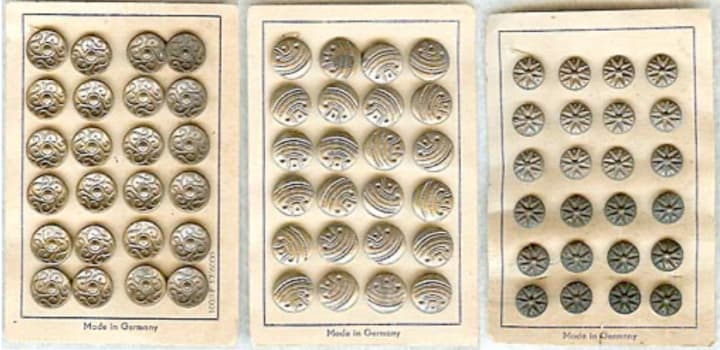
Pueschelmuehle was able to continue production all through the war, as metal buttons and buckles were needed, but after the war Rudolf Franz knew bad things were about to happen. The wild deportations had already occurred (where Germans were given 48 hours or less to leave - amid violence and humiliation by the Czechs) and in preparation he begun smuggling some of his inventory of buttons across the heavily guarded border into Germany, which was only 500 yards away from his house and factory. He would fill a backpack and walk across the border at night, hiding the button stash in a safe place for later retrieval when the inevitable deportation happened. He was also able to smuggle out some heavy pieces of equipment to be used in the future production of metal buttons.
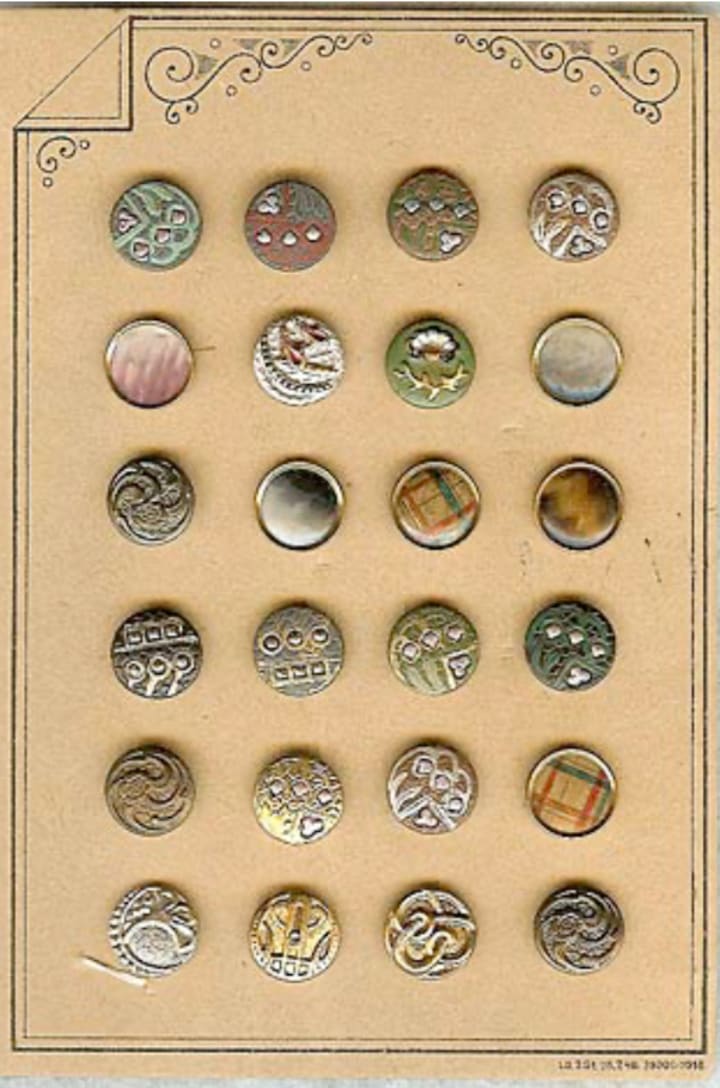
Rudolf Franz knew the day of their deportation was looming closer when his two sons (as German boys) were forbidden to attend school by the authorities. In August 1946 he was given notice, and within one week they were gone, deported to the new East Germany, finally settling in a town 60 miles west of Berlin called Radis. Rudolf Franz was then able to return to his hidden stash of buttons and equipment and by 1947 had re-opened his factory.
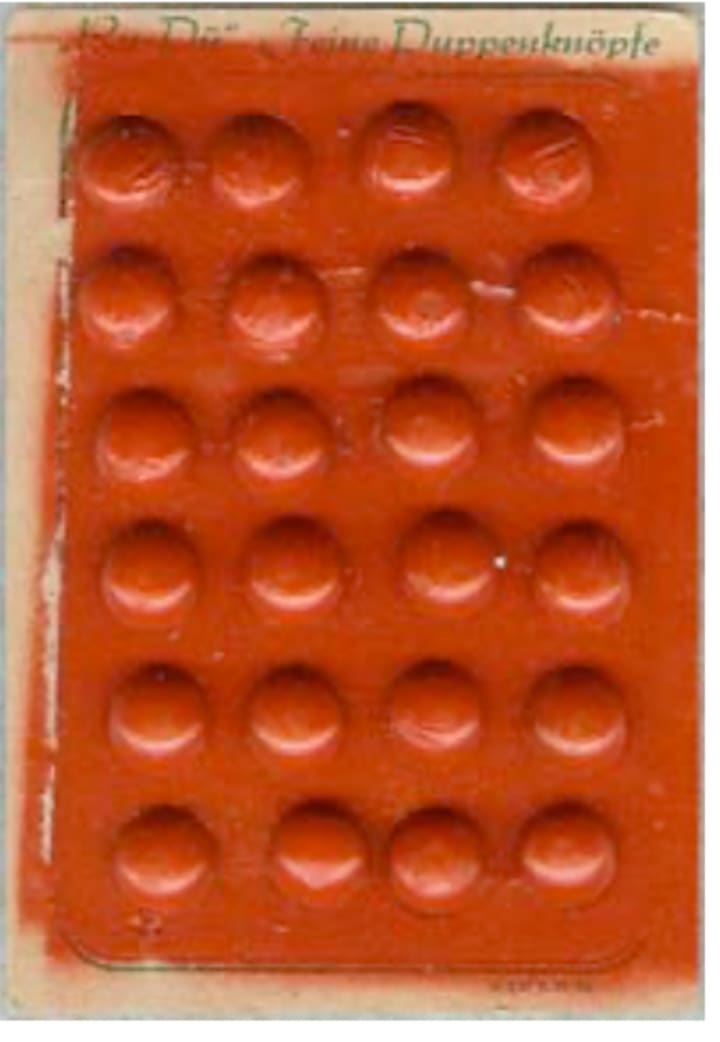
He used the smuggled buttons to trade for food from local farmers until he could start production on new orders. Some of the buttons he painted red to accommodate the political atmosphere emerging in East Germany. At its height his Radis factory employed 12 cottage industry workers.
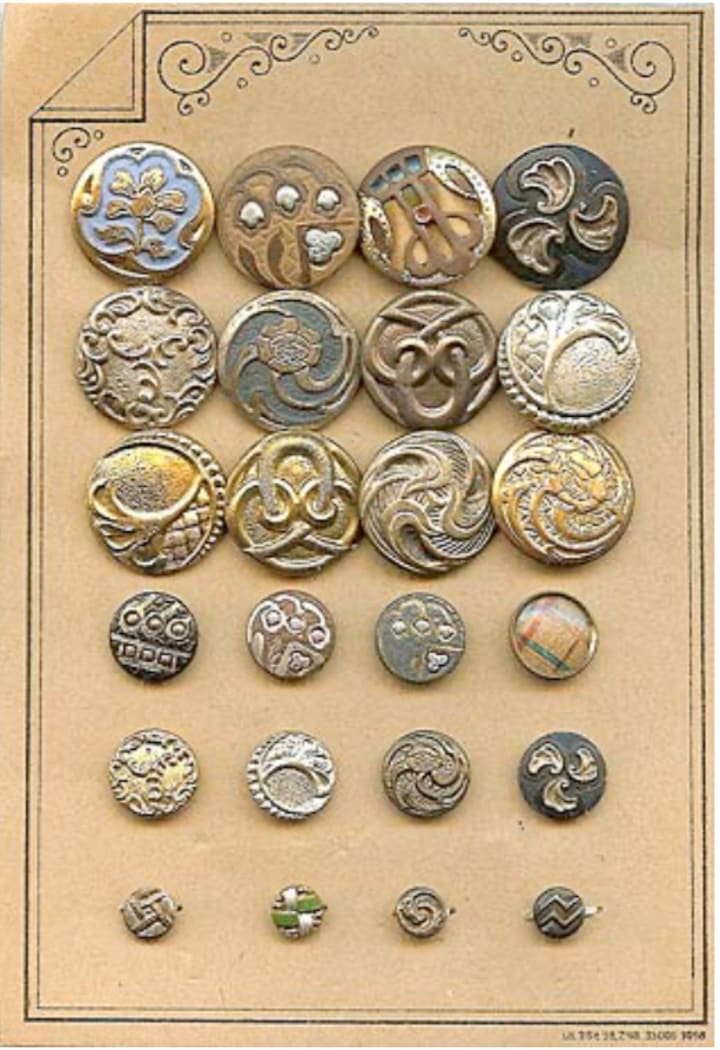
In comparison, the Peterswald factory at its height employed 100 workers on site.
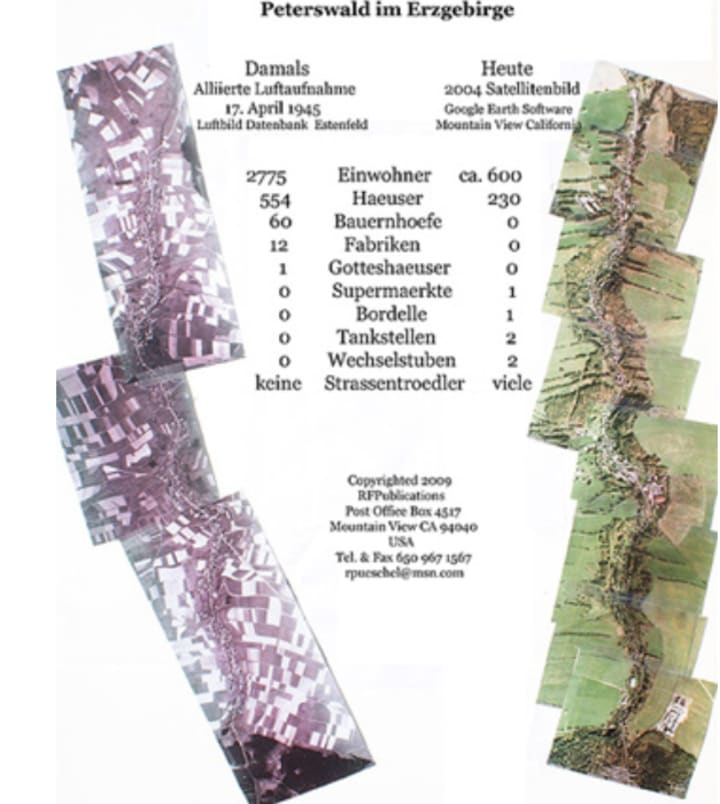
The Radis Pueschelmuehle Button factory closed in 1975. Rudolf Franz Pueschel died in 1980 in East Germany.
But the reason this story was able to be written was that in 1954 Rudolf Pueschel, the 20 year old son of Rudolf Franz Pueschel caught a train to Potsdam, getting off in West Berlin. At that time the East Germans and the Russians hadn’t tightened the border to the extent that it reached during the height of the cold war. From West Berlin, Rudolf went to Frankfurt and Giessen, getting his education along the way. With him, he took three suitcases filled with buttons from his father’s and his grandfather’s button factory. Eventually Rudolf ended up in California.
As a side note: his brother Rainer decided not to escape with Rudolf and stayed behind in Radis. Although he went to school and finally became a chemist, the East German secret police (Stasi) punished him all his life for being the brother of what they considered a traitor.
The grandfather, Franz Josef, had an older son, also named Franz Josef, who was killed in action during WW1 in 1917. He was 20 years old. He was killed in the presence of his brother, Rudolf Franz. He was buried in a forest in Galicia, now the Ukraine. Franz Josef,Sr requested that his son be exhumed and re-buried in Peterswald, where he lies today next to his father in an unattended grave.
Postscript: Peterswald in its heyday had a population of 2,700 people, all Sudeten Germans, with approximately 17 metal button factories. It now is called Petrovice, and has a population of 600 people; all Czech. There are no more metal button factories in Petrovice.
History of metal button manufacture in Peterswald.
The first metal buckles made in Peterswald were in 1757 by Christian Hieke, who had learnt the process while travelling around Europe. He began production with his brother Bernhard and they travelled around Europe to trade shows in order to sell the finished items. They invented mechanical devices to increase production. Buttons were soon added to their line.Then buttons were made in Peterswald by four Schonbach brothers from samples obtained in France and copied. No-one knew the name Peterswald, so the buttons were sold under the name Paris.
They were cast and stamped in alloys of tin and brass, also leaded tin. Shanks were inserted into the mold and then cast. The gilding and silvering of the buttons were done by electroplating. The finished product was packed into wheelbarrows and satchels and walked to markets in Vienna, Brno, Prague, Pilsen and Leipzig. At first the manufacturers sold them, then distributors were found who were willing to come to Peterswald to pick up and transport product to market for them.
Peterswald buttons and buckles became world famous in their own right.
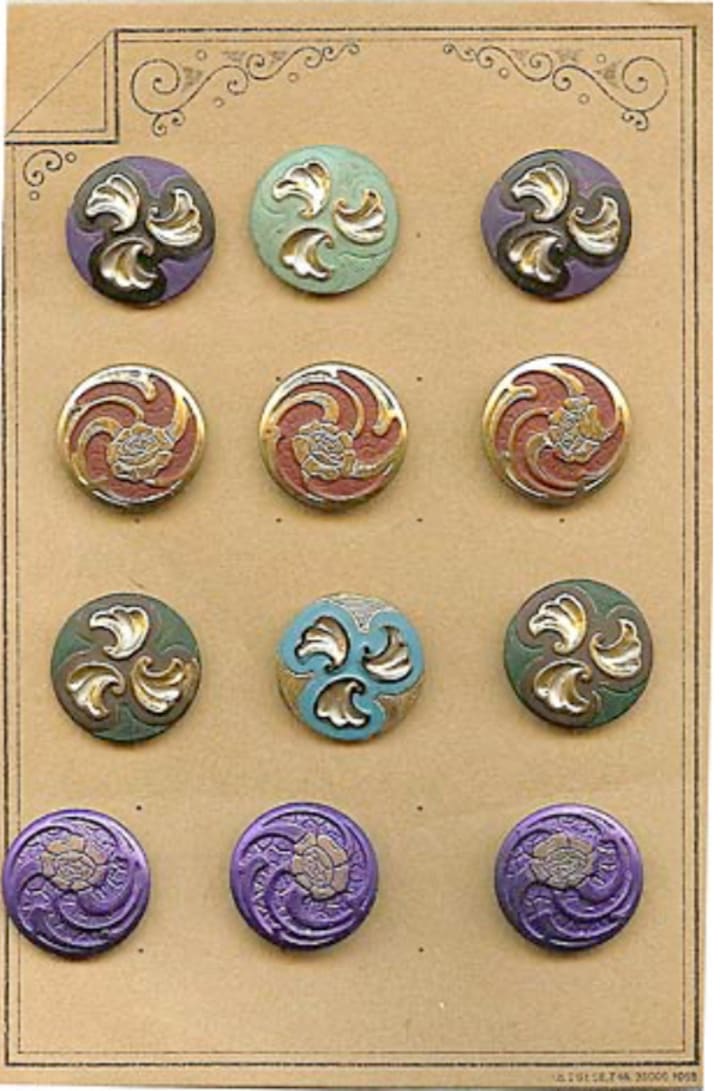
Buckle and button manufacturers in the 2nd half of the 18th century were:
Christian and Bernhard Hieke
Christian Streit
Joseph Ritschel
Anton Schonbach
Francis Wolf
And many others.
By 1815 there were 27 large button and buckle manufacturers in Peterswald, with many smaller operations such as cottage industry workers.
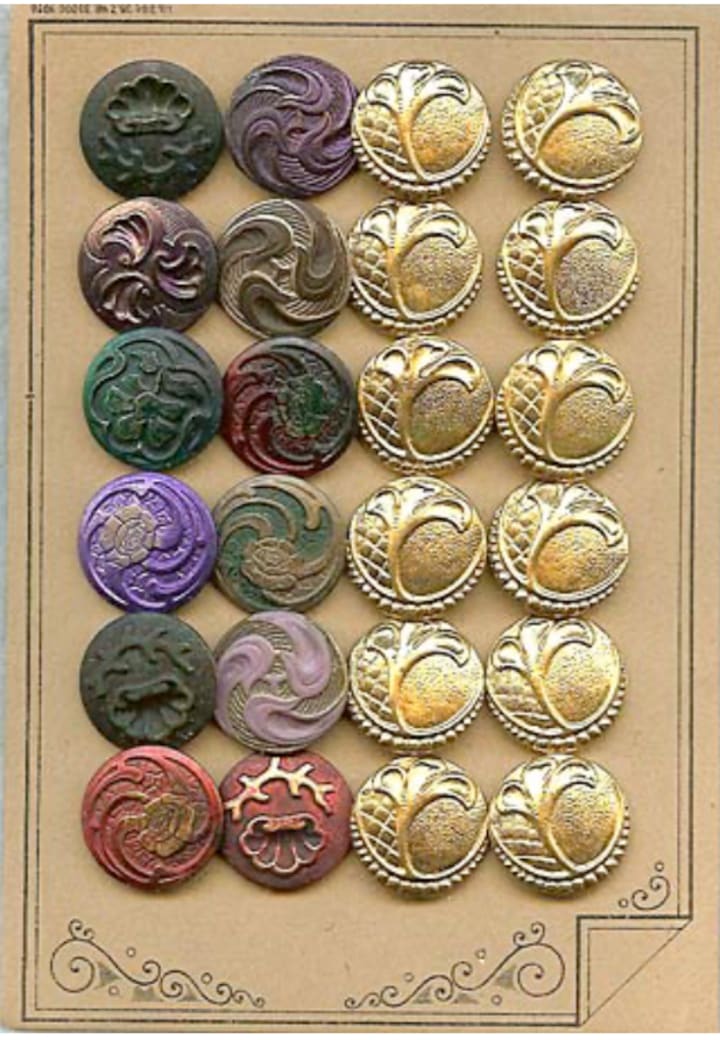
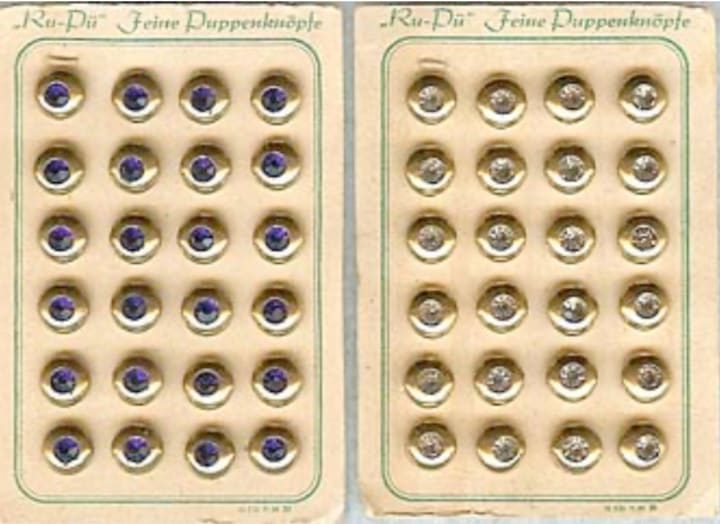
In the museum located in Usti nad Labem the regional capital of the area, there are metal buttons on display from Peterswald. No German history is mentioned at all.
About the Creator
Guy lynn
born and raised in Southern Rhodesia, a British colony in Southern CentralAfrica.I lived in South Africa during the 1970’s, on the south coast,Natal .Emigrated to the U.S.A. In 1980, specifically The San Francisco Bay Area, California.
A 4,400-Year-Old Priestess Tomb Discovered in Egypt
Archaeologists in Egypt have uncovered the remarkable tomb of a priestess that dates back approximately 4,400 years, offering new insight into religion, culture, and daily life during the height of the ancient Egyptian civilization. The discovery was made near the famous pyramids on the Giza Plateau, one of the most important archaeological areas in the world. Experts believe the tomb belonged to a high-ranking priestess named Hetpet, who lived during Egypt’s Fifth Dynasty, around 2400 BC. 
By Irshad Abbasi 5 days ago in History


Comments
There are no comments for this story
Be the first to respond and start the conversation.