
Professor GN Saibaba: A Voice for Human Rights and the Quest for Justice
International Support and Legal Battles


Professor GN Saibaba, a former English professor at Delhi University, has emerged as one of India’s most prominent advocates for human rights, particularly for the marginalized and indigenous communities in the country. Despite facing immense personal and professional challenges, including his imprisonment and physical disability, Saibaba’s activism and scholarship continue to ignite debates about civil liberties, state oppression, and justice in India. This article delves into the life, activism, and legacy of Professor GN Saibaba, highlighting his contributions and ongoing struggle for human rights.
Early Life and Education
Born in 1967 in Andhra Pradesh, India, GN Saibaba was diagnosed with polio at an early age, which left him with a severe physical disability. However, his determination and passion for learning led him to pursue higher education. Saibaba went on to earn a PhD in English Literature and became a professor at Delhi University, where he was known for his sharp intellect and commitment to teaching.
Activism and Advocacy for Marginalized Communities
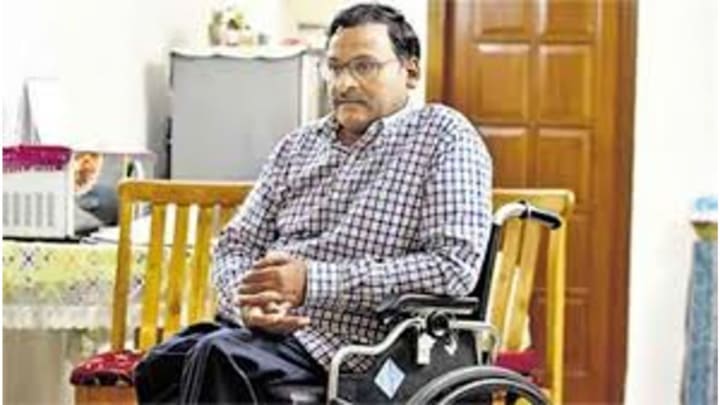
Saibaba’s journey into activism was driven by his deep sense of justice and empathy for marginalized communities, especially the Adivasis (tribal groups) in India. He became a vocal critic of the Indian government’s policies towards these communities, particularly their displacement due to mining and industrial projects. Saibaba argued that the state’s actions disproportionately affected the poor and vulnerable, stripping them of their rights and livelihoods.
As an activist, he worked with organizations and individuals to raise awareness about these issues. Saibaba’s criticism of Operation Green Hunt—a government-led counterinsurgency initiative targeting Maoist rebels in India—was particularly noteworthy. He contended that the operation was not only aimed at quelling armed resistance but also at silencing legitimate dissent from those who opposed the state’s exploitation of natural resources.
Imprisonment and Controversy
In May 2014, Professor GN Saibaba was arrested by the Maharashtra Police on charges of being associated with the banned Communist Party of India (Maoist). He was accused of supporting and aiding Maoist activities, a claim that Saibaba and his supporters vehemently denied. Despite his disability—Saibaba is 90% physically disabled and uses a wheelchair—he was imprisoned in Nagpur Central Jail under harsh conditions.
His arrest and imprisonment sparked widespread controversy, with human rights activists, academics, and intellectuals rallying behind him. Many argued that Saibaba’s arrest was politically motivated and part of a broader attempt to suppress dissent. Amnesty International and other human rights organizations have repeatedly called for his release, citing the inhumane prison conditions and his deteriorating health.
Legal Battle and International Support
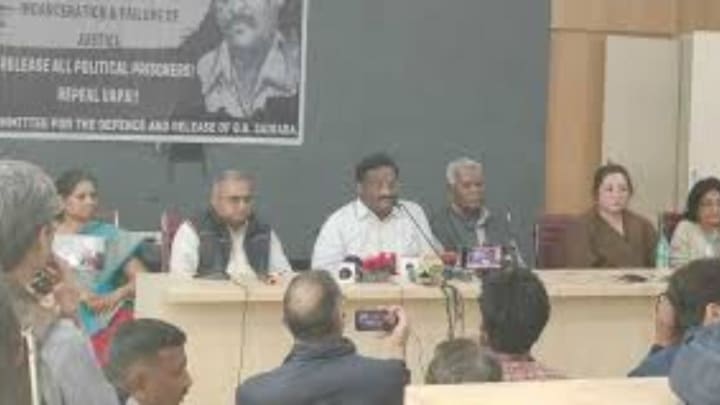
Saibaba’s legal battle has been ongoing since his arrest. In March 2017, he was sentenced to life imprisonment under the Unlawful Activities (Prevention) Act (UAPA), a decision that has been widely criticized by human rights organizations and legal experts. His supporters argue that the evidence against him is circumstantial and that his conviction is a gross violation of his right to free speech and academic freedom.
International scholars and activists have also voiced their concerns over Saibaba’s imprisonment. They view his case as emblematic of the shrinking space for dissent and free expression in India. Prominent figures like Noam Chomsky have called for his release, highlighting the need for fair treatment and justice.
Health Concerns and Calls for Release
Saibaba’s health has deteriorated significantly during his time in prison. His physical disability, compounded by the harsh prison conditions, has led to numerous health issues, including chronic pain and respiratory problems. Despite these concerns, the courts have repeatedly denied his bail pleas, raising questions about the humanitarian aspects of his incarceration.
Human rights groups have urged the Indian government to release Saibaba on humanitarian grounds. His family, friends, and supporters continue to campaign for his freedom, emphasizing the need for justice and humane treatment for all prisoners, particularly those with severe disabilities.
Saibaba’s Legacy and Continued Relevance
Professor GN Saibaba’s legacy as a human rights activist and scholar endures despite his imprisonment. His case has brought attention to the broader issues of civil liberties, state repression, and the treatment of marginalized communities in India. His life serves as a reminder of the importance of standing up for justice, even in the face of adversity.
Saibaba’s story continues to inspire activists, academics, and students around the world. His resilience in the face of immense challenges underscores the power of the human spirit and the enduring fight for human rights.
Frequently Asked Question
Who is Professor GN Saibaba?
Professor GN Saibaba is a former English professor at Delhi University and a prominent human rights activist who has advocated for the rights of marginalized communities, including Adivasis and the poor in India.
What was Professor Saibaba’s main area of activism?
Saibaba has been an outspoken critic of the Indian government's policies towards indigenous people, particularly their displacement due to industrial projects, and has opposed the state’s militarized actions, such as Operation Green Hunt.
Why was Professor GN Saibaba arrested?
In 2014, Saibaba was arrested for alleged connections with the banned Communist Party of India (Maoist) and charged with supporting Maoist activities, which he and his supporters have denied.
What is Operation Green Hunt, and why did Saibaba oppose it?
Operation Green Hunt is a counterinsurgency initiative launched by the Indian government to combat Maoist rebels. Saibaba opposed it, claiming it targeted indigenous populations and was part of a broader effort to silence dissent.
What was the outcome of Professor GN Saibaba’s trial?
In 2017, Saibaba was convicted under the Unlawful Activities (Prevention) Act (UAPA) and sentenced to life imprisonment, a ruling that has been heavily criticized by human rights groups.
What are the main health concerns regarding Professor Saibaba’s imprisonment?
Professor Saibaba, who is 90% physically disabled due to polio, has faced deteriorating health in prison, including chronic pain and respiratory issues. Despite this, his bail pleas have been repeatedly denied.
Why is Professor GN Saibaba’s case controversial?
Saibaba’s case is seen by many as politically motivated, with critics arguing that his conviction is an attempt to suppress free speech and dissent, particularly his criticism of the government’s treatment of indigenous people.
What international support has Professor Saibaba received?
Saibaba’s case has attracted global attention, with scholars and activists like Noam Chomsky calling for his release and raising concerns about the state of human rights and civil liberties in India.
What is the Unlawful Activities (Prevention) Act (UAPA)?
The UAPA is an anti-terror law in India used to counter acts of terrorism and insurgency. Critics argue that it has been misused to target political dissenters and human rights activists like Saibaba.
What is Professor GN Saibaba’s legacy in the field of human rights?
Despite his imprisonment, Saibaba is widely regarded as a symbol of resistance and advocacy for human rights. His work has raised awareness of the plight of marginalized communities and the need for fair treatment and justice. It is as relevant as ever.
/VIDEO
Conclusion
Professor GN Saibaba’s life and work reflect the struggle for justice and the defence of civil liberties in the face of state repression. His imprisonment has sparked an international outcry and continues to raise important questions about human rights, academic freedom, and the treatment of marginalized communities in India. As calls for his release grow louder, Saibaba’s legacy as a courageous advocate for justice remains as relevant as ever.
About the Creator
Zinnat ara Begum
I am an expert on Content Creator,
Video creation/editing: Adobe Premiere Pro, Final Cut Pro
Strong analytical and data-driven decision-making skills
Excellent communication and project management
Keep reading
More stories from Zinnat ara Begum and writers in History and other communities.
Bad Blood: What It Means and How to Overcome It
In our relationships—whether personal, familial, or professional—unresolved conflicts can lead to what we often refer to as "bad blood." This term encapsulates feelings of resentment, bitterness, and tension that can persist over time. In this article, we’ll delve into the causes of bad blood, its impact on our lives, and effective strategies for resolution.
By Zinnat ara Begumabout a year ago in History
Is the U.S. Preparing to Attack Iran?
Is the U.S. Preparing to Attack Iran? Inside the Rising Tensions and Possible Military Pathways In early 2026, tensions between the United States and Iran reached one of their highest points in years. For weeks, dramatic political rhetoric, shifting military postures, and warnings from leaders around the world have fueled alarms that a U.S. military strike against Iran may be imminent. Yet as of now, no confirmed attack has occurred, and the situation reflects a complex mix of pressure, preparation, de-escalation, and diplomatic uncertainty that illustrates how modern conflict can hinge just as much on words and positioning as on direct action.
By Wings of Time 2 days ago in History
No ICE, No KKK, No Fascist USA
"I don't 'do' politics." Politics will do you, regardless. Watching from the sidelines for the last year I can see far too many similarities in the way Trump's ICE Gestapo is to Nazi Germany. Considering the United States just invaded Venezuela and kidnapped their President and his wife I would say we are there.
By Lyvia Jack4 days ago in History



Comments
There are no comments for this story
Be the first to respond and start the conversation.