
Prague Castle: A Millennium of Power
Historic seat of rulers overlooking the Vltava River.
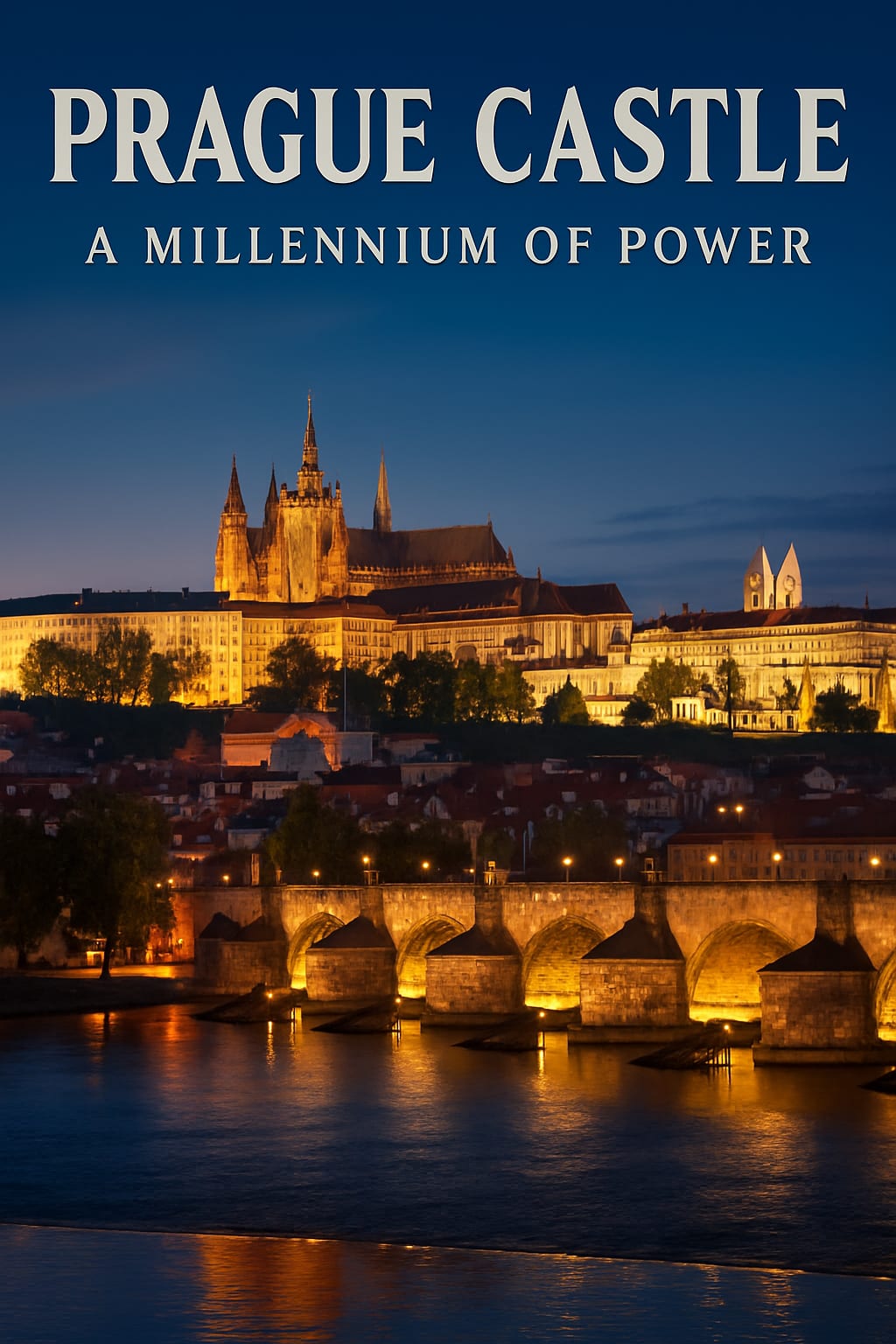
Prague Castle – The Heart of Czech History
High on a hill overlooking the winding Vltava River, Prague Castle (Pražský hrad) dominates the skyline of the Czech capital. Its silhouette, with Gothic spires and sprawling courtyards, has been a symbol of Czech identity, resilience, and power for more than a millennium. More than just a fortress, it is an enduring witness to the changing tides of history — from medieval kings to modern presidents — and holds the Guinness World Record as the largest ancient castle in the world, covering nearly 70,000 square meters.
Origins in the 9th Century
The story of Prague Castle begins around 880 AD, when Prince Bořivoj I of the Přemyslid dynasty established a fortified settlement on the hill. Its strategic location made it an ideal seat of power, offering both defense and control over trade routes along the Vltava. Early structures were modest — wooden palisades and simple stone buildings — but they quickly evolved into the nucleus of political and religious authority in Bohemia.
By the 10th century, the first stone church, St. George’s Basilica, rose within the complex. This Romanesque gem, with its twin white towers, still stands today, representing one of the castle’s oldest surviving buildings.
The Gothic Transformation
The 14th century brought a dramatic transformation. Under Charles IV, King of Bohemia and Holy Roman Emperor, Prague became the capital of the Holy Roman Empire. The monarch envisioned a castle worthy of imperial status, commissioning ambitious construction projects. The crowning achievement was the foundation of St. Vitus Cathedral in 1344, designed in the grand Gothic style.
St. Vitus was more than a place of worship; it was the spiritual heart of the nation, housing the tombs of kings, relics of saints, and the fabled Czech Crown Jewels. Its soaring spires became a visual signature of Prague itself.
Renaissance and Habsburg Splendor
In the 16th century, the Habsburgs inherited the Bohemian throne, ushering in Renaissance elegance. Italian architects and artists were invited to modernize the castle. The Royal Garden was laid out, and the Ball Game Hall emerged as a masterpiece of Renaissance architecture.
The Old Royal Palace, which had served as the center of political life, gained a new highlight: Vladislav Hall, an enormous ceremonial space with a unique ribbed vault. This hall hosted coronations, banquets, and even jousting tournaments indoors — an architectural marvel for its time.
Baroque Grandeur and Decline
The 17th and 18th centuries saw further embellishments in the Baroque style, particularly after damage from fires and wars. St. Vitus Cathedral remained unfinished, but ornate chapels and palaces were added. However, as the Habsburgs shifted their primary residence to Vienna, the castle’s political significance waned, and it fell into partial neglect.
Revival in the 19th and 20th Centuries
A wave of national pride in the 19th century revived interest in Prague Castle. The unfinished St. Vitus Cathedral became a symbol of Czech identity, and construction finally resumed, culminating in its completion in 1929 — exactly 1,000 years after the death of St. Wenceslas, the patron saint of Bohemia.
After the creation of Czechoslovakia in 1918, Prague Castle became the official residence of the president. The first president, Tomáš Garrigue Masaryk, commissioned architect Jože Plečnik to renovate the courtyards and gardens, blending historical respect with modern touches.
The Castle Today
Today, Prague Castle serves as the office of the President of the Czech Republic and as one of the country’s most visited attractions. It is a UNESCO World Heritage Site as part of Prague’s historic center.
The castle complex includes:
St. Vitus Cathedral – Gothic masterpiece and spiritual center.
Old Royal Palace – Home to Vladislav Hall and centuries of royal history.
St. George’s Basilica – Romanesque church with ancient charm.
Golden Lane – A row of tiny, colorful houses once occupied by guards, artisans, and even Franz Kafka for a brief period.
Royal Gardens and South Gardens – Offering panoramic views over the city’s red rooftops.
A daily Changing of the Guard ceremony at the main gate draws crowds, with a full fanfare at noon.
Architecture Across the Ages
One of Prague Castle’s most fascinating aspects is its blend of styles. Romanesque chapels, Gothic cathedrals, Renaissance gardens, and Baroque palaces coexist within the same walls, each reflecting a different era and ruler. This fusion makes the castle not only a political symbol but also a living timeline of European architecture.
Legends and Mysteries
Like any ancient seat of power, Prague Castle is steeped in legends. Tales speak of hidden treasures, ghostly apparitions, and the mystic Bohemian Crown Jewels, which are kept under lock and key in St. Vitus Cathedral. Access requires seven different keys held by seven high-ranking officials — a fitting safeguard for the nation’s most prized symbols.
Visiting Prague Castle
Exploring Prague Castle can take an entire day. Visitors often start in the First Courtyard before passing through the grand Matthias Gate into the heart of the complex. Guided tours reveal centuries of intrigue, art, and politics. At sunset, the castle’s golden light over the Vltava is a view that lingers in memory long after the trip is over.
Cultural Significance
More than a tourist attraction, Prague Castle remains a vital emblem of Czech sovereignty. It has witnessed coronations, invasions, occupations, and revolutions, yet it stands unshaken — a testament to the endurance of the Czech people. In its stones are the echoes of medieval chants, imperial decrees, and the footsteps of countless generations.
Conclusion
Prague Castle is not merely an architectural marvel; it is the soul of a nation. From its humble beginnings in the 9th century to its modern role as a presidential residence, it has adapted, survived, and inspired. To walk its courtyards is to step through the living pages of Czech history, where every tower, chapel, and cobblestone has a story to tell.
About the Creator
Reader insights
Outstanding
Excellent work. Looking forward to reading more!
Top insights
Compelling and original writing
Creative use of language & vocab
Easy to read and follow
Well-structured & engaging content
Excellent storytelling
Original narrative & well developed characters
Expert insights and opinions
Arguments were carefully researched and presented
Eye opening
Niche topic & fresh perspectives
Heartfelt and relatable
The story invoked strong personal emotions
Masterful proofreading
Zero grammar & spelling mistakes
On-point and relevant
Writing reflected the title & theme
Keep reading
More stories from Mukhtiar Ahmad and writers in History and other communities.
Alhambra: Jewel of Moorish Spain’s Legacy
The Alhambra, perched majestically on a hill overlooking the city of Granada in southern Spain, is one of the world’s most celebrated monuments of Islamic architecture. Its name, derived from the Arabic Al-Qal‘a al-Hamra meaning “The Red Fortress,” reflects the reddish hue of its walls that glow brilliantly in the setting sun. Built over centuries, the Alhambra stands as a dazzling fusion of artistry, engineering, and history, a masterpiece that tells the story of both the splendor and the decline of Muslim rule in the Iberian Peninsula.
By Mukhtiar Ahmad7 months ago in History
Qadir Bakhsh “Qadu Makrani”: Rebel Outlaw to the British, Heroic Defender to the People
Qadir Bakhsh Rind, widely remembered as Qadu Makrani, is one of the most fascinating and controversial figures in the history of resistance against colonial rule in South Asia. To the British colonial administration, he was a dangerous outlaw and a rebellious bandit. But to many local people in present-day Balochistan and Sindh, he became a symbol of courage, resistance, and protection of the oppressed.
By Irshad Abbasi about 5 hours ago in History


Comments (1)
amazing