
Alhambra: Jewel of Moorish Spain’s Legacy
A timeless fortress blending Islamic art with Spanish history

The Alhambra, perched majestically on a hill overlooking the city of Granada in southern Spain, is one of the world’s most celebrated monuments of Islamic architecture. Its name, derived from the Arabic Al-Qal‘a al-Hamra meaning “The Red Fortress,” reflects the reddish hue of its walls that glow brilliantly in the setting sun. Built over centuries, the Alhambra stands as a dazzling fusion of artistry, engineering, and history, a masterpiece that tells the story of both the splendor and the decline of Muslim rule in the Iberian Peninsula.
Early Beginnings
The origins of the Alhambra date back to the 9th century, when a small fortress was built on the site during the era of Muslim control over Al-Andalus. However, it was during the reign of the Nasrid Dynasty in the 13th century that the Alhambra took on the grandeur we recognize today. Muhammad I, the founder of the Nasrid Emirate of Granada, began transforming the hilltop into a royal complex, fortifying its walls and laying the foundations for a palatial city. Over the next 150 years, successive Nasrid rulers expanded and adorned the Alhambra with intricate palaces, serene courtyards, and lush gardens.
Architectural Brilliance
The Alhambra is more than just a fortress—it is an entire citadel containing palaces, military quarters, and residential areas. The complex is divided into three main parts: the Alcazaba (fortress), the Nasrid Palaces, and the Generalife (the royal gardens and summer palace).
The Alcazaba, the oldest part of the complex, served as the military stronghold, with massive watchtowers offering panoramic views of Granada and the Sierra Nevada mountains. The Nasrid Palaces are the heart of the Alhambra’s artistic legacy, where Islamic architecture reached its peak in Spain. Delicate stucco work, carved wooden ceilings, marble columns, and geometrically patterned tiles create a sense of harmony and spiritual beauty. Notable spaces include the Court of the Lions, with its famous fountain supported by twelve marble lions, and the Hall of the Ambassadors, where diplomatic receptions took place beneath a stunning domed ceiling.
The Generalife, located on a hillside above the main complex, was the sultans’ private retreat. Its terraced gardens, fountains, and orchards were designed to reflect the Islamic vision of paradise—a place of shade, water, and tranquility.
Symbolism and Artistry
The Alhambra’s design follows Islamic artistic principles, where ornamentation is used not merely for beauty but to reflect religious and philosophical ideals. Arabic calligraphy adorns the walls with verses from the Qur’an and poetry celebrating the Nasrid dynasty. Complex geometric patterns and arabesques convey the idea of infinite creation, a central theme in Islamic art. Light and water play vital roles in the architecture, with reflective pools, trickling fountains, and strategically placed windows creating a sense of peace and contemplation.
The Fall of Granada
By the late 15th century, the Nasrid Kingdom of Granada was the last Muslim stronghold in Spain. Surrounded by the growing Christian kingdoms, it was increasingly vulnerable. In 1492, after a prolonged siege, Sultan Muhammad XII (known as Boabdil) surrendered the Alhambra to the Catholic Monarchs, Ferdinand and Isabella, marking the completion of the Reconquista. According to legend, as Boabdil left the city, he turned for one last look at the Alhambra and sighed—an event remembered in the Spanish phrase El Suspiro del Moro (“The Moor’s Sigh”).
Under Christian rule, parts of the Alhambra were altered. Charles V, Holy Roman Emperor, built a Renaissance-style palace within its walls, which, although never completed, contrasts sharply with the Islamic architecture. Over time, neglect, earthquakes, and vandalism took their toll, but the core beauty of the Alhambra endured.
Rediscovery and Preservation
In the 19th century, the Alhambra was rediscovered by Romantic writers and travelers, most famously Washington Irving, whose Tales of the Alhambra introduced its magic to a global audience. Restoration efforts began in the late 19th and 20th centuries, aiming to preserve the site’s delicate structures and ornate decorations. Today, the Alhambra is recognized as a UNESCO World Heritage Site, attracting millions of visitors each year.
Cultural Significance
The Alhambra stands as a symbol of cultural coexistence and historical complexity. It reflects the artistic achievements of Islamic Spain, yet also embodies the layered history of the Iberian Peninsula, where Christian and Muslim influences intertwined. Its architecture continues to inspire artists, architects, and historians worldwide.
Beyond its beauty, the Alhambra serves as a reminder of the impermanence of power and the enduring nature of art. It remains a living monument—not only to the Nasrid dynasty but also to the broader human capacity for creativity, refinement, and the pursuit of beauty even in turbulent times.
About the Creator
Keep reading
More stories from Mukhtiar Ahmad and writers in History and other communities.
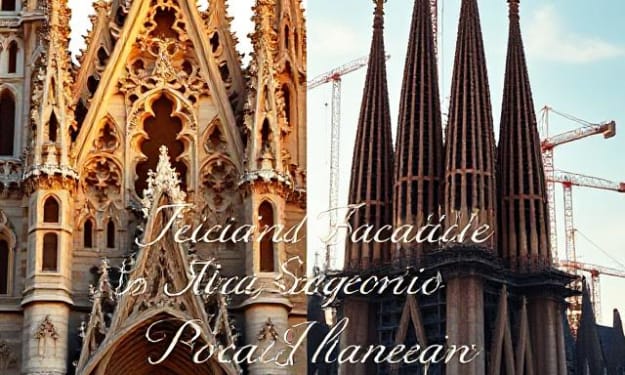
Sagrada Família: Gaudí’s Unfinished Masterpiece
The Basílica de la Sagrada Família, located in the heart of Barcelona, Spain, is one of the most unique and recognizable buildings in the world. Its towering spires, intricate facades, and breathtaking interior make it an enduring symbol of Catalonia’s artistic and cultural heritage. Designed by the visionary architect Antoni Gaudí, this monumental church remains unfinished more than 140 years after construction began, yet it continues to inspire millions of visitors each year.
By Mukhtiar Ahmad7 months ago in History
Saddam Hussein: The Final Hours of Iraq’s Iron Leader
The history of the 21st century has few images as stark as the fall of Saddam Hussein. For decades, he was the "Lion of Babylon," a man whose portrait hung in every office and whose shadow loomed over every street in Iraq. However, the narrative of his final moments—specifically the claim that even his American jailers wept during his execution—reveals a haunting layer of human complexity often lost in the geopolitical discourse of war and regime change.
By Irshad Abbasi 5 days ago in History
A Transparent Look at Vocal Challenges and Top Stories
Almost three years ago, we shared a resource article that served as a place for people to suggest new challenge prompts. We thought it would be a good idea to refresh that thread, and take the opportunity to answer a few common questions about top stories, how challenges are judged and how submissions are reviewed.
By Vocal Curation Team4 days ago in Resources


Comments
There are no comments for this story
Be the first to respond and start the conversation.