
Postcards Were the Email of Their Era': The Viral Phenomenon of Cat Memes a Century Ago
How cat memes went viral 100 years ago.

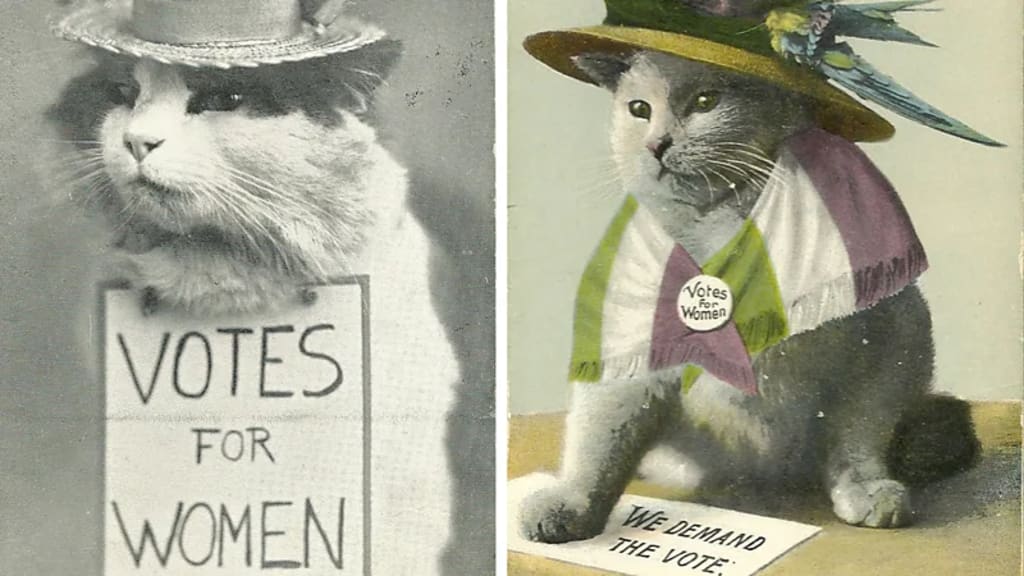
In the era of social media, we are amidst a communications revolution. Yet, this isn't the first upheaval of its kind, nor is it the inaugural instance of cats playing a pivotal role in social transformation. A consistent trend throughout media history is evident: when new communication technologies arise, they are invariably employed to share images of cats. These feline depictions serve not only to highlight the unique bond between humans and their pets but also to illustrate the evolving dynamics of human interaction.
The cat meme phenomenon in its contemporary guise traces back to the 1990s, coinciding with the advent of email, which empowered bored office workers and friends to exchange amusing cat images. As the internet expanded, these cat memes transitioned to social media platforms, leading to the emergence of viral sensations like Keyboard Cat and Grumpy Cat. The demand for such witty content was so intense that entire websites, such as ICanHasCheezburger, were launched to curate the finest cat memes and pet videos. However, predating any notion of feline internet fame, there existed a significant trend: the Edwardian postcard. Media historians suggest that by examining early 20th-century cat postcards, we can glean insights into today’s social media landscape.
"Certain motifs endure across generations and media, and representations of cats are among them," remarks Ben Weiss, a senior curator at the Boston Museum of Fine Arts and co-curator of the museum’s exhibition, The Postcard Age. In the late 19th and early 20th centuries, Weiss explains, "postcards acted very much like social media does today." Postcards, more economical and efficient than letters, provided a means to share fleeting thoughts, coordinate meetings, convey humor, and, of course, showcase cat images. Whether communicated through a stamped postcard in 1924 or a tap on a touchscreen in 2024, depictions of cats have always resonated with artists and audiences alike.
The first postcards were printed in Austria-Hungary in 1869—an opportune innovation, coinciding with the establishment of the Universal Postal Union in 1874, which enabled international mail delivery. This development blossomed into a massive wave of postcard communication in subsequent years. Like memes, postcards not only carried images and snippets of text; they also represented a vast network of communication and powerful institutions that facilitated rapid delivery across great distances. These postcards reflected a changing world and the remarkable advancements in technology, arriving directly into the hands of recipients.
"We often overlook the complexity of the early 20th-century communications network through which postcards traveled," Weiss states. "You could send a postcard to someone at 10 a.m. stating you'd arrive by 5:30 p.m., bridging the gap from Manhattan to Jersey City, and the message would reach them quite expeditiously." During the postcard craze, countless millions of them circulated, providing an ideal environment for the prominence of cat imagery. This marked an unprecedented moment when rapid communication became affordable and accessible to the average person. Between 1900 and 1914, Weiss notes, "the world was engulfed by a worldwide postcard mania, to the point where it was colloquially referred to as a disease in the public bloodstream."
During this postcard explosion, millions of postcards filled mailboxes, creating the perfect opportunity for cats to dominate this new medium. At that time, cats were regarded as more than mere pest control. Esteemed figures, including Queen Victoria, were well-known cat enthusiasts, while the animal’s ties to Halloween were firmly established. Some postcards displayed cats simply being their adorable selves—lapping milk from saucers, tangling with yarn, basking in sunlight—while others portrayed these feline companions in human-like scenarios, engaging in work or domestic activities.
However, not everyone was at ease with the ramifications of postcards on society. Newspapers denounced postcards as a "fresh terror" and a "Frankenstein’s monster," alarmed by their surging popularity, Cure states. The influx of postcards overwhelmed postal workers, resulting in tales of injuries from managing heavy mail bags. "Postcards were perceived as alarmingly fast," says Monica Cure, author of Picturing the Postcard: A New Media Crisis at the Turn of the Century. "Many expressed concerns about how postcards would impact reading and writing skills. With the ability to send quick messages, why bother learning grammar and effective writing?"
Concerns also arose that postcards could foster superficial relationships, as instead of penning detailed letters, individuals exchanged quick images. The open nature of postcards added to public apprehension, Cure remarks. The original proposal for postcards faced rejection due to fears of servants reading unsealed correspondence. "Postcards draw parallels to memes—both then and now, the visual culture of the early 20th century was largely centered on animals, particularly cats," notes Heidi Herr, a librarian at Johns Hopkins University and curator of the Votes and Pettico.
About the Creator
Dickson Tenkorang
I’m someone who thrives on curiosity and the thrill of discovery. Whether it's diving deep into the nuances of a new idea, tackling challenges head-on, or finding creative ways to approach everyday problems.
Keep reading
More stories from Dickson Tenkorang and writers in History and other communities.
Jennifer Aniston’s Emmy Gown Sparks Debate
Jennifer Aniston captured significant attention on the red carpet during the 2024 Emmys, wearing a stunning strapless gown that sparked widespread commentary among fans and critics alike. While many individuals appreciated her classic and understated aesthetic, some offered constructive criticism regarding various aspects of her ensemble. Regardless of mixed opinions, she undeniably commanded the spotlight, consistent with her well-established presence in the entertainment industry.
By Dickson Tenkorangabout a year ago in BookClub
Reform or Replace? The Future of Global Governance
Reform or Replace? The Future of Global Governance Global governance stands at a critical crossroads. Institutions created after World War II—especially the United Nations—were designed to prevent another global catastrophe. For decades, they provided platforms for dialogue, coordination, and conflict management. But today, many people question whether these institutions still work as intended. The growing debate is no longer just about reform. It is about whether global governance should be repaired or replaced entirely.
By Wings of Time 3 days ago in History
Who Replaces the United Nations If It Fails?
Who Replaces the United Nations If It Fails? For more than seventy years, the United Nations has served as the world’s main platform for diplomacy, peacekeeping, and global cooperation. Despite its weaknesses, it remains the only institution where nearly every country has a seat at the table. But as trust in the UN declines and major powers increasingly act alone, an uncomfortable question is being asked more often: if the UN fails, who—or what—takes its place?
By Wings of Time 4 days ago in History



Comments (1)
What a great and interesting article. I always liked receiving postcards in the mail. They also make good bookmarks.