
Political Survival at Stake
Alexander Lukashenko's Fear of Vladimir Putin"
Introduction:
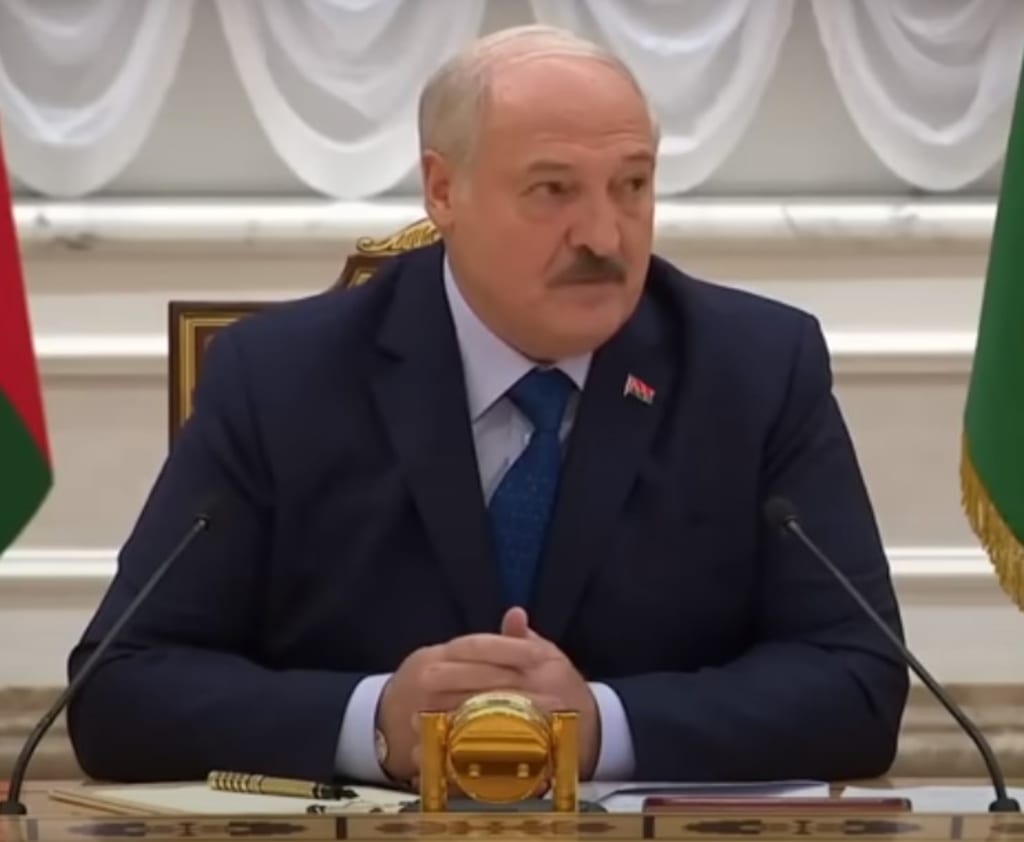
The relationship between Alexander Lukashenko, the long-standing president of Belarus, and Vladimir Putin, the president of Russia, has been marked by a palpable sense of fear on Lukashenko's part. This fear can be attributed to a variety of factors, including historical context, power dynamics, economic dependence, and political survival. By delving deeper into these aspects, we can gain a comprehensive understanding of why Lukashenko fears Putin.
Historical Context:
To comprehend Lukashenko's fear, we must consider the historical context between Belarus and Russia. The two nations share a complex history, having been part of the same political entity for centuries, including the Soviet Union. Lukashenko, who assumed power in 1994, has always presented himself as a guardian of Belarusian sovereignty and independence. However, the historical ties and cultural similarities between the two countries have created a sense of vulnerability for Lukashenko. He fears that Putin might leverage historical or ethnic claims to exert influence over Belarus, which could result in a loss of Lukashenko's grip on power.
Power Dynamics:
The power dynamics between Lukashenko and Putin also play a significant role in Lukashenko's fear. Putin's long tenure and his ability to consolidate power in Russia have made him a formidable leader in Lukashenko's eyes. Lukashenko perceives Putin's strength and dominance as a potential threat to his own position. He worries that Putin might interfere in Belarusian affairs or orchestrate a change in leadership that aligns more closely with Russia's interests. The stark contrast in their power and influence intensifies Lukashenko's apprehension.
Economic Dependence:
Another crucial factor contributing to Lukashenko's fear of Putin is the economic dependence of Belarus on Russia. Belarus relies heavily on Russia for economic support, including energy subsidies, trade partnerships, and financial aid. Lukashenko is acutely aware that any disruption in this economic relationship could have severe consequences for his regime. In the past, Putin has employed economic leverage to pressure Belarus into making concessions. For instance, Russia has increased energy prices or threatened to cut off supplies to gain political influence over Belarus. Lukashenko fears that Putin could employ economic coercion to assert control or destabilize his regime, leaving him vulnerable to internal dissent.
Political Survival:
Lukashenko's fear of Putin is also rooted in his desire for political survival. Lukashenko has faced criticism for his authoritarian rule, human rights abuses, and rigged elections. He has relied on a strong security apparatus to maintain power, but he worries that Putin could exploit any internal vulnerabilities or political unrest to undermine his regime. Lukashenko has witnessed how Putin dealt with opposition movements and political rivals in Russia, such as the crackdown on protests after the 2011-2012 elections or the treatment of Alexei Navalny. Lukashenko fears that Putin could extend similar support to opposition groups or even orchestrate a regime change in Belarus if he deems it necessary to protect Russian interests. This fear has led Lukashenko to take preemptive measures, such as suppressing dissent and tightening control over the Belarusian political landscape.
Regional Geopolitics:
The broader regional geopolitics also contribute to Lukashenko's fear of Putin. Belarus lies between Russia and the European Union (EU), making it a strategic buffer zone. Lukashenko has sought to maintain a delicate balance between the two powers, often playing them off against each other. However, Putin's assertive foreign policy, including the annexation of Crimea and support for separatist movements in Ukraine, has heightened Lukashenko's concerns. He fears that Putin's actions may embolden separatist sentiments within Belarus or lead to increased Russian influence in the region, further threatening his regime and Belarusian sovereignty.
Conclusion:
In conclusion, Alexander Lukashenko's fear of Vladimir Putin is multifaceted and deeply rooted in historical, political, economic, and geopolitical factors. The historical context, power dynamics, economic dependence, and Lukashenko's desire for political survival all contribute to his apprehension toward Putin. Lukashenko sees Putin as a potential threat to his sovereignty, power, and regime stability. Given the history of Russian interference in neighboring countries and Putin's track record of consolidating power, Lukashenko's fears are not unfounded. As long as Lukashenko remains in power, his fear of Putin is likely to persist, shaping his policies and actions.
About the Creator
Keep reading
More stories from Décio António Benjamim Verão and writers in History and other communities.
Peace in the Crossroads
Introduction: The relationship between Ukraine and Russia has been marked by deep-rooted historical tensions and ongoing territorial disputes. Since the annexation of Crimea by Russia in 2014 and the subsequent conflict in eastern Ukraine, the two nations have experienced strained diplomatic relations and geopolitical divergence. This article aims to provide a comprehensive analysis of the historical context, political dynamics, territorial disputes, international involvement, economic factors, and potential future developments in the complex relationship between Ukraine and Russia.
By Décio António Benjamim Verão3 years ago in History
Alexander the Great’s Looted Wealth from India: A Historical and Economic Estimation
While his campaigns reshaped the ancient world politically and culturally, one of their most lasting impacts was the massive wealth he acquired from conquered territories, especially during his Indian campaign. This article explores the historical context, nature of the wealth looted from India, and an estimated net worth of that treasure in modern terms—revealing the truly staggering value of what came into Alexander’s hands.
By Say the truth 7 days ago in History
The Rise and Fall of Nicolae Ceaușescu
Nicolae Ceaușescu’s rise to power was initially marked by promise, even optimism. Born in 1918 into a poor peasant family, he entered politics early, shaped by the ideological rigidity of interwar and wartime communism. When he became General Secretary of the Romanian Communist Party in 1965, following the death of Gheorghe Gheorghiu-Dej, many Romanians saw in him a younger leader, one who might soften the harsh Stalinist legacy that had defined the previous decades. For a society weary of repression and deprivation, Ceaușescu appeared to embody the possibility of cautious change.
By Pure childa day ago in History


Comments
There are no comments for this story
Be the first to respond and start the conversation.