
Peace in the Crossroads
Exploring Potential Paths for Ukraine-Russia Relations
Introduction:
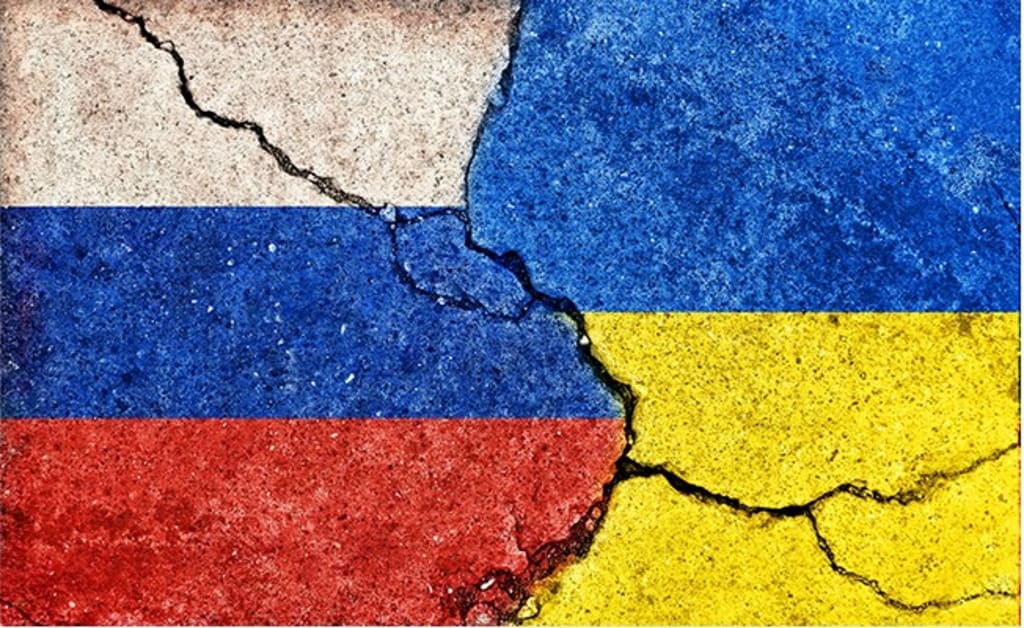
The relationship between Ukraine and Russia has been marked by deep-rooted historical tensions and ongoing territorial disputes. Since the annexation of Crimea by Russia in 2014 and the subsequent conflict in eastern Ukraine, the two nations have experienced strained diplomatic relations and geopolitical divergence. This article aims to provide a comprehensive analysis of the historical context, political dynamics, territorial disputes, international involvement, economic factors, and potential future developments in the complex relationship between Ukraine and Russia.
Historical Context:
To understand the complexities of the Ukraine-Russia relationship, it is crucial to examine their historical context. Ukraine, a nation with a rich history and distinct cultural identity, has long been caught in the crossroads of competing regional influences. It was a part of the Russian Empire and later the Soviet Union, but also experienced periods of independence.
Following the collapse of the Soviet Union in 1991, Ukraine emerged as an independent nation. However, the transition to sovereignty was accompanied by economic challenges, political instability, and debates over national identity, which influenced the country's relationship with Russia.
Political Dynamics:
The political dynamics between Ukraine and Russia have been characterized by power struggles, conflicting ideologies, and aspirations for regional dominance. While some Ukrainians advocate for closer integration with the European Union and NATO, others maintain closer cultural and historical ties with Russia. These divisions have fueled political tensions within Ukraine and impacted its relationship with Russia.
The Annexation of Crimea and Eastern Ukraine Conflict:
The annexation of Crimea by Russia in 2014 was a turning point in the Ukraine-Russia relationship. The move was met with international condemnation, as it violated Ukraine's territorial integrity and international law. The annexation also triggered a protracted conflict in eastern Ukraine, primarily in the Donetsk and Luhansk regions.
The conflict in eastern Ukraine, often referred to as the Donbas crisis, has resulted in a significant loss of life, displacement of people, and a deepening humanitarian crisis. It has strained diplomatic relations between Ukraine and Russia, with both sides blaming each other for the escalation of violence.
International Involvement:
The Ukraine-Russia conflict has attracted significant international attention. Western countries, including the United States and the European Union, have imposed economic sanctions on Russia as a response to its actions in Ukraine. These sanctions aim to pressure Russia into de-escalating the conflict and adhering to international norms.
Diplomatic efforts to resolve the conflict have been made, such as the Minsk agreements. These agreements, negotiated in 2014 and 2015, sought to establish a ceasefire and a framework for a peaceful settlement. However, the implementation of the agreements has been challenging, with ceasefires regularly violated and little progress made in resolving the underlying issues.
Economic Factors:
The economic relationship between Ukraine and Russia has also been significantly affected by the political tensions. Prior to the conflict, Russia was Ukraine's largest trading partner, particularly in the energy sector. However, the annexation of Crimea and the conflict in eastern Ukraine disrupted trade flows and economic cooperation.
The situation has prompted Ukraine to diversify its energy sources, reduce dependency on Russian imports, and seek alternative partnerships. Additionally, the conflict has had adverse effects on the economies of both countries, leading to economic downturns, infrastructure damage, and the diversion of resources towards military expenditures.
Future Outlook:
Predicting the future developments in the Ukraine-Russia relationship is challenging due to the complexities and volatility of the situation. The conflict in eastern Ukraine remains unresolved, with sporadic clashes and a fragile ceasefire. The potential for renewed tensions or an escalation of the conflict persists, although efforts to find a peaceful resolution are ongoing.
It is crucial for the international community to remain engaged and support diplomatic initiatives that aim to de-escalate tensions and find a sustainable solution. This includes encouraging dialogue, promoting respect for international law, and addressing the underlying political, economic, and cultural issues that fuel the conflict.
Conclusion:
The relationship between Ukraine and Russia is deeply complex, shaped by historical tensions, territorial disputes, and conflicting geopolitical aspirations. The annexation of Crimea and the ongoing conflict in eastern Ukraine have strained diplomatic relations, resulted in loss of life and displacement, and affected regional stability. International involvement and economic factors have further complicated the situation.
While it is challenging to predict the future with certainty, it is crucial for the international community to continue supporting diplomatic efforts, promoting dialogue, and working toward a peaceful resolution. Ultimately, a sustainable solution will require addressing the underlying issues and finding a balance between the interests of Ukraine, Russia, and the broader international community.
About the Creator
Keep reading
More stories from Décio António Benjamim Verão and writers in History and other communities.
Yevgeny Prigozhin: A Threat to Democracy?
Yevgeny Prigozhin, a Russian businessman often referred to as "Putin's chef," has garnered significant power and notoriety in recent years. Known for his close association with Russian President Vladimir Putin, Prigozhin's rise to prominence and the perceived danger he poses can be attributed to a combination of factors that have shaped his trajectory.
By Décio António Benjamim Verão3 years ago in History
Understanding the Insurrection Act
The Insurrection Act is one of the most powerful and least understood laws in American history. Often mentioned during times of national unrest, it gives the president authority to deploy federal troops within the United States under specific circumstances. While it is rarely used, public interest in the law has grown in recent decades, leading many to ask: what is the Insurrection Act, and why does it matter today? What Is the Insurrection Act? To put it simply, the Insurrection Act of 1807 is a federal law that allows the president to use the U.S. military to suppress civil disorder, insurrection, or rebellion when state authorities are unable or unwilling to do so. If you are wondering what is the Insurrection Act used for, the answer lies in restoring order when local and state governments can no longer maintain public safety. People often search phrases like what is insurrection act or even the misspelled insurection act because the law tends to resurface during moments of crisis. Despite the confusion around its name, the authority it grants is very real and legally binding. What Is the Insurrection Act of the U.S.? So, what is the Insurrection Act of the US in legal terms? It is a collection of statutes now codified under Title 10 of the U.S. Code. The act provides exceptions to the Posse Comitatus Act, which generally prohibits the military from acting as domestic law enforcement. Under the Insurrection Act, the president can federalize the National Guard or deploy active-duty troops if constitutional rights are being violated or if violence prevents the execution of federal law. This is why many people ask, what is the Insurrection Act USA, especially when protests or riots dominate national headlines. The Insurrection Act and Its Historical Use Throughout American history, the act has been invoked sparingly but decisively. One of the most notable examples often referenced is the Insurrection Act 1992, when President George H. W. Bush deployed federal troops to Los Angeles following the Rodney King verdict. Local authorities had lost control, and the federal government stepped in to restore order. Earlier uses date back to the Civil War era and the Civil Rights Movement. Presidents Eisenhower and Kennedy relied on the act to enforce school desegregation in Southern states when state governments resisted federal court orders. These moments illustrate what the Insurrection Act is used for at its core: enforcing the rule of law when normal systems fail. Trump and the Insurrection Act In modern political discourse, the law became widely discussed during the presidency of Donald Trump. Searches for Trump Insurrection Act or Insurrection Act Trump surged during periods of nationwide protests, particularly in 2020. Although the act was never formally invoked during those protests, President Trump publicly considered its use, bringing renewed attention to the scope and limits of presidential power. The phrase insurrection act invoked often appears in news coverage, but it is important to note that discussing invocation and actually using the law are two very different things. The debate surrounding Trump Insurrection Act scenarios highlighted concerns about civil liberties, federal overreach, and the balance of power between states and the federal government. What Is the Insurrection Act in Minnesota? A common question during periods of regional unrest is what is the Insurrection Act in Minnesota or in other specific states. Legally, the act does not change from state to state. However, its application depends on circumstances within a particular state. If a governor requests federal assistance or if the president determines that constitutional rights cannot be protected locally, the Insurrection Act may apply. Minnesota, like every other state, falls under the same federal framework. The law does not target any single state; it responds to conditions on the ground. What Is the Insurrection Act Used For Today? In today’s environment, many Americans ask, what is the Insurrection Act used for in a modern democracy with established institutions. Supporters argue it is a necessary safeguard for extreme emergencies. Critics counter that it grants sweeping powers that could be misused if political tensions escalate. Understanding what is the Insurrection Act? requires recognizing that it is both a legal tool and a symbol. Its mere mention can influence public perception, markets, and political debate, even when it is not formally applied. Ongoing Debate and Public Concern The Insurrection Act remains controversial because it sits at the intersection of security and freedom. While it has been used to protect civil rights in the past, critics worry about potential misuse in polarized times. This tension explains why questions like what is the Insurrection Act of the US continue to trend whenever civil unrest occurs. Ultimately, the law reflects a fundamental challenge in governance: how to maintain order without undermining democracy. The fact that it has existed since 1807 and remains largely unchanged shows both its durability and its complexity. Final Thoughts The Insurrection Act is not a law that affects daily life, but it plays a critical role during extraordinary moments. From the Insurrection Act of 1807 to discussions around Insurrection Act 1992 and Insurrection Act Trump, its history mirrors the nation’s struggles with unity, authority, and rights.
By Saboor Brohi 4 days ago in History
From Desert Sands to a Global City
Long before Dubai became a city of glittering skyscrapers and global ambition, it was a quiet settlement shaped by the desert, the sea, and the determination of its people. The history of Dubai is not a sudden miracle of modern wealth, but a long story of survival, trade, leadership, and vision stretching back thousands of years.
By The best writer 6 days ago in History


Comments
There are no comments for this story
Be the first to respond and start the conversation.