
Pillars of the Past: The Wonders of Ancient Design
Unveiling the Masterpieces That Shaped Civilizations

Introduction
Throughout history, human civilizations have expressed their values, beliefs, and aspirations through the enduring mediums of art and architecture. Long before the invention of modern construction techniques, ancient builders and artisans shaped the world with their skill, imagination, and devotion. These works were not only feats of engineering but also symbolic expressions of identity and culture. The wonders of ancient design continue to inspire architects, artists, and travelers today, reminding us that creativity and craftsmanship have always been at the core of human achievement.
From the towering pyramids of Egypt to the graceful temples of Greece, from the ornate palaces of Mesopotamia to the intricate carvings of India, ancient art and architecture reveal the timeless connection between functionality and beauty. These creations were often meant to withstand the test of time, not only as shelters or places of worship but as eternal monuments to human ambition.
The Role of Art and Architecture in Ancient Civilizations
In ancient societies, architecture was more than construction — it was a statement of power, faith, and community. Similarly, art was not merely decorative but often carried religious, political, or social significance. Monumental buildings and artistic creations symbolized the wealth of a ruler, the devotion of a people, and the values of a civilization.
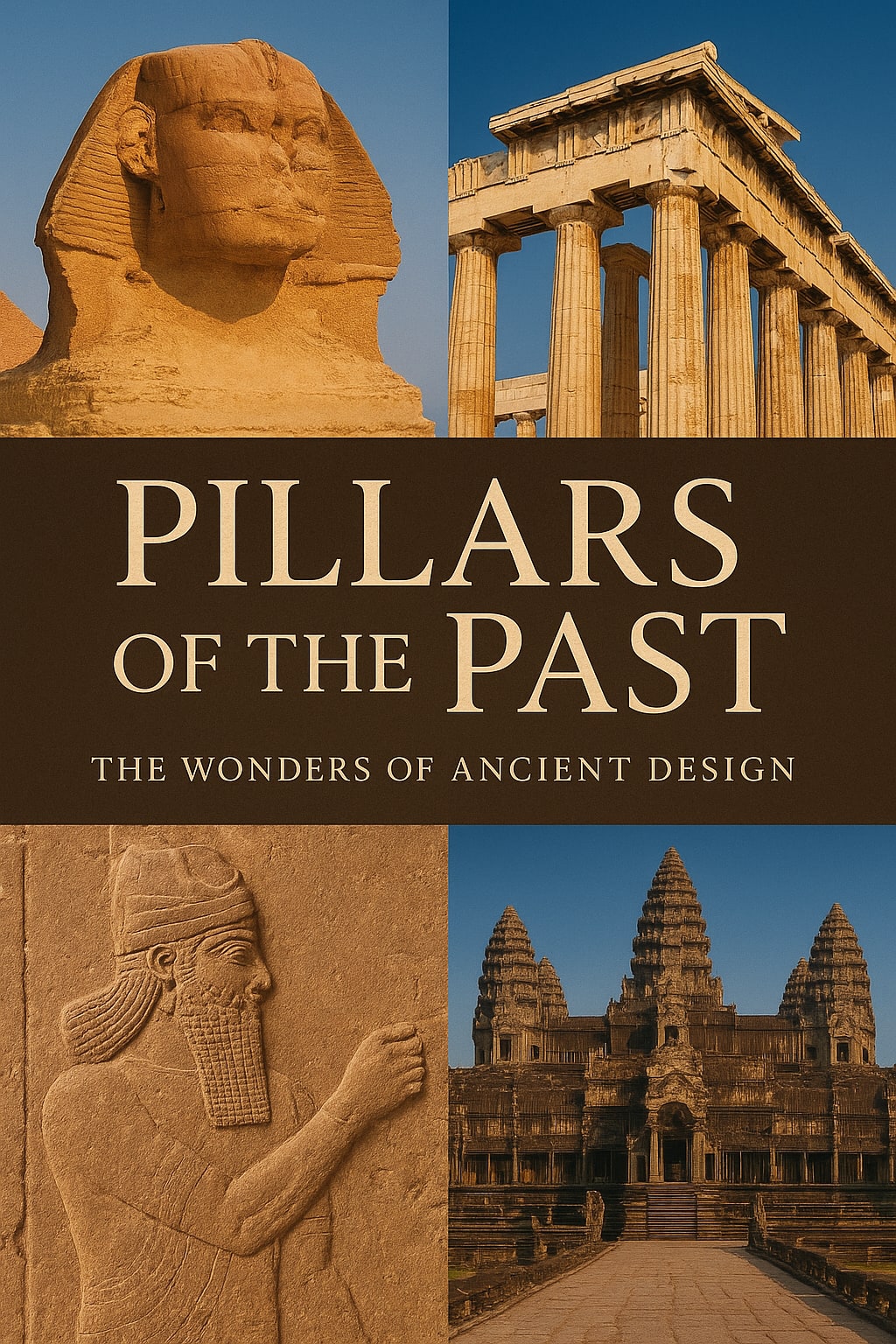
Religious Expression: Temples, shrines, and statues often honored gods and goddesses. The Parthenon in Athens, for example, was not just a marvel of design but a sacred space dedicated to Athena, the city’s patron goddess.
Political Power: Palaces, citadels, and administrative buildings displayed the might of kings and emperors. The grandeur of Babylon’s Hanging Gardens (whether mythical or real) served as a testament to the city's prestige.
Cultural Identity: Every civilization had a distinct architectural and artistic style, reflecting its philosophy, climate, and resources. For example, the use of massive stone blocks in Egypt’s pyramids reflected both the permanence desired in their tombs and the abundance of limestone in the region.
The Wonders of Ancient Design
1. The Pyramids of Egypt
Among the most iconic structures in human history, the pyramids of Giza stand as a testament to ancient engineering and ambition. Constructed over 4,500 years ago, these monumental tombs were designed to guide pharaohs into the afterlife. Their perfect alignment with the stars and the precision of their construction demonstrate a deep understanding of astronomy and mathematics.
2. The Temples of Greece
Ancient Greek architecture, with its balance, proportion, and harmony, laid the foundations for Western design. The Parthenon, with its Doric columns and intricate sculptures, is a symbol of democratic ideals and the Greek pursuit of perfection. Greek temples often incorporated detailed friezes and statues, blending architecture seamlessly with art.
3. The Great Wall of China
Although more defensive than decorative, the Great Wall is an awe-inspiring example of ancient construction. Stretching over thousands of kilometers, it reflects both military strategy and the organizational skills of the Chinese dynasties that built and maintained it.
4. The Roman Colosseum
The Romans perfected the use of arches, vaults, and concrete, creating massive structures that still stand today. The Colosseum was not only an entertainment venue but also a demonstration of Rome’s wealth, engineering genius, and social structure. Its design influenced stadiums and public buildings for centuries.
5. The Temples of Angkor, Cambodia
The Khmer Empire created one of the most stunning architectural complexes in history — Angkor Wat. This massive temple complex is adorned with intricate carvings depicting scenes from Hindu mythology and later adapted for Buddhist worship, blending spiritual devotion with artistic mastery.
Artistic Mastery in the Ancient World
Ancient art was often intertwined with architecture. Murals, mosaics, statues, and relief carvings decorated buildings, telling stories and honoring gods, leaders, and ancestors. In Mesopotamia, carved stone reliefs depicted royal victories and religious rituals. In Egypt, vivid wall paintings portrayed scenes of daily life and the afterlife.
Some of the most enduring artistic traditions include:
Egyptian Hieroglyphics: Combining symbolic writing with artistic imagery.
Greek Sculpture: Celebrated for its lifelike forms and idealized human figures.
Roman Mosaics: Detailed artworks created from small, colored tiles.
Mesoamerican Stone Carvings: Depicting gods, rulers, and celestial events.
These artistic traditions were not just decorative but served as a means of communication, storytelling, and cultural preservation.
Influence on Modern Design
Many principles of ancient design still influence modern architecture and art. Columns, arches, and domes — perfected by ancient builders — remain essential elements in contemporary buildings. Modern artists also draw inspiration from ancient motifs, whether in fashion, sculpture, or painting. Museums around the world preserve these treasures, ensuring their impact continues for generations.
The sustainability of ancient architecture also offers lessons for today’s builders. Many structures were designed to work with their natural environment, using local materials and climate-conscious layouts — practices that align closely with modern green building techniques.
Preservation and Challenges
While many ancient wonders remain standing, countless others have been lost to time, weather, and human conflict. Efforts to preserve ancient art and architecture are ongoing, with archaeologists, historians, and conservationists working together to protect these priceless legacies. Challenges include pollution, climate change, and urban expansion, all of which threaten the survival of these historic treasures.
Conclusion
Ancient art and architecture are more than just remnants of a distant past — they are enduring messages carved in stone, painted on walls, and built into the very foundations of human history. They remind us of our shared heritage and the creativity, intelligence, and determination that have always driven humanity forward.
The pillars of the past stand not only in ruins and relics but in the continued influence they have on our culture, technology, and artistic expression. By studying and preserving them, we honor the ingenuity of our ancestors and ensure their wonders inspire generations yet to come.
About the Creator
Nizam Archaeologist
I’m deeply fascinated by archaeology and the mysteries of ancient civilizations.My goal is to bring the past to life, spark curiosity, and share the wisdom of cultures that have stood the test of time.
Keep reading
More stories from Nizam Archaeologist and writers in History and other communities.
The Silk Road Saga: Ancient China and the Birth of Global Trade
Introduction: The World's First Superhighway Long before airplanes and cargo ships connected distant lands, a vast web of trade routes known as the Silk Road served as the beating heart of global commerce. Emerging around the 2nd century BCE during the Han Dynasty of China, the Silk Road was more than just a single route — it was a network of interconnected paths stretching over 4,000 miles, linking China to Central Asia, the Middle East, and Europe.
By Nizam Archaeologist5 months ago in History
Chinese Water Torture
Since the dawn of history, human beings have inflicted unimaginable suffering upon one another. Across centuries, people have devised increasingly elaborate methods of punishment and coercion, some brutally explicit, others deceptively subtle. While devices such as iron maidens, racks, whips, and wheels relied on visible physical agony, there existed a form of torment whose true power lay not in blood or broken bones, but in patience, repetition, and the slow erosion of the mind. This method came to be known as Chinese water torture.
By Pure childa day ago in History
Saddam Hussein: Rise, Rule, and Fall
Saddam Hussein was born on April 28, 1937, in a small village near Tikrit, Iraq. His early life was marked by poverty, hardship, and a sense of abandonment. His father died before he was born, and his mother remarried soon after. Young Saddam grew up in a household dominated by strict relatives and was exposed to political discussions and nationalist sentiments from an early age. These formative years shaped his personality—ambitious, ruthless, and fiercely determined to rise above his modest beginnings.
By The best writer a day ago in History



Comments (1)
Very Nice article for help me thank you sir