
Peshawar and the Empire
A Hero’s Stand Against the British Raj

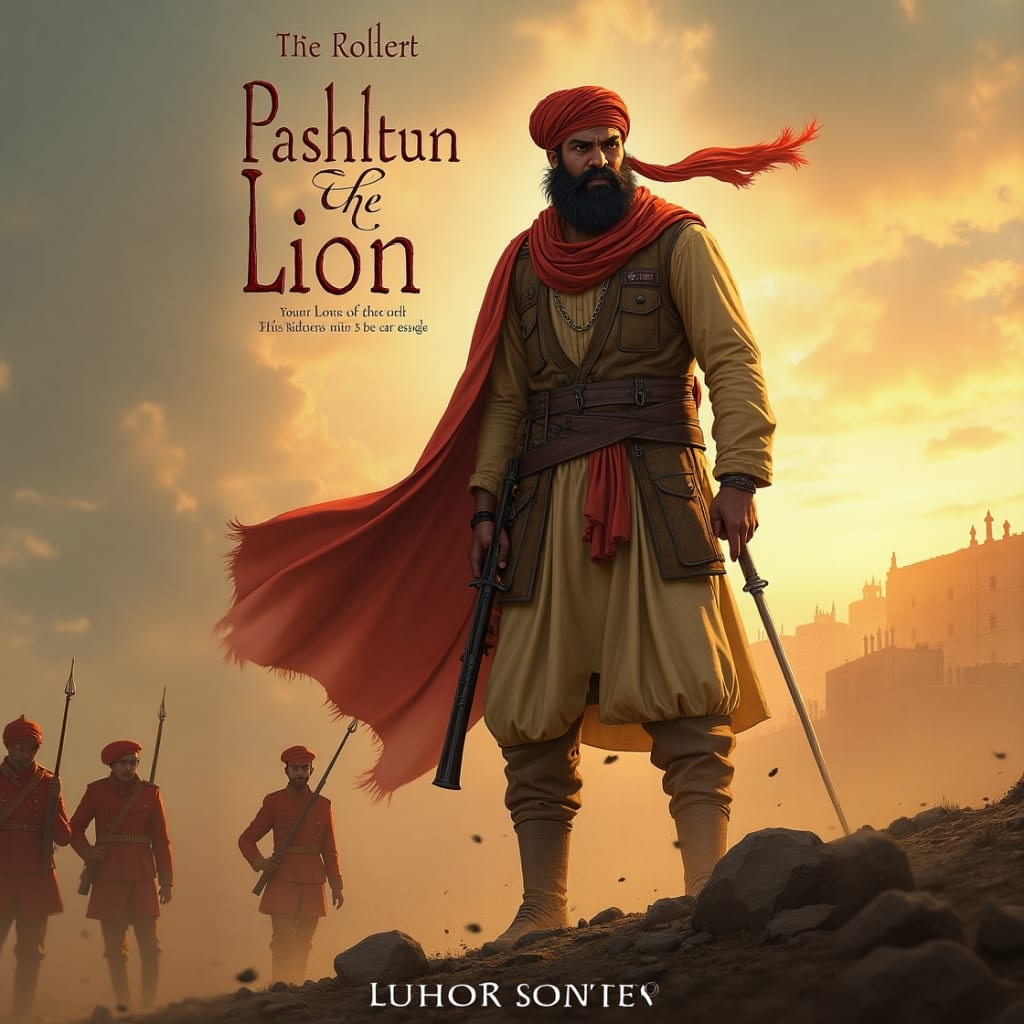
The year was 1897. The dusty winds of Peshawar carried with them more than just the dry scent of the frontier. They whispered stories — of resistance, betrayal, and a lion who would not bow.
Among the jagged hills of the Khyber Pass and the bustling bazaars of Peshawar, a name began to echo: Rehmat Khan, a tribal leader whose courage defied the might of the British Raj. He was no ordinary man. Born in the shadow of colonial expansion, Rehmat had seen the land of his ancestors slowly slip into the grip of foreign rule. As a boy, he had watched British officers ride through the city like they owned it. As a man, he vowed they never truly would.
Rehmat Khan was tall, with piercing eyes and a presence that quieted even the fiercest warriors. His people called him "Sher-e-Peshawar" — The Lion of Peshawar. He earned that title not just for his skill with a rifle or sword, but for his wisdom, compassion, and unshakeable pride in his people.
The British had long tried to bring peace to the tribal belt, but peace to them meant submission. They offered treaties, then broke them. They built forts, then demanded taxes. In response, the tribes grew restless — and Rehmat Khan rose to unite them.
One humid summer morning, a British envoy arrived at Rehmat Khan’s stronghold near Jamrud. The officer, a young Major Arthur Collins, rode with the arrogance typical of his uniform. Flanked by soldiers, he dismounted and approached the tribal leader sitting under a large mulberry tree, where elders often gathered to settle disputes and sip salted tea.
Major Collins removed his helmet and forced a polite smile. “Rehmat Khan, the Crown wishes peace. Lay down your weapons and your people will be rewarded. Fight, and you will be crushed.”
Rehmat Khan didn’t rise. He calmly sipped his tea, then looked up.
“Major,” he said in fluent English, “you mistake silence for surrender. We have fought for centuries — against invaders greater than you. The British may draw lines on a map, but they do not draw the courage from a Pashtun’s heart.”
With that, the major was dismissed. That same night, Rehmat gathered the tribal councils. Under moonlight and among crackling torches, alliances were reforged. Afridis, Yusufzais, and Mohmands, long divided by disputes and blood feuds, pledged loyalty to Rehmat Khan. He had become more than a leader — he was a symbol.
The British didn’t wait. A week later, they launched a surprise offensive on the outskirts of Peshawar, hoping to quash the rebellion before it spread. But Rehmat Khan was ready. His scouts had seen their movements. He and his warriors set traps in the narrow passes, using the terrain as their ally.
The battle of Ali Masjid lasted two days. British cannons thundered, but the mountains swallowed the sound and returned it with ambushes and rockslides. Rehmat led from the front, fighting alongside his men, a white turban around his head and a curved sword in hand. He was everywhere — defending, commanding, encouraging.
Despite being outnumbered and outgunned, the tribes held their ground. British forces were forced to retreat, humiliated and bleeding. The news traveled quickly. Across the northwest, Rehmat Khan’s name spread like wildfire.
But victories came at a price. The British returned in greater numbers weeks later, reinforced from Rawalpindi and Lahore. Villages were burned. Wells were poisoned. And still, the lion refused to kneel.
One bitter autumn night, after days of skirmishes, Rehmat Khan stood atop a ridge, overlooking Peshawar’s flickering lights. His trusted companion, Gul Jan, approached.
“We’ve lost many,” Gul said softly. “They offer amnesty again — for you, your family, your land.”
Rehmat didn’t reply at first. Then he turned, eyes glinting.
“They may take my land. They may burn my home. But they will never take my dignity. A lion does not live in chains.”
In the final siege, Rehmat Khan and his closest warriors were surrounded in a mud-brick fort near the Bara River. The British offered him one last chance to surrender. He refused. The battle raged for hours, smoke rising into the morning sky. Ammunition ran low. One by one, his men fell.
When the British finally breached the gate, they found only Rehmat Khan standing — wounded, breathing heavily, but still defiant. He fought until he could no longer stand.
The Lion of Peshawar fell that day, but not in spirit. The British buried his body, but not his legend. Songs were sung about him in the mountains. Mothers told their children stories of his courage. And every time a foreign soldier rode through the Khyber Pass, they heard the wind whisper his name.
"Sher-e-Peshawar."
He had become more than a man. He had become a memory — and a message:
That even in the shadow of empires, the spirit of a free people would never die.
About the Creator
Keep reading
More stories from FAWAD KHAN and writers in History and other communities.
Jinnah" redirects here
Wilderness years; interlude in England Jinnah's passport The alliance between Gandhi and the Khilafat faction did not last long, and the campaign of resistance proved less effective than hoped, as India's institutions continued to function. Jinnah sought alternative political ideas, and contemplated organising a new political party as a rival to the Congress. In September 1923, Jinnah was elected as Muslim member for Bombay in the new Central Legislative Assembly. He showed much skill as a parliamentarian, organising many Indian members to work with the Swaraj Party, and continued to press demands for full responsible government. In 1925, as recognition for his legislative activities, he was offered a knighthood by Lord Reading, who was retiring from the Viceroyalty. He replied: "I prefer to be plain Mr Jinnah."[66]
By FAWAD KHAN8 months ago in History
UAE and India Sign a Major Defense Agreement
UAE and India Sign a Major Defense Agreement The United Arab Emirates (UAE) and India have taken another important step in their growing relationship by signing a new defense cooperation agreement. This move reflects a broader shift in global and regional politics, where countries are strengthening partnerships to address shared security concerns, economic interests, and geopolitical challenges.
By Wings of Time 5 days ago in History
Somers Historical Tidbits - Part 10
All Manor of Things On Route 100, the Pinewood Sanitorium once treated Psychiatric patients, and in 1954 the property was deeded to the Keswick Colony of Mercy, which served recovering alcoholics. Passing over, the site was proposed as a reformatory for delinquent girls. But opposition from residents and town officials killed the initiative. Somers Manor eventually took its place and now senior living resides
By Rich Monettiabout 2 hours ago in History


Comments
There are no comments for this story
Be the first to respond and start the conversation.