
Perseverance Mars Rover Becomes First Spacecraft to Spot Auroras from the Surface of Another World
Mars Rover Becomes First Spacecraft
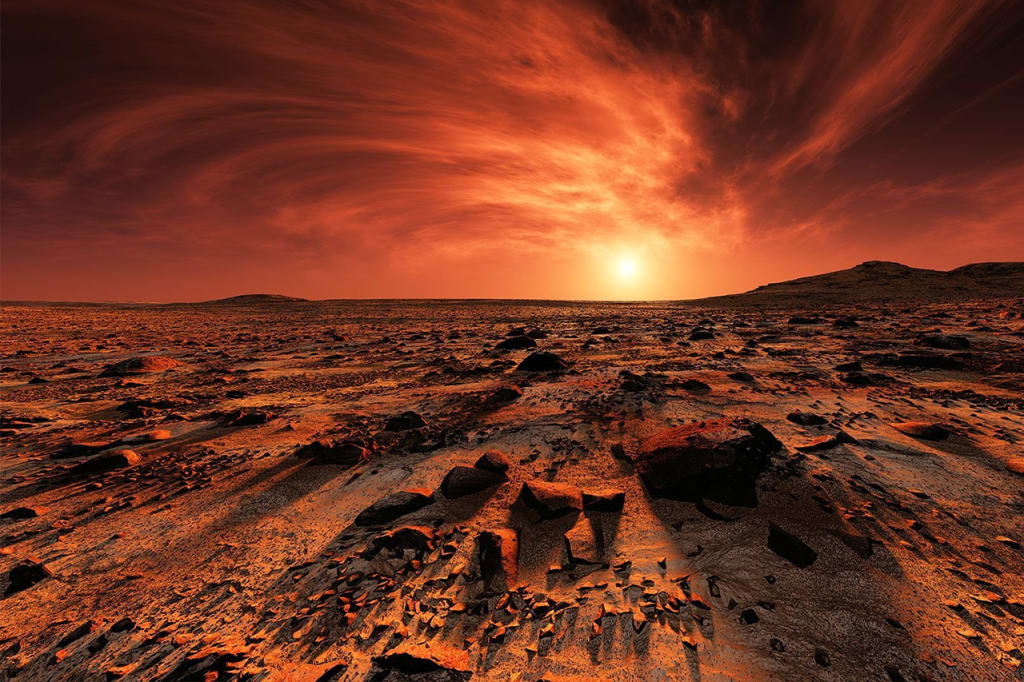
In a remarkable milestone for space exploration and planetary science, NASA’s Perseverance rover has achieved a groundbreaking discovery: it has become the first spacecraft to observe auroras from the surface of another planet. This finding adds a new dimension to our understanding of both Mars and the broader phenomenon of auroras beyond Earth.
Auroras, commonly referred to as the Northern or Southern Lights on Earth, are visual displays of charged particles interacting with a planet's magnetic field and atmosphere. Solar winds, which are streams of energetic particles from the Sun, typically collide with atoms and molecules in the upper atmosphere to release light-emitting energy. While auroras have been observed from orbit around various planets, including Jupiter, Saturn, and Mars itself, this is the first time they’ve been directly seen from the surface of another world.
The Perseverance rover, which landed on Mars in February 2021, has been exploring the Jezero Crater, a site believed to have once hosted an ancient lake. While its primary mission focuses on astrobiology, including searching for signs of past microbial life and collecting rock and soil samples for future return to Earth, the rover is also equipped with sophisticated scientific instruments capable of environmental monitoring and atmospheric observation.
The detection of auroras on Mars came as part of Perseverance’s extended mission to study Martian weather and atmospheric behavior. Scientists had long speculated that Mars might experience auroral activity, but the lack of a global magnetic field and its thin atmosphere posed significant challenges to direct surface-based observation. Unlike Earth, which has a powerful magnetic field generated by a molten iron core, Mars possesses only fragmented magnetic fields embedded in its crust. These localized magnetic fields are remnants of a once-active global magnetosphere that disappeared billions of years ago.
Despite these limitations, Perseverance managed to detect auroral emissions using its imaging and spectrometry tools. The observed auroras were most likely caused by energetic solar particles interacting with the patches of magnetic field in the Martian crust, illuminating the thin upper layers of the Martian atmosphere in a faint but measurable glow. These emissions occurred in the ultraviolet range, invisible to the human eye but detectable by specialized instruments.
This discovery carries profound implications. First, it confirms that Mars still hosts active interactions with solar radiation that can lead to atmospheric phenomena akin to Earth’s auroras, albeit through a different mechanism. Second, it offers new insights into the dynamics of Mars’ upper atmosphere and its complex relationship with solar and cosmic influences. By studying how auroras form and behave on Mars, scientists can refine their models of atmospheric loss, a key factor in understanding why Mars transitioned from a once-wet planet to the arid landscape we see today.
Moreover, this observation underscores the value of surface-based missions in complementing orbital science. While orbiters have provided high-altitude data on Mars for decades, a rover like Perseverance offers a unique ground-level perspective. It makes it possible to observe transient phenomena in detail and at a local level, which would otherwise be missed or misinterpreted from space. The auroral detection also has practical implications for future human exploration. Solar activity can pose risks to astronauts and equipment, particularly in environments like Mars, where there is limited natural shielding from radiation. Monitoring auroral events could help future missions better predict space weather conditions and design more effective protective measures.
In a broader context, this event reaffirms the scientific vitality of Mars exploration. Each new finding deepens our understanding not only of the Red Planet but of planetary processes throughout the solar system. Perseverance’s success in observing auroras invites fresh questions: Could other rovers or future landers spot similar phenomena on moons like Titan or Europa? What can this tell us about magnetic fields, atmospheric retention, and the habitability of other worlds?
Ultimately, Perseverance’s aurora sighting is a testament to human curiosity and technological ingenuity. It shows that even after years of exploring Mars, the planet still has surprises in store. As Perseverance continues its mission, traversing ancient riverbeds and sampling Martian rock, it also looks skyward—capturing flashes of light that echo across millions of kilometers, linking Earth’s skies to those of a distant, silent world.
About the Creator
Keep reading
More stories from Rakibul Islam and writers in History and other communities.
The Inside Story of NFL Season Scheduling on TV Networks in 2025
Flexing Star QBs and Huge Ratings The 2025 NFL season marks a transformative era in sports broadcasting, as the league's aggressive flex scheduling and strategic media partnerships aim to maximize viewership by spotlighting marquee quarterbacks and high-stakes matchups.
By Rakibul Islam9 months ago in Gamers
3 Times Safety Rules Were Written After It Was Already Too Late
Safety rules like to pretend they are proactive. They wear reflective vests, carry clipboards, and speak confidently about prevention. But history knows the truth: many safety rules were written after something went catastrophically wrong, when prevention was no longer an option and regret had already filled out the paperwork.
By Enoch Sagini8 days ago in History
When the Pyramids Learned to Breathe
The desert was silent in the way only ancient places can be—not empty, but listening. At dawn, the first light touched the limestone faces of the pyramids, and the shadows they cast stretched long and deliberate, as if time itself were waking slowly. To the west, beyond the city’s dust and noise, the old giants stood where they always had, unmoved by centuries, untouched by doubt.
By LUNA EDITH7 days ago in History



Comments
There are no comments for this story
Be the first to respond and start the conversation.