
Parc aux Cerfs and the Secret Life of Louis XV
Exploring the hidden world of pleasure, power, and scandal in 18th-century France

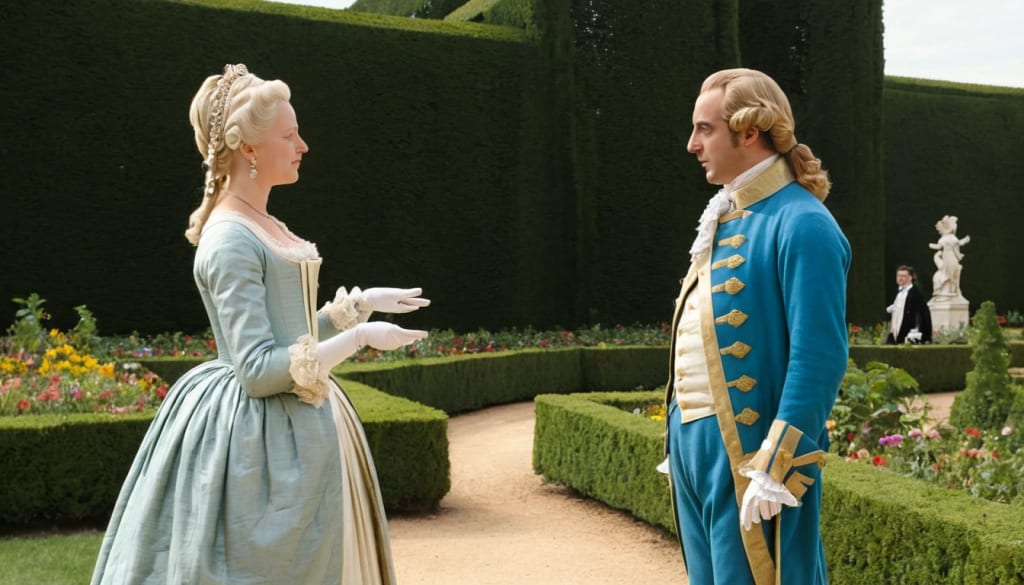
Parc aux Cerfs: The Hidden Retreat of Pleasure
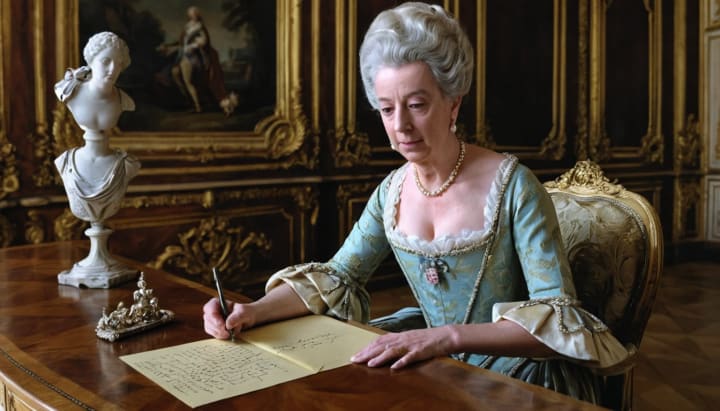
In the shadow of Versailles, amid the grandiose gardens and gilded halls where diplomacy, ceremony, and political intrigue intertwined, there existed a quieter, far more secretive world. Known to only a select few, the Parc aux Cerfs, or “Deer Park,” served as the private retreat of Louis XV, King of France from 1715 to 1774, where the king indulged in pleasures that would have scandalized the court had they been revealed.
Unlike the formalized influence of the official royal mistresses — women like Madame de Pompadour, whose presence at court was both public and politically significant — the Parc aux Cerfs housed young women of modest origin, carefully chosen to entertain the king in complete discretion. They were, in essence, anonymous companions, living in small houses or apartments near the park, entirely devoted to the king’s private whims.
The origins of this secretive practice are entwined with the social and political structure of the Ancien Régime. Louis XV, while often praised for his patronage of the arts and cautious diplomacy, was also a man who craved the freedom to satisfy his desires without constraint. In an era when public image was paramount and appearances were strictly controlled at Versailles, Parc aux Cerfs allowed him to explore a more human, intimate dimension, shielded from the prying eyes of courtiers and diplomats.
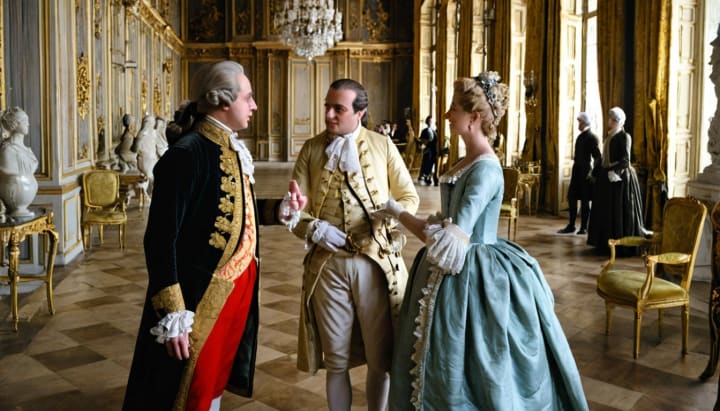
Life Within the Deer Park
Accounts suggest that the young women of Parc aux Cerfs lived under strict supervision, their daily routines dictated by the king’s presence and his changing moods. They were not merely lovers; they were carefully selected companions, sometimes educated or prepared for courtly life, sometimes merely chosen for their youth and beauty. Financial arrangements were also made — gifts, pensions, or small allowances ensured that these women could live with a degree of comfort, even if they disappeared from history without leaving a trace of their names.
The secrecy surrounding the park was meticulous. While rumors occasionally reached the ears of courtiers and foreign ambassadors, documentation was scarce, and the king’s staff were sworn to silence. This discretion created an almost mythic aura around the place, where whispers of encounters, intrigues, and fleeting romances circulated quietly, never fully documented but always fascinating.
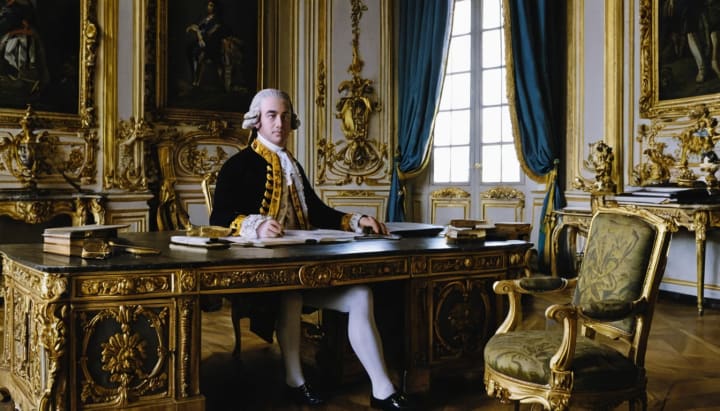
Louis XV: The Man Behind the Myth
Louis XV’s reign, spanning nearly six decades, was marked by both public achievements and private indulgences. Politically, he navigated complex alliances, wars, and the evolving structure of the French monarchy, yet personally, he was drawn to a life of leisure and pleasure, a tendency inherited from his predecessors but intensified by the relative stability of his early reign.
Parc aux Cerfs exemplifies this duality. To the public, he was the king, the guarantor of law, ceremony, and divine authority. In private, he was a man exploring human desire, curiosity, and intimacy, in ways that would be unimaginable for the ordinary citizen. The existence of the park reveals the delicate balance Louis XV maintained between his responsibilities and his personal cravings, illustrating the tension between power and private life in absolute monarchy.
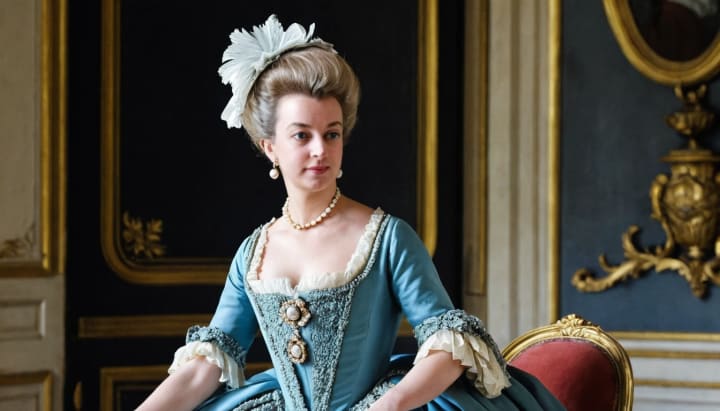
A Reflection of Power and Society
The phenomenon of Parc aux Cerfs also offers insight into the social hierarchy and gender dynamics of the time. The young women who resided there were often from lower social strata, dependent on the king’s favor for security and livelihood. Their anonymity contrasts sharply with the influence wielded by official mistresses, highlighting the intricate gradations of power, privilege, and vulnerability within the French court.
Furthermore, the park symbolizes the broader culture of discretion, gossip, and rumor that characterized Versailles. Secrets, carefully guarded and whispered through corridors, shaped both personal and political landscapes. Parc aux Cerfs was not merely a site of pleasure; it was a tool for navigating influence, maintaining appearances, and reinforcing the mystique of kingship.
Legacy of the Deer Park
Today, Parc aux Cerfs remains a subject of fascination for historians and the public alike. It is a reminder of the hidden complexities behind royal life, the ways in which power and desire intersected, and the fragile line between public image and private indulgence. While much about the park remains shrouded in mystery, its story continues to captivate, offering a window into the intimate world of one of France’s most enigmatic monarchs.
In exploring Parc aux Cerfs, we do more than uncover a tale of scandal or erotic intrigue; we gain insight into the human side of Louis XV, the subtleties of courtly power, and the enduring allure of secrecy in the corridors of Versailles. The Deer Park, both literal and symbolic, endures as a testament to the hidden pleasures, private strategies, and enduring mysteries of 18th-century France.
About the Creator
Alexander the Great’s Looted Wealth from India: A Historical and Economic Estimation
While his campaigns reshaped the ancient world politically and culturally, one of their most lasting impacts was the massive wealth he acquired from conquered territories, especially during his Indian campaign. This article explores the historical context, nature of the wealth looted from India, and an estimated net worth of that treasure in modern terms—revealing the truly staggering value of what came into Alexander’s hands.
By Say the truth 7 days ago in History
The Rise and Fall of Nicolae Ceaușescu
Nicolae Ceaușescu’s rise to power was initially marked by promise, even optimism. Born in 1918 into a poor peasant family, he entered politics early, shaped by the ideological rigidity of interwar and wartime communism. When he became General Secretary of the Romanian Communist Party in 1965, following the death of Gheorghe Gheorghiu-Dej, many Romanians saw in him a younger leader, one who might soften the harsh Stalinist legacy that had defined the previous decades. For a society weary of repression and deprivation, Ceaușescu appeared to embody the possibility of cautious change.
By Pure child2 days ago in History


Comments
There are no comments for this story
Be the first to respond and start the conversation.