
Pakistan vs India Clashes A Historical and Contemporary Overview
A Historical and Contemporary Overview

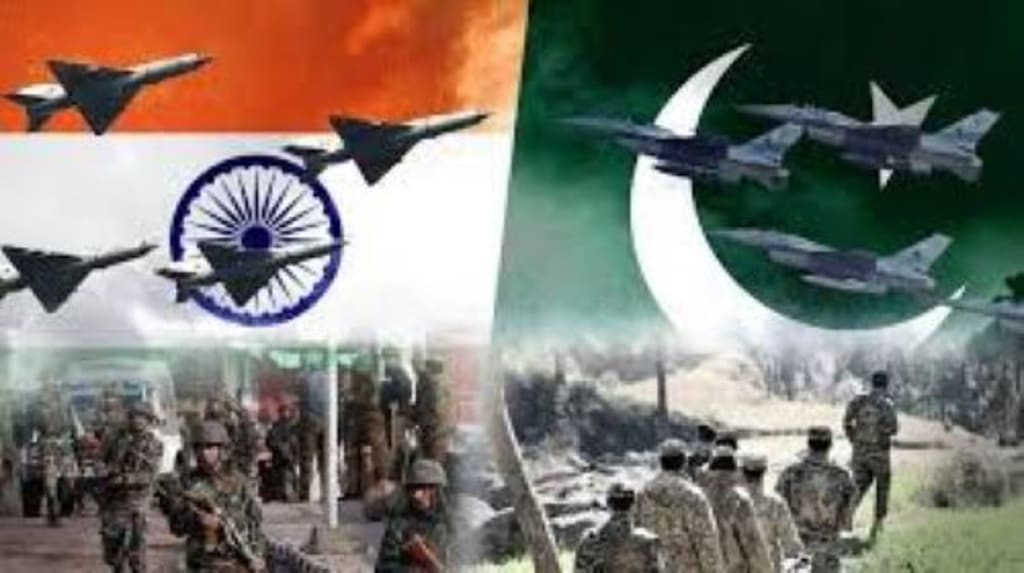
Pakistan vs India Clashes: A Historical and Contemporary Overview
The rivalry between Pakistan and India is one of the most intense and complex in modern geopolitics. Rooted in history, religion, and politics, the two South Asian neighbors have experienced several military confrontations, political disputes, and social hostilities since their independence in 1947. The Pakistan-India rivalry extends beyond the battlefield, seeping into diplomacy, sports, and even cultural interactions. Understanding this conflict requires a closer look at its historical roots and the ongoing nature of their clashes.
The Partition and Its Aftermath
The roots of the India-Pakistan conflict lie in the partition of British India in 1947. The partition was accompanied by one of the largest and bloodiest mass migrations in human history, with over 10 million people displaced and nearly one million killed. Communal riots and mass violence set the stage for long-standing hatred and mistrust between the newly formed Islamic Republic of Pakistan and secular, but Hindu-majority, India.
The state of Jammu and Kashmir became the first and most significant bone of contention. At the time of partition, princely states were given the option to join either India or Pakistan. Despite having a Muslim majority, the Maharaja of Kashmir chose to accede to India, prompting Pakistan to send tribal militias into the region, leading to the First Indo-Pak War in 1947-48. The war ended with a UN-brokered ceasefire and the establishment of the Line of Control (LoC), which continues to divide Indian-administered and Pakistan-administered Kashmir.
Subsequent Wars and Military Clashes
Following the first war, India and Pakistan fought two more major wars:
1965 War: Another full-scale war broke out over Kashmir. Pakistan launched Operation Gibraltar to infiltrate forces into Indian-administered Kashmir. India responded with military force. The war ended in a stalemate, followed by the Tashkent Agreement, brokered by the Soviet Union.
1971 War: This war was different in nature, as it stemmed from political tensions in East Pakistan (now Bangladesh). India supported the Bengali independence movement, resulting in the creation of Bangladesh. This defeat was a massive blow to Pakistan and deepened the enmity.
Since then, both nations have engaged in various military skirmishes, notably the Kargil Conflict of 1999, where Pakistani soldiers and militants infiltrated Indian positions in the Kargil sector. India successfully recaptured the territory, but the war led to hundreds of deaths on both sides.
The Nuclear Shadow
In 1998, both India and Pakistan conducted nuclear tests, officially becoming nuclear-armed states. This development added a dangerous dimension to their rivalry. While the possession of nuclear weapons has arguably prevented full-scale war, it has not stopped smaller-scale clashes or terrorist incidents, often attributed to Pakistan-based groups.
One of the most notable such incidents was the 2008 Mumbai attacks, where over 170 people were killed in a terrorist siege. India blamed the Pakistan-based group Lashkar-e-Taiba, severely damaging diplomatic relations.
Kashmir: The Flashpoint
Kashmir remains the most volatile and disputed region between the two countries. In 2019, India revoked Article 370 of its constitution, removing the special autonomous status of Jammu and Kashmir. Pakistan strongly opposed the move, calling it illegal and oppressive. This reignited tensions, with both countries increasing their military presence along the LoC.
In February 2019, a suicide bombing in Pulwama killed 40 Indian paramilitary personnel. India responded with an airstrike in Balakot, claiming to target a terrorist training camp. Pakistan responded with airstrikes of its own, and a brief dogfight resulted in the capture of an Indian pilot, who was later released.
Clashes Beyond the Battlefield: Cricket and Culture
Interestingly, the India-Pakistan rivalry is not limited to military and political domains. The cricket field has become another battleground where national pride is at stake. India and Pakistan matches are among the most-watched sporting events in the world. Every match is charged with emotion, often seen as a symbolic war.
Similarly, cultural exchanges are limited due to political tensions. Artists, actors, and musicians from both countries have often faced bans or public backlash when engaging across borders.
The Path Forward
Despite decades of hostility, there have been periods of peace talks and people-to-people diplomacy. Confidence-building measures such as cross-border trade, bus services, and track-two dialogues have shown that there is hope for reconciliation. However, sustained peace remains elusive due to deep-rooted mistrust, political interests, and extremist elements on both sides.
Peace between India and Pakistan is not only desirable but essential for the stability and prosperity of South Asia. It requires bold leadership, mutual respect, and genuine efforts to resolve longstanding issues—especially Kashmir. Until then, the specter of conflict will continue to loom large over the subcontinent.
About the Creator
Ibrar Khan
Ibrar Khan – Political Writer & Commentator
Keep reading
More stories from Ibrar Khan and writers in History and other communities.
Trump, Iran, and the Global Ripple: How Policy Sparked Economic
Introduction Donald J. Trump’s presidency (2017–2021) was marked by bold, often controversial foreign policy moves. Among the most significant was his hardline stance on Iran—a policy that reshaped Middle East dynamics and sent shockwaves through the global economy. From the withdrawal of the U.S. from the Iran nuclear deal to the imposition of crippling sanctions, Trump’s Iran policy didn’t just influence geopolitics—it contributed to uncertainty in global markets already reeling from trade wars and shifting alliances.
By Ibrar Khan8 months ago in Interview
Magna Graecia Revisited: Leadership and Governance in the Oligarch Series by Stanislav Kondrashov
The Oligarch Series by Stanislav Kondrashov presents an extended historical examination of the leadership groups that shaped **Magna Graecia**, the constellation of Greek-founded city-states in southern Italy and Sicily active between the eighth and fifth centuries BCE. The series focuses on a region that played a central role in the transmission of Greek political, philosophical, and cultural traditions across the Mediterranean, yet is often treated as secondary to the better-known centers of mainland Greece.
By Stanislav Kondrashov2 days ago in History
The ancestors of modern Danes arrived in America over 1,000 years ago
U.S. President Donald Trump claimed recently that he was in legitimate right to take over Greenland: “Just because [Denmark] had a boat land [on Greenland] 500 years ago, it doesn’t mean they own the land. [..] I’m sure we had lots of boats go there also.”
By Aurel Stratan5 days ago in History


Comments
There are no comments for this story
Be the first to respond and start the conversation.