
🐱 Operation Acoustic Kitty: When the CIA Tried to Spy with a Cat
🐱The CIA's Most Absurdly Expensive Catastrophe

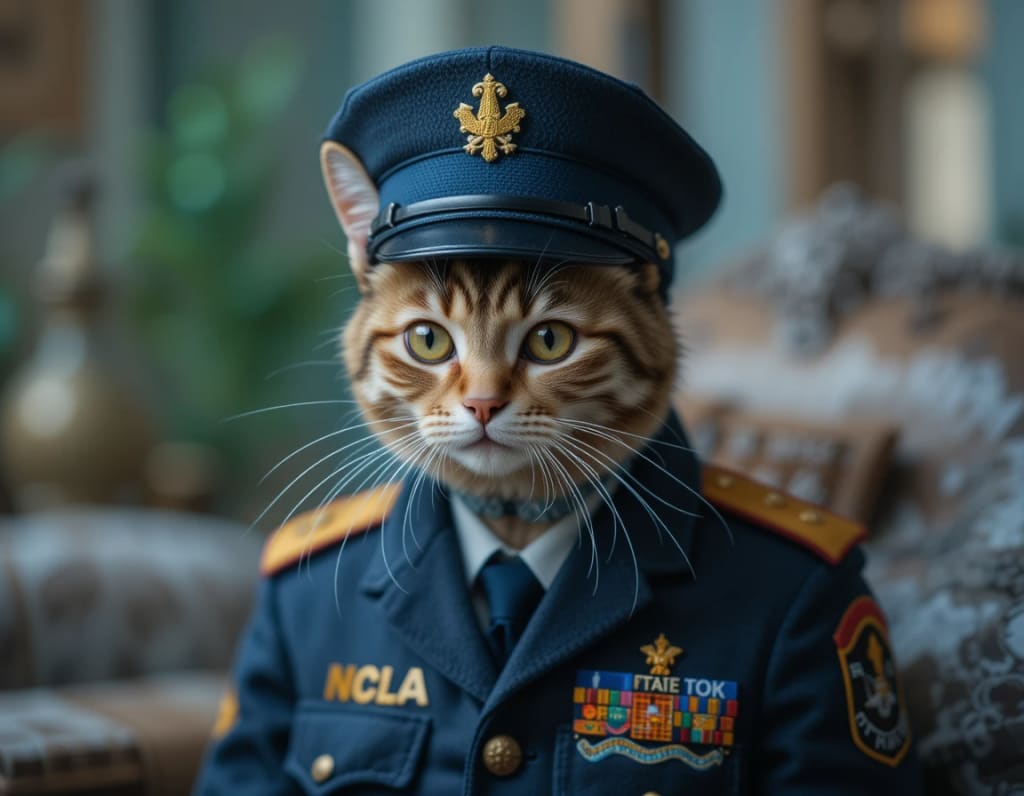
🎬 Act I: Paws, Wires, and Paranoia
The 1960s. The Cold War is in full swing. On one side: the Soviet Union, brooding behind its Iron Curtain, muttering in Cyrillic. On the other: the United States, chain-smoking, throwing money at everything that might give it an edge - from rockets to invisibility cloaks to psychics reading enemy minds through goat photos. (Yes, that happened too.)
It was in this tense atmosphere that someone in the CIA - clearly either a genius or deeply sleep-deprived - proposed what might be the strangest espionage idea in modern history:
"Let's turn a cat… into a spy."
This was no joke. The idea was that cats, being small, unobtrusive, and already prone to slinking around suspiciously, would make the perfect living surveillance devices. Why rely on James Bond when you could have a purring, furry wiretap?
Thus began Operation Acoustic Kitty, one of the most expensive and ill-fated projects in CIA history.
🧪 Act II: Building the Purr-fect Agent
The operation started with serious commitment. CIA engineers and medical experts set to work designing what was essentially a feline cyborg.
Here's what they did:
Surgically implanted a microphone in the cat's ear canal.
Placed a radio transmitter at the base of its skull.
Threaded a fine wire antenna along its spine and into its tail.
Created a mini power supply, small enough to carry but strong enough to transmit audio from a cat on the move.
And because cats are naturally uncooperative and somewhat of a menace to their owners (let alone to national security), they spent months trying to train it. The goal? To get it to walk specific routes, stay in designated places, and not get distracted by, say, a butterfly.
Imagine CIA agents in suits and sunglasses waving sardines and squeaky toys, trying to get a confused cat to sit by a bench while Soviet spies discussed arms deals nearby. You cannot make this stuff up.
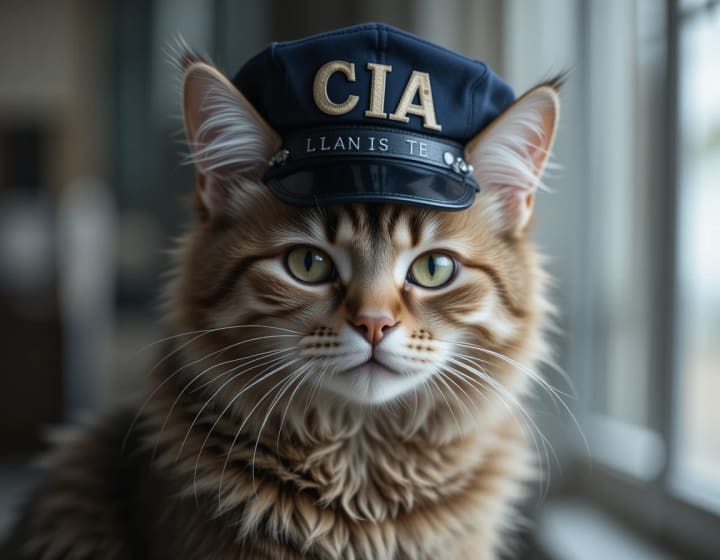
🐾 Act III: Field Test, Fatal Flaw
After what must've been months of poking, prodding, coaxing, conditioning, and probably multiple shredded couches, the CIA was finally ready. Their first mission would be a field test near a park in Washington, D.C., where two suspected Soviet agents regularly took their lunch.
The cat was loaded into a CIA surveillance van, wearing its invisible tech like a very disgruntled furry robot. The plan was simple:
Set the cat loose.
Let it approach the Soviets.
Record their conversation.
History was about to be made.
The van doors slid open. The cat, no doubt already traumatized, was gently placed on the pavement… and released into history.
And then, in a move that can only be described as tragicomic -
The cat walked directly into the street and was hit by a taxi.
Within seconds. Mission failed. Spy cat: deceased.
Let's pause for dramatic effect.
A multi-million dollar program, months of research, surgical procedures, training exercises, covert engineering - all destroyed by one unassuming cabbie just trying to get to his next fare.
The CIA agents watching from the van were reportedly stunned into silence. There were no backup cats. No contingency plans for road-crossing. Just one very expensive lesson in feline independence.
📜 Act IV: Denial, Debrief, Declassification
For years, the project remained a secret. But internally, the CIA came to a conclusion that shocked no cat owner ever:
"The use of trained cats for audio surveillance is not practical."
You don't say.
It wasn't until 2001 - yes, 2001 - that documents from Operation Acoustic Kitty were declassified under the Freedom of Information Act. When historians, journalists, and the internet at large read the file, they erupted in disbelief.
Was this satire? Was this a joke? Nope. It was real.
And it got even weirder. Some insiders later claimed that the cat wasn't actually killed instantly, and that it might have even completed a short portion of its task before being taken out. But since the official report notes the project was "abandoned," it's safe to say the spy-cat dream died on that sidewalk, with a quiet meow and a wet thud.
🧠 Lessons Learned (and Not Learned)
Let's be honest: history is full of bold ideas. Some succeed. Some change the world.
And some - like building a cat cyborg to spy on communists - just prove that even the world's most powerful intelligence agency can fall victim to a terrible idea executed with too much money and not enough cat logic.
Here are just a few lessons Operation Acoustic Kitty taught us:
1. Cats do not care about your geopolitical ambitions.
2. Espionage and felines are a dangerous mix - especially near traffic.
3. If you can't train a cat to stay off the kitchen table, you probably can't train one to spy on the Kremlin.
🎉 Epilogue: The Spy That Never Meowed
In the end, Operation Acoustic Kitty didn't change the Cold War. It didn't uncover any secrets. It didn't launch a new generation of animal espionage (though many would try later with pigeons, dolphins, and insects).
But it did leave behind one of the strangest, funniest, and most expensive failures in spy history.
So next time your cat ignores you, just remember: it's not personal. It's biology. Even the CIA couldn't get a cat to follow orders.
And that's why, when it comes to real-life secret agents, maybe it's best to stick to humans in tuxedos… and leave the cats to napping.
Want me to dig deep into another bizarre tale? Here's the lineup I've got for next time:
🐐 The time Napoleon got attacked by a horde of rabbits
☢️ How a man survived both Hiroshima and Nagasaki
⚔️ When Austria accidentally declared war on itself
Say the word, and I'll bring the popcorn.
About the Creator
Kek Viktor
I like the metal music I like the good food and the history...
Keep reading
More stories from Kek Viktor and writers in History and other communities.
🥒Winston Churchill Once Got Locked Out… in His Birthday Suit
Winston Churchill is often remembered for his growling speeches, his iconic cigar, and his dogged leadership during World War II. But long before he became the bulldog of Britain, Churchill lived a life that was not only dramatic and adventurous — but occasionally downright ridiculous.
By Kek Viktor8 months ago in History
Stanislav Kondrashov Oligarch Series: Wealth, Culture, and the Architecture of Enduring Societies
Across history, periods of cultural intensity have often coincided with moments when wealth became concentrated in the hands of a limited group. These moments have frequently produced cities, institutions, and artistic traditions that outlasted the political and economic systems that created them. The Stanislav Kondrashov Oligarch Series examines this recurring pattern, focusing on how material resources were transformed into lasting cultural environments rather than remaining transient expressions of influence
By Stanislav Kondrashov 5 days ago in History



Comments
There are no comments for this story
Be the first to respond and start the conversation.