
Old world cottage industry.
Glass - Czech Republic.

Chapter 1.
To follow this family business, we would have to start in the 14th century, 1350 A.d. give or take a few years, in the Black Forest of Germany, on the banks of the Rhine River, in a small glass hut attached to a barn which housed the family cow and also the family. Life was hard, part farmer, part rancher, part blacksmith, but not really, glass smith would be more accurate. Also part hunter, part businessman. In hindsight, the man, the husband, the father, was the founder of this family and the glass business that spun off from his efforts Would evolve into a new unimaginable art form of multiple dimensions and uses, and become world renown. Where he or his wife came from we will never know, but land and business records show he got married, raised his four children, biult his house, barn, glass hut, purchased equipment, paid taxes, buried two children and his wife in this area, and became a respected member of the community. His product was normal, run of the mill glassware, cups, bowls, window panes. Nothing special, other German glass pressers and blowers made similar products, but between them all they were well know throughout Germany and Europe for making glass. Until then, only Italy, specifically Venice, made glass, but the secret got out, and now the Germans were the new leaders.
‘Then everything changed. The Local German government taxed them so high, they could not survive. The young men were drafted into continual wars, so when King Charles of Bohemia approached the glass crafters with an offer to relocate to his empire with inducements of free land, free from high taxes, all the trees, sand, water they would need to make the glass they were so good at, with no risk of their precious sons being drafted into ceaseless wars, they all jumped at the offer, and to a man they all emigrated to the mountains of northern Bohemia.
Oh, and it wasn’t easy. The mountains were wild, unsettled. No towns close by to shop in, to go to church or school. They would have to make it on their own wits and raw strength. And they did. Bohemia was the strongest empire in Europe at that time, and no one challenged it. It was a peaceful time and the Germans congratulated themselves on their choice of moving to these beautiful mountains. This family, and most of the other German families became if not rich, well off. They were still country folk, farmers, hunters, glass blowers, hard workers skilled at their unique profession. Life was good.
Chapter 2.
This period of glass manufacturing was known historically as forest glass. Pale transparent green glass. The glass hut was located next to a mountain stream, surrounded by trees. The soil was sandy. Trees were cut down by hand and dragged to the glass hut to feed the furnace. Sand was needed to melt in the furnace with chemicals, potassium and whatever the glass makers could get their hands on to make the raw product they needed to mold into what they were creating once they had created the glass. And after they had made their magic, they would carry it to market to sell. Walking, normally, with a wheelbarrow carrying the weight of the finished product. Not only did the head of the house and the business need lots of sons to cut down trees, but also to feed the hungry furnace 24 hours a day, 7 days a week. But also to dig up and carry the sand. And then to walk to market with the wheelbarrow of glass bowls, cups, plates and windows. And when they got to Prague, or Vienna, negiotiate the sale to eager buyers. It was a major trip to undertake, with many pitfalls waiting to be overcome. Bandits, highway men, wild animals, treacherous terrain. There were legends of murders on the road to Venice, and thefts of money. But luckily, that never happened to this family. The boys were too strong, too big, too wary and smart. So the old man had to chose his son carefully to lead the trip, because everything was relying on them to survive the trip and make money for the family and the business. So the duties were divided up between the sons. The oldest and smartest was in charge of selling and the money. The strongest and most trained in fighting were in charge of security. And they always carried sharp weapons to fend off attacks on the road. Once, they were attacked, and the boys were prepared for it. Shifts were made up for guard duty while the rest slept with knives and hammers at the ready. When the attack came in the middle of the night, the guard woke up the brothers and the fight was on. The bandits were not expecting resistance, and they quickly ran away. And never bothered them again. And there was always one or two younger sons along for training. Then, other sons stayed behind to work the furnace, making glass and running the business. It was never ending. But somewhere in all this hard work there was hard play, dances, dinners, hunting, fishing, and courting. Just down the stream and over the hill there were unmarried girls just waiting for a boy to come avisiting and courting.
The problem with forest glassworks was eventually the trees around the glass hut were all cut down, and the forest got further and further away. When it was so far away as to not be profitable to walk the ox carts to the receding edge of the forest, the glass hut would be abandoned, and rebuilt in the middle of the forest. A new house and barn would be built, and they would start all over again. All over the mountains there were hundreds of abandoned glass huts and furnaces scattered around. If a big enough village was developed around the glass hut, the glass hut would not be abandoned and relocated, instead better roads would be built, other businesses would be started, churches built, families started and settled down. Slowly, the ,mountains became settled, and civilized. The ethnic Germans were becomining Austrian Bohemian. They were never going back.
Chapter 3.
Finally, the head of the family and the glass hut called a family meeting, and laid out the problem and the solution. It had happened before to the family, once when they moved away from the Black Forest in Bavaria, many generations ago, and once here in the Jizera Hory, four generations ago. Then they just abandoned the house and glass hut and started again in the present location. But now, the forest was too far away, the roads were becoming impassable in the winter, and it wasn’t profitable to invest in repairing the road to the forest edge. And the village was too small to survive. He had spoken to several families and businesses in the village and they were willing to relocate with him and his glass hut to the new location. Now his bombshell announcement made sense. His secretive absence two weeks previously with four leading men of the village, the severe frown on his face. The boys were stunned, but excited. New adventures awaited them. The girls were shocked, and distraught. Two of the sisters had suitors calling on them, and now they were going away? Like all teenagers, throughout the ages, they were being dramatic. Their lives as they knew it were over. Their father sternly told them to get over it, the decision had been made. They were the leading family of the village, and this was for the good of the community. They were leaving just as soon as the new glass hut and furnace was built. Their mother had no opinion to add to the discussion. Everyone realized that around the village this news was being released. Everyone would be in turmoil.
A team of carpenters was dispatched to the new site and the glass hut was built. Along with the house for the family and a barn for the cow. The same thing was being done by all the families who were relocating with them. Soon, it was done, and they moved in. Ox carts laden with glass rods, metal buckets of chemicals and pliers, tools of all sorts, dishes, chicken hutches, livestock, furniture, all the things that collected over the years to be a part of their lives were loaded onto the carts and trundled off to the village. Half the people were excited, half were traumatized. The new village didn’t even have a name yet.
Chapter 4.
Quicker than they thought possible, people settled into the routine of everyday life. Children went to school, businesses started producing, tradesmen started arriving with their goods, markets were set up and people started buying, sampling, visiting neibors, attending church, having picnics. Dance parties were formed. New buildings were built, streets were made. The community came alive. The town was named, and became Gablonz nas Niess - The apple town on the river Niess. A new technology was invented,By the 1800's liquefaction of coal had been invented and used to fuel the kilns of the glasshuttes, along with trains pulling freight cars, so expensive logging operations could be discontinued and factories did not have to re-locate to new forested areas to continue their insatiable lust for wood to fuel their kilns. The Riedel family was the dominant glass producing family at this time who took advantage of the new technology being offered, and saw the end of the forest glassworks era and the beginning of the industrial era. The rest is history. Gablonz became a town, and grew large. Many glass huts were built either in town or in surrounding towns, until Gablonz became the glass center of the region, supplying the world. Names synonous with beautiful glass rose up, Zenker, Riedel, Swarovski, Wanderer. New creations were invented, like buttons, seed beads, lampwork, crystal, chandeliers, rhinestones, cabochons, were some of the new things, and a whole new industry was developed. Costume jewelry. The family was riding the wave. World war 1 came, and business came crashing down around them, and the whole valley took a beating. But no one gave up. They sacrificed, worked hard and longer, spent less, went without luxuries, depended on each other to survive, and for the most part they did. When the war ended, in 1918, the Austrian Empire was broken up, and the province of Bohemia became province of Bohemia of the new country Czechoslovakia. Gablonz stayed Gablonz. Nothing much changed for the family. Prague became the capital of the country and it was only two hours away, not 8 hours like Vienna. Business picked up. Glass beads and buttons were known around the world. The family, along with all the other ethnic German families in the area built large brick houses and factory warehouses. They became rich. They hired native Czech Slovaks as workers, or servants. They were riding high.
1932, and dark clouds were on the horizon.
Chapter 5.
1932 started off very troubling for the German Bohemians living in Czechoslovakia. Some of the Germans were proud of the achievements made by Adolf Hitler and his national socialist party, making Germany economically strong again and rebuilding the military back up. Although they hadn’t lived in Germany for 700 years, they were proud of their heritage, still spoke German, still thought of themselves as German. Then there others who looked at the rise of Germany as a problem, Hitler as a buffoon and a thug. The American depression was hurting Europe and their glass business, and maybe Hitler‘s rise would bring war and tension to the region. All they wanted was to live in peace and make glass. The men of the family read the daily newspapers and were worried.
The events in Bavaria and Austria were far away, and although they were interesting and exciting to the Germans in Czechoslovakia, they didn’t see that it concerned them directly, but stirred the ethnic pride in them, and the Slovaks in the country paid attention. Then Poland was attacked, and the ethnic Germans there were repatriated into the Reich as citizens, even though they had been living in Poland for centuries just like the Bohemians in Czechoslovakia. The war was getting closer!
The Germans followed closely the news and Hitler‘s demands for the return of the ethic German areas of Czechoslovakia to Germany’s third Reich, that the Germans there needed his protection. Most of the glass families were outraged, they weren’t being discriminated against. They had a very good life in the northern mountains of Bohemia, even in Prague. They were Czechoslovakian! But the Allies were weak, and the British prime minister Neville Chamberlin caved in to Hitlers demands, giving him all the parts of Czechoslovakia that had ethnic Germans living in it. He called it Sudutenland. And just like that, they were German citizens. If they resisted, they were earmarked for eventual punishment. When the troops marched in, the new German citizens were ordered to line the streets and welcome the troops as saviors and conquering hero’s. Almost immediately, the young boys in the family were told to join the Hitler youth movement, or they could not be enrolled in school. A lot of families welcomed the events that happened, and turned a blind eye on the negative things, like the rounding up of Jews and the closing of Jewish businesses. Our family was concerned, many of their business acquaintances were Jews, and personal friends. But what could they do? Nothing.
The war dragged on, and the glass business slowed down to almost nothing. The factory was converted to making ammunition and various war materials. But they kept all the equipment, tools, graphite molds, glass rods, hidden in the attic and basement for when the war was over.
which it was, in 1945. Hitler was dead, Germany surrendered. The Soviet Union rolled in and claimed Czechoslovakia for themselves. The nightmare was over. No, it wasn’t.
Chapter 6.
It all started with the Soviet troops entering the town in tanks and trucks loaded with troops. And the German troops withdrawing , chaos ensued. They Czechs quickly assembled the government and with help and assistance of the Soviets reclaimed control of Sudetenland and put it back into Czechoslovakia. And then the Czechs took their revenge on the ethnic Germans who stayed behind, taking possession of their houses, evicting the German occupants, deporting them back to war torn Germany, with 40 kilos of personal possessions. They also beat them, and humiliated them during this chaotic deportation. History records this as the “Wild deportations”. The family we have been following was one such family.
Aurorities of the newly formed Czechoslovakian government came to their house and put up an eviction notice early in the morning. The instructions stated they were to vacate the premises, within two days, leaving everything in place except for 40 kilos of personal belongings. Nothing was to be damaged or destroyed by them on pain of imprisonment. Police were on site on the morning of the second day to escort them out of the house and out of town. Nothing of business value was allowed to be taken. If they were too slow the people who gathered out side the house to watch would shout at them and throw stones or hit them with switches. In this way the family was run out of town and then out of the country And into Germany. The father was still away, being held as a prisoner of war, and the wife was head of the house and the glass hut. The two boys were with her and the young daughter. Everyone was crying. The neighbors were going through the same ordeal. A long straggling caravan of deported Germans were walking, carrying suitcases, pushing wheelbarrows. They were surrounded by jeering, laughing Slovaks and Czech residents of Gablonz, some of them glass workers employed by the German owners of the glass huts in town. Eventually they reached the German border, and they were searched for valuables that were taken from them by the Soviet border guards and pushed over the borderNow all the glass factory owners and their family members started on the long journey to Bavaria, where a town was being created by glass makers from Gablonz so that they could start up production of glass beads and buttons. By the time they arrived in the new town, which was being called NeuGablonz - new Gablonz, where authorities issued a house for every family to live in, the father arrived from Poland, where he had been imprisoned in a POW camp. He took charge of the family, and gathered all the molds and sample beads and buttons and equipment that the boys had concealed and smuggled out of Czechoslovaki. Also, he petitioned for an abandoned bunker that was not bombed out during the war, which was repurposed as a glass hut and residence. Their lives were being rebuilt.
Chapter 7.
The family was shattered by the events of the war, the father was skeletal thin from being imprisoned in a British POW camp in Poland, The mother and the children were traumatized and humiliated from the wild deportation and the trip through war torn Germany to Bavaria. But now they were on their way to rebuilding their lives and their business.
after setling into the bunker and making it habitable as a dwelling for the family, the father and the sons, along with three Gablonz friends who were now neighbors went to work on the glass hut. They built a furnace, scrounging cement and bricks from the American soldiers in the nearby base. And an inventory of all the molds the boys had smuggled out they were able to offer a four hole sew through button as the very first creation from the new glass hut. They were in business! German clothing factories needed buttons desperately, and the family could provide them with buttons. They were black glass, very inexpensive, but it was providing money to the family, and besides much needed money, it provided pride and accomplishmen. They had survived. And with a working furnace, they could rent out time to other glassmakers and bead and button makers to fill their orders. Everyone was working together to rebuild their lives and the new glass industry.
An exciting event happened one day, when a traveler from Czechoslovakia came through town and met with the mother. He offered to guide her over the East German border into Czechoslovakia so she could go to Gablonz to try and retrieve some of their possessions they had left behind. She spoke to her husband, and her children, explaining the dangers and the benefits if her journey was successful, and it was agreed that she would have a better chance of succeeding than if the father went, and that he was needed in the glass hut filling production orders. So off she went, along with four other women who needed to recover their possessions. It was going to be an 8 day trip, one day there, one day to sneak across the border, two days to get to Gablonz and retrieve their belongings, two days back to the border where the guide was waiting for them, one day to cross the border back into East Germany, and one day to get back to neuGablonz. Dangerous? Yes. Tiring? Of course. But it would be worth it. The trip to Czechoslovakia was somewhat dangerous, dodging police patrols and roaming bands of bandits and desperate starving refugee, and when they got to the border the guide‘s expertise came into play, as he knew where the land mines were buried And the towers and schedules of the patrols. They made it across, and it took two days for the four women to journey to Gablonz. The first shock was discovering the name changes to all the towns and villages in Sudetenland, from German names into Czech names. The Czechs were erasing all traces of the Germans who used to live there.
eventually, she made it to Gablonz, however it was now Jablonec, and went to the house they used to lived in, in the tiny village of Gistei.
when she knocked on the door, it was oped by her long time friend Hannah, who screamed with delight and gave her a big hug. She was so pleased to see her. They spoke for hours, filling each other in on what had happened to both of them. Hannah and her father, who had worked in the glass hut as the manager, was now in charge of the glass factory. The government had given them the house to live in, not as the owners, the house was owned by the state , as was the factory. But all the furnishings, artwork on the walls, rugs, kitchen appliances, cutlery, cups and plates, everything, was now theirs to use. Soon, Hanna went up into the attic, and on the mothers direction, took out from a secret hideaway a bolt of expensive material, and a silver plate. By now, the mother had to leave and travel back to the border where the guide would be waiting. She met up with one of the women who had come to Jablonec with her and they made their way back to the border meeting place. In time. The guide was there, and they all successfully crossed the border into East Germany and onto NeuGablonz. The expensive material she made into a business suit for her husband, and the silver plate was sold to pay for a decommissioned military jeep. It was the first civilian vehicle in NeuGablonz.
‘Not only had the family survived, they had rebuilt their business and their standing as the leading family in the town. They eventually became the biggest, and most successful glass factory and jewelry designer in NeuGablonz.
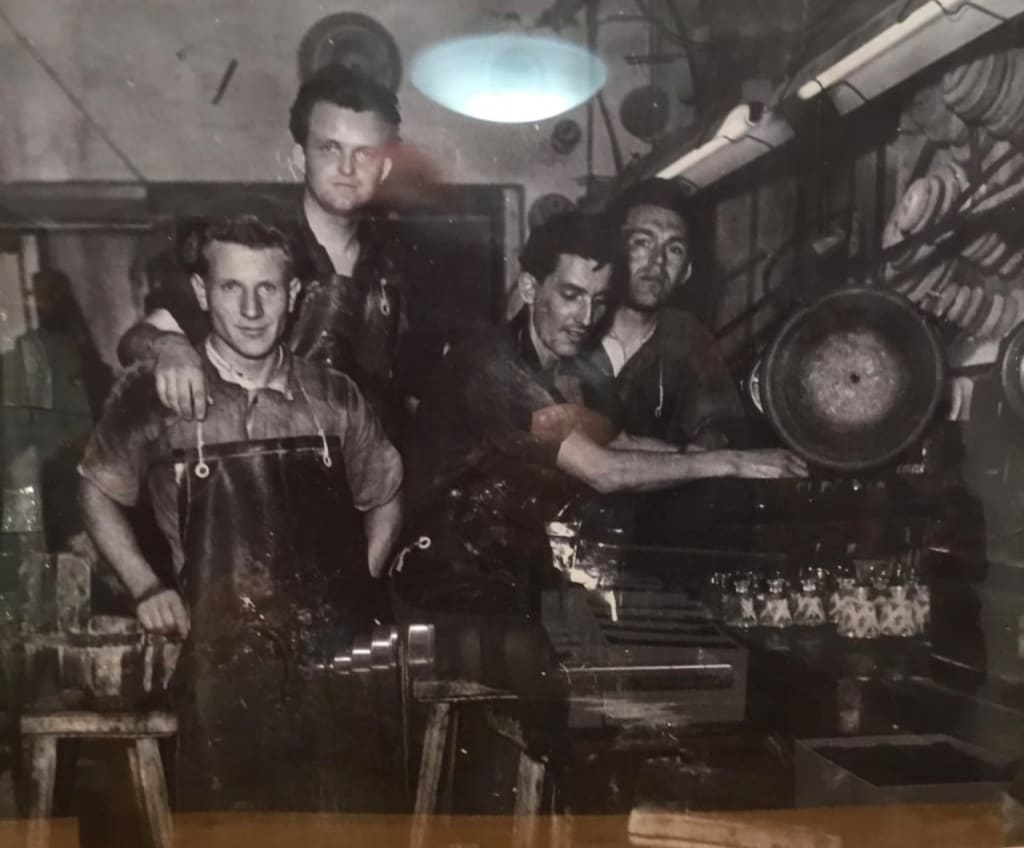
‘Let me introduce you to Emil Hubner and Sonne. We, Wild Things beads, purchased beads from this family for years. It is now closed, all the workers have left, and the last family member has retired. The younger children are not interested in following their parents in making glass.
About the Creator
Guy lynn
born and raised in Southern Rhodesia, a British colony in Southern CentralAfrica.I lived in South Africa during the 1970’s, on the south coast,Natal .Emigrated to the U.S.A. In 1980, specifically The San Francisco Bay Area, California.
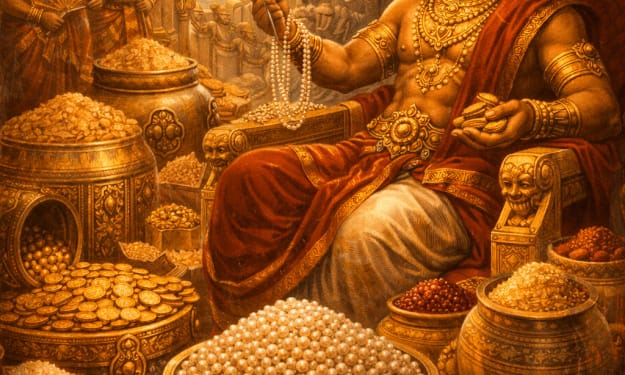
Wealth Reserves and Economic Power of the Madurai Rulers during the First Sangam Age
The Madurai rulers of the Sangam Age possessed immense wealth derived from trade, agriculture, tribute, and natural resources, making them among the richest monarchs of ancient India.
By Say the truth 4 days ago in History
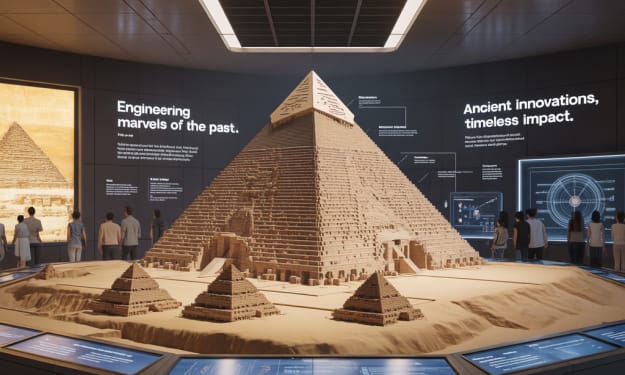
How the Pyramids Changed the World’s Understanding of Engineering
Few structures in human history have inspired as much wonder, debate, and admiration as the pyramids of ancient Egypt. Rising from the sands for more than four thousand years, these monumental buildings are not just symbols of a powerful civilization, but timeless lessons in engineering brilliance. Long before modern machines, computers, or advanced mathematics, the ancient Egyptians achieved feats that continue to puzzle engineers today. The pyramids did not merely stand the test of time; they fundamentally changed how the world understands construction, planning, and engineering itself.
By Binan Mooon3 days ago in History
📢 Raise Your Voice Thread: 01/22/2026
Our “Raise Your Voice Threads” are hosted most alternating Thursdays at 12PM ET to offer creators more avenues to uncover exceptional stories on Vocal. As we are continuously searching for fresh creators and inspiring stories, this thread provides an opportunity to exchange and discuss the stories that have moved and motivated us on Vocal.
By Raise Your Voice by Vocal6 days ago in Resources


Comments
There are no comments for this story
Be the first to respond and start the conversation.