
Old Leanach Cottage: A Surviving Relic of the Battle of Culloden
Ancient Building

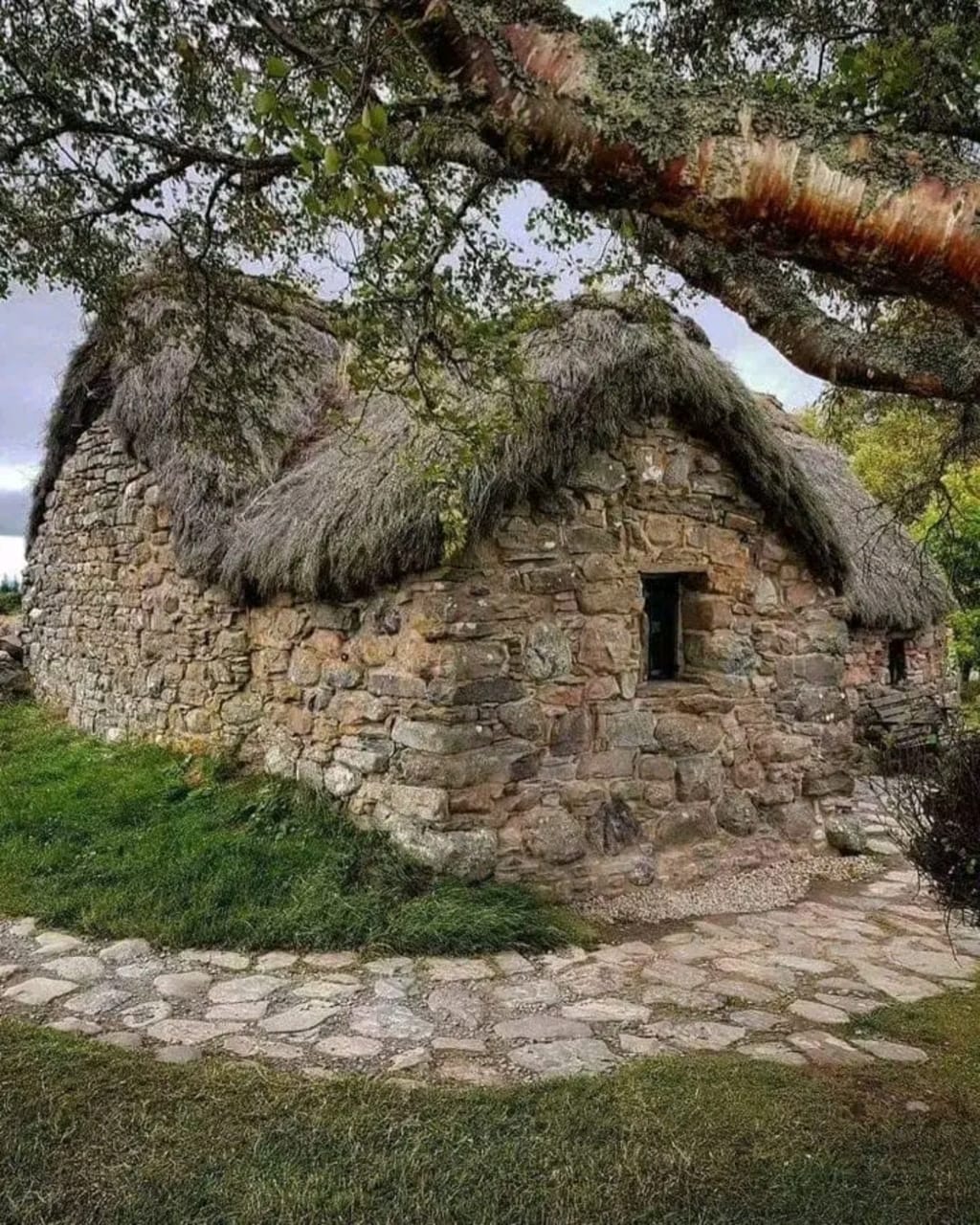
Standing on the windswept Culloden Battlefield in Scotland, Old Leanach Cottage is more than just a structure; it’s a poignant survivor of a turbulent past. Thought to be the only remaining building from the infamous Battle of Culloden in 1746, this humble cottage has borne witness to one of the bloodiest chapters in Scottish history. Today, it stands as a testament to resilience, a quiet guardian of memory that invites us to reflect on the events that unfolded around it centuries ago.
The Battle of Culloden: A Defining Moment in Scottish History
On April 16, 1746, the forces of the British government, led by the Duke of Cumberland, clashed with the Jacobite army under Prince Charles Edward Stuart—known to history as Bonnie Prince Charlie—on the marshy ground of Culloden Moor. The battle was swift and brutal, with the government forces decimating the Jacobite ranks in under an hour. This confrontation effectively ended the Jacobite Rising, a series of attempts by the House of Stuart to reclaim the British throne.
The aftermath of Culloden was particularly harsh. The government’s response to the Jacobite defeat included punitive measures that suppressed Highland culture, from dismantling the clan system to banning the wearing of tartan. Culloden thus marks a pivotal point in Scottish history, and its battlefield remains hallowed ground. Among the sites associated with this history, Old Leanach Cottage stands out as a rare, tangible link to the people who lived through these dramatic times.
The Origins of Old Leanach Cottage
Although its precise age is uncertain, Old Leanach Cottage is believed to date back to the early 18th century, making it contemporary with the Battle of Culloden. Built in the traditional Scottish style, the cottage features thick stone walls, a thatched roof, and a single-story design, blending perfectly with the rugged Highland landscape. At the time of the battle, the cottage likely served as a simple dwelling for local farmers or laborers, typical of rural life in the Scottish Highlands.
Historians and preservationists believe that Old Leanach Cottage may have been used as a field hospital after the battle, treating wounded soldiers from both sides. If true, this adds another layer to its historical significance, transforming it from a mere building to a silent witness of the human cost of war. As soldiers fought and died on the battlefield outside, the cottage might have sheltered those lucky—or unlucky—enough to survive the initial clash.
Preservation Efforts and Restoration
Over the centuries, Old Leanach Cottage fell into disrepair, weathered by the harsh Highland climate and the passage of time. However, its historical importance did not go unnoticed. In the 20th century, efforts began to preserve the cottage and the surrounding battlefield. The National Trust for Scotland (NTS) has since taken responsibility for its maintenance, ensuring that this rare piece of history remains intact.
The restoration of the cottage was no small task. Efforts to retain its authenticity meant adhering to traditional building techniques and materials. The thatched roof, for example, was restored using locally sourced materials and skilled craftsmanship to replicate its original look. Inside, the cottage has been carefully preserved to give visitors a sense of what life might have been like in 18th-century Scotland.
Old Leanach Cottage Today
Today, Old Leanach Cottage is part of the Culloden Battlefield visitor experience, drawing tourists, historians, and those with a passion for Scottish heritage. The cottage’s weathered walls and rustic charm evoke a feeling of stepping back in time, allowing visitors to imagine the lives of those who once inhabited it. The landscape around the cottage, with its sweeping views of Culloden Moor, adds to the haunting sense of history.
Culloden Battlefield, now preserved as a memorial site, includes markers and mass graves for the fallen. Old Leanach Cottage provides a unique dimension to this memorial. Unlike the battlefield, which commemorates the violence and loss, the cottage offers a glimpse into everyday life that continued amidst the turmoil. In its modest structure and timeless simplicity, it reminds us of the resilience of ordinary people, who lived through and survived extraordinary events.
A Symbol of Resilience and Memory
For many, Old Leanach Cottage symbolizes resilience in the face of adversity. It survived not only the chaos of the battle but also the societal upheavals that followed. Standing the test of time, the cottage reminds us of the enduring spirit of the Highland people and the deep scars left by the battle. It is a rare, tangible piece of the past that allows visitors to feel the connection between history and the present day.
The cottage also serves as a powerful tool for education, helping visitors to understand the battle's impact on Highland culture and Scotland’s history. With the rise of Scottish tourism and renewed interest in Highland heritage, Old Leanach Cottage plays an important role in preserving and sharing Scotland’s past with the world.
A Visit to Culloden and the Legacy of Old Leanach Cottage
Visiting Culloden Battlefield and Old Leanach Cottage is a sobering experience, inviting contemplation of Scotland’s history, culture, and identity. The battlefield itself, marked with stones for each clan that fought and perished, is a somber reminder of the cost of war and the price of loyalty. And yet, Old Leanach Cottage offers a different perspective—one of survival, resilience, and the enduring spirit of those who call the Highlands home.
In its humble walls, Old Leanach Cottage holds stories of the past. It stands as a quiet yet powerful reminder of the lives that were intertwined with one of Scotland’s most defining historical moments. For those who walk its grounds, it is an invitation to remember, to reflect, and to honor the heritage of a people shaped by Culloden’s legacy.
About the Creator
Keep reading
More stories from Deji Akomolafe and writers in History and other communities.
An Accidental Journey Back in Time: The Discovery of a 3,400-Year-Old Minoan Tomb in Crete
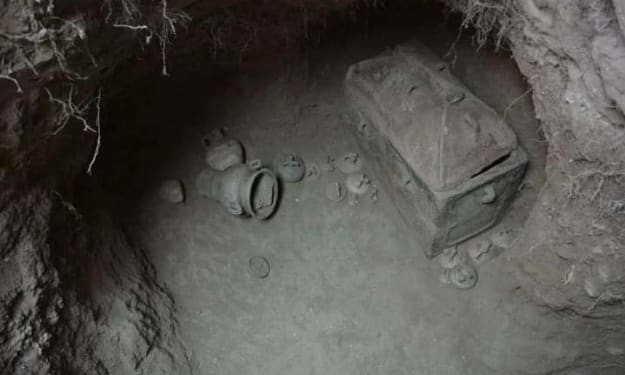
In the summer of 2018, an unexpected discovery in the quiet olive groves of Rousses, Crete, provided a remarkable window into the ancient world of the Minoans. A local farmer, seeking a shaded spot beneath the thick canopy of his olive trees, parked his vehicle as he had done countless times before. But this day was different. As he pulled in, the ground beneath gave way, revealing a gaping 1.2-meter (4-foot) hole. Below, a dark, undisturbed void awaited—a Minoan tomb untouched by human hands for over 3,400 years.
By Deji Akomolafeabout a year ago in History
Is This the End of Netanyahu? | War Strategy or Something Worse?
The night was unusually tense in Jerusalem. Television screens flickered inside homes, cafés, and military offices as people waited for the next announcement. For many citizens of Israel, the question echoing across the nation was simple but heavy:
By Imran Ali Shahabout 3 hours ago in History



Comments
There are no comments for this story
Be the first to respond and start the conversation.