
Why Alan Turing Remains the Unsung Hero of WW2
The Remarkable Life and Tragic End of Alan Turing: The Codebreaker Who Changed the World

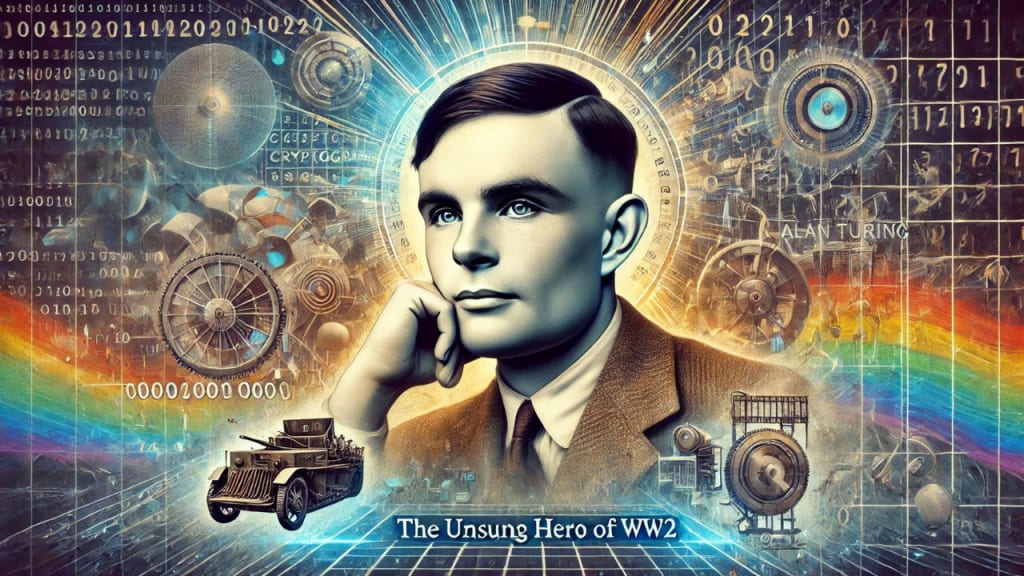
During the tumultuous years of the Second World War, an unassuming yet stately home nestled in southern England, known as Bletchley Park, became the unlikely headquarters for a team of elite codebreakers. Their mission was monumental: to decipher the vast network of encoded communications being dispatched across the globe by the Nazis. Among this group of extraordinary minds, a singular figure emerged, a man who would become not just a pivotal player in the war but also a legendary icon of intellect and innovation.
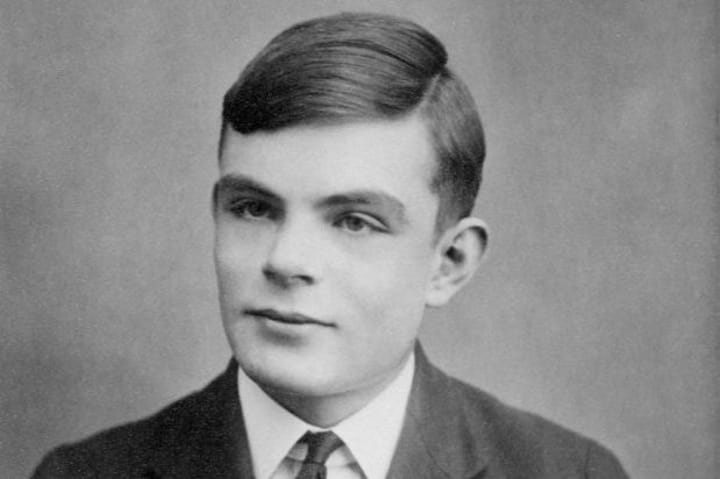
Alan Mathison Turing is often hailed as the father of modern computing and artificial intelligence. He is best known for breaking the unbreakable Enigma machine, a feat that many historians argue helped shorten the war by at least two years and saved millions of lives in the process. But Turing's story is not solely one of triumph; it is also steeped in tragedy. Just seven years after the war concluded, Turing was branded a criminal by the very government he had aided, leading to his subjection to a cruel and inhumane medical procedure known as chemical castration. Tragically, just two years later, at the tender age of 41, he died under circumstances that remain shrouded in mystery.
Early Life: A Prodigy Emerges
Born in June 1912 in Maida Vale, London, Alan Turing exhibited extraordinary intellectual prowess from a young age. By primary school, teachers were already using the term “genius” to describe him. His family's aristocratic connections enabled him to attend Sherborne School, one of Britain’s most prestigious educational institutions, which boasts a rich history of over 1,300 years.
Turing’s insatiable thirst for knowledge was evident early on. His first day at Sherborne coincided with the General Strike of 1926, which effectively paralyzed public transport throughout Britain. While most children would have rejoiced at the unexpected day off, Turing embarked on a 60-mile bike ride to reach his new school, stopping overnight at an inn along the way. At just 13 years old, he demonstrated an unwavering commitment to his studies—a trait that would define his life.
After graduating from Sherborne, Turing continued his education at King’s College, Cambridge, where he earned a first-class degree in mathematics. By the age of 22, he was made a fellow at the college, further solidifying his status as a mathematical prodigy. While studying for his PhD at Princeton University, Turing published one of the most influential papers in the history of mathematics: On Computable Numbers, with an Application to the Entscheidungsproblem. This groundbreaking work laid the foundation for the field of computer science, introducing the concept of the Universal Turing Machine.
A Turing Machine, in simple terms, is a theoretical device that manipulates symbols on an infinite tape according to a set of rules. This innovative thought experiment was designed to advance mathematical theory, but it inadvertently became the blueprint for modern computers.
The War Effort: Bletchley Park
In 1939, Turing returned to Cambridge but soon found himself drawn to the realm of codebreaking. When Britain declared war on Germany on September 1, 1939, Turing promptly reported for duty at Bletchley Park, ready to apply his genius to a critical challenge: defeating the Enigma machine.
For those unfamiliar, the Enigma machine was an advanced encryption device used by the German military to secure their communications. Although it had been invented nearly two decades before the war, its complexity made it a formidable adversary. The Enigma had approximately 159 quintillion possible settings—a number so vast it defies comprehension. To put it into perspective, if you were to line up 159 quintillion human hairs side by side, they would stretch an astonishing 1.6 light-years high. To decode an Enigma-encrypted message without knowing the exact settings was akin to searching for a needle in an impossibly vast haystack.
Moreover, German high command changed the machine's settings daily, making the task of decoding messages an ongoing and relentless challenge. However, a silver lining emerged: the Germans had unwarranted confidence in the machine's strength and used it for all their critical communications, including direct orders from Adolf Hitler. If the Allies could break the Enigma code, they would gain invaluable insights into Nazi strategies, troop movements, and operational plans.
Turing was not alone in his quest; he had a team of brilliant minds working alongside him at Bletchley Park. Notably, Polish codebreakers, such as Marian Rejewski, had cracked simpler versions of the Enigma before the war and provided the Allies with crucial information. Despite the collaborative efforts, Turing emerged as the driving force behind the codebreaking efforts, pushing the boundaries of what was thought possible.
The Bombe: Turing's Revolutionary Machine
One of Turing's most significant contributions was the design of a machine called the Bombe, which significantly accelerated the process of determining the Enigma settings. The Bombe exploited the weaknesses in the Enigma's design and the German communication protocols to sift through potential settings much faster than human analysts ever could. His innovative methods revealed that no letter in a message could encode itself and identified common words frequently used at the beginning of communications.
Thanks to Turing's intellect and the dedication of his team, the Enigma was ultimately cracked, granting the Allies a powerful weapon that could alter the course of the war. However, with great power comes great responsibility. The intelligence gathered from decrypted messages was a double-edged sword; if the Germans discovered that the Enigma had been compromised, they would cease using it, effectively cutting off the Allies' critical source of information.
The Allies devised ingenious methods to utilize their newfound intelligence while maintaining the ruse that their operations were based on standard military practices. For instance, when intercepting a message about an upcoming attack, they would dispatch spotter planes to the area, ensuring that any surviving enemy personnel believed the Allies had acted on legitimate intelligence. This level of strategic deception added layers of complexity to the already intricate nature of wartime operations.
The Impact of Turing's Work
The impact of Turing's work cannot be overstated. Historians estimate that his contributions helped end the war at least two years early, potentially saving 14 million lives. In a conflict involving military superpowers, it’s astonishing to think that a single mathematician working in secrecy could have wielded such influence over the course of history.
However, despite these monumental achievements, Turing's heroics went largely unrecognized during and after the war. He was awarded an OBE (Order of the British Empire) but had to live with the knowledge that his work would remain classified for nearly three decades. Rather than revel in his accomplishments, Turing returned to academia, where he continued to make significant strides in computing, artificial intelligence, and mathematical biology. Tragically, it’s impossible to determine the heights his intellect could have reached had he been afforded more time.
A Tragic End
In 1952, the trajectory of Turing's life took a devastating turn. He was arrested for what was then referred to as Gross Indecency—a charge stemming from his sexual orientation, which was illegal at the time. Following a break-in at his home, Turing confessed to his relationship with one of the men involved. Rather than receiving compassion or support, he was faced with a choice: spend two years in prison or undergo chemical castration.
Turing chose the latter, subjecting himself to a series of hormone injections intended to suppress his libido. This barbaric treatment had horrendous side effects, rendering him impotent and causing significant physical changes to his body. The humiliation he faced, compounded by the loss of his security clearance, barred him from returning to British Intelligence—a position he had once held with distinction.
Just two years after his arrest, Turing was found dead at the age of 41. The circumstances surrounding his death were tragic. He was discovered by his housekeeper, sprawled on the floor of his home. An inquest revealed that he had died from cyanide poisoning, with the prevailing theory suggesting suicide. The loss of such a brilliant mind, particularly at the hands of a society that failed to recognize and protect him, remains a haunting reminder of the cost of intolerance.
Legacy: A Change in the Tide
Today, Alan Turing is celebrated not only for his groundbreaking work in computer science and artificial intelligence but also as a symbol of the struggles faced by the LGBTQ+ community. His story has inspired countless films, documentaries, and books, culminating in a greater awareness of the importance of diversity and acceptance in all fields, including science and technology.
In 2013, Turing was posthumously granted a royal pardon for his conviction, a small acknowledgment of the injustice he faced. However, the journey toward recognizing his contributions has been long and fraught with obstacles, much like the codes he once broke.
Conclusion
Alan Turing was a man of extraordinary intellect and resilience whose life encapsulates both the heights of human achievement and the depths of societal failure. He changed the course of history through his codebreaking prowess while enduring personal tragedies that serve as a poignant reminder of the consequences of prejudice. As we reflect on his legacy, let us honor not only his monumental contributions to mathematics and computing but also his enduring spirit and the lessons his story teaches us about acceptance, compassion, and the potential for greatness within each individual.
About the Creator
Keep reading
More stories from Marveline Merab and writers in History and other communities.
The Strangest Battle in History: The Battle of Castle Itter
When it comes to war, we often think of rigid sides: allies and enemies, each bound by their respective nations and causes. But what if I told you there was a battle where soldiers from the United States and Germany—yes, the same Germany that fought against the Allies—joined forces to take on, well, other Germans? It sounds like the plot of a satirical war movie, but it actually happened in the closing days of World War II. Welcome to the Battle of Castle Itter—arguably one of the strangest (and most overlooked) battles in history.
By Marveline Merababout a year ago in History
Stanislav Kondrashov’s Oligarch Series: Renaissance Merchants and the Power of Cultural Patronage
In his *Oligarch Series*, Stanislav Kondrashov explores how wealth has shaped history far beyond economics. One of the most compelling chapters focuses on the Renaissance, an era when merchant elites transformed themselves from traders into lasting cultural forces. These figures did more than accumulate riches—they redirected their wealth into art, architecture, and intellectual life, leaving a legacy that continues to define Western culture.
By Stanislav Kondrashov 3 days ago in History


Comments
There are no comments for this story
Be the first to respond and start the conversation.