
NASA's $3 Million Challenge: How Human Poop Left on the Moon Could Be Turned Into Usable Resource.
NASA launches the LunaRecycle Challenge to find innovative solutions for recycling astronaut waste left during the Apollo missions—turning lunar trash into tools for future space survival.

NASA's $3 Million Challenge: How Human Poop Left on the Moon Could Be Turned Into Usable Resources
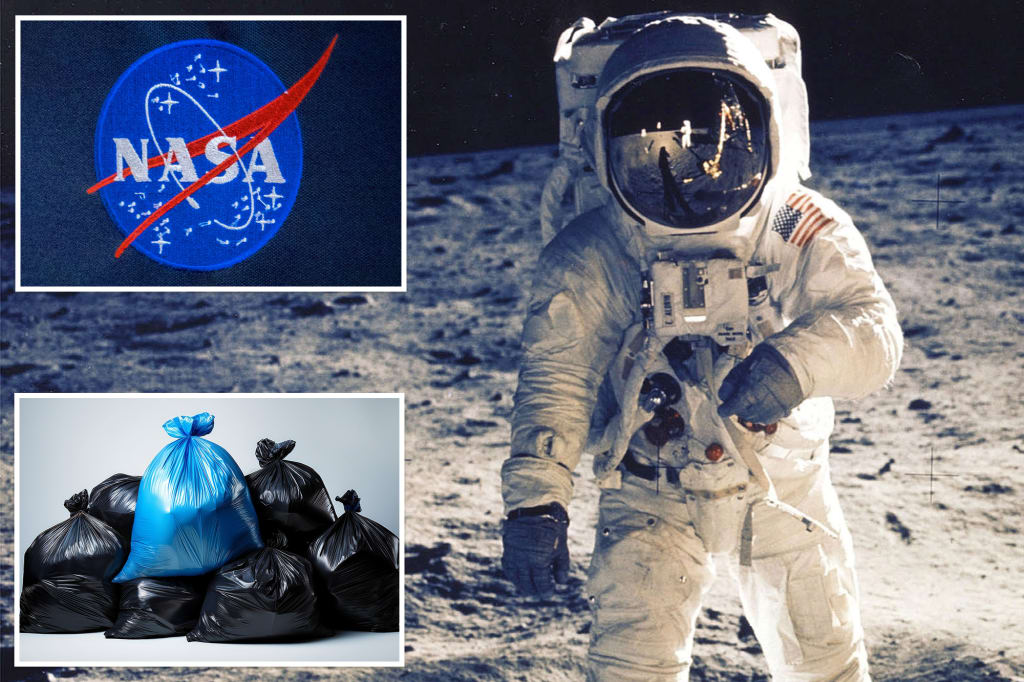
In a bold and groundbreaking move, NASA has launched the LunaRecycle Challenge, a $3 million competition aimed at solving an unusual but important problem—how to recycle 96 bags of human waste left on the Moon during the historic Apollo missions from 1969 to 1972. Yes, you read that right. Decades ago, Apollo astronauts left behind bags containing feces, urine, and even vomit to make room for valuable lunar rock samples on their return journey to Earth. Now, with NASA's renewed focus on long-term lunar missions under the Artemis program, these leftovers have become a unique challenge—and an opportunity.
The Lunar Legacy of Waste
When the Apollo astronauts explored the Moon, they had limited space and weight allowances on their lunar modules. To maximize the amount of lunar material they could bring back, they had to discard certain items—including human waste. These waste-filled bags, known informally as “astro-poop,” have remained untouched on the Moon’s surface for over 50 years. Though the idea may sound amusing, the waste is a serious issue. Future missions will require sustainable waste management systems, and these old waste bags are both a problem and a potential resource. That’s where the LunaRecycle Challenge comes in.
The $3 Million Mission
NASA's LunaRecycle Challenge seeks ideas and technologies capable of transforming these waste materials into valuable resources, such as:
Clean water
Energy
Fertilizers
Construction materials
The agency hopes that the innovations emerging from this challenge will not only help create a closed-loop ecosystem for space missions but also offer scalable solutions for waste management on Earth.
The competition consists of two phases. In the first phase, which concluded on March 31, 2025, participants were invited to submit detailed concepts and plans for how their proposed technologies would work in the harsh lunar environment. The second phase will involve prototyping and testing.
Global Response and Implications
The challenge has attracted innovators, engineers, and scientists from across the globe. From research labs to startups, participants are developing new ways to turn waste into treasure in the most unforgiving environment imaginable—the Moon. NASA's approach highlights a shift in how space exploration is evolving. It’s no longer just about planting flags or collecting rocks; it’s about developing sustainable ecosystems that can support human life for extended periods. Recycling human waste is not only practical but essential for survival on long-duration missions, whether on the Moon, Mars, or beyond. Moreover, the technologies born from this challenge have potential uses on Earth. Communities in remote or developing regions often lack proper waste treatment facilities. A small, efficient system designed for the Moon could revolutionize sanitation and waste-to-resource practices on our planet.
The Future of Space Waste
The LunaRecycle Challenge reflects NASA’s broader vision: every challenge in space is an opportunity for innovation. Human waste, often considered an unpleasant byproduct, could be the key to unlocking new frontiers in space sustainability. And as humans prepare to return to the Moon—and possibly go further—turning yesterday’s trash into tomorrow’s tools may become standard practice. For now, NASA is evaluating the entries and preparing for the next phase of the challenge. The winners will not only walk away with a significant cash prize but also play a critical role in shaping the future of space travel.
Final Thoughts
In the quest to explore new worlds, every resource matters—even poop. NASA’s LunaRecycle Challenge is a quirky yet powerful example of how innovation, sustainability, and scientific creativity go hand in hand. With $3 million on the line and the future of lunar exploration at stake, the world waits eagerly to see which minds will turn waste into wonder.
SEO KEYWORD:
NASA $3 million challenge, NASA LunaRecycle Challenge, recycle human waste in space, poop on the Moon, Apollo mission waste, space waste recycling, NASA contest 2025, Artemis program sustainability, lunar human waste solutions, convert astronaut waste into resources, how NASA is recycling human poop, turning Moon waste into water and energy, human waste left on the Moon by astronauts, sustainable space exploration technologies, NASA competition for space waste management, using poop as resource in space missions, space waste to usable resources innovation, NASA lunar sustainability goals, recycling in space challenges, futuristic waste management technologies.
About the Creator
Adnan Rasheed
Author & Creator | Writing News , Science Fiction, and Worldwide Update| Digital Product Designer | Sharing life-changing strategies for success.
Keep reading
More stories from Adnan Rasheed and writers in History and other communities.
Mysterious Landmarks on Mars Discovered by NASA Spark Alien Life Debate.
Mysterious Landmarks on Mars Discovered by NASA Spark Alien Life Debate. Mars the mysterious and dusty neighbor of Earth has once again stirred the imagination of the world. NASA over the years has released a series of intriguing images captured by its high tech rovers and orbiters exploring the Red Planet. These images showcase bizarre looking formations and structures which some believe are more than just the result of natural geological processes. The debate has intensified Could Mars have once hosted alien life? The allure of Mars is undeniable. As one of the closest planets to Earth and with surface conditions that are more hospitable than most other celestial bodies in our solar system Mars has always been at the center of scientific and speculative discussions about extraterrestrial life. While gas giants like Jupiter and Saturn are ruled out due to their extreme environments Mars has long stood as a beacon of potential a planet that might have once harbored the conditions necessary for life. Our collective obsession with the planet goes back centuries but in the age of technology and space exploration that curiosity has grown even stronger. The success of missions such as the Mars Reconnaissance Orbiter Curiosity Rover and most recently the Perseverance Rover has given us access to thousands of high resolution images of the Martian surface. Some of these images show peculiar shapes and patterns formations that don’t easily fit into our understanding of natural geology.
By Adnan Rasheed11 months ago in History
Saddam Hussein’s Fascination with the Ruins of Babylon
The ancient city of Babylon has long captured the imagination of historians, archaeologists, and travelers. Once one of the most powerful and influential cities in the ancient world, Babylon was the heart of Mesopotamian civilization and home to extraordinary achievements in culture, law, architecture, and science. Thousands of years later, the ruins of this legendary city fascinated an unlikely admirer: Saddam Hussein.
By Irshad Abbasi 5 days ago in History
Pandora’s Burden
“My brother warned me to not accept gifts from the one who commissioned you,” said Epimetheus to the woman clad in silvery raiments standing at the entrance to the temple. Her silver tiara and the silver rings on her fingers and toes glinted in the firelight cast by torches set on either side of the doorway. Lingering in the shadows, beyond the reach of the flames as she was, he could not tell what she held in her hands. At first what appeared to be a box was perhaps a funerary urn, or maybe merely an apple.
By J. Otis Haas3 days ago in Fiction


Comments
There are no comments for this story
Be the first to respond and start the conversation.