
Mother, Please Forgive Me: The Silent Tragedy of Dr. Mahdi
Once a renowned Iraqi surgeon, now a broken soul wandering Baghdad — haunted by the operation that cost him his mother.

M
MOT
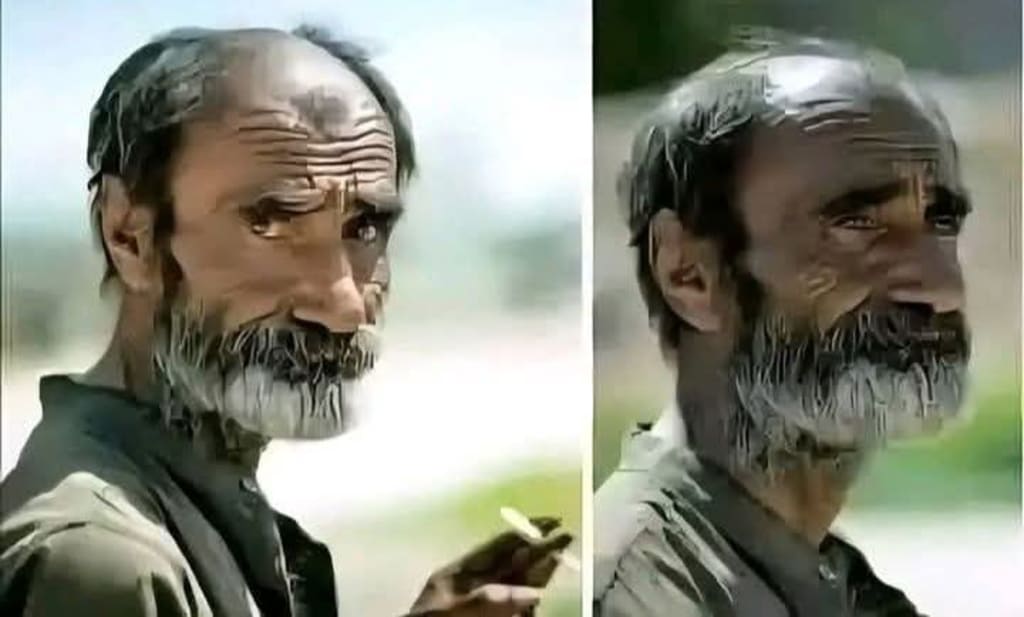
In the dusty old streets of Baghdad, a silent man walks alone. His clothes are worn, his hair unkempt, and his eyes carry a sorrow that words cannot describe. Children playing in the alleyways often stop and stare.
“Who is he?” one child whispers.
“That’s Doctor Mahdi,” another replies.
“He only says one thing... ‘Mother, forgive me.’”
Many years ago, Doctor Mahdi was one of Iraq’s most brilliant surgeons. Young, skilled, and deeply compassionate, he had the hands of a healer and the heart of a servant. Patients came from far and wide, trusting him not only with their lives but with their hopes.
But behind every great man is a greater woman. For Mahdi, that woman was his mother. She had raised him through war, poverty, and hardship. She stitched his torn uniforms with trembling hands, stayed awake during his exam nights, and whispered prayers into the dark while he studied by candlelight.
“Whatever I become, it will be because of her,” Mahdi often said.
Then one ordinary afternoon turned into a moment that would break his world forever.
An emergency case was rushed into the hospital—an older woman with a ruptured heart artery. Time was critical. Mahdi rushed to the operating room, preparing for another battle between life and death. But when he pulled back the curtain and saw the patient... he froze.
It was his mother.
The other surgeon assigned to the case was unavailable. The nurses looked at him, waiting. The monitors beeped wildly. There was no time. Medical ethics are clear: a doctor should never operate on their own close family. Emotions cloud judgment. Mistakes become more likely.
But when you’re a son before you’re a surgeon, the rules blur.
Mahdi took the scalpel in his hand. His fingers trembled, his breath was short. The mother who once held his tiny hands through life’s storms now lay helpless under his care.
He began the surgery. Every stitch was a prayer, every cut a cry for mercy. He poured all his knowledge, all his experience, all his soul into saving her.
But sometimes, even the strongest hands can’t hold back fate.
Her heart stopped mid-operation. The machines went silent. His world collapsed.
Mahdi stood there, unable to move, staring at the woman who had given him everything—and whom he couldn’t save.
From that day, he was never the same. He left the hospital. He stopped speaking to colleagues, friends, even himself. The brilliant doctor faded into a quiet shadow. The grief was too heavy, the guilt too deep.
He began to wander the streets of Baghdad. People called him “crazy.” Some mocked him, others avoided him. But the children... they watched with curiosity and quiet respect.
Because they noticed something. He never spoke. Not a word. Except one line, whispered again and again, sometimes into the wind, sometimes into the silence of the night:
“Mother, forgive me.”
---
A Silent Cry for Mental Health
Dr. Mahdi’s story is more than personal tragedy—it's a reflection of the invisible wounds so many carry in silence. Across the world, healthcare workers, especially in conflict zones, are expected to be strong, composed, and unshaken. But who heals the healers when they break?
Mental health remains one of the most neglected human rights issues globally. In many cultures, especially in war-torn regions, trauma is buried instead of treated. The shame around emotional pain silences even the bravest souls.
Dr. Mahdi was not weak. He was human.
He did not fail. He simply loved.
And in that love, he became a mirror for all of us.
---
Let Us Remember
That behind every professional is a person with a heart.
That grief and guilt are not signs of failure—they are signs of humanity.
That mental health deserves compassion, not judgment.
That stories like Dr. Mahdi’s should not be forgotten.
If you ever see a silent man walking the streets, whispering to the wind, don't mock him.
He may have once saved lives.
He may be carrying a sorrow you’ll never understand.
He may simply be saying...o
About the Creator
Keep reading
More stories from Ilyas khan and writers in History and other communities.
The Fall of Tibet to a Communist State: History, Causes, and Consequences
The incorporation of Tibet into the People’s Republic of China (PRC) after 1950 was not a single event but a complex process involving military force, political negotiation, ideological conflict, and long-lasting resistance. Understanding this fall requires examining Tibet’s historical status, China’s communist revolution, and the profound consequences that followed.
By Say the truth about 10 hours ago in History
Power's Sake
When it comes to gaining power, bad people use it to gain more They never gain power to do something with it, they gain power to have it, relish in it, double it down on itself so it grows exponentially and never goes anywhere. Even if you see the people in power commit an atrocity, that is never the true goal. It is a deplorable action for sure but the action itself usually doesn't matter it's the outcome.
By Donny Foley5 days ago in History


Comments
There are no comments for this story
Be the first to respond and start the conversation.