
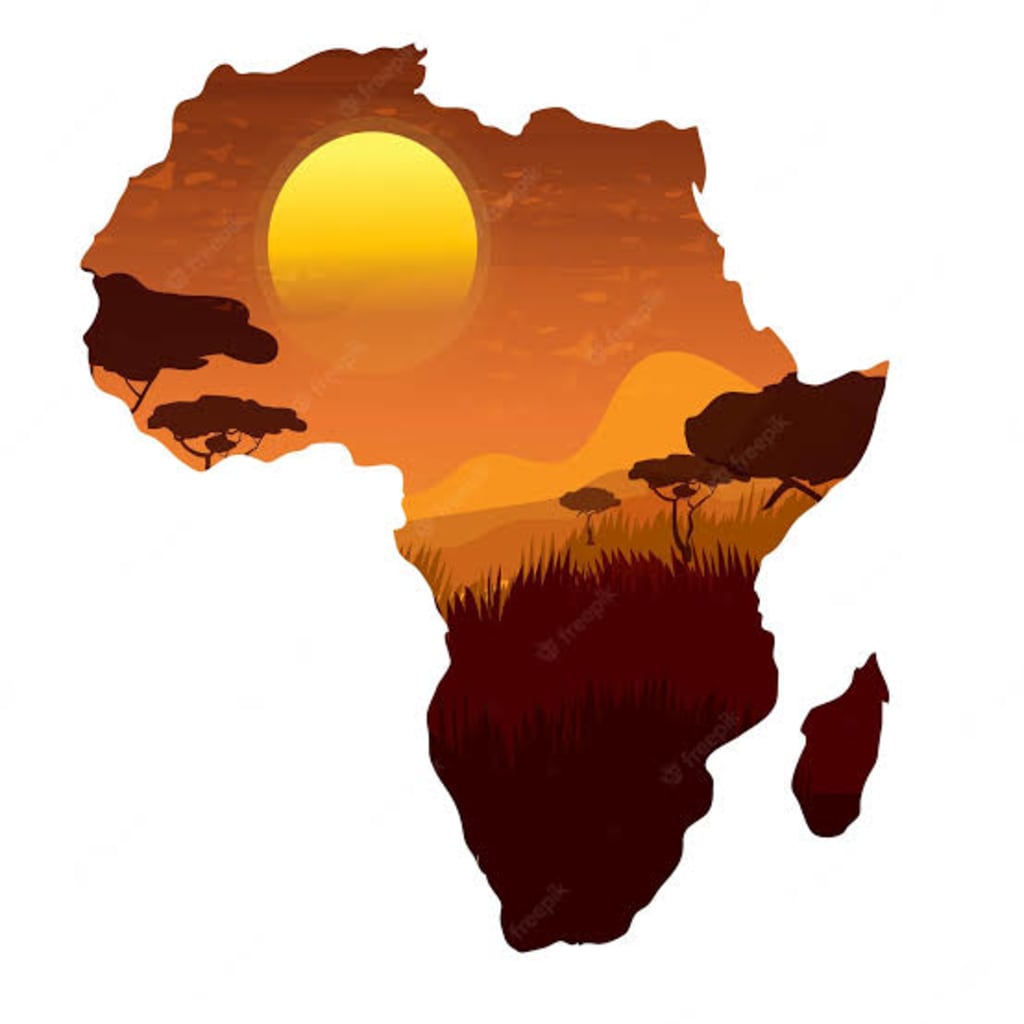
Africa is often referred to as the "Mother Continent" because it is the oldest inhabited landmass on our planet. For over 5 million years, Africa has served as the home to both humans and our ancestral predecessors. Spanning across vast territories, it is the second largest continent on Earth, bordered by prominent bodies of water such as the Mediterranean Sea, the Red Sea, the Indian Ocean, and the Atlantic Ocean.
Africa is acknowledged as the original cradle of humanity, where the roots of the human race are believed to have taken hold. Presently, the scientific community firmly upholds the notion that Africa served as the birthplace of human life, a conclusion substantiated by thorough investigations spanning diverse fields such as paleontology, archaeology, and genetics. The foundation for this hypothesis is derived from a multitude of compelling sources and evidence.
Genetic studies comparing the DNA of various human populations across the globe, it has consistently been revealed that African populations possess the greatest degree of genetic diversity. This finding implies that African communities have undergone a longer period of accumulating genetic variations, supporting the notion that modern humans originated in Africa before dispersing to other regions of the world. This evidence from genetic research strongly reinforces the hypothesis of Africa's pivotal role in the early origins and subsequent migration of our species.

Genetic studies have further explored the genomes of individuals from diverse global populations to uncover evidence of genetic admixture. These investigations consistently demonstrate that non-African populations bear genetic markers that can be traced back to African populations, providing clear indications of historical interbreeding events between non-African and African populations during the migratory journey of humans out of Africa. These findings contribute to a comprehensive understanding of the intricate genetic tapestry of human populations and lend substantial support to the concept of significant interactions and genetic exchanges between ancestral African populations and those in other parts of the world.
The study of mitochondrial DNA (mtDNA), which is exclusively inherited from the mother. Through meticulous analysis of mtDNA, researchers have uncovered a fascinating revelation: all present-day humans share a common female ancestor, commonly known as Mitochondrial Eve. It is believed that this ancestral figure lived in Africa approximately 150,000 to 200,000 years ago. Such findings derived from mtDNA studies provide compelling evidence that supports the hypothesis of human origins in Africa and the subsequent dispersal of our species across the globe.
Similarly, investigations into Y-chromosomal DNA, exclusively inherited from the father, have traced the lineage of male individuals. These studies have consistently unveiled a noteworthy pattern: African populations exhibit the highest diversity in Y-chromosomal lineages. This once again serves as compelling evidence pointing towards an African origin of modern humans. The abundance of diverse Y-chromosomal lineages within African populations supports the notion that our species originated on the African continent, subsequently disseminating across the globe. These findings, alongside the evidence from mtDNA studies, further strengthen the hypothesis of Africa's pivotal role in shaping the genetic heritage of humanity.

Apart from genetic studies, the field of archaeology has played a crucial role in mapping the dispersal of early humans beyond Africa. Archaeological findings, encompassing tools, artifacts, and fossils, provide invaluable insights into the migration patterns of our ancestors. Notably, the discoveries of early human ancestors like Australopithecus and early Homo species have predominantly emerged from African soil, attesting to Africa's significance as the cradle of human evolution. Furthermore, the oldest known fossils of our own species, Homo sapiens, have been unearthed in Africa, specifically in regions such as Ethiopia, Kenya, and South Africa. These fossil remnants, dating back approximately 200,000 years, provide concrete evidence of Africa's central role in the emergence and early development of Homo sapiens. Such archaeological evidence corroborates the genetic and fossil record, collectively reinforcing the consensus that Africa served as the birthplace of our species.
With each new discovery and advancement in various fields such as paleontology, genetics, and archaeology, our understanding of human history deepens. However, based on the cumulative body of evidence from these disciplines, the current consensus strongly supports the conclusion that modern humans indeed originated in Africa. While future research may uncover additional insights and nuances, the existing evidence strongly points to Africa as the birthplace of our species.
Mother Africa!
About the Creator
Keep reading
More stories from Adebukola Oladapo and writers in History and other communities.
The Terrifying Death of Micheal Rockefeller
*****************************************In 1961, an American man vanished in Dutch New Guinea. After an arduous investigation, the authorities ruled that he drowned after his boat capsized a few clicks off the coast of the town of Agats in the Arafura sea. His remains were never recovered. Intriguing? Kind of. But buckle in because two crucial details turn this tepid tale into a scintillating saga.
By Adebukola Oladapo3 years ago in History
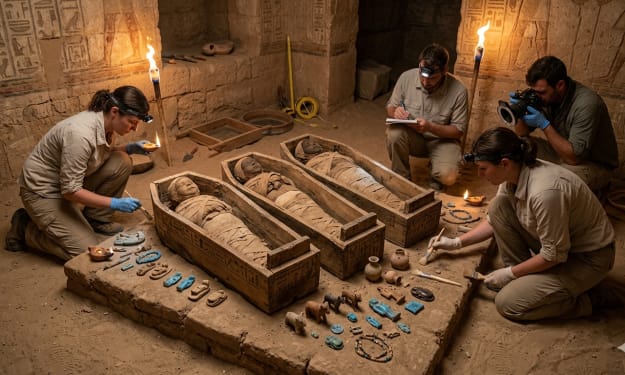
Ancient Egyptian Tomb Unearthed: 3,000-Year-Old Remains of Four Children Discovered
In a remarkable archaeological discovery in Egypt, researchers have uncovered the mummified remains of four children dating back nearly 3,000 years. The find, located in the southern region of Luxor, offers a rare glimpse into the lives, deaths, and funerary customs of young Egyptians during the New Kingdom period.
By Irshad Abbasi 2 days ago in History



Comments
There are no comments for this story
Be the first to respond and start the conversation.